







MSc Financial Mathematics
The MSc Financial Mathematics programme provides you with advanced analytical training, quantitative knowledge and the practical skill sets required by modern financial institutions.



September 2026

Full time

18 months

Suzhou


This programme leads to a University of Liverpool degree which is recognised by Ministry of Education, China.
Knowledge and skills
By the time you graduate from the MSc Financial Mathematics programme, you will have:
- an advanced understanding of financial mathematics and quantitative analysis;
- practical mathematics and emerging data analytical skills, linking finance theories to real-world applications;
- the ability to devise, plan and undertake complex research projects in the field of financial mathematics;and
- skills in research, evaluation and analysis and the quantitative techniques to evaluate and interpret complex data and research literature.
Our financial mathematics master program here at XJTLU is an intensive one and half year graduate program. One year coursework taught by specialists with international teaching and research experience and half year practical training and master thesis.


Dr Hasanjan Sayit
Modules
*Programme modules listed are illustrative only and subject to change. XJTLU students are advised to log in to the e-Bridge Portal to view the effectuated module structure.
Semester 1
Semester 2
The rigorous academic training in Financial Mathematics helped me lay a solid foundation in mathematics and economics. Moreover, the connections between our programme and the finance industry provided me with a variety of internship opportunities, which is crucial to my career development.
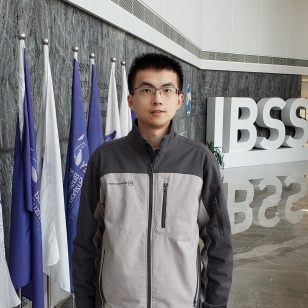
Guangyu Wang
Student, MSc Financial Mathematics
Careers
The programme delivers rigorous and comprehensive training to develop technical experts and elite professionals in financial mathematics. Through a range of exceptional optional modules, students are empowered to tailor their learning to prepare for diverse roles in banks, investment firms, insurance companies, consulting services, government agencies, and the rapidly growing FinTech sector.



Overview
The MSc Financial Mathematics at XJTLU is an intensive 18 month programme that blends rigorous mathematical theory with modern computational and data‑driven approaches to finance. Through a balanced curriculum covering pricing and hedging, financial econometrics, portfolio risk management, fixed income modelling, and advanced topics such as stochastic processes and deep learning in finance, the programme prepares students for both cutting‑edge research and quantitative roles in the global financial industry.
Why should I study Financial Mathematics at XJTLU?