





2026-05-22

10:00 AM - 4:00 PM
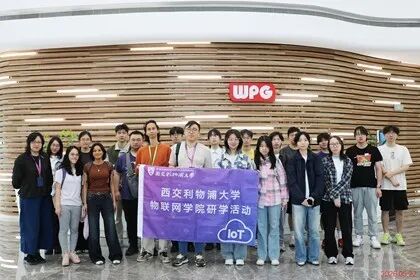
On 22 May, Year 2 students from the School of IoT visited Shanghai WPG Smart Water Co., Ltd. for a field trip linked to their Big Data Analytics course. WPG is a high-tech enterprise built around the industrial internet, dedicated to providing full-scenario smart water solutions. This visit was designed to give students a close look at how big data technologies are applied in the water industry, reinforcing the integration of theory and practice.
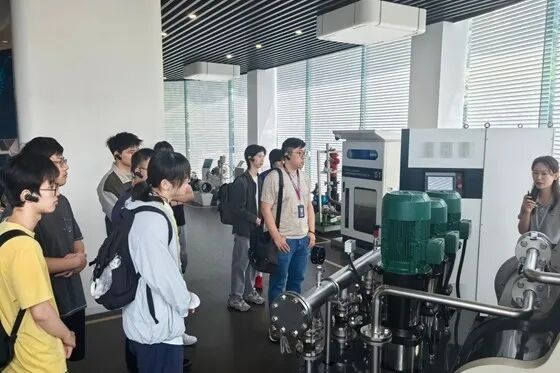
During the visit, WPG staff guided the students through the core product display zone on the first floor and gave detailed introductions to the functions and working principles of key products such as intelligent water supply equipment and secondary water supply units. The explanations centered on how sensors are integrated into water equipment: students observed up close the actual installation positions and structural design of pressure sensors, flow meters, level gauges, and water quality probes embedded in pipes and units. They learned how these sensing elements convert physical states like water pressure, flow rate, liquid level, and turbidity into electrical signals in real time, and how built-in acquisition modules perform initial analog-to-digital conversion and signal conditioning. This "equipment-as-sensing" design approach gave students their first concrete understanding that every reliable piece of water data originates from the precise placement and signal pickup of sensors on site, thereby offering them a direct and profound grasp of "where data really comes from" — a core question emphasized in the course.
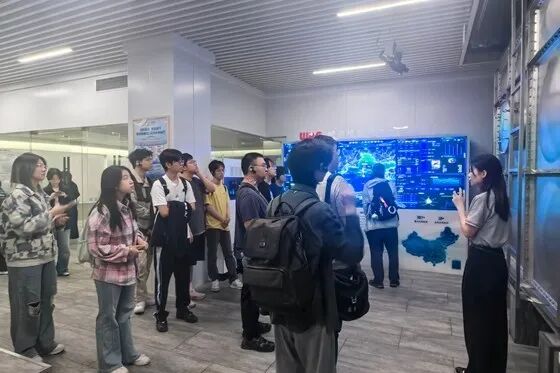
After that, staff guided the students into the immersive digital twin exhibition hall, where a large digital twin screen powered by the smart water IoT platform immediately captured their attention. The screen displayed a real-time, three-dimensional digital mapping of the urban water supply system, with dynamic data on pipe pressure, flow rates, and water quality indicators, echoing the physical equipment the students had just seen on the first floor. The presenter demonstrated the complete linkage from sensor signals to platform visualization: when the status of a flow meter or pressure sensor at a certain pipe section changed, the corresponding values and colors on the big screen updated in real time, and abnormalities automatically triggered alert pop-ups along with suggested actions. This immersive experience of “linking physical equipment with a data dashboard” gave students a tangible sense of the full-chain value of data — from collection and aggregation to analysis and decision-making. They came to understand that data is no longer just numbers in a spreadsheet, but a “smart brain” capable of diagnosing pipe network health, assisting leakage localization, and optimizing operational decisions. Through this session, students gained a more concrete grasp of the core concept of “data analysis empowering decision-making” emphasized in the course, and deepened their understanding of data’s real-world applications.
Also, staff led the students down to the underground level of the campus to observe the core water equipment and piping systems in actual operation. In the pump rooms and pipe galleries, the rainwater harvesting and reuse installations, water supply booster units, drainage lifting equipment, and a network of sensors installed along the pipelines were all presented up close. In this underground space, students could clearly see how rainwater collected from roofs and the ground flows into underground storage tanks, and after sedimentation, filtration, and disinfection, is delivered above ground by variable-speed pump sets for landscape irrigation and water replenishment. Meanwhile, data transmitted from soil moisture sensors and microclimate monitoring stations directly feeds into the smart algorithms housed in the underground control cabinets, which precisely determine pump activation and valve openings, enabling the entire campus water dispatch to be completed automatically in the “invisible underground.” This behind-the-scenes, face-to-face encounter with the physical equipment dissolved the vague notion that data and algorithms are abstract and untethered. Standing amid the dense pipes and humming machinery, the students came to truly realize that it is these sensors, controllers, and actuators hidden deep underground that transform data-driven decisions into subtle, silent acts of environmental regulation, turning the abstract concept of a green and comfortable office environment into a tangible, perceptible reality — thereby gaining a much deeper appreciation of the real-world impact of data.
Through close engagement with WPG’s smart water equipment, digital twin platform, and underground deployment systems, students gained a more intuitive understanding of the entire data flow—from collection and analysis to environmental regulation—and deeply felt the driving force of data analysis in smart water management and green development. This activity closely integrated the theoretical knowledge of the Big Data Analytics course with industrial practice, effectively broadening students’ professional perspectives on “data-empowered decision-making.” The School of IoT will continue to organize such practice-oriented teaching activities to support student growth and development.
Share this event


