




20 Sep 2026


Opening the Mind through Books, Discussing Integration Together
Prof. Xiaobo Xu noted that Xi’an Jiaotong-Liverpool University, Huzhou College and the Bank of Huzhou had a sound foundation for cooperation, and hoped that everyone would engage in learning with an open mind, strengthen exchanges through the collision of views, and explore more possibilities for cooperation through mutual connection.
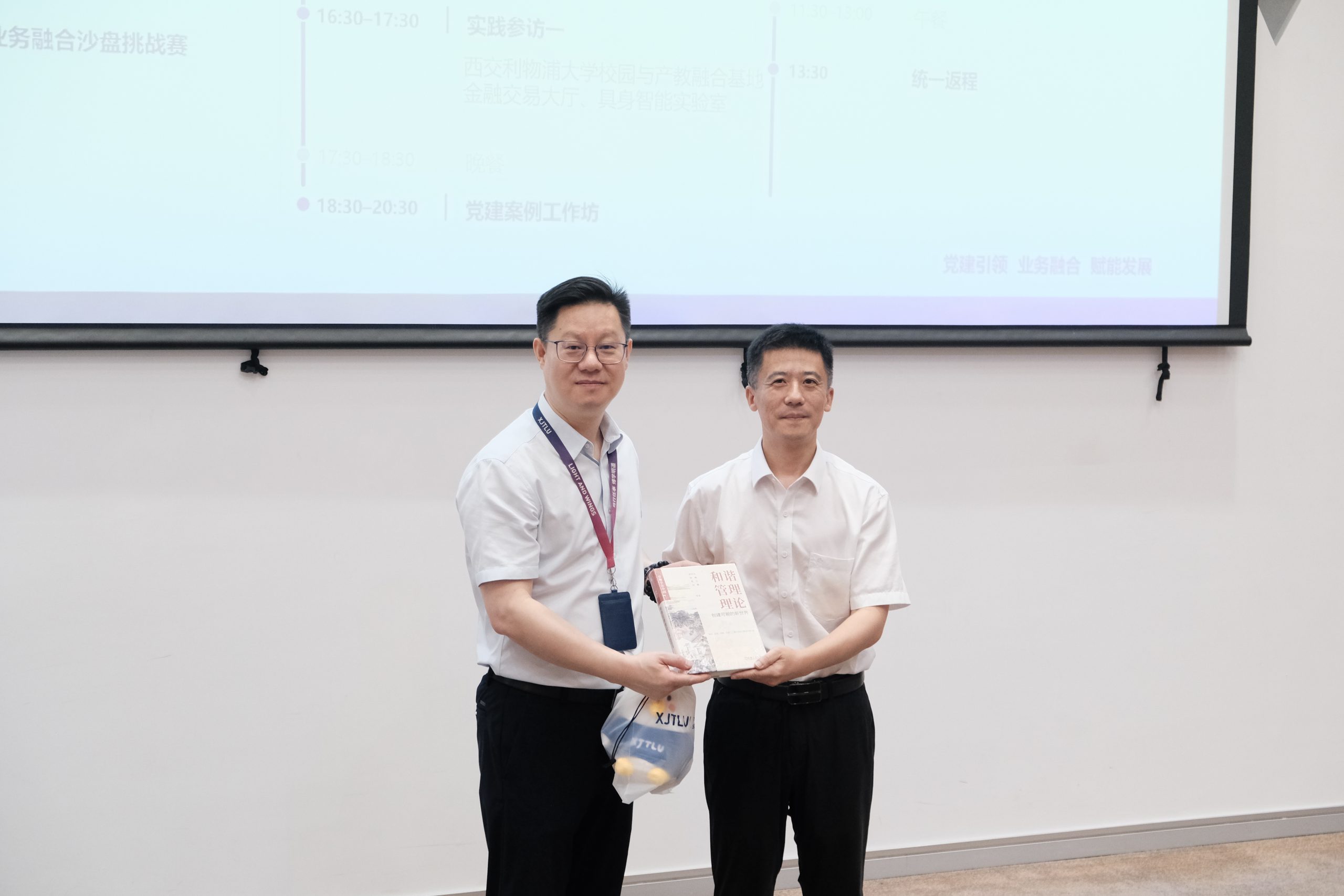
After the speeches, Prof. Xu presented the Bank of Huzhou with The HeXie Management Theory by Professor. Youmin Xi. A book as a gift, learning as a means to promote integration. This “gift of books” also added special meaning to the three days of learning and exchange.
Understanding Integration from Multiple Perspectives
How should the relationship between Party building and business be understood? The training did not remain at a single perspective, but instead unfolded from three dimensions: Party building leadership, the local economy and banking practice.
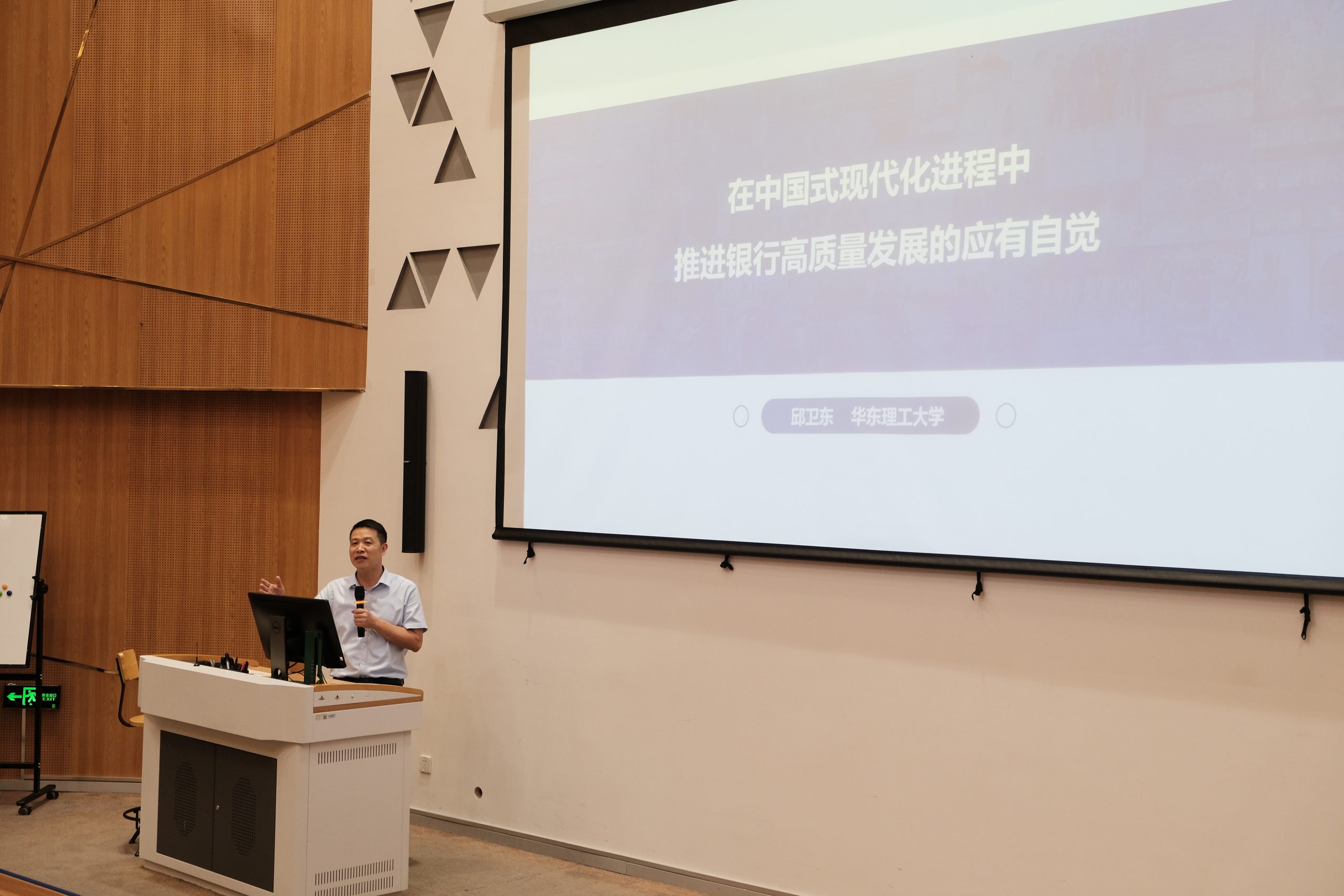
Prof. Weidong Qiu, Party Secretary and doctoral supervisor of the School of Marxism at East China University of Science and Technology, gave a lecture entitled “The Due Consciousness of Banks’ High-Quality Development from the Perspective of the Chinese Path to Modernisation”. Starting from the process of Chinese-style modernisation, he guided participants to reflect on the positioning and responsibilities of financial institutions in high-quality development, and to further understand the internal connection between Party building leadership and banks’ high-quality development.
Dr. Sheng Zhao, Assistant Professor at the International Business School Suzhou at Xi’an Jiaotong-Liverpool University, presented “Local Economic Transformation and New Opportunities for Financial Services to the Real Economy”. Starting from the macroeconomic situation and local economic transformation, and focusing on dimensions such as consumption, investment, government expenditure and net exports, he combined specific cases to analyse the challenges in local economic transformation and the new opportunities and risks faced by financial services serving the real economy.
The training also invited professionals with front-line bank management experience to give a specialist sharing session on “Innovative Practice in Party Building Empowering Banking Business Integration”, exchanging practical experience and reflections on the integration of Party building and business from the perspective of actual bank work.
Deepening Integration through Practice
Understanding is only the first step. How to make judgements in concrete problems was another important element of the training.
In the Party Building and Business Integration Sandbox Challenge, participants used scenario drawing, teamwork and sandbox simulation to bring classroom reflections into simulated decision-making scenarios, and to understand the connection between Party building and business in different roles and tasks.
The Party Building Case Workshop further brought learning into case discussion. Participants analysed and exchanged views on practical issues, sorting out ideas and deepening understanding through the collision of different views.
From “listening” to “practising”, through repeated discussion, judgement and collaboration, participants also brought their understanding of “integration” further into practice.
20 Sep 2026