




16 Sep 2026


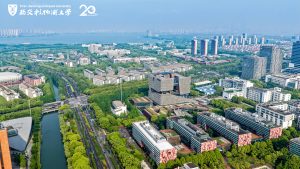
Executive MBA participants from around the world have arrived at International Business School Suzhou (IBSS) for the EMBA Consortium International Week, which formally began on Monday 14 September.
Before the lectures, company visits and group work began, there was time for a rather more Suzhou-style introduction to the week: a classical garden, a boat ride up the Grand Canal rounded off with a sumptuous Suzhounese dinner beside Jinji Lake.
Hosted at IBSS, this year’s programme, “Where Next for China? How the ‘World’s Factory’ became an Innovation Hub and Beyond”, brings together participants from across Latin America, Africa and Europe to explore how China’s economy, businesses and place in the world are changing.
Over the course of the week, they will combine academic discussion with company visits, group work, networking and cultural experiences, with plenty of opportunity to compare perspectives along the way.
A ‘taste’ of Suzhou
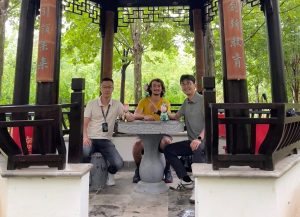
Participants arrived in Suzhou over the weekend and spent Sunday afternoon getting to know both the city and one another. Their first stop was Lotus Garden, one of Suzhou’s UNESCO-listed classical gardens. From there, the group took to the city’s canals for a boat trip accompanied by a live performance on the classical Chinese string instrument: the pipa.
The evening finished with Chinese food and drinks at Lingxuange Restaurant on Ligongdi. For a group whose members have travelled from several continents, the afternoon also offered something equally important: a chance to meet before the formal programme began.
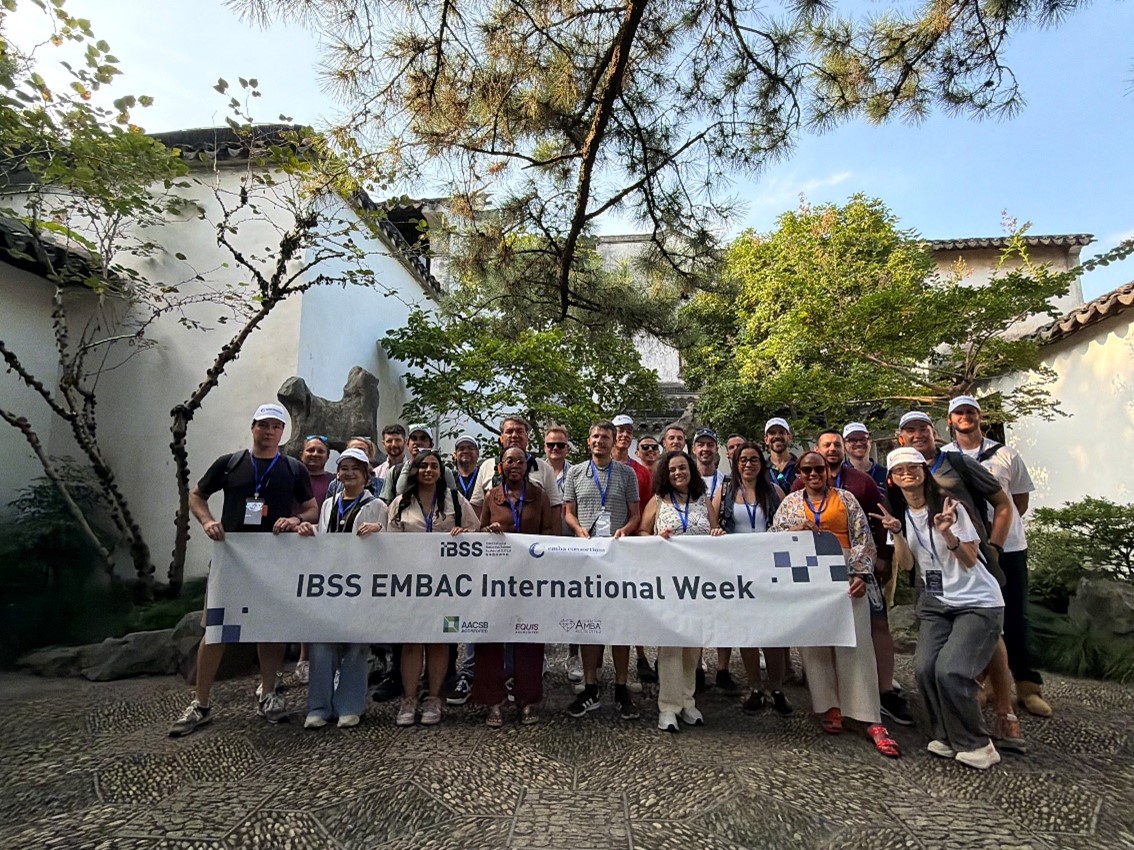
Participants explored Suzhou’s classical gardens and ancient canals
Learning through diversity
The EMBA Consortium is an international network of business schools that allows Executive MBA participants and alumni to take part in learning experiences hosted by fellow member institutions.
IBSS joined the Consortium in 2025. Membership gives participants on the School’s International MBA for Executives access to programmes at member schools overseas, while bringing executives from across the network to Suzhou to experience China first-hand.
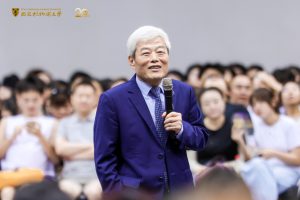
That international mix was a central theme of Monday morning’s opening session. David Weinstein, Chair of the EMBA Consortium, told participants that diversity is at the heart of the International Week experience.
“Some of you will work with each other and you’ll be colleagues for a week. Some of you might be friends for a lifetime,” he said.
He encouraged the group to make the most of the different nationalities, professions and backgrounds represented in the room, and to use the week to build connections beyond their usual MBA cohorts and professional circles.
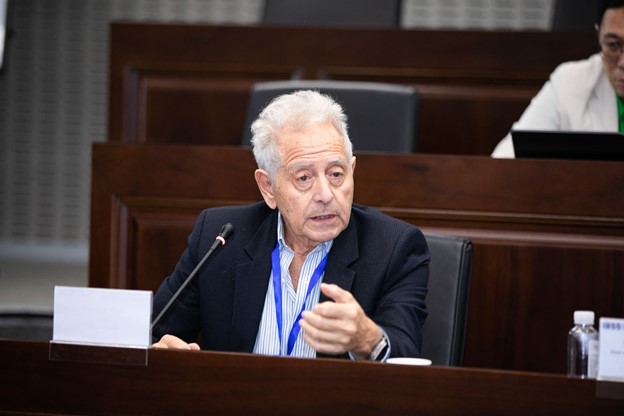
David Weinstein, Chair of the EMBA Consortium, delivering his thoughts on the week ahead.
China up close
Welcoming the group to IBSS, Professor Eddy Fang, Dean of IBSS, spoke about the School’s development and its changing role as an international business school based in China.
He described IBSS as a “safe landing space” for international students seeking to understand China and, increasingly, as a springboard for companies looking to develop their business in the country.
“We are trying to project the School as a platform for people to learn about China, to do business in China,” he said.
Professor Fang also encouraged participants to think about how internationalisation itself is changing. For example, he pointed to shifts in global supply chains, international student mobility and the localisation of management within multinational companies as examples of how the relationship between China and the rest of the world has evolved. For IBSS, he explained, this creates an opportunity to offer executives a perspective on China that is grounded in what is happening around them rather than viewed from afar.
He also introduced the School’s growing work with industry, including its Global Business Intelligence Hub, which will provide English-language reports, indices and data to help international organisations better understand the Chinese market.
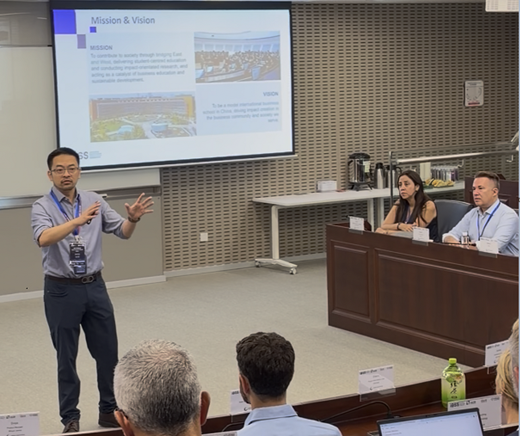
Dean of IBSS, Professor Eddy Fang introducing IBSS to the EMBA participants.
Following the welcome speeches, Nuno da Camara, Senior Associate Professor and MBA Director at IBSS, introduced the programme for the week by setting out some of the big questions participants would be exploring.
Nuno also spoke on the rise of China in the last 30 years, from the development of state-of-the-art infrastructure, the rapid development of innovation and high-level manufacturing, to the huge advances in the green economy. That said, the current economic situation has areas of concern, he said. A struggling property sector and the visible weakening of consumer demand, as well as increases in both corporate and government borrowing, are all indicators of a worrying slowdown, despite overall GDP growth still reaching 5% per annum. China’s strong AI policy is certainly one area that can continue to create real value and further catapult economic growth.
That mix of rapid development, new opportunities and emerging challenges sets the scene for the rest of the week.
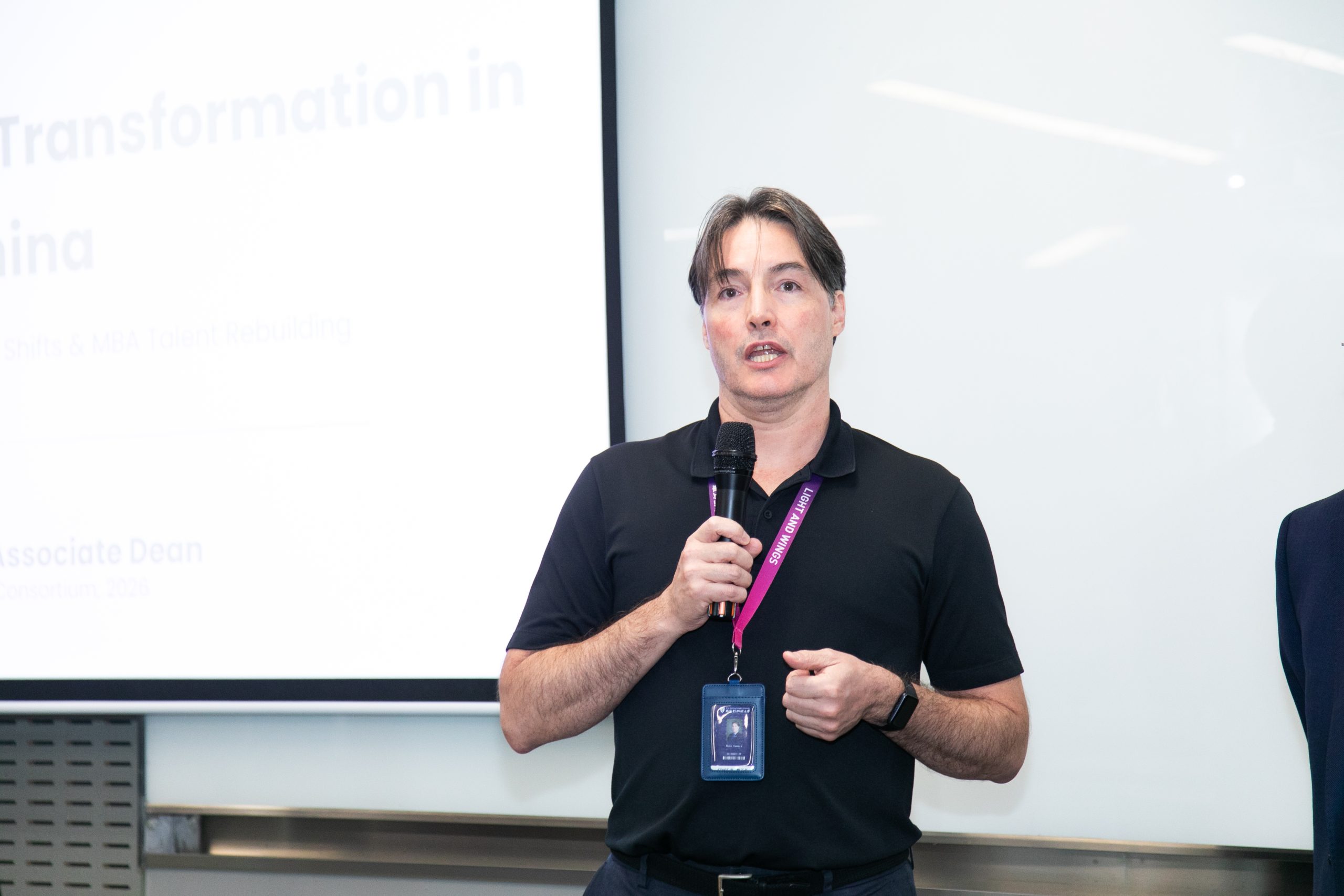
IMBA Director Nuno da Camara setting the agenda for the week ahead.
The week ahead. And there is plenty ahead.
There is a lot packed into the week.
Participants will tackle everything from China’s economy and consumer behaviour to AI, innovation, leadership and sustainability, before heading out for company visits at Modula and Etron to see some of those themes in practice.
The “China 2050” project will also put international teams to work on one big question: where might China be heading next?
And, in true Suzhou style, there is culture in the mix too, including calligraphy, paper cutting and late-night Chinese opera (and drama!) at the Master of the Nets Garden.
It is all designed to help participants get beyond the headlines and see China from a number of different angles, so they can form their own view.
By Thomas Durham
Reviewed by Yifei Wu
16 Sep 2026