





09 Sep 2026


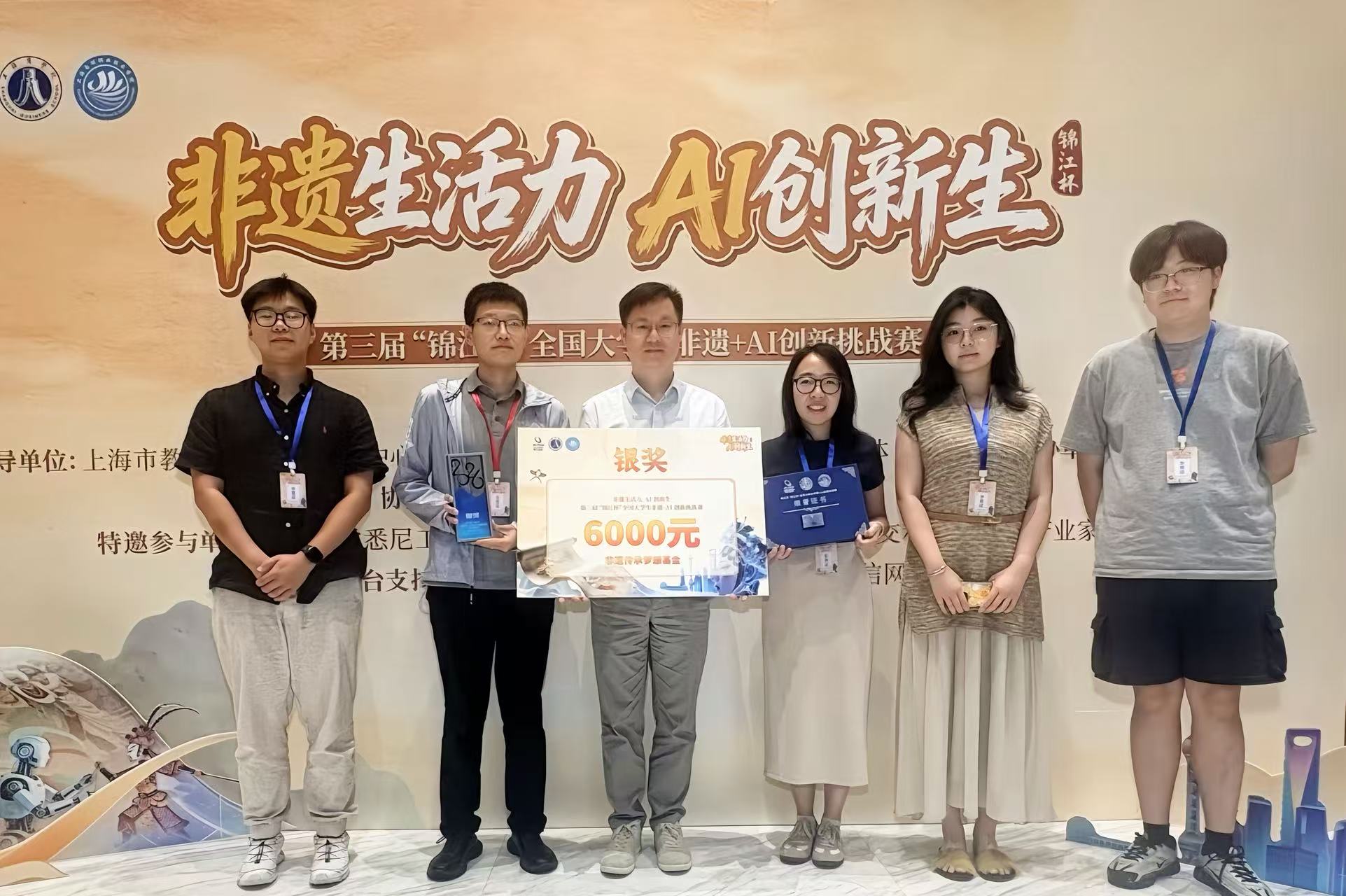
Recently, a student team supervised by Dr. Ke Wang, Assistant Professor at the College of Industry-Entrepreneurs (CIE) and HeXie Management Centre (HeXie Academy), won the Silver Award in the Grand Final of the 3rd "Jinjiang Cup" Intangible Cultural Heritage + AI Innovation Challenge with their project entitled "Jinjiang Secret Key", they won the Silver Award, along with a prize of RMB 6,000 and Jinjiang Hui reward points. The team was composed of five students from various specialisations within the Master's programme in Entrepreneurship and Innovation – Zheng Bao, Shihui Niu, Di Wu, Jiajie Zhao, and Qize Wu – who, with the strong support and careful guidance of the College and Centre, applied their classroom learning to hospitality service scenarios and explored innovative pathways for integrating intangible cultural heritage with artificial intelligence. Professor Xiaobo Xu, Executive Dean of the CIE and Director of the HeXie Academy, attended the Grand Final as a judge and witnessed the students' practical achievements.
Using Culture as a Key to Redesign the Hotel Check-in Experience
The competition was hosted by Jinjiang Hui (Jinjiang International Group) under the theme "ICH Vitality, AI Innovation," and was open to university students nationwide. It featured an online quiz round and an ICH + AI business planning competition. The business planning section was organised around three tracks – Brand Revitalisation, Urban Empowerment, and AI Innovation – encouraging participants to propose innovative and feasible solutions to industry pain points.
The Secret Key of Jinjiang transforms a hotel's unique architecture, brand identity and local culture into an ICH experience that guests can participate in and take away. The project also designs an AI planning agent to assist hotel outlets in automatically generating activity plans, cost pricing and execution workflows. Using the Jinjiang Metropolis Classic Youth Hotel in Shanghai as the initial pilot site, the project combines architectural motifs with Shanghai paper-cutting, allowing guests to fold paper structures by hand, receive commemorative keepsakes, and embark on the next leg of their cultural exploration. Starting from user needs, the team progressively refined their cultural and creative ideas into a business plan covering product experience, pricing and operations, fully addressing the competition's focus on brand revitalisation and AI innovation.
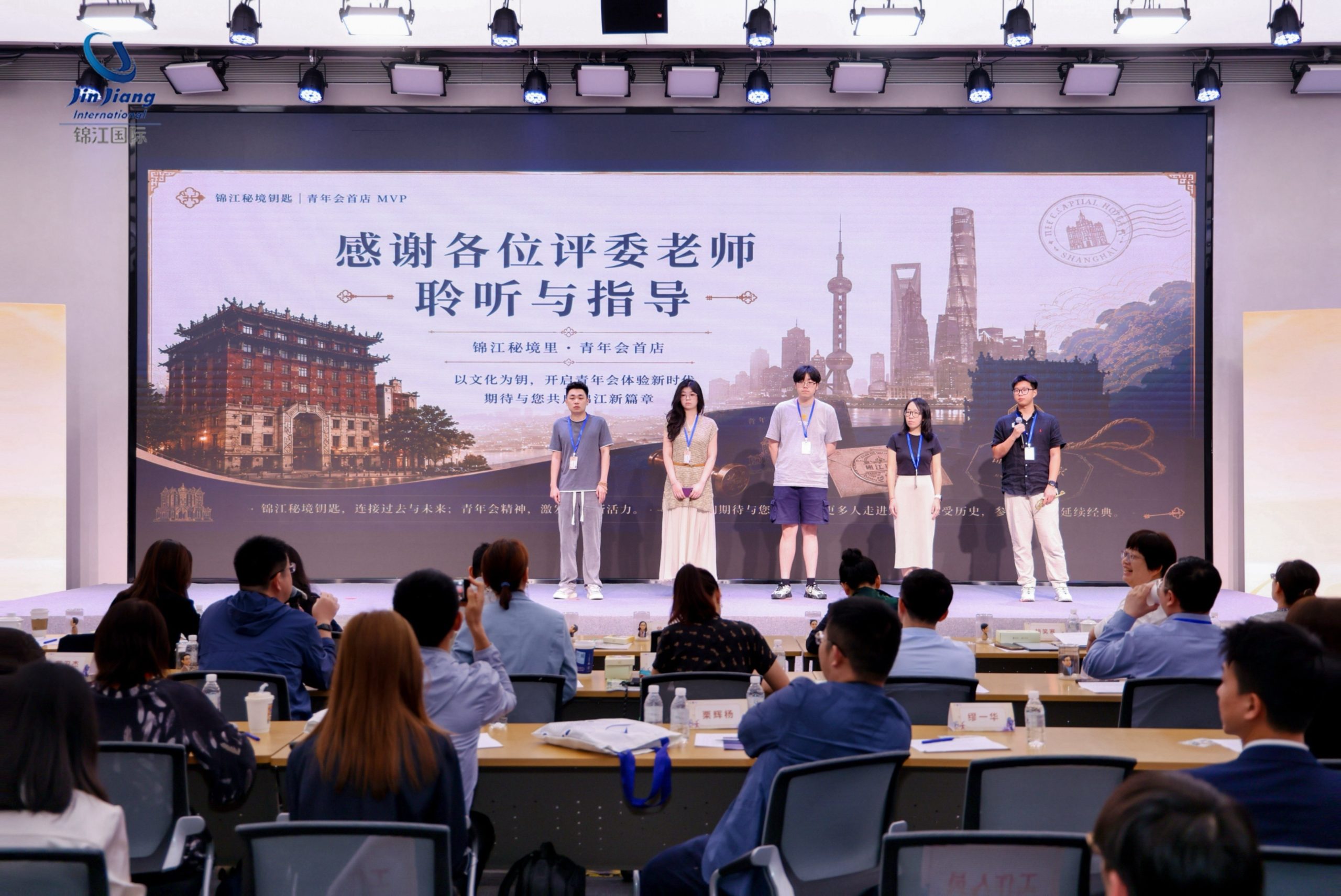
From a Course Assignment to the National Final
The team's collaboration began with a course assignment. After the module ended, the members maintained the rapport they had built in class and, under Dr Ke Wang's guidance, brought their shared idea into the competition. Members from diverse pathways – Business and AI, Strategic Human Resources Management, and Smart Ageing and Health Management – worked together on the same project, learning to understand each other's perspectives while continuously refining their understanding of innovation. During the preparation process, the team gradually focused on practical issues such as guest participation motivation, product pricing and outlet execution. The platform resources and interdisciplinary support provided by CIE and HeXie Academy proved instrumental in helping the team move from idea to implementation.
"The project evolved from an initial 'ICH + AI' concept to a focus on real consumer scenarios and viable business plans, which made us deeply realise that innovation requires not only imagination but also repeated validation, trade-offs and refinement," said team leader Zheng Bao. He believes that the open, interdisciplinary and problem-oriented educational philosophy upheld by CIE and HeXie Academy helped the team cultivate independent thinking, collaboration, and the ability to translate creativity into practice.
Shihui Niu regards the competition as an extension of classroom learning. Her undergraduate background in marketing gave her a foundation in consumer insight and market analysis, while the project-based learning at the College and Centre during her postgraduate studies further developed her abilities in problem identification and collaborative execution. "For us, this Silver Award is not only an affirmation of the project but also a testament to our journey from being a 'coursework group' to 'project partners' – and none of this would have been possible without the guidance and support from the College and Centre," she said.
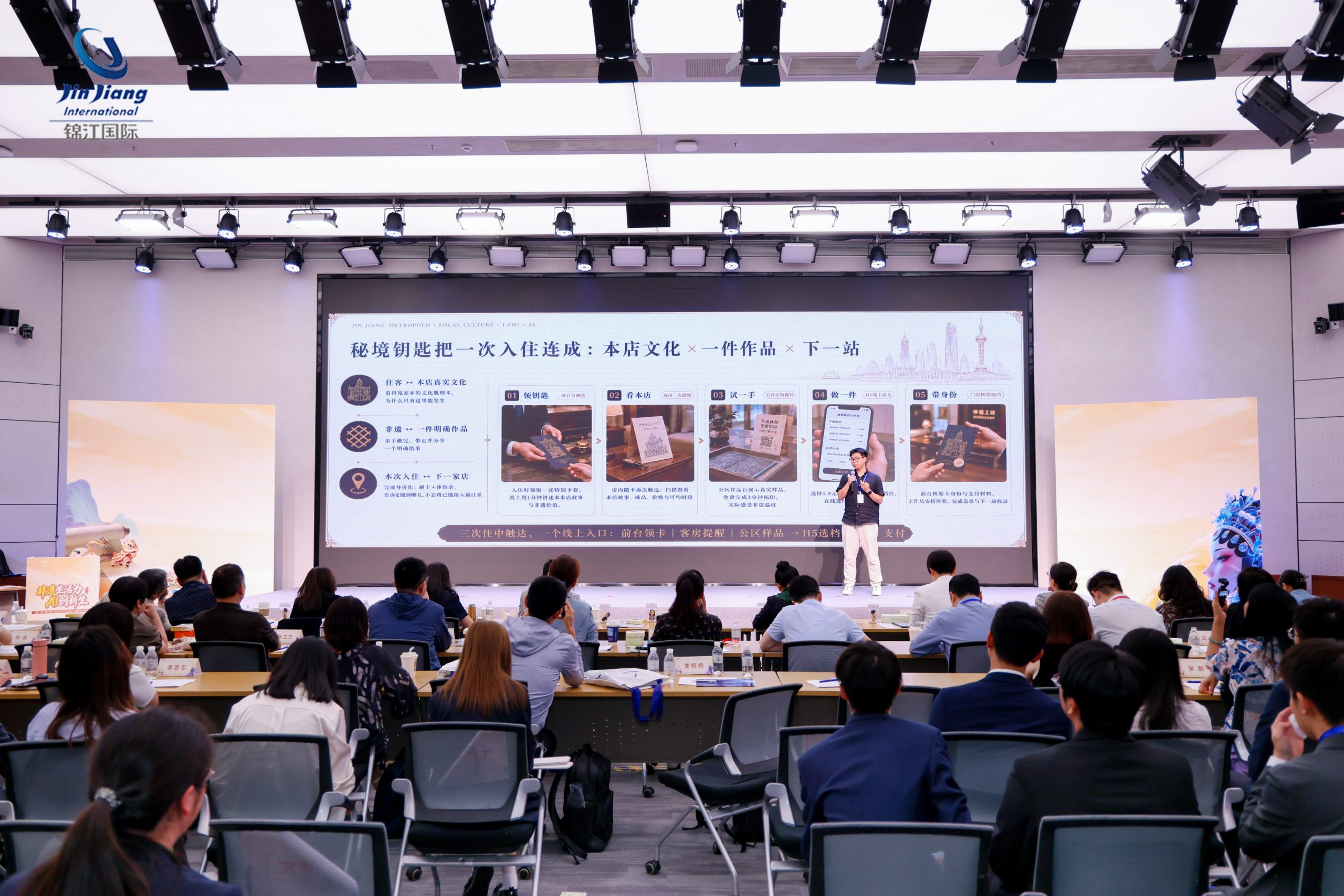
Grounded in Industry Practice, Nurturing Innovative Capacity
A complete business plan requires genuine collaboration across different competencies.
Jiajie Zhao, who was responsible for producing the AI effect video, adjusted narrative pacing, ICH elements and scene presentation repeatedly. Through this process, he began to reinterpret visual expression from the perspectives of brand tone and user perception: technology must not only be "made" but also be understood and felt by users.
Qize Wu focused on brand positioning and business decisions. In his view, the competition brought the entrepreneurial and innovation methods learned in the classroom into direct engagement with specific issues such as brand positioning, user needs and business implementation, giving him a more intuitive understanding of how an idea gradually evolves into a viable business plan.
And the five members, coming from different disciplinary backgrounds, learned to appreciate each other's perspectives through countless discussions, task divisions and adjustments – which is perhaps one of the most valuable aspects of interdisciplinary projects.
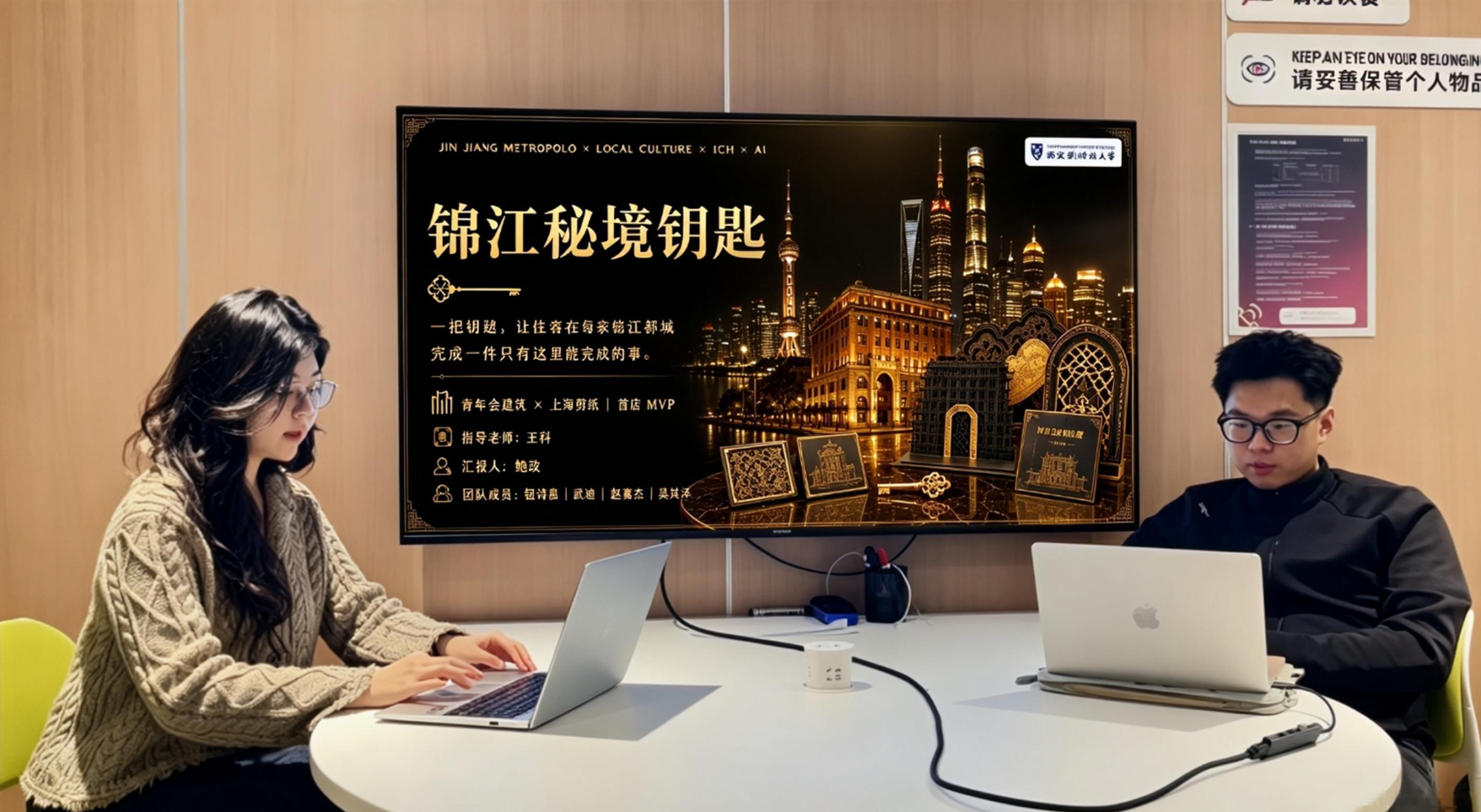
Beyond the Silver Award: Taking the Idea Further into Real-World Settings
For the team, the Silver Award is not the end of the project.
"This honour belongs to every member and will inspire us to continue pushing the project towards more concrete implementation, so as to live up to the expectations and cultivation we have received from the College and Centre," said Zheng Bao.
From a course assignment, to a project refined by students from diverse pathways, to standing on the national final's award podium – every step of The Secret Key of Jinjiang has been answering the same question:
How can knowledge from the classroom truly enter the industry site?
And when students begin to face real users, real costs, real operations and real decisions, learning no longer stops at completing an assignment.
This time, with a "secret key," they have unlocked not only an ICH experience within a hotel, but also a door from the classroom to the real world.
09 Sep 2026