




Two restructured academies to launch in September

01 Sep 2026


At the start of the new academic year, Xi’an Jiaotong-Liverpool University (XJTLU) will officially launch two newly restructured academic units: the Academy of AI and Advanced Technology (AIAT) and the Academy of Life and Natural Sciences (AoLNS).
AIAT was formed from the former School of Advanced Technology and the School of AI and Advanced Computing. The new academy brings together strengths in artificial intelligence, computer science, electrical and electronic engineering, and communications engineering.
AoLNS, meanwhile, was created through the merging of the former School of Science and the XJTLU Wisdom Lake Academy of Pharmacy, connecting fundamental natural sciences with biomedicine, bioinformatics, environmental health, interdisciplinary technologies and translational research.
The restructuring goes beyond changes in names or organisational boundaries.
Over the past two decades, XJTLU has developed its 1.0 model of elite professional education, 2.0 model of industry leader education and 3.0 integrated ecosystem model. As the University has grown, so too have its disciplines, programmes, research platforms, and industry partnerships.
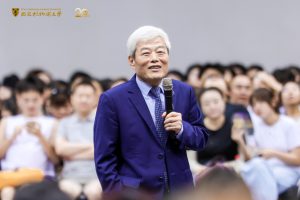
Professor Zhoulin Ruan, Vice President for Academic Affairs at XJTLU, says that at the current stage of development, the old organisational structure faces growing demands for increased interdisciplinary collaboration, programme coordination, and resource sharing. The University must also respond more rapidly to the trends in education and research reshaped by AI.
One purpose of the current restructuring is therefore to reduce barriers created by traditional disciplinary and organisational boundaries, and to enable more integrated approaches to education, research and resource allocation.
According to Professor Ruan, the evolving academic structure allows the University to place greater emphasis on interdisciplinary collaboration, flatter governance, and digital and AI empowerment. At the same time, it will preserve disciplinary expertise while creating more flexibility for teaching and research.
He further noted that the new academies will strive to link applied research with industrial advancement and societal needs. Through this transformation of academic structures, XJTLU will advance deep integration of academia, industry and research; stimulate innovation among academics and students; and build an innovation ecosystem for education and research in the AI era.
The two new academies show how this direction is being translated into practice.
Fundamentals to the future
AIAT organises its education around three broad dimensions: an “intelligent core”, covering applied AI, algorithms and data science; “digital infrastructure”, including computer systems and software engineering; and “frontier engineering”, spanning communications, electrical engineering and mechatronic systems.
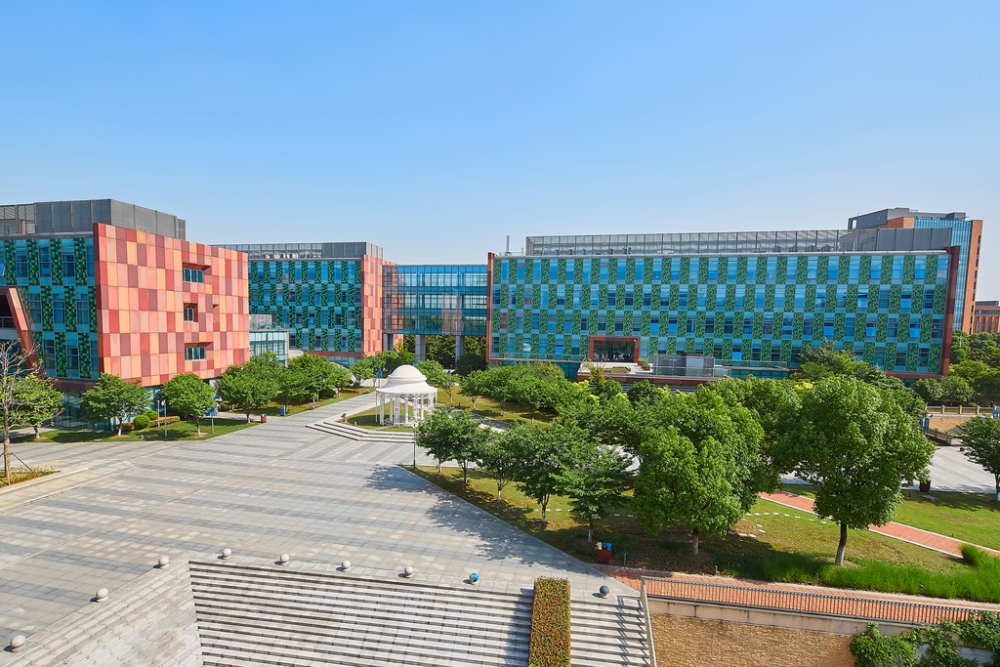
The Academy currently offers nine undergraduate, 10 master’s and three doctoral programmes. Its curriculum is also organised into nine subject areas, supported by cross-campus collaboration, shared laboratories and project-based learning designed to strengthen students’ ability to solve complex problems in real-world settings.
In research, AIAT is developing five major clusters: foundational AI; human-centred and creative intelligence; AI-driven science and healthcare; applied intelligence; and materials, energy and semiconductors. The Academy emphasises interdisciplinary work that links AI with biomedicine, automation, microelectronics, communications, new energy, and advanced materials, with the aim of connecting fundamental research more closely with technological applications and industry needs.
Translating science into impact
AoLNS has similarly reorganised inherited programmes into six interdisciplinary subject areas: Biological and Biomedical Sciences; Chemistry and Materials Science; Pharmacy and Biopharmaceutical Engineering; AI, Statistics and Bioinformatics; Digital Health and Behavioural Science; and Environmental and One Health Sciences. It currently offers 10 undergraduate, nine master’s, and five doctoral programmes, using a theme-based structure intended to connect fundamental science, life and health research, and real-world industry contexts.
Rather than simply combining existing disciplines, AoLNS is being designed as an integrated academic ecosystem in which fundamental science, AI, shared research platforms, and translational capability work together around major challenges in human and planetary health.
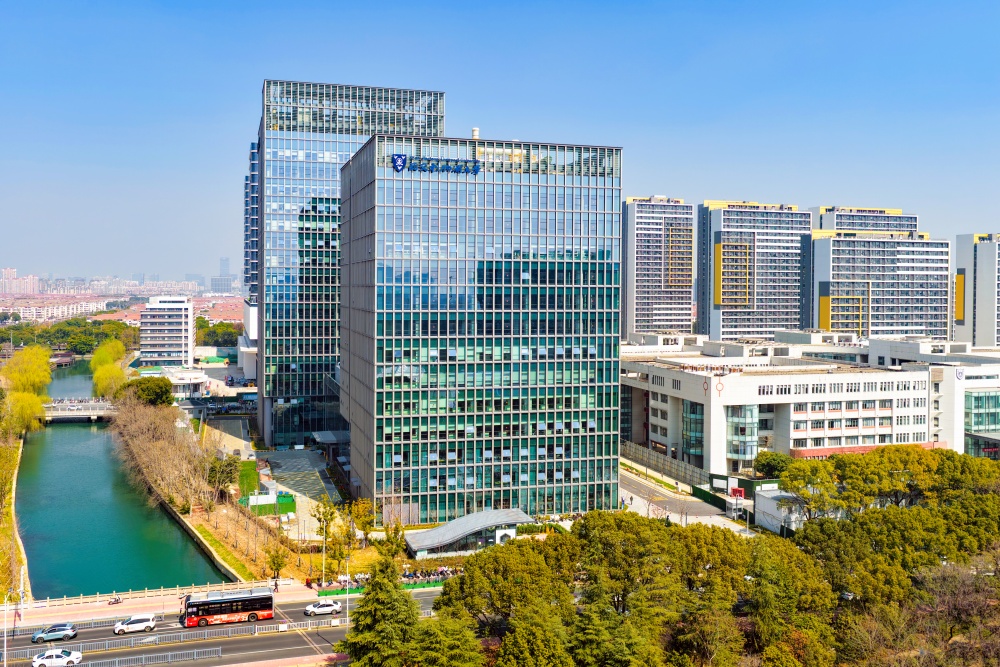
Its research structure includes six Centres of Research Excellence covering brain health and neurotechnology; oncology and immunology; translational biopharmaceutical engineering and manufacturing; precision medicine, digital health and regulatory science; molecular innovation and advanced materials; and One Health and environmental sustainability.
“Our ambition is to build an Academy where excellent fundamental science can lead naturally to technological innovation, translational research and meaningful societal impact. We also want to educate a new generation of interdisciplinary graduates who can work across scientific boundaries and use AI as an integral part of scientific discovery and innovation,” says Professor Lei Fu, Deputy Dean of AoLNS.
From AI and advanced technologies to the life and natural sciences, both academies reflect a common shift: rather than organising knowledge solely within conventional disciplinary boundaries, the University is exploring how student development, research, facilities, and industry resources can be reconnected around complex problems.
Professor Ruan describes this direction as a move towards a more syntegrative academic ecosystem – one that preserves disciplinary strengths while strengthening interdisciplinary collaboration, global connections and social impact. He said that as XJTLU enters a new stage in its 20-year journey, the launch of the two new Academies provides a platform for the University to further explore future-oriented models of education and research.
By Bo Kou
Edited by Patricia Pieterse
01 Sep 2026
RELATED NEWS
Life Sciences Building offers blueprint for innovation-driven social ecosystem
Xi’an Jiaotong-Liverpool University (XJTLU) officially opened its Life Sciences Building on 31 March, providing additional space and state-of-the-art facilit...
Learn more