




XJTLU conference explores AI’s changing role in communication and society

21 Sep 2026


近百名学者、博士生、青年研究人员及业界从业者于9月4日至5日齐聚西交利物浦大学,在题为“人工智能、传播与社会转型”的会议上就人工智能在传播、媒体、文化、教育、新闻业及社会等领域日益扩大的影响展开探讨。
Nearly 100 scholars, PhD students, early-career researchers and practitioners gathered at Xi’an Jiaotong-Liverpool University on Sept. 4-5 for the conference “Artificial Intelligence, Communication, and Social Transformation,” where they explored the growing influence of AI across communication, media, culture, education, journalism and society.
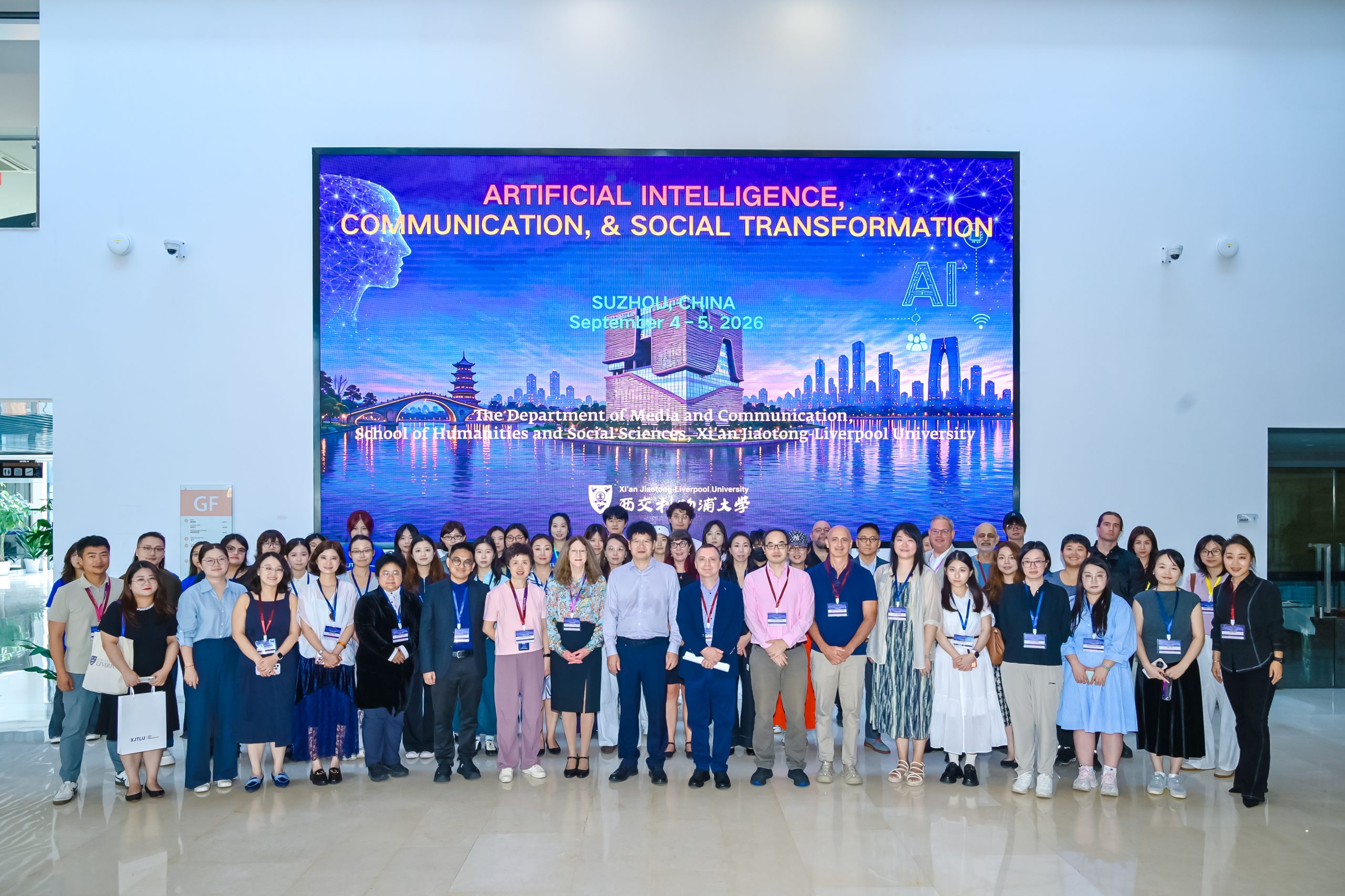
Scholars and participants came together at XJTLU for the two-day conference “Artificial Intelligence, Communication, and Social Transformation.” All photos by Lanyu Zhang, unless otherwise noted.
Organised by XJTLU’s Department of Media and Communication, the two-day conference featured two keynote speeches, 16 parallel panels with 72 presentations and a roundtable discussion on the future of AI and social transformation. The conference drew on four research clusters at DMC: Digital Technology and Changing Society; Culture, Creativity and Communication; Journalism and Society; and Screen Studies and Popular Culture.
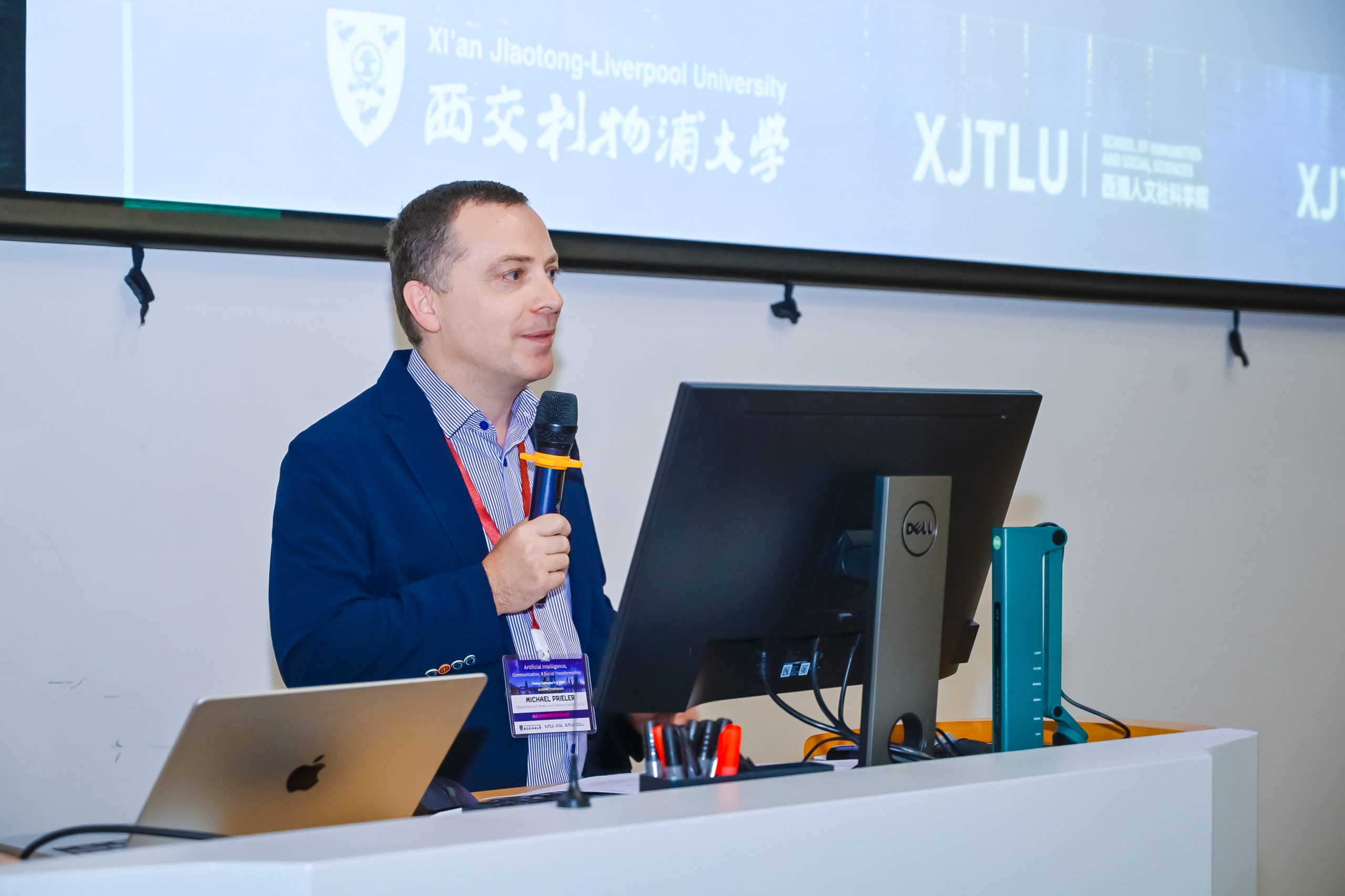
Professor Michael Prieler welcomes participants at the opening of the conference.
Conference Chair and Deputy Head of DMC Professor Michael Prieler welcomed participants and highlighted the importance of bringing together researchers from different areas of study.
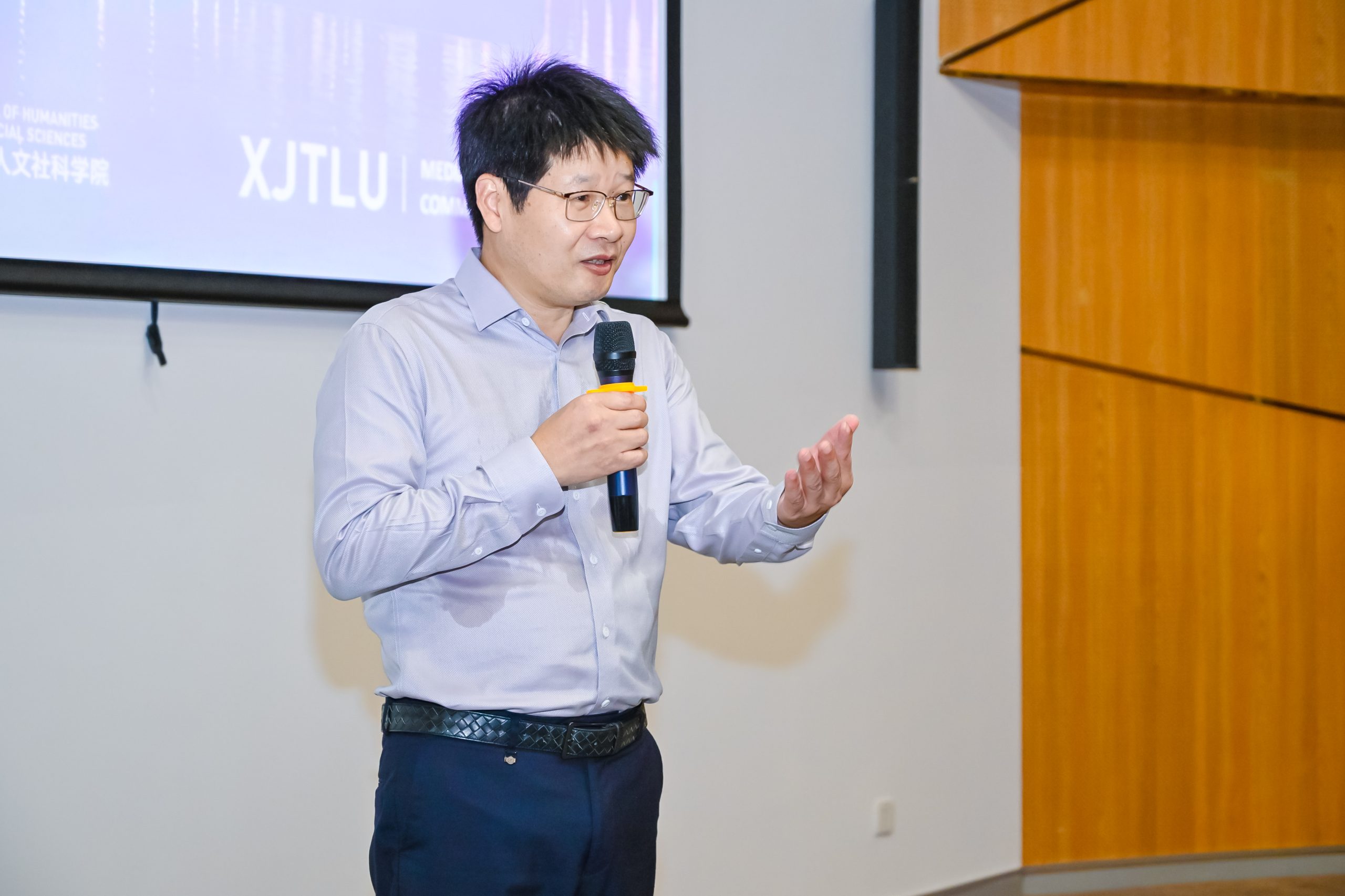
XJTLU’s Vice-President for Academic Affairs Professor Zhoulin Ruan delivers welcome remarks at the conference.
Delivering his welcome speech, XJTLU’s Vice-President for Academic Affairs Professor Zhoulin Ruan said AI is changing communication mainly from human-to-human to increasingly human-machine interactions. He urged researchers and users to approach AI-generated content critically. “We should always be a little suspicious of what we receive from AI,” he said.
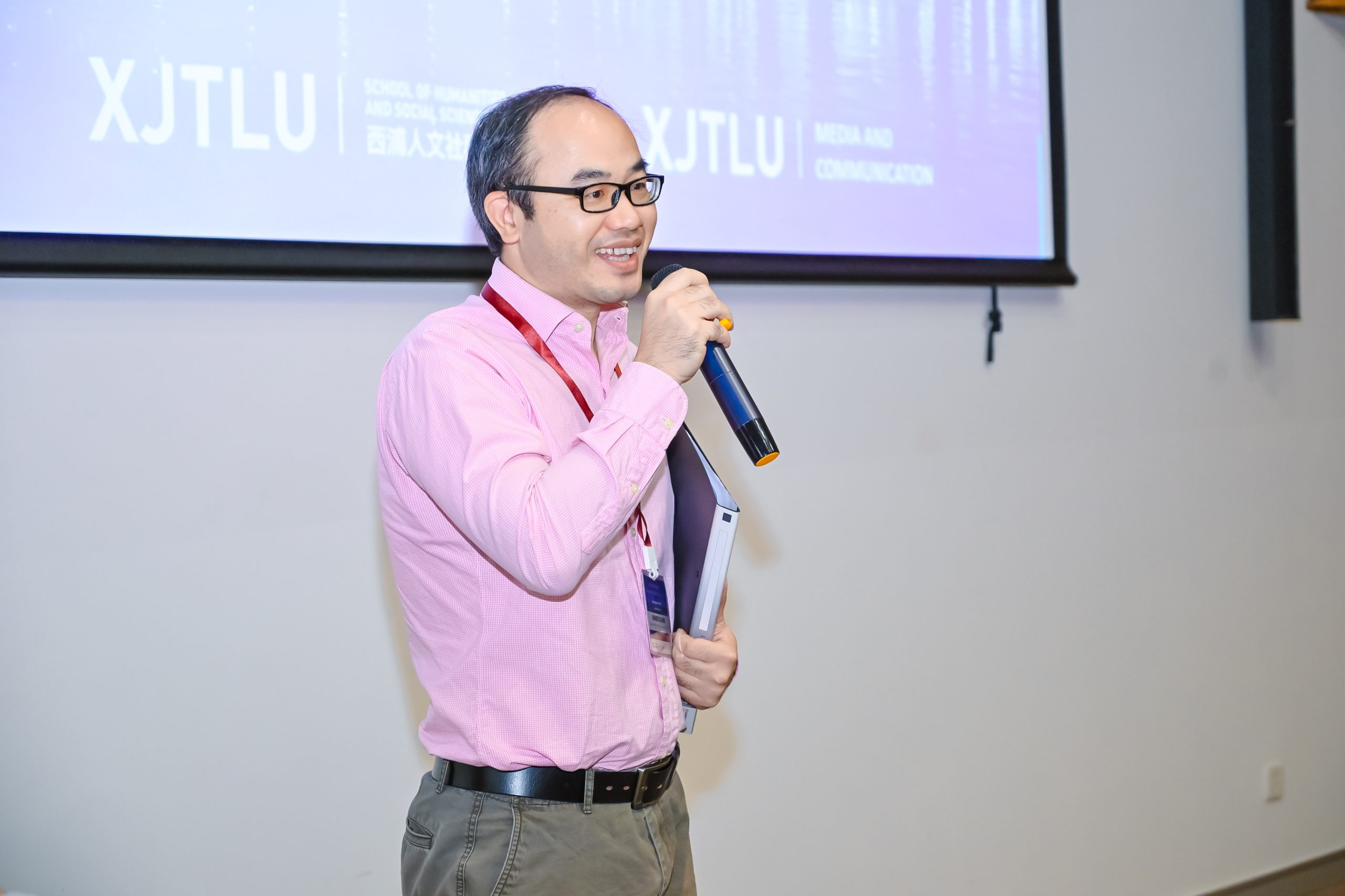
Senior Associate Professor Dr Xianwen Kuang, Acting Head of XJTLU’s Department of Media and Communication, speaks at the conference opening.
The Acting Head of the DMC, Senior Associate Professor Dr Xianwen Kuang, said the conference reflected the department’s broad research interests and could serve as a catalyst for dialogue and future collaboration across disciplines.
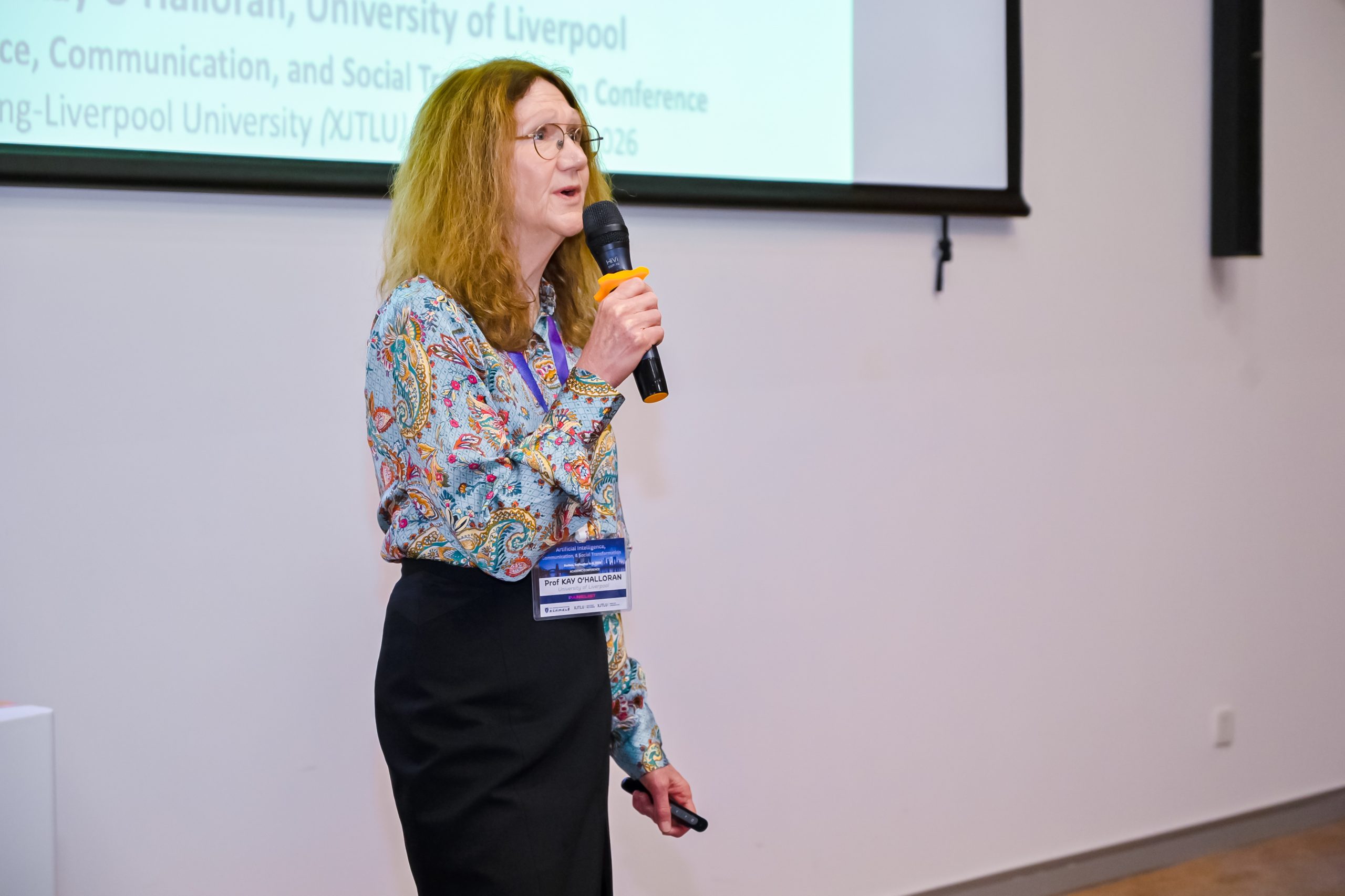
Professor Kay O’Halloran of the University of Liverpool delivers her keynote at the conference.
In the first keynote, Professor Kay O’Halloran of the University of Liverpool examined the opportunities and challenges of multimodal AI. She explored how AI systems process different forms of communication, including text and images, and questioned whether machines can interpret meaning in the same way as humans. She also stressed the importance of context in communication.
Professor O’Halloran illustrated this challenge through a study of AI-based hate speech moderation during the COVID-19 pandemic. The study showed that AI systems could produce false positives and miss cases when they failed to fully capture contextual meaning. “These systems are algorithms. They are not thinking and they are not human,” she said.
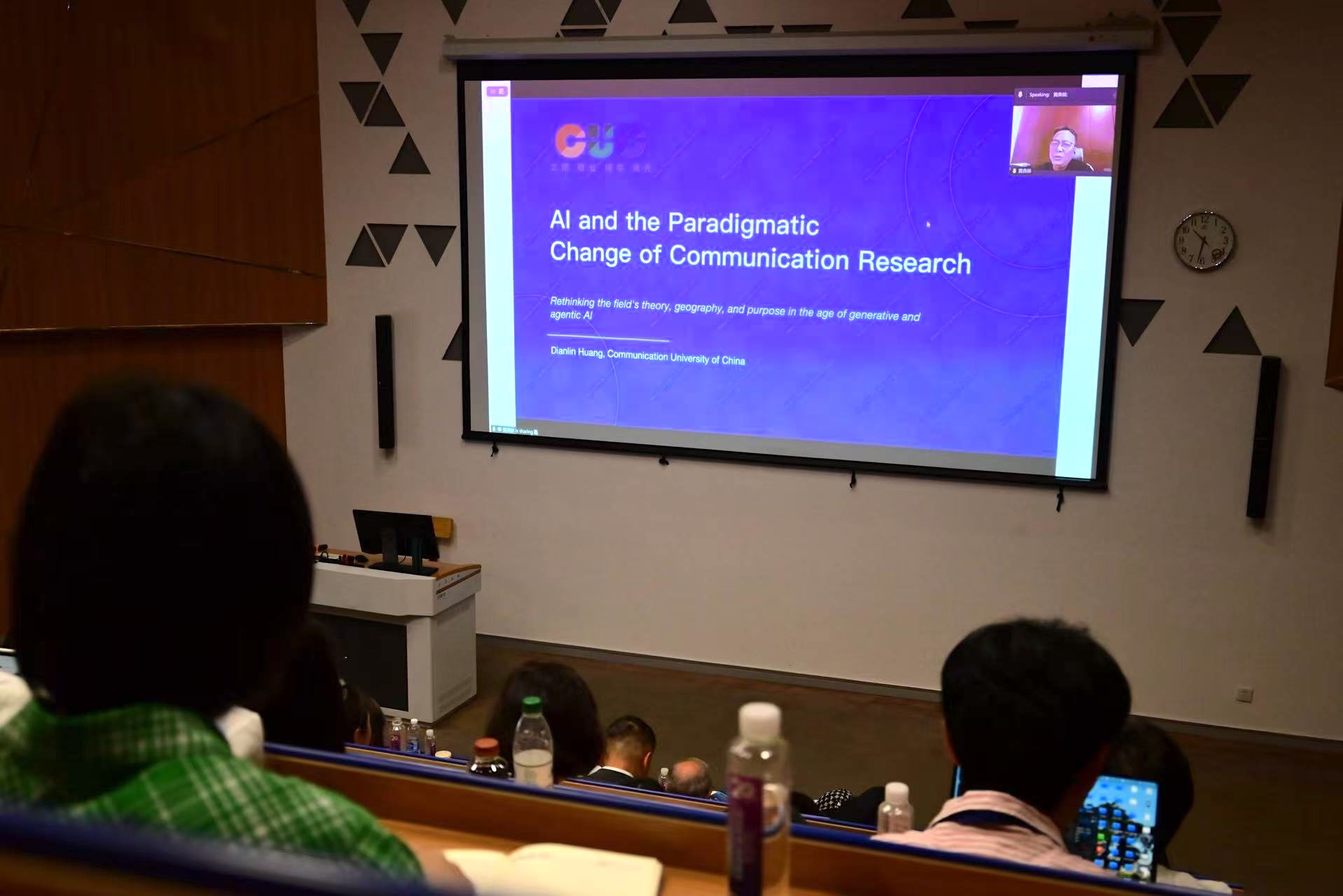
Professor Dianlin Huang of Communication University of China gives keynote speech online at the conference
The second keynote, delivered by Professor Dianlin Huang of Communication University of China, focused on how AI is changing communication research itself. He argued that AI is no longer simply a tool used in communication, but is increasingly becoming part of the communication process itself. This shift is prompting scholars to rethink established concepts, research objects and theoretical frameworks.
Professor Huang structured his keynote around three areas: mapping current AI-communication research, identifying gaps in the existing literature and considering what AI may change or leave unchanged. He highlighted gaps in research on US-China divergence and the Global South, as well as the pressure AI is placing on established ideas about creativity, authorship and originality. He stressed the continued importance of access, costs, benefits and control over AI infrastructure.
Across the parallel sessions, attendees examined AI’s impact on journalism, human-AI relationships, education, creative industries, labour and governance. Topics ranged from AI news anchors and AI companionship to misinformation, AI literacy and workplace transformation, reflecting the breadth of the conference’s interdisciplinary approach.
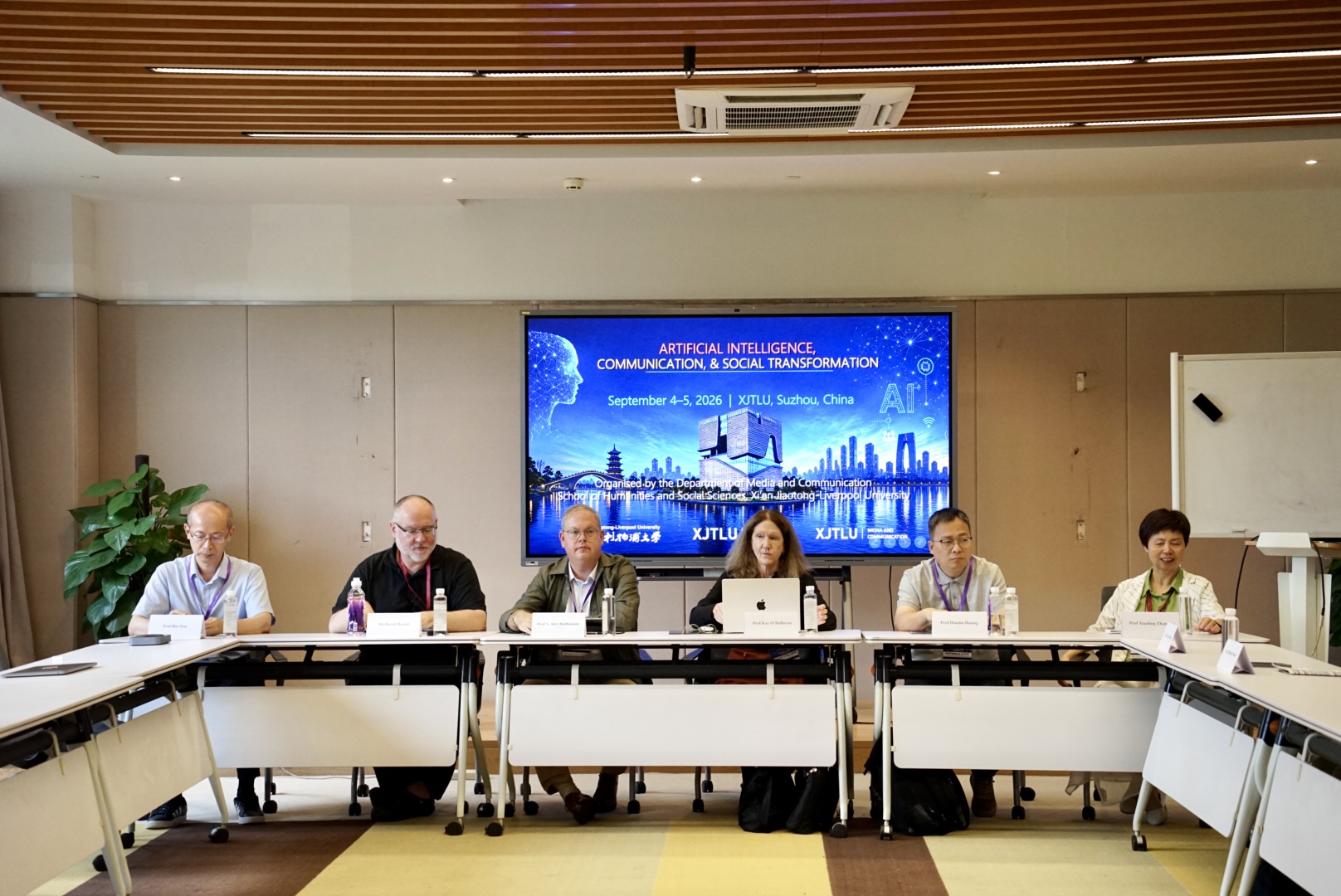
Roundtable speakers, from left to right: Professor Bin Zou (XJTLU); Dr David Herold (XJTLU); Professor S. Alex Ruthmann (New York University Shanghai); Professor Kay O’Halloran (University of Liverpool); Professor Dianlin Huang (Communication University of China); and Professor Xiaoling Zhang (XJTLU).
The conference concluded with a roundtable discussion titled “Where is AI Taking Us? Communication and Social Transformation in the Years Ahead,” hosted by Professor Xiaoling Zhang, dean of XJTLU’s School of Humanities and Social Sciences. The discussion brought together Professor O’Halloran, Professor Huang, Professor S. Alex Ruthmann of New York University Shanghai, Associate Professor Dr David Herold of DMC and Professor Bin Zou of XJTLU’s Department of Applied Linguistics.

Professor Xiaoling Zhang, dean of XJTLU’s School of Humanities and Social Sciences, speaks during the roundtable discussion.
Responding to the question of where AI is taking society, Professor Huang said he did not have a definitive answer, but argued that human beings would continue to have roles and advantages that machines cannot replace. While AI may take over routine computational tasks, he said, human communication and face-to-face interaction would remain important.

Professor Dianlin Huang of Communication University of China speaks during the roundtable discussion.
Professor O’Halloran shifted the discussion towards governance and responsibility, arguing that society should not simply accept the direction of AI development. She called for greater researcher access to AI systems and data, stronger control over personal data and continued research into AI’s wider social, economic, cultural and political effects.
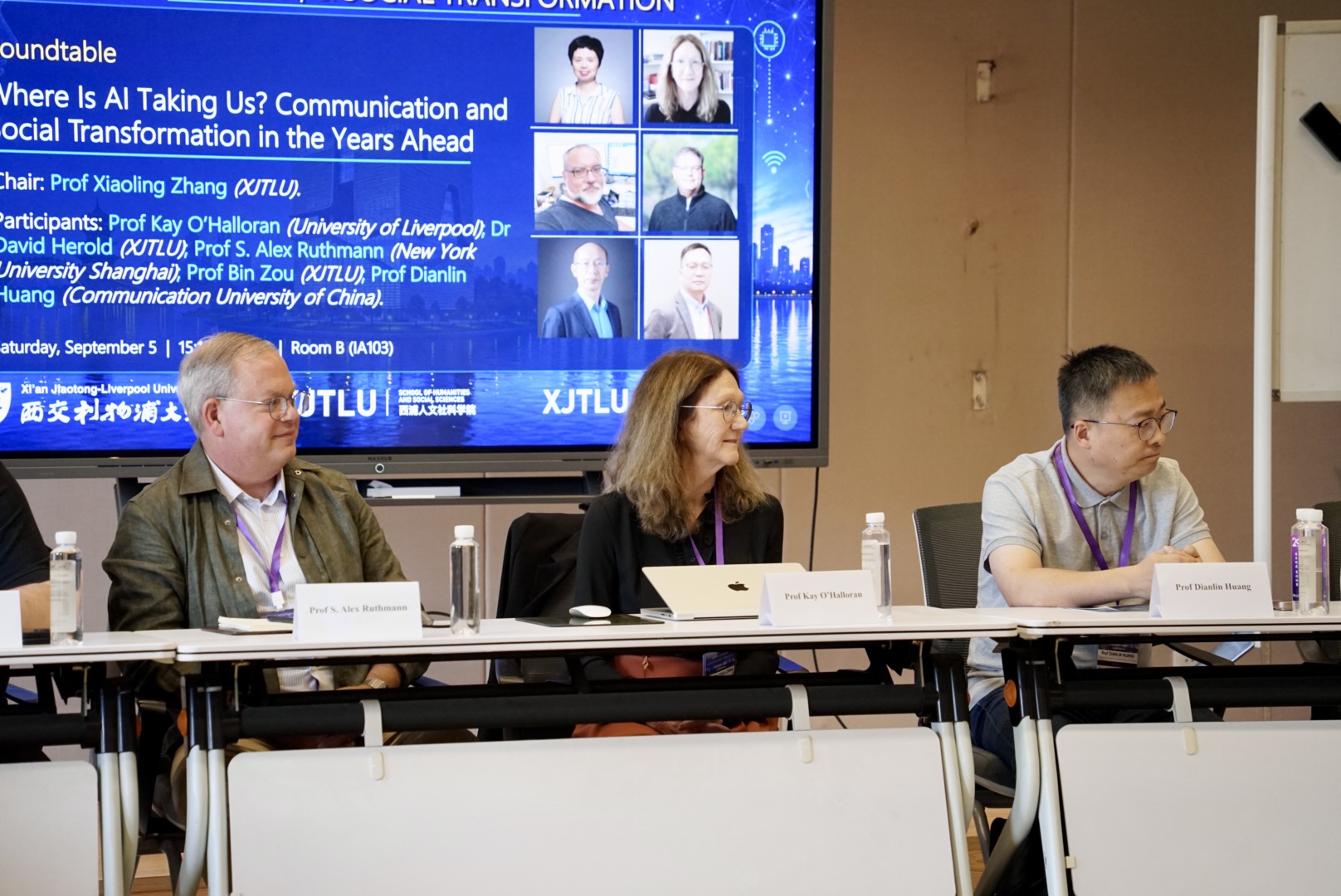
Professor Kay O’Halloran of the University of Liverpool speaks during the roundtable discussion.
Professor Ruthmann approached the question from education and creative technology, arguing that universities should not confuse the completion of assignments with learning. He noted that students use AI differently, with some using it to overcome technical barriers and others relying on it to replace their own thinking.
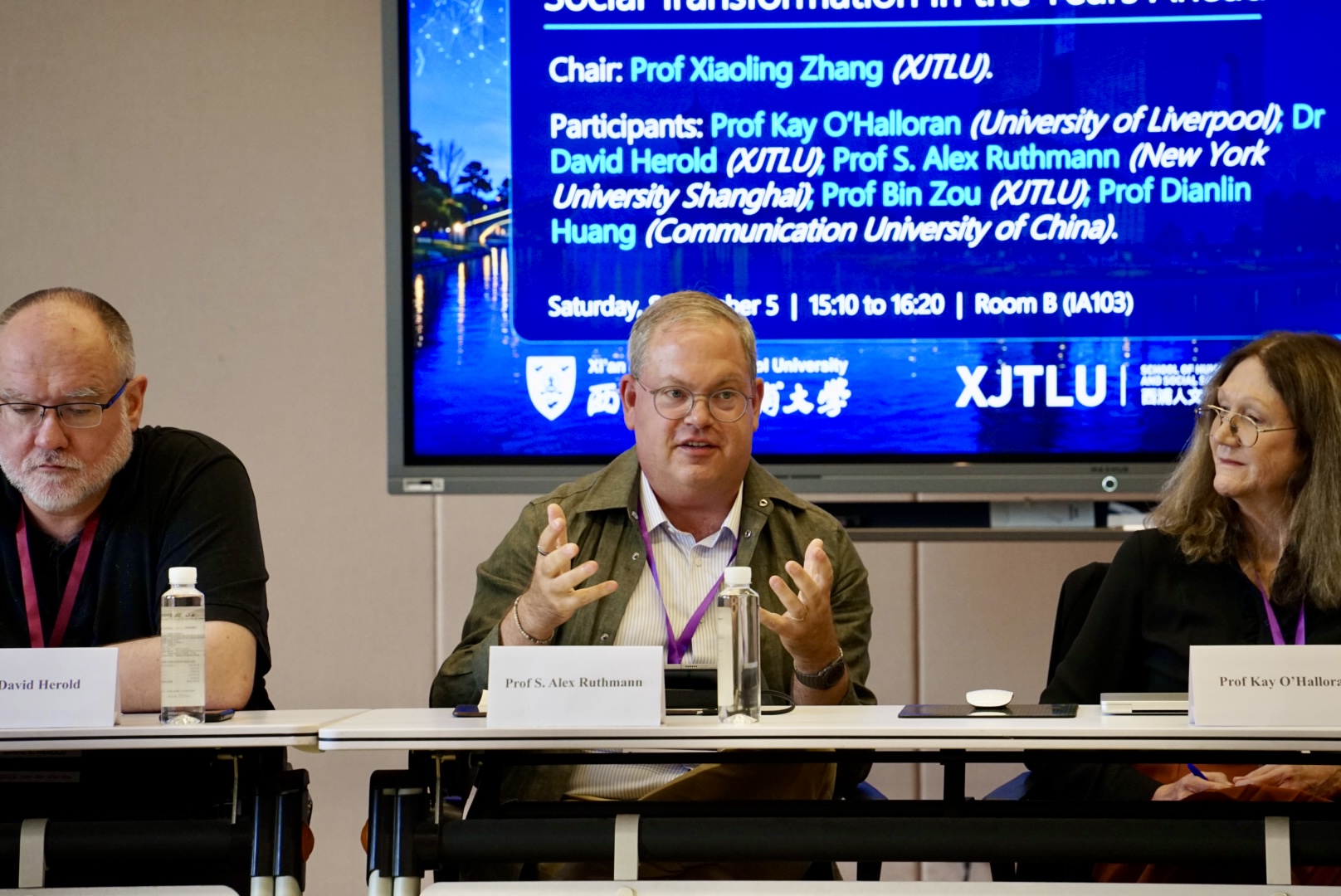
Professor S. Alex Ruthmann of New York University Shanghai speaks during the roundtable discussion.
Dr Herold took a more sceptical view of AI’s agency. He described AI as a tool that people use to achieve particular goals, with its effects depending on their choices. He linked this to questions of responsibility and employment, including the possibility that employers may reconsider roles as AI takes on more tasks and stressed the importance of human responsibility for decisions involving AI.
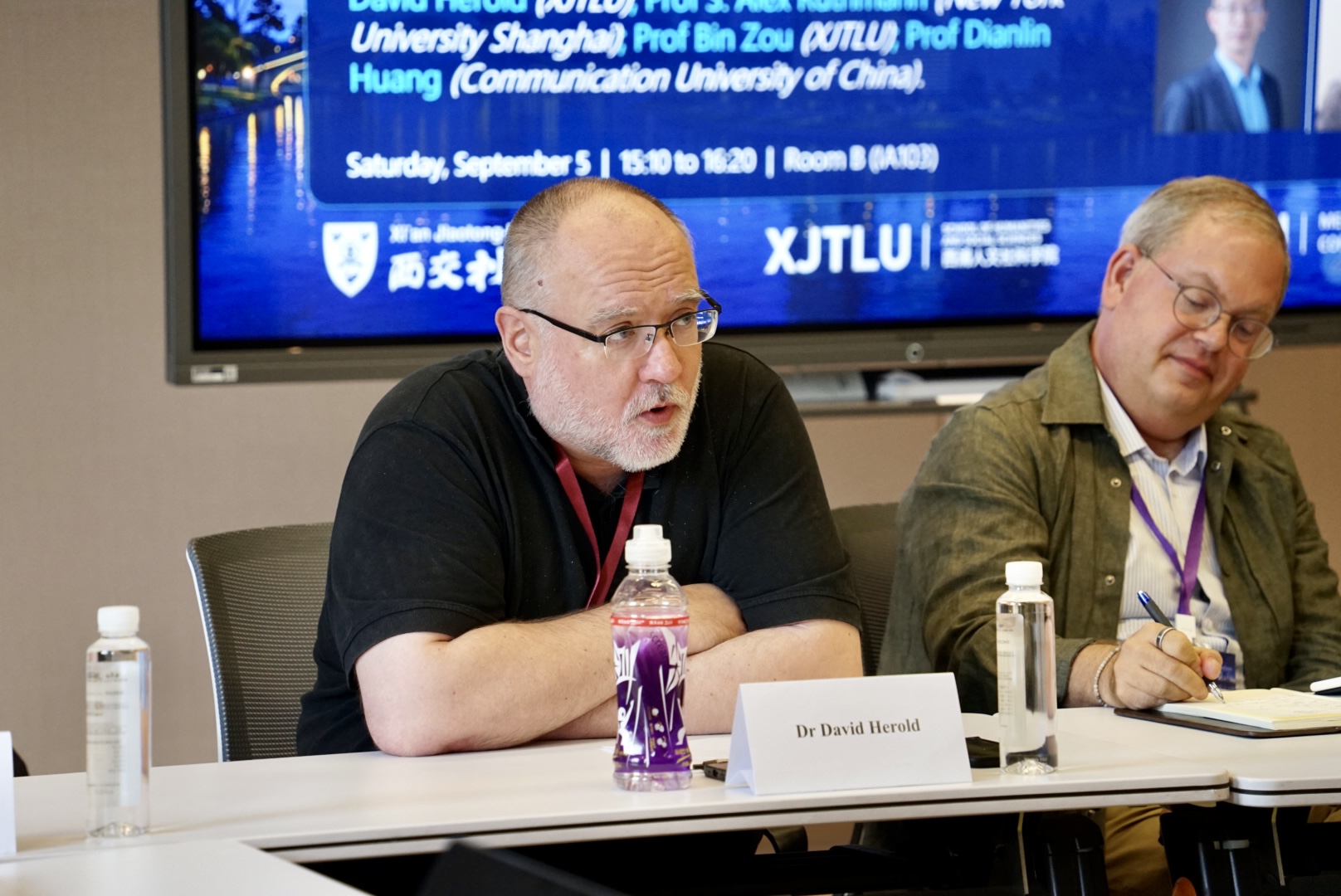
Associate Professor Dr David Herold of DMC speaks during the roundtable discussion.
Professor Zou offered a practical example from language education, showing a language programme that combines AI-generated feedback with teacher feedback. He stressed the continuing role of educators in helping students understand both the use and limitation of AI.
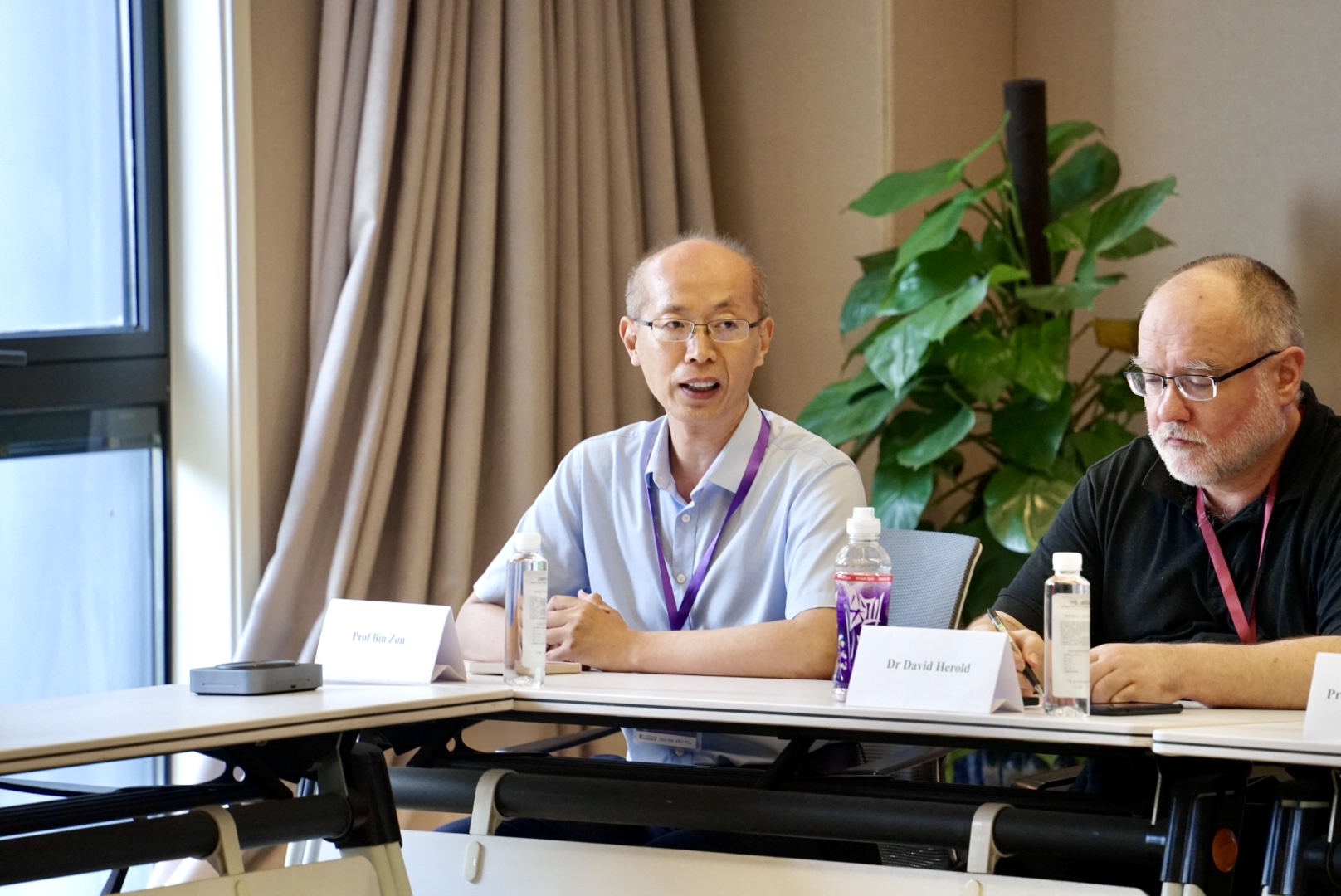 Professor Bin Zou of XJTLU’s Department of Applied Linguistics speaks during the roundtable discussion.
During the Q&A, speakers pointed to the need for universities to strengthen students’ AI literacy, critical thinking and ability to work without AI, and also to place greater emphasis on communication and human skills. The discussion also raised concerns about unequal access to AI tools and the need for universities to respond to changing employment demands.
Closing the conference, Dr Luk Van Mensel, associate dean for Research in XJTLU’s School of Humanities and Social Sciences, reflected on the breadth of perspectives shared over the two days and highlighted the role of humanities and social sciences in engaging with AI.
Conference Chair Professor Prieler thanked the organising team and student volunteers, and also noted the range of perspectives and quality of presentations and the possibility of developing a book project based on discussions from the conference.
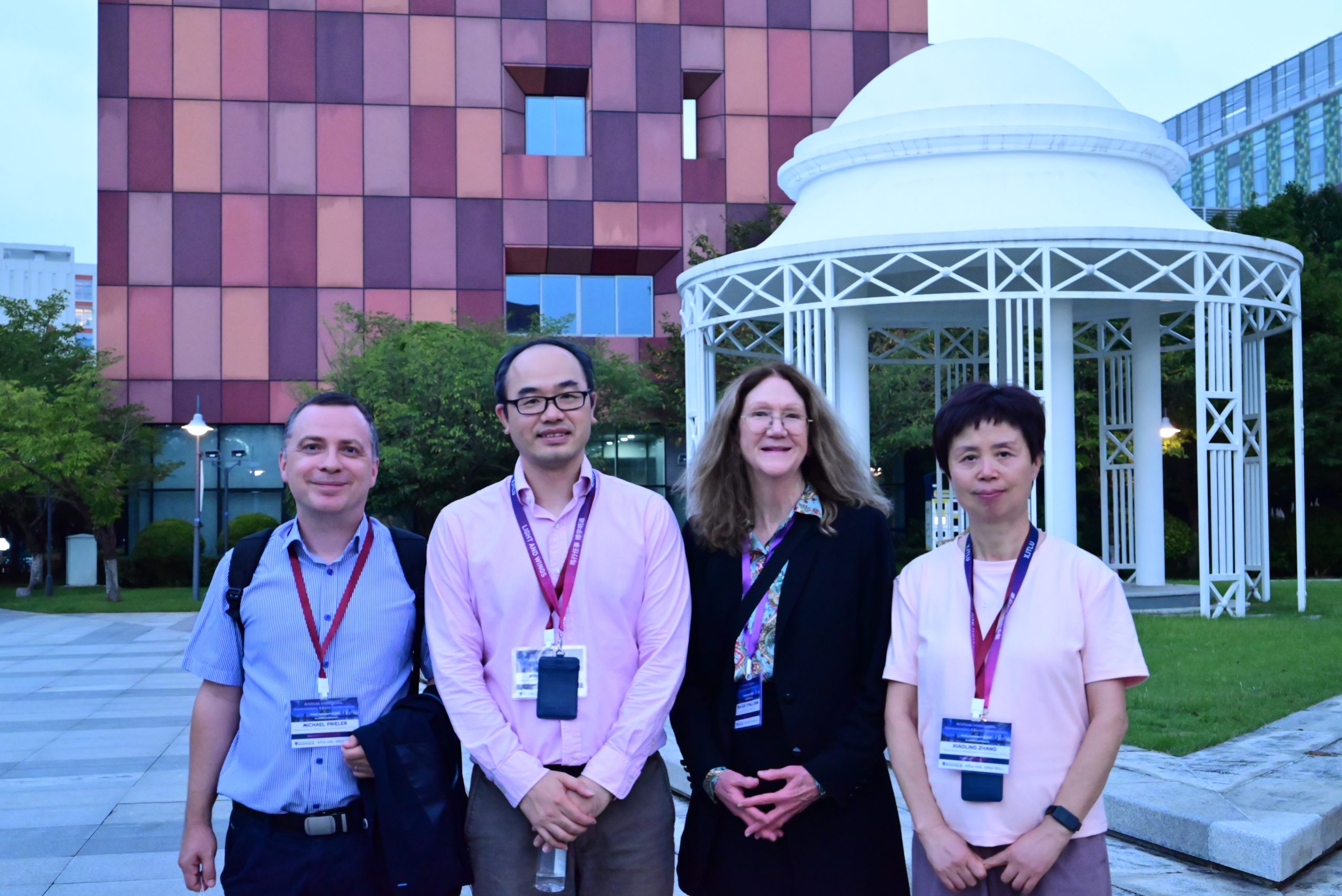
Conference participants during a campus tour at XJTLU, from left to right: Professor Michael Prieler (XJTLU); Dr Xianwen kuang (XJTLU); Professor Kay O’Halloran (University of Liverpool); and Professor Xiaoling Zhang (XJTLU). Photo by Shuting Cao.
Text by Danning Zhao / DMC Newsletter.
Courtesy of the Scholastic Journalism Team,
21 Sep 2026