In late August 2026, as delegates gathered in Ulaanbaatar for the 17th session of the UN Convention to Combat Desertification (COP17), Dr Niklas Weins, Assistant Professor in the Department of International Studies at XJTLU, was on the ground as an accredited academic observer.
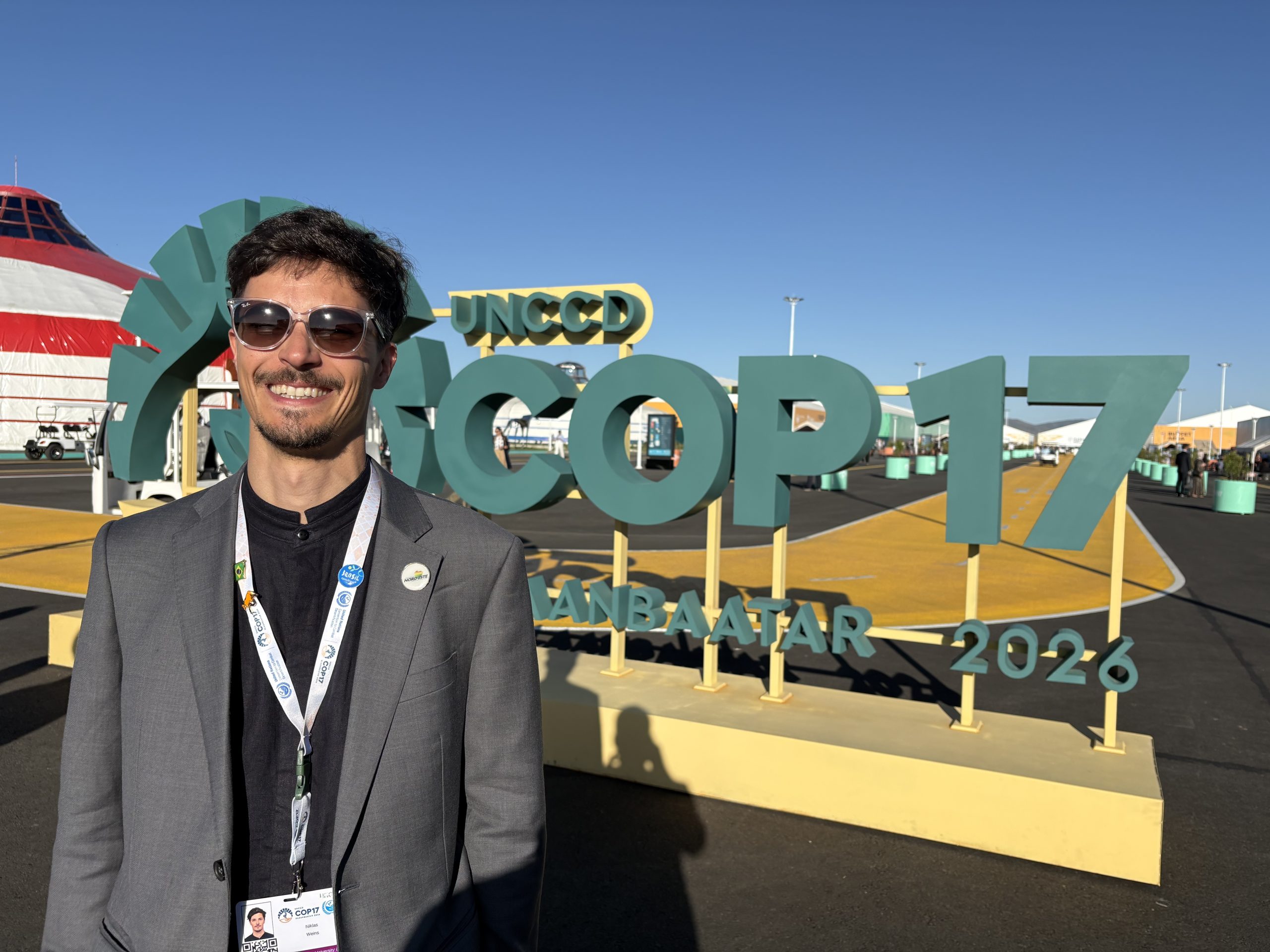 As part of a group of academic observers with Wageningen University & Research (WUR) in the Netherlands, Dr Weins accompanied the official program that brought together pastoralists, policymakers, scientists, and diplomats from 197 Parties. His particular attention was on how China and Brazil are framing the future of sustainable land management, questions which are part of his project “Sustainability and greening trends in Brazil-China relations“ funded by XJTLU’s Research Development Fund (RDF).
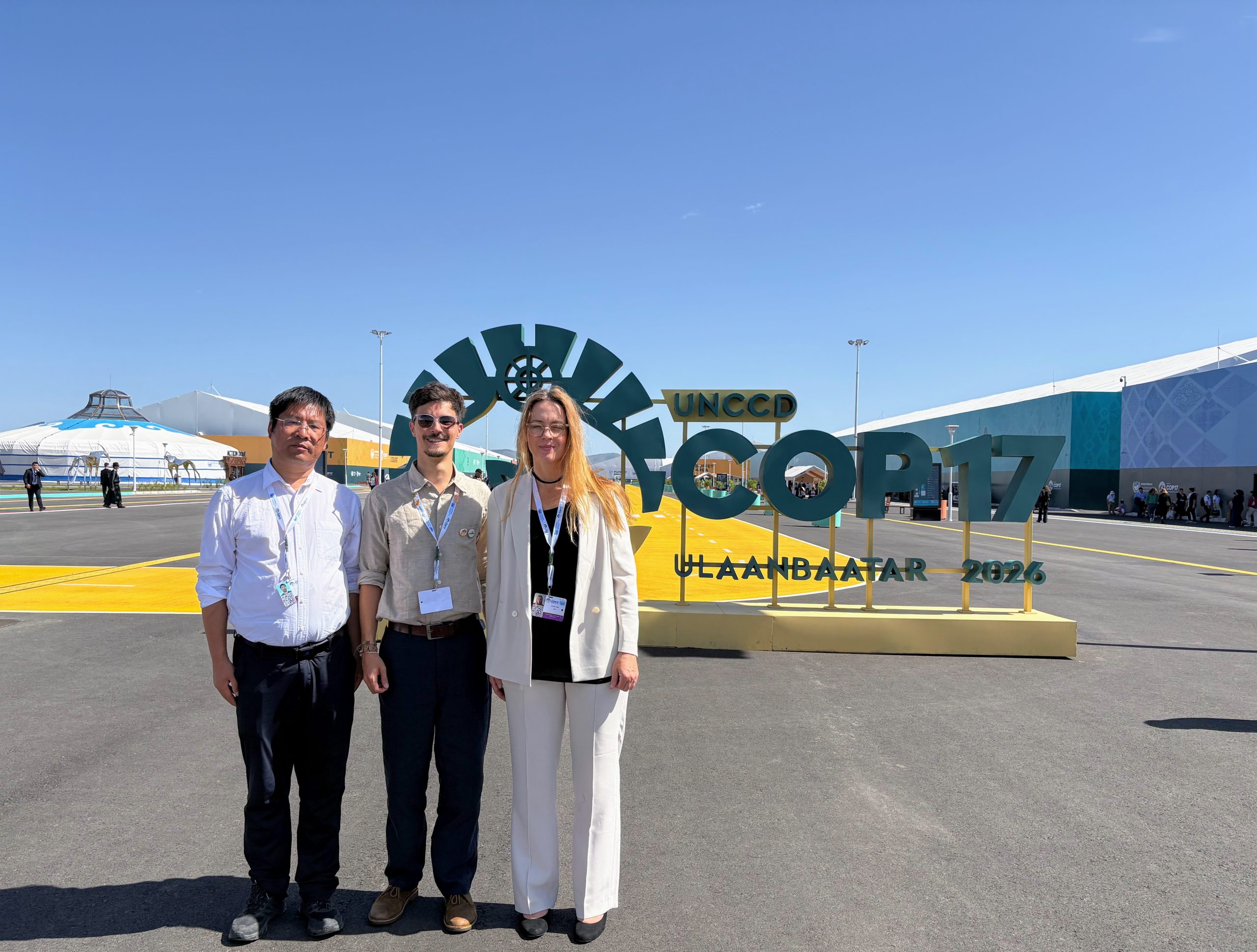
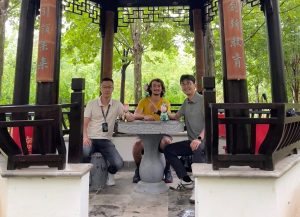
The research team formed by Prof. Chen Ruishan (Shanghai Jiaotong), Dr. Niklas Weins (XJTLU) and Dr. Annah Zhu (Wageningen University & Research) at the COP17 in Ulaanbaatar.
The conference, themed “Restoring Land, Restoring Hope” is taking place in the International Year of Rangelands and Pastoralists, against the striking backdrop of the Mongolian steppe, where land degradation affects nearly 77% of the territory. For Dr Weins, whose research examines the political economy of China-Brazil agricultural relations, the setting offered a rare opportunity to observe two major environmental powers from the Global South as they presented competing visions of ecological restoration."The UNCCD is often called the 'orphan convention' and compared to the other Rio Conventions’ COPs on climate and biodiversity, gets much less attention" Dr Weins noted. "But that makes it all the more interesting. This is where questions of land tenure, finance, and whose knowledge counts are fought out with fewer headlines but very real consequences for carbon stocks and food systems."During the first week, Dr Weins attended a series of side events in the Chinese pavilion hosted by the National Forestry and Grassland Administration and Beijing Forestry University, including the flagship "China's Green Great Wall Showcase" and a session on the "Dengkou Model" of eco-industry integration. He also accompanied his former PhD co-supervisor, Dr. Annah Zhu from WUR, in side events on the Senegalese Great Green Wall Program, and in exploring how China's domestic experience with large-scale reforestation is being presented to countries of the Global South. Together with collaborator Prof. Chen Ruishan from Shanghai Jiaotong University and Dr. Thomas White from King’s College London, they also attended a technical field trip to Khustai National Park organized by The Nature Conservancy where Mongolian wild horses can be found."The future of land governance is being written in venues like this COP, and it matters enormously whose voices are in the room. As an academic observer I track what is being promised, who is being heard, and who is not."
In the second half of his participation at COP17, he followed closer what Brazil is bringing to the table. The tropical country, similar to China, covers many different climate zones and actually has long-standing experience and interest in combatting desertification. Dr Weins attended events hosted in the Brazil pavilion and accompanied researchers and representatives of the Northeast Consortium (Consórcio Nordeste), including at a session on climate finance in the Caatinga biome, the "EthnoCaatinga" event on territorial solutions for land restoration and women's leadership and the announcement of Brazil’s Land Degradation Neutrality (LDN) target by Minister of the Environment and Climate Change, João Paulo Capobianco. The country's semiarid Northeast region presented itself as a "global laboratory" for dryland resilience and there was great interest in China’s large-scale solutions to land restoration.
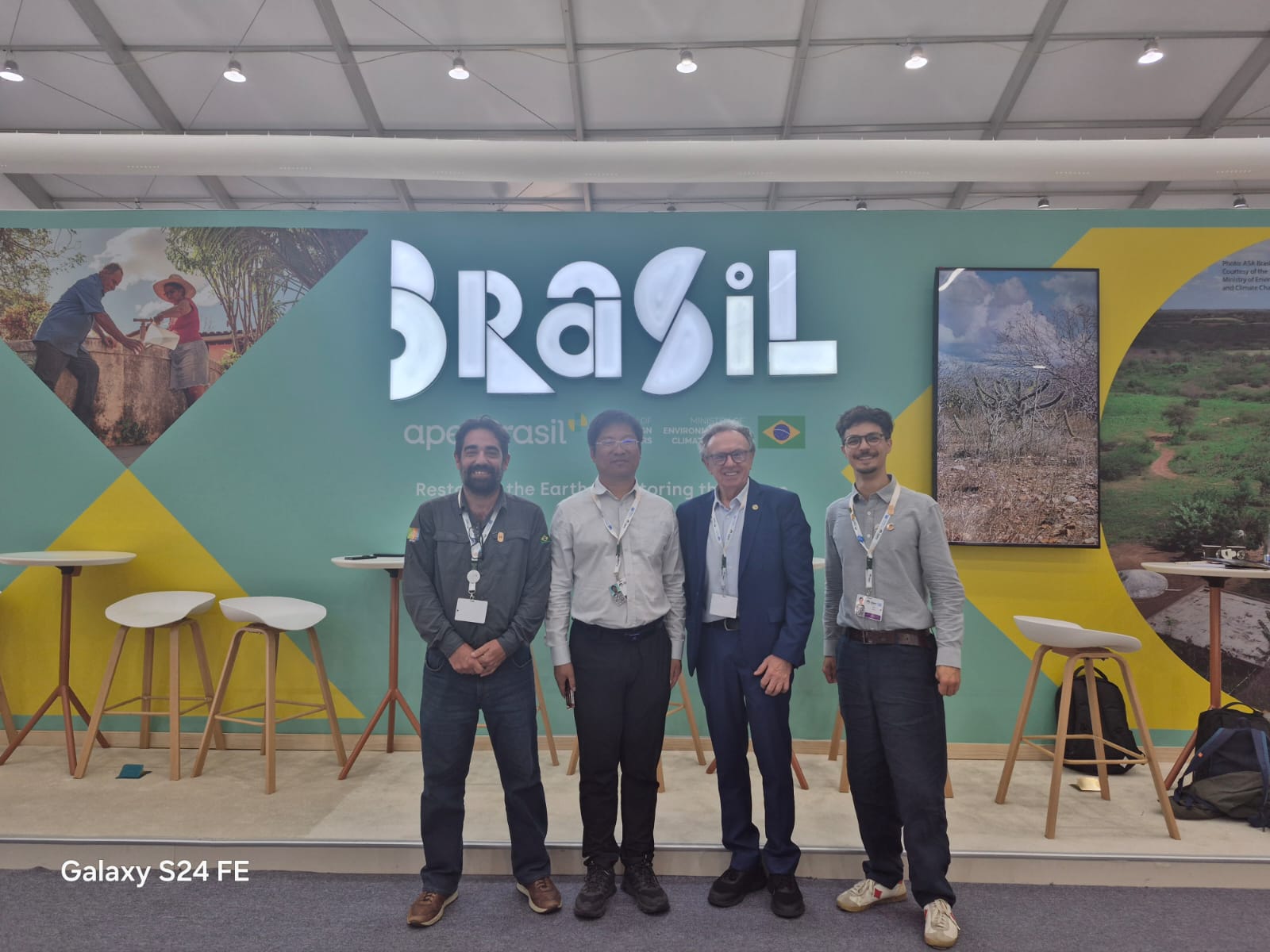
Prof. Renato Rodrigues (Universidade Federal do Vale do São Francisco), Prof. Chen (Shanghai Jiaotong), and Nelton Friedrich, Executive Director of the Brazilian Ministry of Integration and Regional Development, after a discussion at the Brazil pavillion with Dr. Weins (left to right)."What struck me most was the contrast in framing," Dr Weins reflected. "Under the ‘Ecological Civilization' paradigm, China presents its state-led model, with significant space for science, and scalable solutions that partners from industries, startups and non-government organizations take an active role in. Brazil, on the other hand, promotes a stronger territorial, multi-stakeholder approach that is rooted in local knowledge but that similarly promotes ecological restoration hand in hand with rural development. Both offer global solutions, but they start from very different assumptions about how the land is governed and at which scales solutions can be implemented."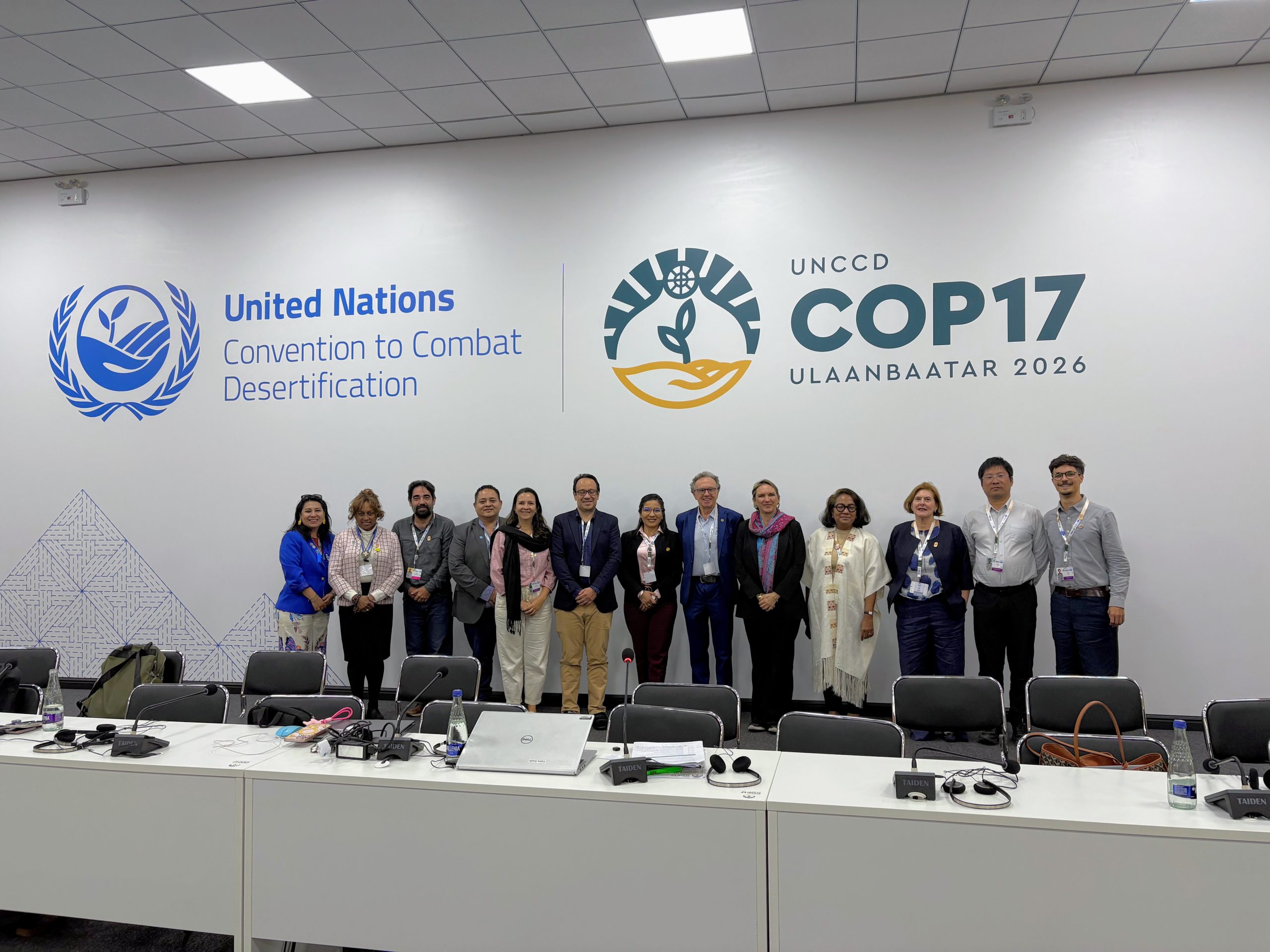 Dr. Weins and Prof. Chen (right) at the session "Addressing Climate Change and Desertification: Solutions from the Global South” organized by the Brazilian Ministry of Integration & Regional Development, with speakers from EMBRAPA, the Ministry of Environment Bolivia, and the UN focal point for the Global South.
The trip also yielded insights directly relevant to his teaching at XJTLU. Just days before departing for Mongolia, Dr Weins had served as a remote discussant in a graduate course at the State University of Campinas (Unicamp) in Brazil, where he engaged with researchers on the history of the UNCCD and the politics of drought governance. The classroom debate on whether the convention's bottleneck is political will or fiscal capacity found immediate echoes in the negotiation rooms of Ulaanbaatar, where a proposed 30 percent budget increase for the Secretariat met resistance from donor countries."This was my second participation in a COP and it showed me how the theoretical debates in global environmental governance play our in practice, experiences that I am sharing with my students in INS415 Global Environmental Policy" Dr Weins said."We read about the history of the environmental regime and North-South finance gaps in the classroom. At COP17, I watched those same dynamics play out in real time — from Russia's procedural objections to Brazil's defence of implementation budgets for developing countries."The visit also feeds directly into Dr Weins' ongoing research on the "greening" of China-Brazil trade, funded through XJTLU's RDF project 24-01-031. He plans to publish findings from observations and field work in upcoming journal articles. A co-authored book chapter on China’s role in Brazil’s green transition, in publication at Cambridge University Press (late 2026) will present initial insights.Content from Niklas Weins
Dr. Weins and Prof. Chen (right) at the session "Addressing Climate Change and Desertification: Solutions from the Global South” organized by the Brazilian Ministry of Integration & Regional Development, with speakers from EMBRAPA, the Ministry of Environment Bolivia, and the UN focal point for the Global South.
The trip also yielded insights directly relevant to his teaching at XJTLU. Just days before departing for Mongolia, Dr Weins had served as a remote discussant in a graduate course at the State University of Campinas (Unicamp) in Brazil, where he engaged with researchers on the history of the UNCCD and the politics of drought governance. The classroom debate on whether the convention's bottleneck is political will or fiscal capacity found immediate echoes in the negotiation rooms of Ulaanbaatar, where a proposed 30 percent budget increase for the Secretariat met resistance from donor countries."This was my second participation in a COP and it showed me how the theoretical debates in global environmental governance play our in practice, experiences that I am sharing with my students in INS415 Global Environmental Policy" Dr Weins said."We read about the history of the environmental regime and North-South finance gaps in the classroom. At COP17, I watched those same dynamics play out in real time — from Russia's procedural objections to Brazil's defence of implementation budgets for developing countries."The visit also feeds directly into Dr Weins' ongoing research on the "greening" of China-Brazil trade, funded through XJTLU's RDF project 24-01-031. He plans to publish findings from observations and field work in upcoming journal articles. A co-authored book chapter on China’s role in Brazil’s green transition, in publication at Cambridge University Press (late 2026) will present initial insights.Content from Niklas Weins