





24 Sep 2026


The School of Mathematics and Physics (SMP) at Xi’an Jiaotong-Liverpool University (XJTLU) has welcomed its first cohort of students to its new BSc Applied Physics programme.
A welcome event was held on 22 September, bringing students together with faculty members from the Department of Physics. Approved by China’s Ministry of Education, the programme began admitting students for the first time this academic year. The event was hosted by Dr Tiago Adorno, Programme Lead for Applied Physics.
Exploring the links between mathematics and physics
Professor Jintai Ding, Dean of SMP, welcomed the new students and reflected on the close relationship between mathematics and physics. Drawing on his own research in post-quantum cryptography, he highlighted the interdisciplinary nature of the two fields and encouraged students to explore their connections.
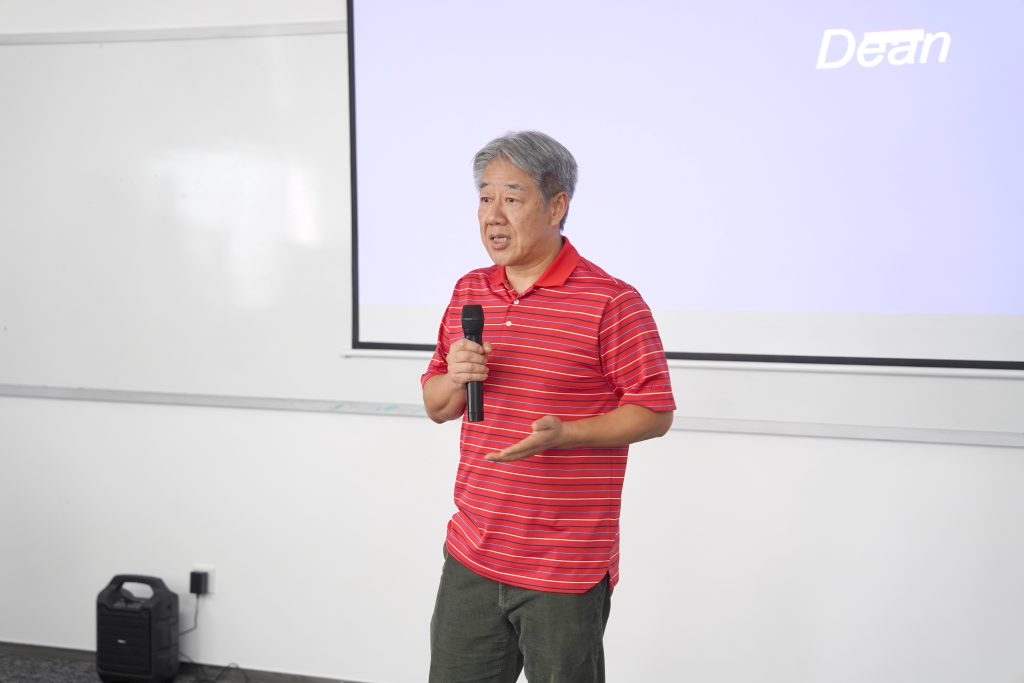
Professor Ding also discussed how artificial intelligence is changing the way people learn and work, encouraging students to develop the skills needed to use AI tools effectively.
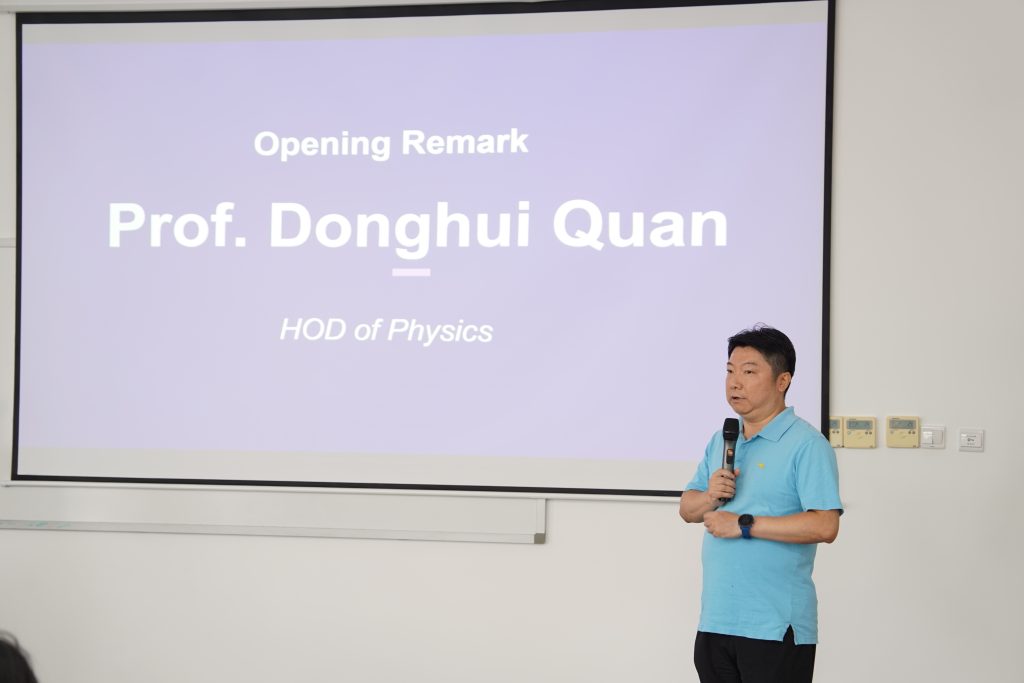
Professor Donghui Quan, Head of the Department of Physics, thanked colleagues who contributed to the development of the programme. He highlighted the benefits of having mathematics and physics within the same School, giving students a broader academic foundation and opportunities to explore across disciplines.
Combining theory with practical skills
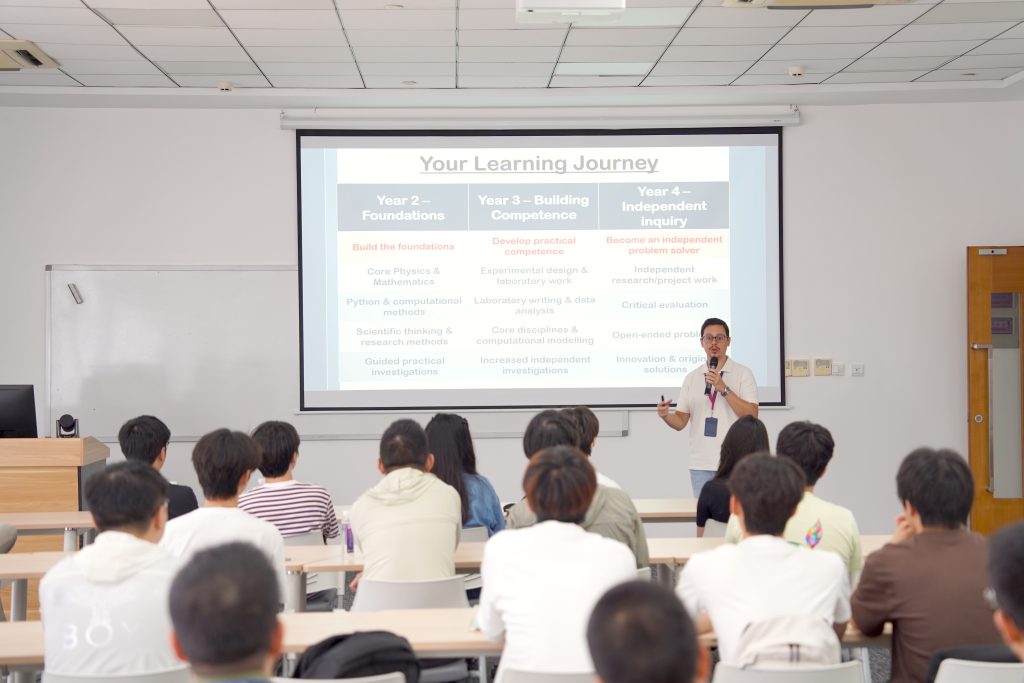
Dr Adorno described the programme as a combination of theory and practice. Alongside a strong foundation in physics, students will develop laboratory, computational modelling and research skills.
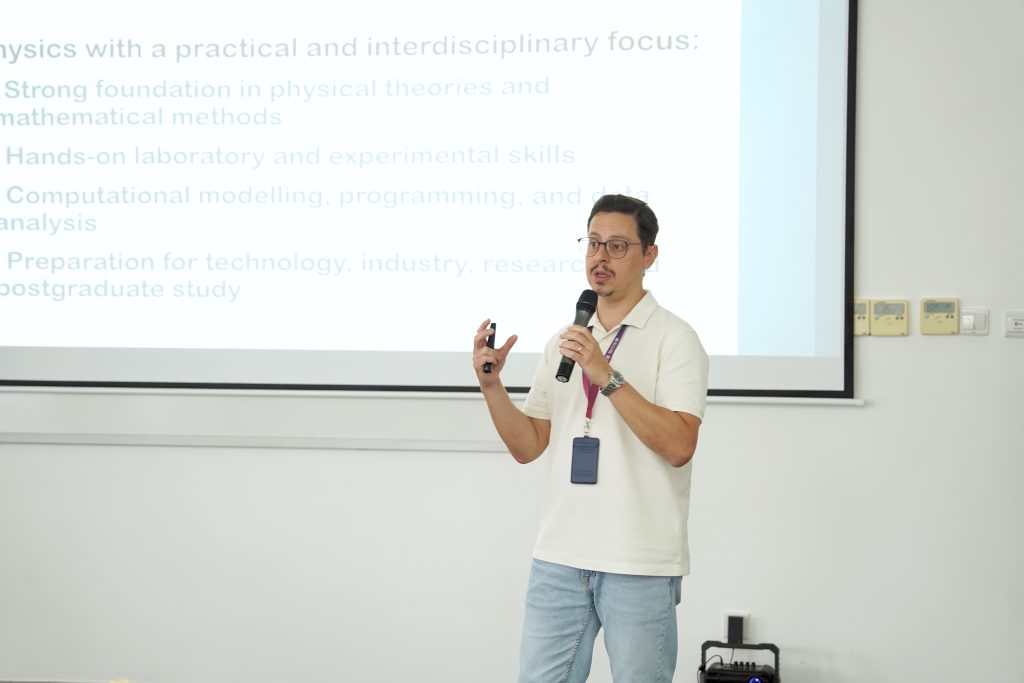
The four-year curriculum begins with physics and mathematics fundamentals, together with programming, computational methods and research skills. Students then progress to modern physics and systematic laboratory training, followed by core areas including classical mechanics, thermodynamics, vibrations and waves. The programme concludes with statistical mechanics, solid-state physics, and a set of optional modules followed by a two-semester final-year project.
Flexible pathways for further study
The programme offers three areas of focus: computational physics, materials physics and applied quantum physics. Students can explore these through elective modules while also pursuing other areas of interest.
Graduates can continue their studies through a 2+2 pathway with relevant programmes at the University of Liverpool, or apply for postgraduate programmes in areas such as astrophysics, computational and data science, engineering and medical physics. Their skills in physics, mathematics, computing and analysis can also support careers in fields including finance and consulting.
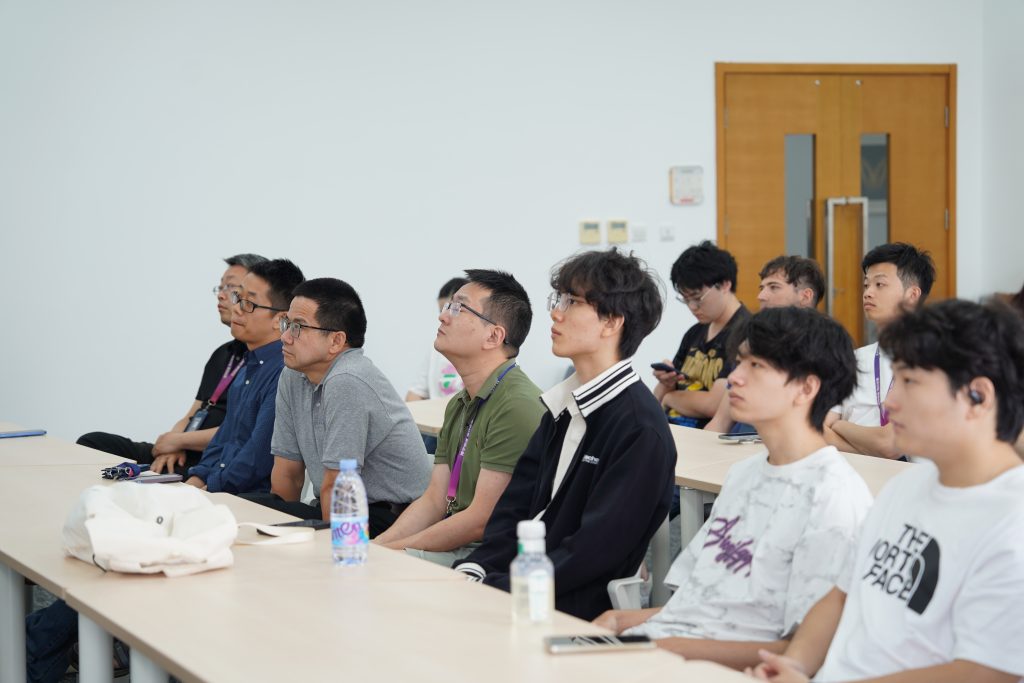
Meeting the faculty and exploring research
Faculty members introduced their research areas during the event, covering fields including computational astrophysics, galaxy formation, astrochemistry, condensed matter physics, energy-storage materials, semiconductor devices and medical applications.
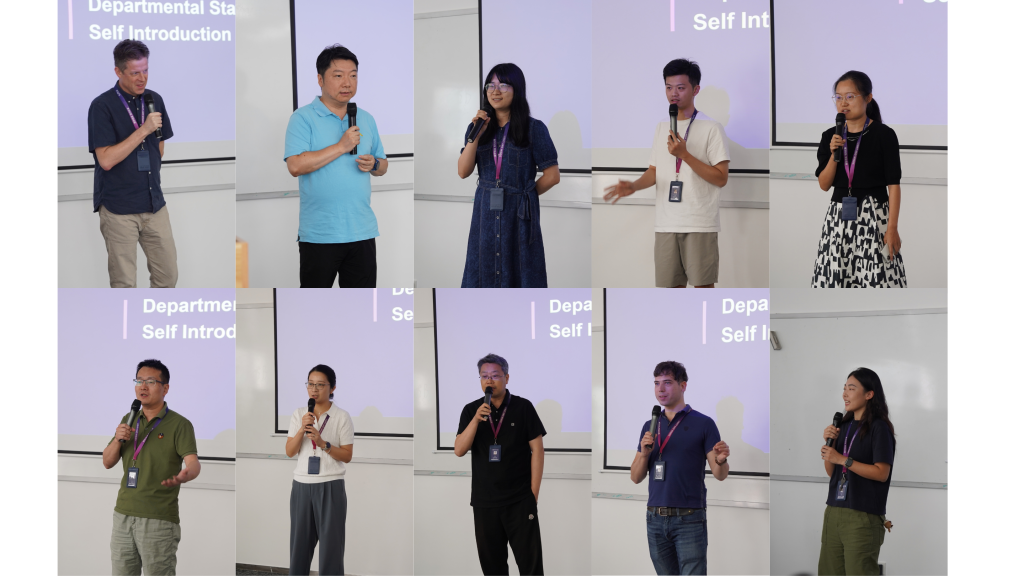
Faculty members encouraged students to make use of office hours to discuss their studies and interests. Students also shared their experiences of the first few weeks at XJTLU, with some describing the courses as “very enriching” and others noting their early exposure to research and laboratory work.

With its first cohort now enrolled, the Applied Physics programme has begun its undergraduate teaching. Through theoretical study, laboratory training and research experience, it will provide students with a foundation for further study and careers across physics and related fields.
By Qinru Liu
24 Sep 2026