






A conversation between an external mentor and a student

15 Oct 2026


Have you ever found yourself relentlessly pursuing the “optimal track” in life?
Have you ever complained that your internships or projects are nothing but grunt work?
Has a “trivial task” ever suddenly opened your eyes to the bigger picture?
Preface
On 19 September, Zhimin Gou, external mentor at Xi’an Jiaotong-Liverpool University (XJTLU), hosted a virtual meeting with 10 undergraduate and postgraduate students newly matched through the annual mentor-student matching scheme, to talk through their concerns and puzzles. Yiheng Lin, a 2022 XJTLU graduate whom Gou mentors, co-hosted the session.
One frustration came up repeatedly: many students feel they are doing nothing but “grunt work” in their internships or project work.
After the meeting, a second-year Applied Mathematics student sent in a written reflection on whether to narrow their focus early or keep exploring options.
Having grown up in an exam-oriented education system, many Chinese students are conditioned to look for one standard answer. Add the influence of the seniors who have gone before them, and it can feel as if securing a good job is the sole purpose of university.
As a result, many young students are eager to find the “optimal career track” while still at university. They aim to lock in a career path as early as possible, afraid of taking a wrong turn.
But life is not a multiple-choice test with a single correct answer.
“We need to look beyond career choices themselves to a more fundamental question: what is the primary purpose of university? Is it to settle on a career, align with an industry, or shape a whole person?” said Zhimin Gou.
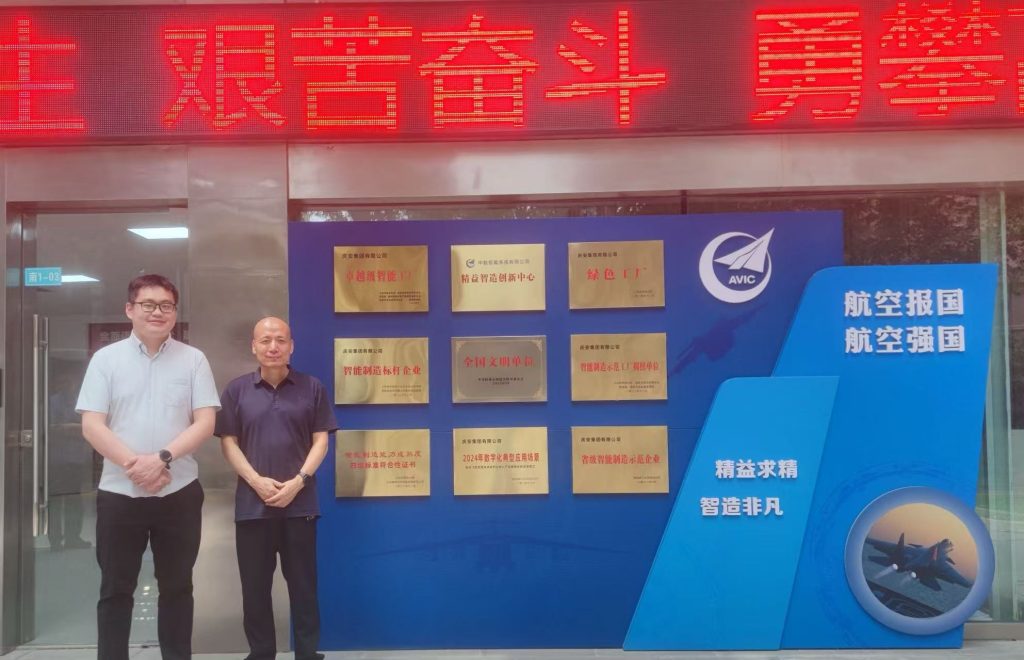
Zhimin Gou (right) and Yiheng Lin (left)
The following dialogue is published with the student’s consent and has been lightly edited. It is for anyone torn between focusing early and staying open to exploration.
Student: Hello Mr Gou, I’ve been thinking lately about whether to narrow my focus early or keep exploring. It’s quite a lot to lay out, so please don’t rush to reply – feel free to get back to me at your convenience. I’d really appreciate your insights.
I am currently studying Applied Mathematics. At the start of my first year, I believed career planning could be a fairly rational process: by gathering information, talking to senior students, and comparing different paths, I could settle on a suitable direction early on.
Over the past year, I have thought about this a great deal and gradually identified finance, data analysis, and related fields as my fairly clear career goals.
After getting involved in some research work and projects, I found them very interesting and rewarding, and my initial way of thinking has shifted somewhat.
I have come to realise that if I lock myself into a single “seemingly optimal” path too early, I may gain targeted experience and a head start sooner. But I may also miss the chance to truly explore and get to know myself, and lose the joy of trying new things, which would be a shame.
So, I would like to ask for your perspective – how do you view the value of the undergraduate and even postgraduate years?
Should I narrow my focus to one direction early and prioritise accumulating experience? Or should I maintain a degree of openness alongside a general career goal, actively exposing myself to aviation, AI, and other fields, and even joining in campus programming projects that seem unrelated to my future direction, gradually working out through hands-on practice what is worth a long-term commitment?
I’m also very curious about your personal experience. When you decided to commit your career to the aviation industry, did you settle on that direction early, or did you go through considerable exploration and shifts in your thinking before arriving at your current path?
Zhimin Gou: Personally, I believe the most important question in life is what kind of person to become, not what to do.
By “what kind of person to become”, I mean we should live up to the version of ourselves we aspire to, rather than becoming someone we would resent. That is why the process of genuine self-exploration and self-discovery you mentioned is so important. You cannot skip it.
Whatever we do, we should use every task to cultivate ourselves and refine our character.
At the Saturday meeting, one student remarked that their internship amounted to nothing but “grunt work”: converting image file formats. I asked: Where do the original images come from? What are the selection criteria? Who uses the converted images? How are they used? What value do they add to the final outcome? None of these questions had a clear answer.
If you proactively work through this series of questions, the task is no longer mere grunt work. You will grasp the underlying research logic and gradually develop a habit of deep inquiry.
Deep inquiry will gradually broaden your perspective. You will understand yourself, others and the world around you far more clearly.
There is also a key distinction between an occupation and an industry. An occupation is defined by the value and capabilities you consistently deliver, while an industry is the arena where that value is realised.
My first job was at PetroChina. It was purely by chance that I later moved into the aviation industry. That move was driven by my occupation in management consulting, not by an early ambition to dedicate myself to the aviation sector.
Personally, I believe it makes sense to start with a broad career direction.
But if you rigidly box yourself into that single direction, you can easily fail to see the forest for the trees. If you keep an open mind and broaden your scope appropriately around this anchor point, you can draw connections between information and knowledge across different fields. You will often gain fresh understanding and even sudden insights, and your research and practice will grow deeper.
These are just my personal views for your reference.

Student: Thank you, Mr Gou. I used to limit my decisions to choosing between different career paths, or even specific industry tracks. Looking back, this strikes me as an extension of the high school mindset – chasing the “optimal path” and “standard answers”.
What you’ve said makes a great deal of sense. Perhaps while developing myself in line with my general career direction, I should first focus on becoming a more whole version of myself. Then, as my experience, interests and abilities grow, I will naturally settle into a suitable career or industry path.
Instead of moulding myself too early into a “tool” tailored to a single industry, being a more whole person may actually equip me with greater capacity for long-term, in-depth development and sustained growth.
Thank you again for your thoughtful and thorough response. I will take the time to fully digest these insights.
Zhimin Gou: You’re very welcome. You’ve grasped this perfectly.
Don’t mould yourself too early into a “tool” tailored to a single industry – strive to become a whole person.
Key takeaways
- Stay anchored and explore with an open mind.
- Don’t rush to mould yourself into a tool fit for a specific role.
- Take your time choosing a path, but never stop self-exploration.
- Dig deeper with layered questions, because even trivial tasks foster deep inquiry.
- Cultivate yourself through practice. Become a whole person first, and the path ahead will gradually unfold.
Mentor profile
Zhimin Gou, senior economist (professorial rank), renowned expert in management innovation, visiting professor at Tsinghua University, external mentor at XJTLU, member of the Advanced Manufacturing Expert Committee in China.
Edited by Luyun Shi and Xinmin Han
Translated by Xueqi Wang
Text and photo courtesy of Zhimin Gou
15 Oct 2026