





11 Nov 2026


How can a major waterway be understood at both the national and local levels? Through an international studio exchange, students from China and South Korea are exploring this question from different urban planning and design perspectives, using the Grand Canal as a shared case study.
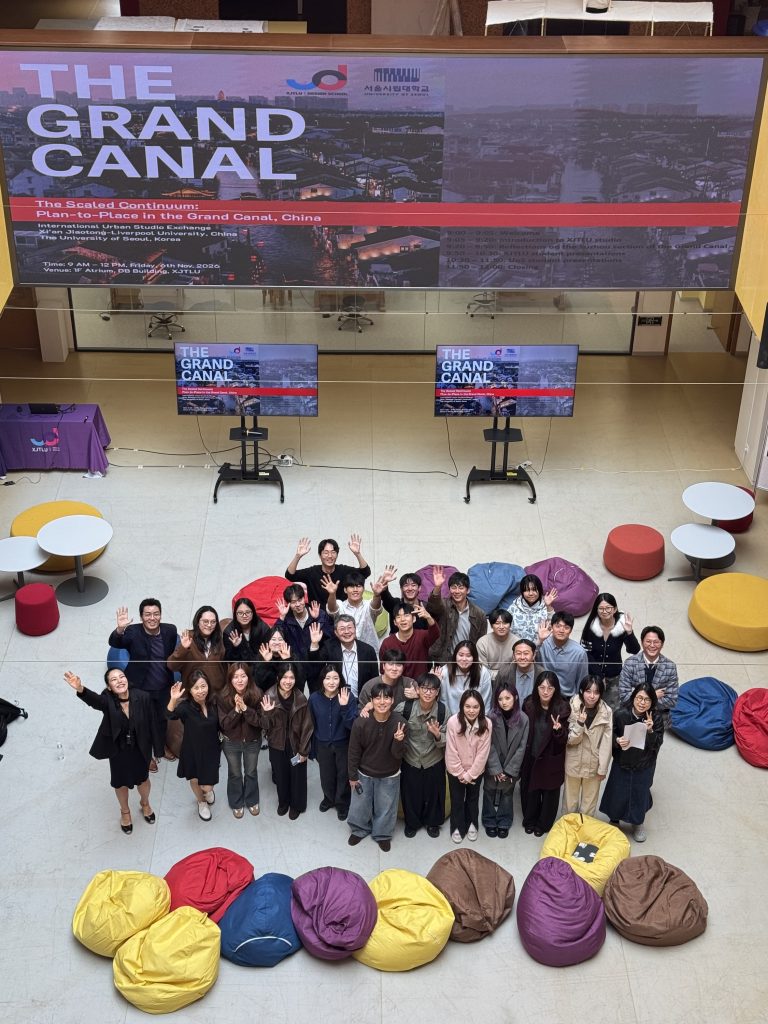
On 6 November, Xi’an Jiaotong-Liverpool University (XJTLU) welcomed a delegation from the University of Seoul (UoS) for its fifth international studio exchange visit, continuing a partnership that dates back to 2018.
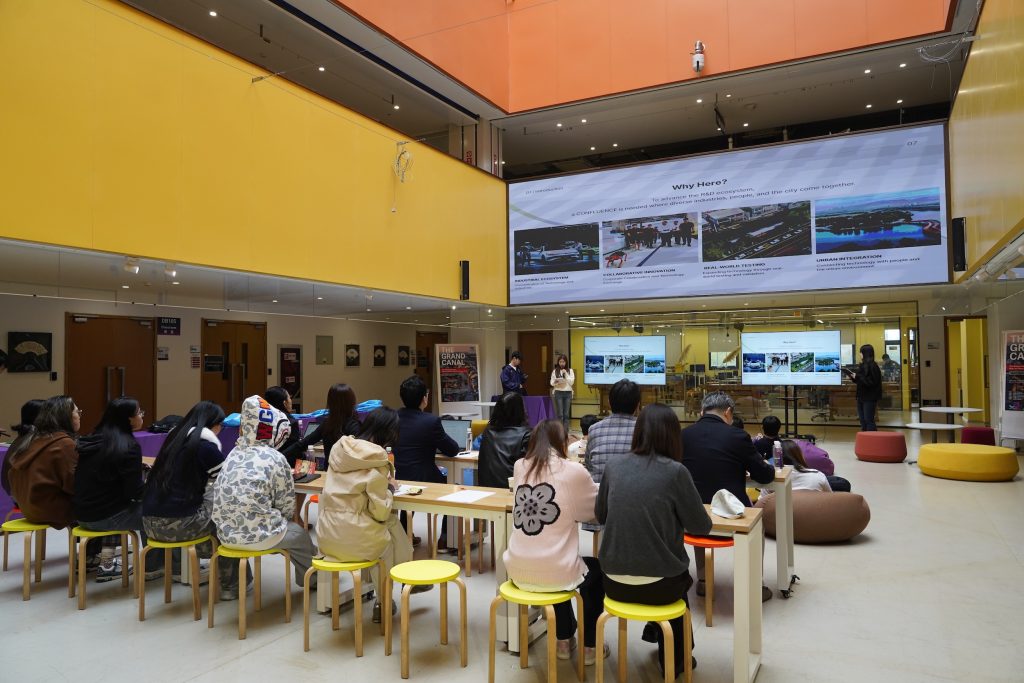
The event, titled “The Scaled Continuum: Plan-to-Place in the Grand Canal, China”, provided a platform for students and academic staff from both universities to present their research and exchange ideas on the waterway’s significance at different spatial scales, while further strengthening collaboration in design education, academic staff exchange, and research.
Exploring the Grand Canal across spatial scales
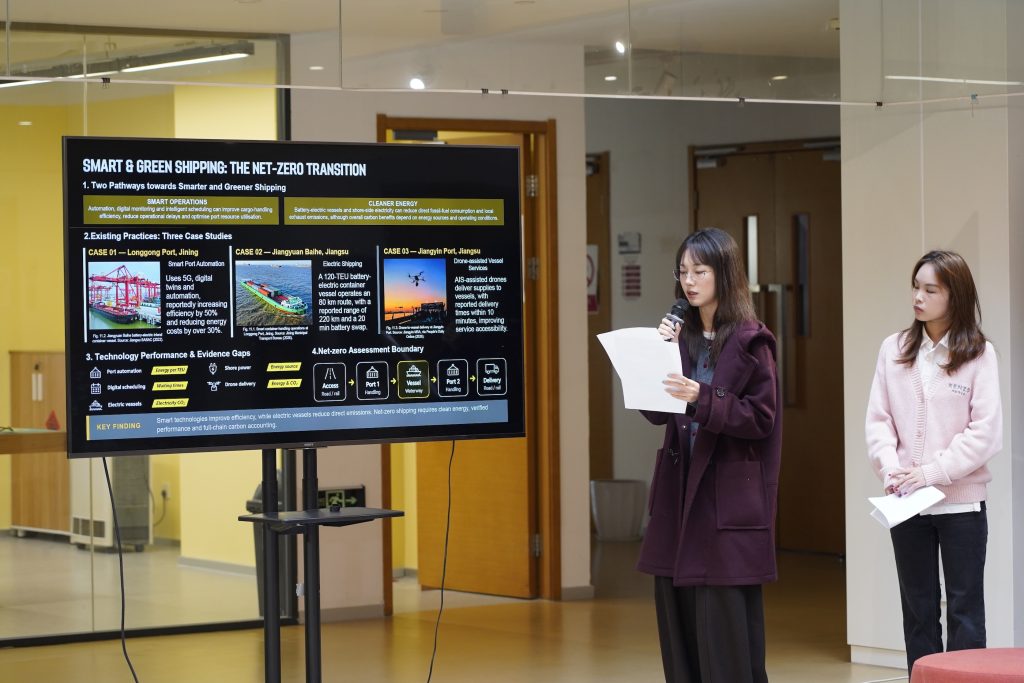
At XJTLU, Year Four undergraduate students from the UPD308 Thematic Studio of Urban Planning/Design are examining the Grand Canal at the national and regional levels. Through thematic analysis, they aim to explore how the canal can inform strategies for national integration. Meanwhile, UoS students are developing urban design proposals focused on the Suzhou section of the Grand Canal, with particular attention to the area around Baodai Bridge.
The two groups approached the same geographical and cultural asset from complementary perspectives, connecting broader national planning considerations with site-specific urban design proposals.
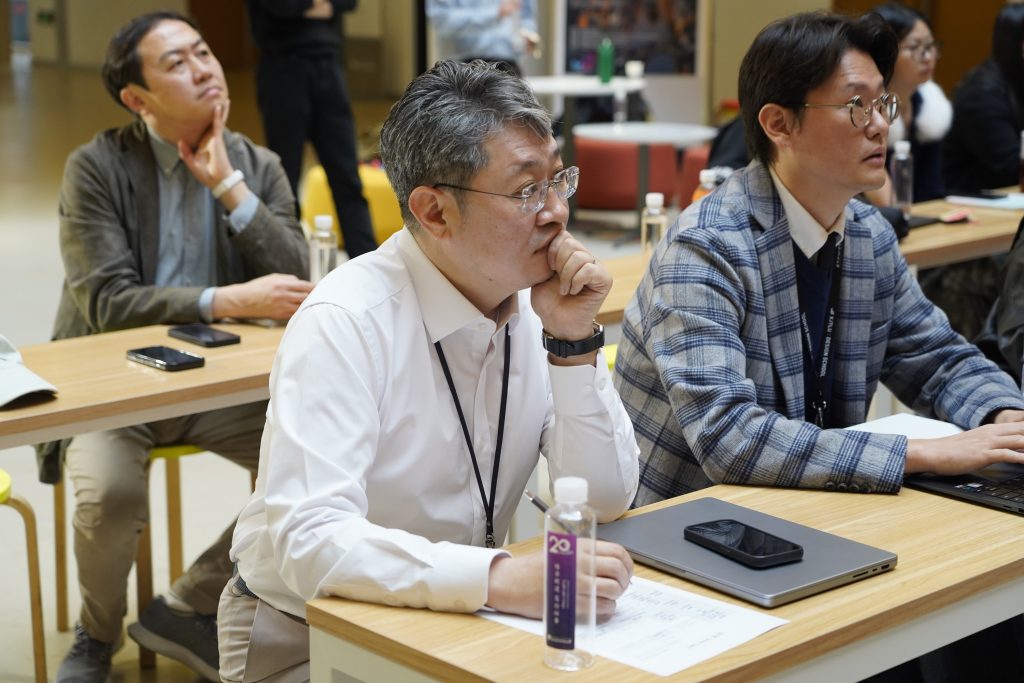
The programme began with a welcome address and an introduction to the XJTLU studio, followed by reflections on the Suzhou section of the Grand Canal. Two XJTLU student groups then presented their work, with four groups from UoS sharing their urban design projects in the subsequent session, which also included question-and-answer discussions.
Professor Joon Sik Kim, Acting Dean of XJTLU’s Design School, said: “The international studio exchange offers our students an invaluable opportunity to gain insight into China’s urban issues from an international perspective.
“Initially focused on the studio exchange, it has now expanded to include academic staff exchanges and collaborative research projects. This initiative represents more than just academic cooperation; we have created a shared ecosystem.”
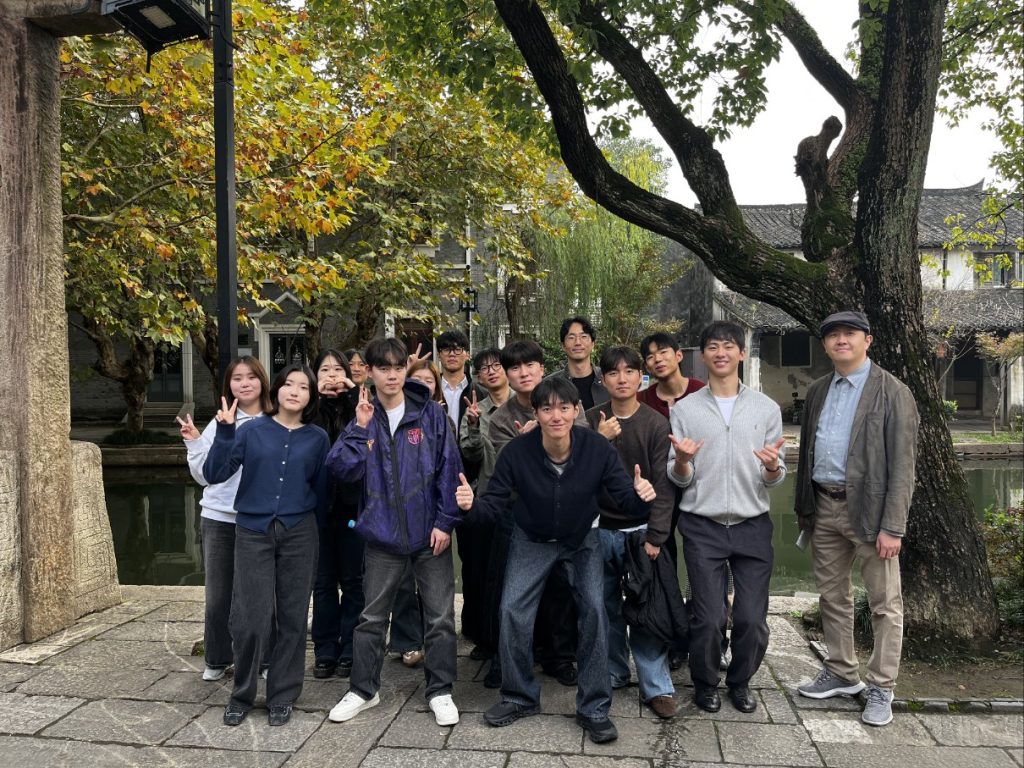
Beyond the academic exchange, the visiting students spent four days exploring cultural, architectural and urban development sites in Suzhou and Shanghai. Their itinerary included MoCA Suzhou (Suzhou Museum of Contemporary Art), Lili Ancient Town, the Shanghai Urban Planning Exhibition Centre, Xintiandi and Shanghai Tower. These visits provided opportunities to observe the region's urban development, cultural heritage and contemporary architectural practices in their broader contexts.
From student exchange to collaborative research
The exchange builds on a long-standing relationship between XJTLU and UoS. Since 2018, UoS has visited XJTLU for international studio exchanges in 2018, 2019, 2023, 2024, and 2026. The collaboration has also involved reciprocal academic visits, including UoS hosting XJTLU's international field trip for Year Four undergraduate students.
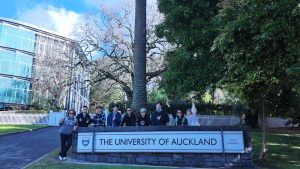
In 2025, XJTLU students visited UoS as part of the UPD313 International Field Class. During the two-week programme, the universities organised an intensive studio workshop, with UoS students providing local knowledge, supporting site analysis and facilitating access to UoS facilities.
The partnership has subsequently developed beyond student exchanges to include academic staff mobility and joint research initiatives. During 2023–2024, an XJTLU academic served as a Visiting Researcher at UoS.
More recently, Dr Jinhwan Jun, a member of the UoS teaching team who led delegations to XJTLU for the last two visits, began his appointment as a Visiting Scholar at XJTLU on 1 November 2026. Supported by a Korean government funding scheme, he is expected to spend one year at XJTLU from February 2027.
The collaboration reflects the universities’ continued efforts to connect design education with international perspectives, local urban contexts, and research cooperation.
By Yi Qian
Photos by Chenxu Zhao and UoS
11 Nov 2026