




2026-05-21

5:30 PM - 6:35 PM

BSG21, South Campus, XJTLU
Details
- Time: 17:30-18:35
- Date: 21 May
- Venue: BSG21, South Campus, XJTLU
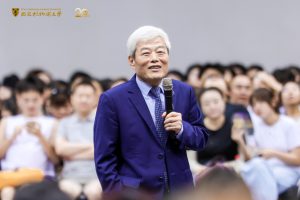
- Speaker: Professor Linxiao Zhao
Abstract
Advanced cutting-edge information technologies, exemplified by Artificial Intelligence (AI) and Virtual Reality (VR), have progressed into a new era of rapid development, bringing an unprecedented innovative impetus to various related vertical application domains. The interdisciplinary intersection of cutting-edge information technologies with biomedical engineering not only drives theoretical and methodological innovations within the information technology sphere, but also provides novel means for addressing challenges in the biomedical engineering. The speaker has conducted extensive and in-depth research across disciplines such as AI-assisted Medical Image Analysis, 3D Visualization, and Virtual Reality in recent years. He has also successfully translated numerous research achievements into practical applications via industry-academia collaborations. This presentation shares the speaker’s valuable experiences and insights regarding interdisciplinary research and industrial integration, with an exploration of technology trends and an overview of his R&D projects and commercialization case studies of research results. A primary focus is placed on how AI technologies, such as deep learning, multi-modality analysis, multi-omics, and large language models, can be leveraged to characterize clinical data, automatically identify and classify lesions, and suggest personalized treatments for patients. These technologies can assist doctors in achieving more efficient and accurate diagnosis for diseases such as brain tumors, esophageal cancer, colorectal cancer, breast cancer, and cervical cancer, thereby enhancing treatment efficacy. Furthermore, the presentation delves into how VR technology facilitates novel, intuitive, precise, and efficient intraoperative surgical navigation, preoperative planning, and clinical training. Details of how advanced 3D medical modeling and rendering techniques along with purely vision-based AI solutions can address the technical challenges associated with virtual-real fusion display and surgical instrument localization and tracking are discussed. This presentation aims to provide cutting-edge technological references to support collaborative innovation among industry, academia, and hospitals within the fields of high-end medical devices and clinical diagnosis and treatment.
Speaker

Lingxiao Zhao is currently working as a full professor in the School of Artificial Intelligence and Advanced Computing (AIAC) at Xi’an Jiaotong-Liverpool University (XJTLU). He obtained his B.Sc. degree of Computer Science from Beijing University of Aeronautics and Astronautics (BUAA), and then worked as a M.Sc. student and then a Ph.D. researcher in the Computer Graphics and Visualization group of the Delft University of Technology (TU Delft), the Netherlands, from 2002 to 2008. During this period, he conducted his research work as a part of the advanced development of CT imaging and AI-assisted diagnosis in virtual colonography inside of Philips Healthcare, Best, the Netherlands. In January 2009, he joined the Imaging Dept. of Philips Healthcare and continued to work on the R&D of medical visualization algorithms and software products. In 2014, he moved to Philips Research, HTC, Eindhoven, the Netherlands, and contributed for two incubating projects on AI-assisted medical image analysis and surgery navigation product development of Philips Healthcare. In August 2015, he joined Suzhou Institute of Biomedical Engineering and Technology (SIBET), Chinese Academy of Sciences (CAS), and worked as a distinguished research PI of CAS 100 Talents Program and the director of the AI for Biomedical Engineering laboratory in SIBET. He was also a professor and PhD supervisor in the Biomedical Engineering Dept. of University of Science and Technology of China (USTC), as well as a guest professor in Fudan University. In recent 10 years, he has published more than 40 journal and conference papers, led and participated in more than 10 Chinese national/provincial/ministerial/municipal science and key-tech development projects, as well as more than 20 enterprise-commissioned R&D projects and technology commercialization collaborations. In August 2025, he started his new position in the School of AIAC at XJTLU and continue his research works on AI-assisted clinical diagnosis and treatment, medical image processing, 3D graphics and medical visualization, and Virtual Reality for Clinical Surgery Navigation.
Share this event


