




2026-06-17

5:30 PM - 6:35 PM

IA G08, South Campus, XJTLU
Details
- Time: 17:30-18:35
- Date: 17 June
- Venue: IA G08, South Campus, XJTLU
- Speaker: Professor Donghui Quan
Abstract
The night sky may appear empty, yet the space between the stars is not a void but a dynamic physical and chemical laboratory. Within the interstellar medium, atoms combine into molecules, and simple species gradually evolve into complex organic compounds. These processes, governed by fundamental physics under extreme cosmic conditions, shape star-forming regions, emerging planetary systems, and potentially the preconditions for life.
In this talk, we will begin with the simplest atoms and molecules and trace how molecular complexity develops in interstellar clouds: the “molecular factories” of the universe. Using large ground- and space-based telescopes, scientists detect faint spectral signatures that reveal temperature, density, radiation fields, and chemical composition in regions thousands of light-years away. Through these observations, we reconstruct environments where the chemical pathways toward life may begin.
At the same time, artificial intelligence is transforming this field. AI-driven methods now assist in automatically identifying molecular signals, predicting reaction networks, and modeling complex interstellar environments from massive datasets. By integrating physics with intelligent computation, we are moving beyond seeing only starlight—we are beginning to uncover the physical processes that may give rise to life among the stars.
Speaker

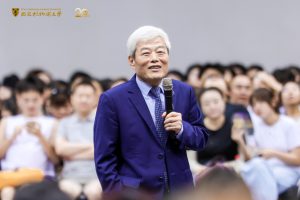
Professor Donghui Quan is the Head of Physics in the School of Mathematics and Physics at Xi’an Jiaotong-Liverpool University. He received his B.S. degree from the Gifted Young Program and his M.S. in Chemical Physics from the University of Science and Technology of China, and earned his Ph.D. in Chemical Physics from The Ohio State University. With over twenty years of research experience, he has established an internationally recognized profile in astrophysics and computational modeling.
Professor Quan began his academic career in the United States at Eastern Kentucky University, where he progressed from Assistant Professor to Full Professor and held key roles in graduate education and curriculum development. Prior to joining XJTLU, he served as Deputy Director and Acting Director of the Research Center for Astronomical Computing at Zhejiang Laboratory, leading major national-level initiatives in AI for Science and astronomical data infrastructure.
His research focuses on the interstellar medium, atomic and molecular processes in star-forming regions, and large-scale computational modeling of complex astrophysical systems. He has published more than 70 peer-reviewed articles in leading international journals and secured substantial competitive research funding as Principal Investigator. His recent work integrates physics-based modeling with artificial intelligence, advancing automated spectral analysis and intelligent data platforms for next-generation astronomy.
Share this event


