





Science is boring? Not at XJTLU Research Fun Day!

14 Nov 2025


Research is not always boring, serious, and complicated. XJTLU’s Department of Health and Environmental Sciences recently proved this through its Research Fun Day, a series of activities designed to introduce students to scientific exploration.
When science meets dessert
 Students follow the demonstration and make ice cream
One of the most popular sessions invited students to explore science through an unexpected medium: ice cream.
As Dr Lu Zhang and her team poured liquid nitrogen into a mixture of milk and sugar, vapour rose from the bowl as the mixture rapidly froze. Within seconds, it solidified into smooth ice cream, demonstrating the effects of ultra-low temperatures on food and materials.
She later explained that liquid nitrogen, which has an extremely low temperature of -196 degrees Celsius, freezes the mixture so rapidly that it prevents large ice crystals from forming. This process gives the ice cream a silky and soft texture unlike anything produced by a regular freezer.
 Professor Lu Zhang and her team demonstrate how liquid nitrogen is used to make ice cream
Beyond dessert, Dr Zhang emphasised that this same principle is used in environmental science research, where rapid freezing helps preserve water or soil samples in their original state.
“It is like freezing time,” she said, referring to how liquid nitrogen stops microbial activity and preserves the condition of whatever it cools.
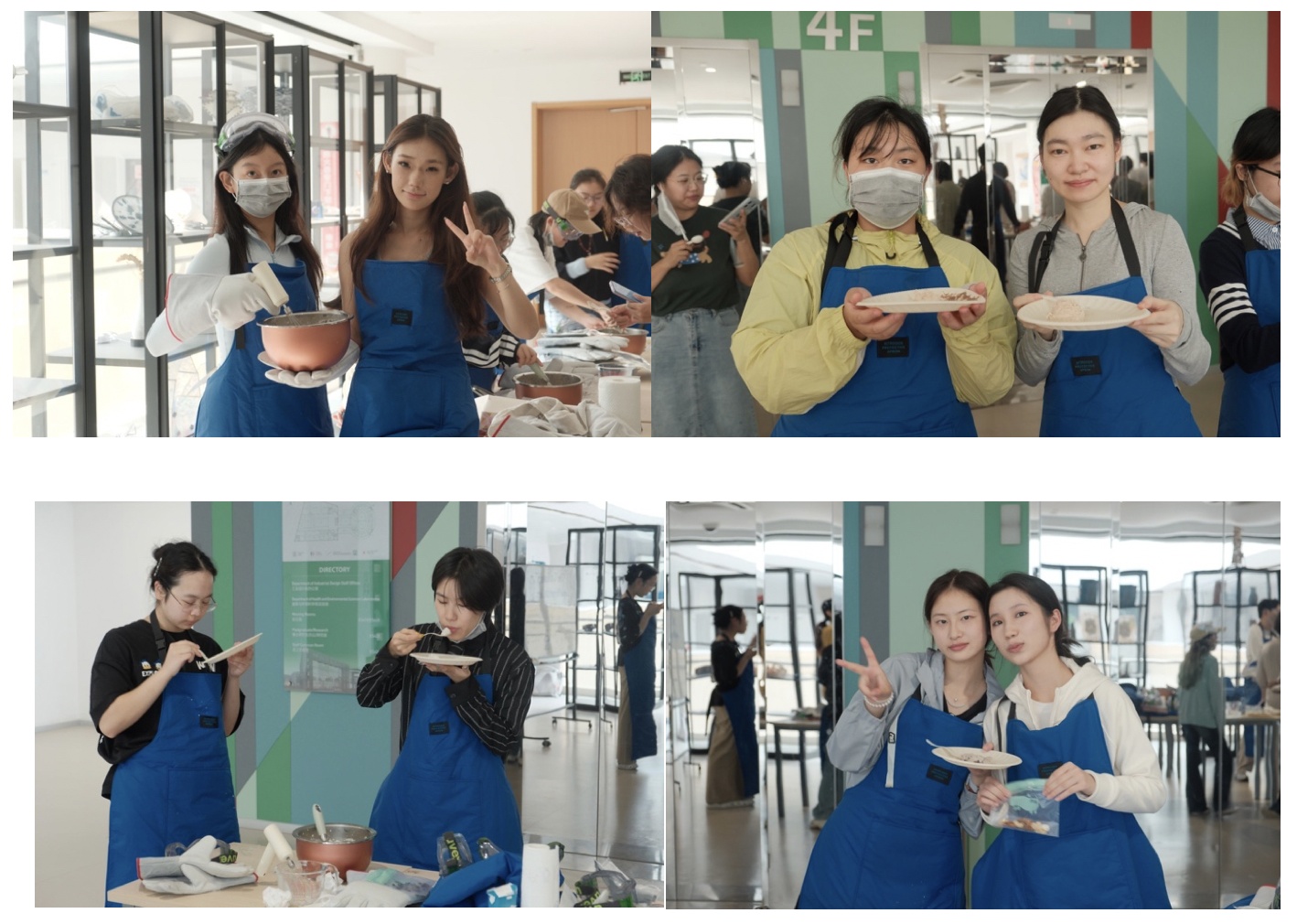
Students showcase their final creations and enjoy ice cream together
Exploring aerial photography
Another session demonstrated aerial photography with drones for environmental research. Attendees had the chance to fly drones to capture high-resolution images from above the campus green space.
The activity showed how drones are used in real environmental science research, such as monitoring grassland retreat, evaluating vegetation health through the Normalised Difference Vegetation Index (NDVI), and tracking sources of pollution.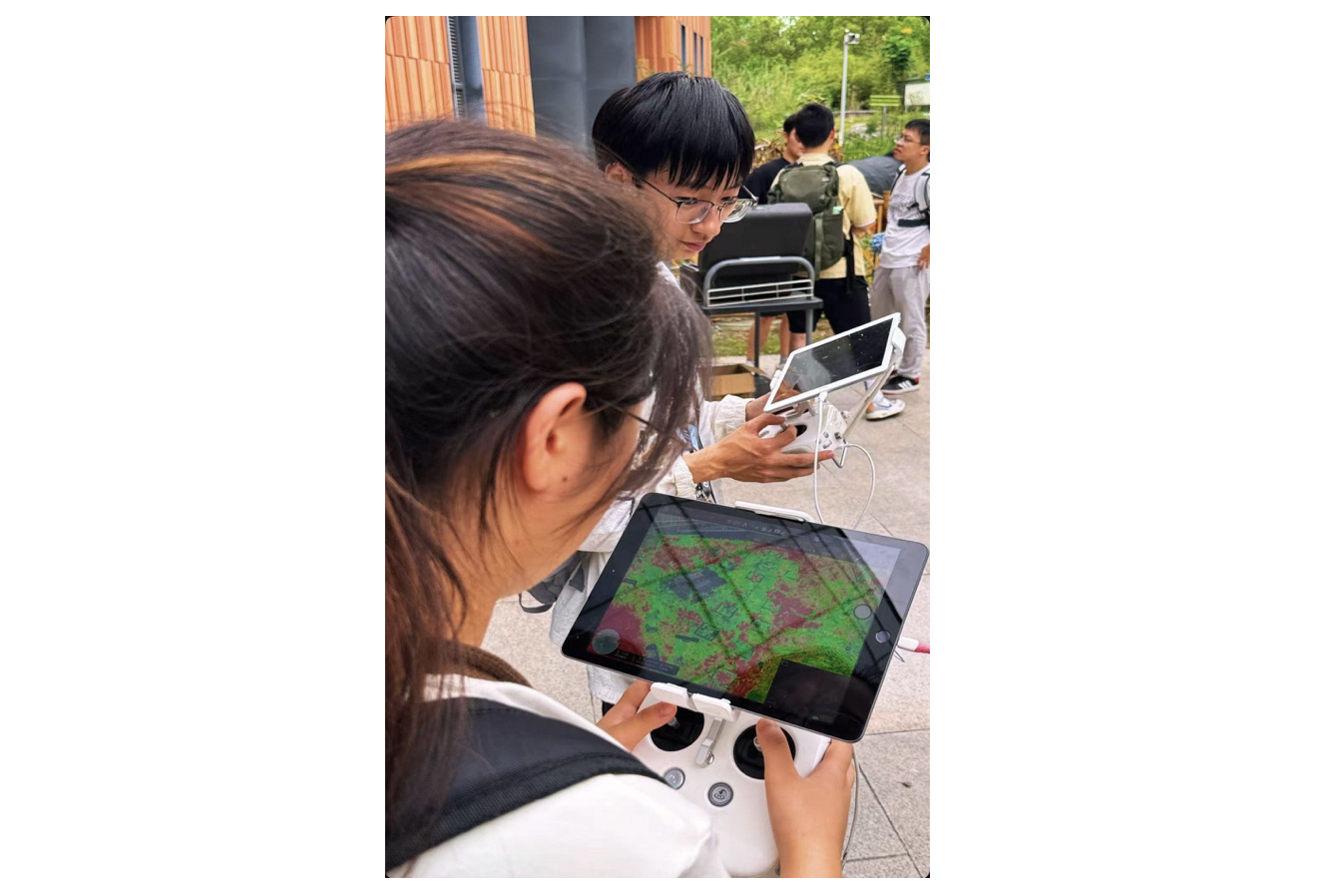 An image of the Normalised Difference Vegetation Index (NDVI) on the screen
Aerial photography allows students to study grassland retreat, vegetation health, and even water pollution by quickly covering areas that would be difficult to examine on foot. With centimetre-level high resolution, drones can provide precise data for researchers.
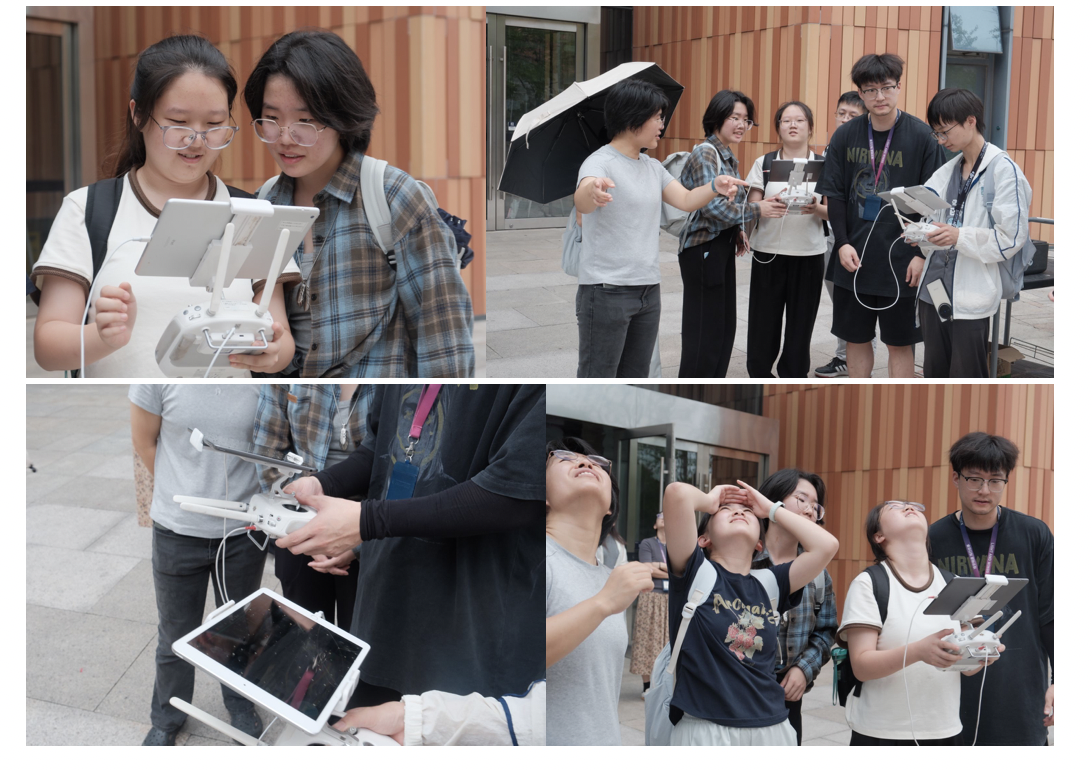
Students experience hands-on aerial photography using drones
The session also featured a presentation from an XJTLU postgraduate alumna, accompanied by Dr Juan Li, who demonstrated the use of high-resolution aerial photography to monitor grassland retreat. They stated that drone technology for aerial photography enables precise measurements of elevation, aspect, slope, point cloud and even water pollution.
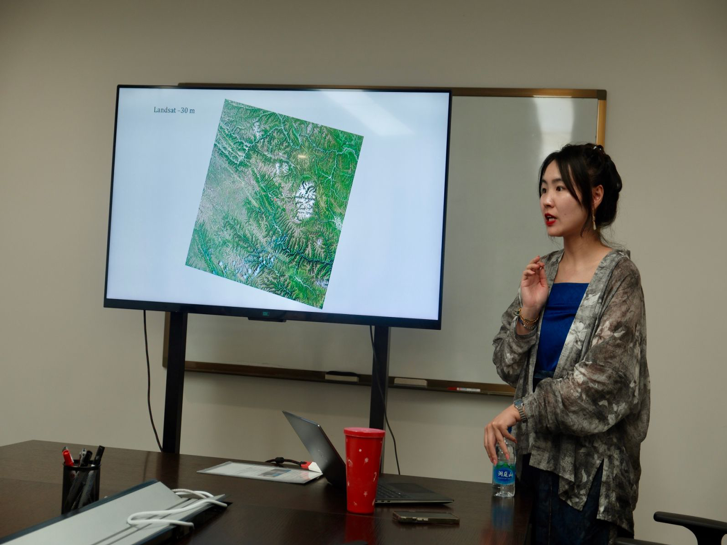
An alumna presents her case study to the participants
For many attendees, especially first-year students, the activities offered an eye-opening introduction to what specific research looks like in practice.
Ting Tong, Research Assistant at the Department said the event also aimed to encourage students to explore science programmes. “Our goal is to inspire curiosity and motivate more students to consider studying environmental sciences,” he said.
By Jansen The
Edited by Ziling Yang and Xinmin Han
Photos by Yiming Cai
14 Nov 2025