




From XJTLU to Harvard: Jiayi Li’s research journey

10 Jan 2026


Jiayi Li, a BSc Biomedical Statistics (Biostatistics) graduate from Xi’an Jiaotong-Liverpool University (XJTLU), has been awarded a full scholarship by Harvard University, US, for its master’s programme in Computational Biology and Quantitative Genetics.
She has also received offers from Stanford University and Yale University, US, and the University of Oxford, UK. She is now determined to further explore computational biology and AI-driven scientific discovery.
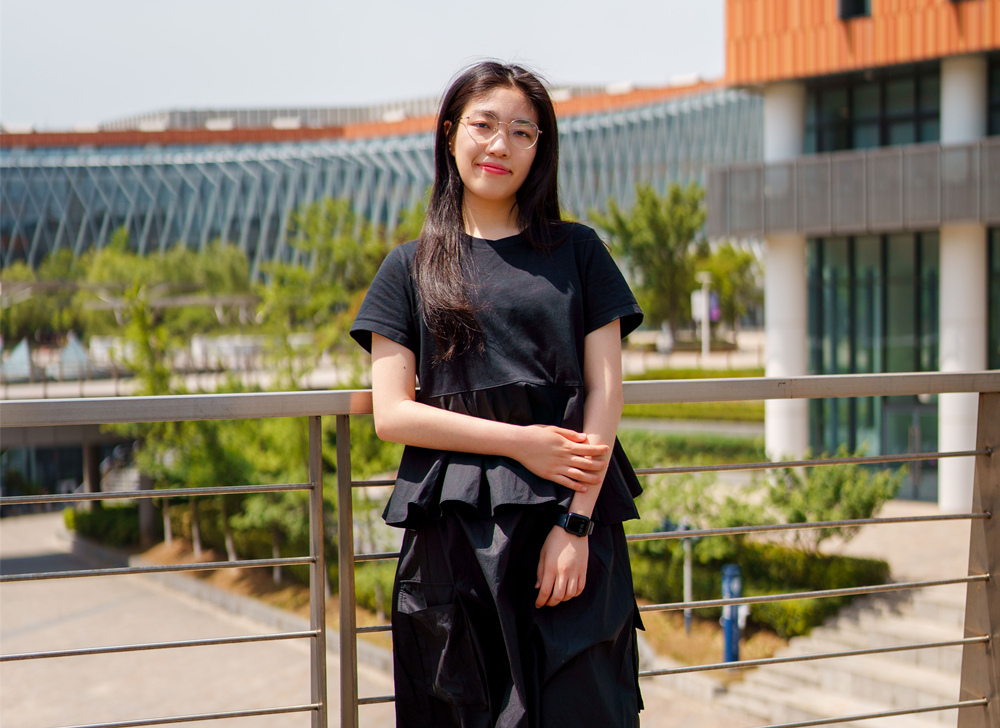
Jiayi Li on XJTLU campus
Finding a passion
Li has developed an interest for biology since high school.
Instead of focusing solely on textbook knowledge and high grades, she was eager to discover what truly fascinated her. This pursuit led her to participate in biology competitions, which sparked her profound interest in life sciences and technology.
“I was drawn to the complexity and beauty of systems biology,” Li says. “Exploring life sciences by integrating disciplines like mathematics, physics, and computer science has been incredibly exciting.”
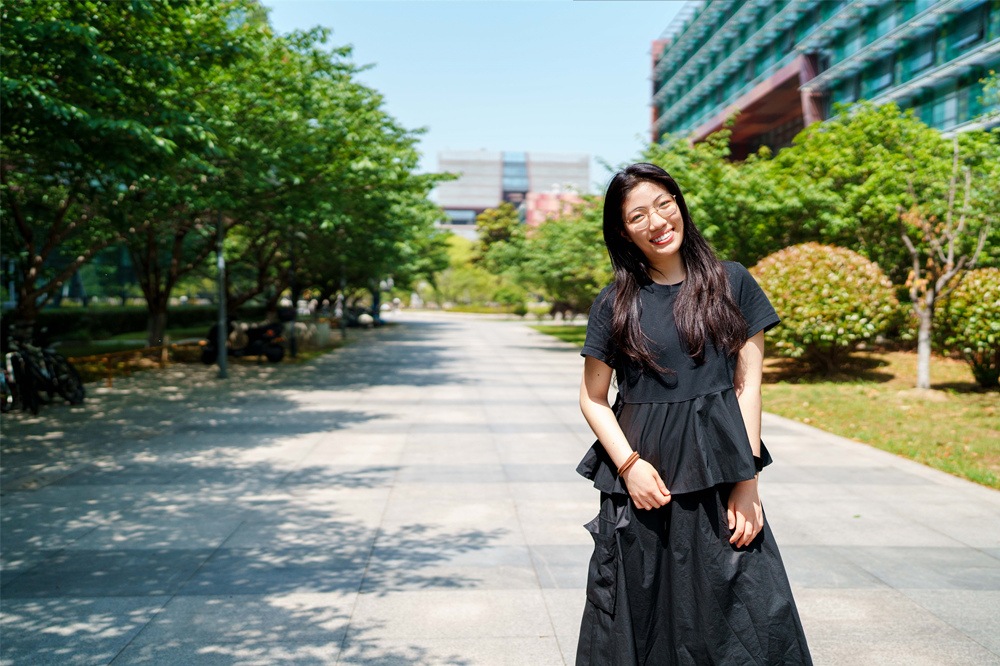
Jiayi Li on XJTLU campus
Li’s path to higher education was far from smooth. As the sudden onset of the pandemic disrupted her initial plans to study abroad, she turned her focus to XJTLU, a Sino-foreign cooperative university, where she began her research journey.
“The programme is jointly delivered by multiple schools at XJTLU, including the XJTLU Wisdom Lake Academy of Pharmacy, the School of Mathematics and Physics, the School of Science, and the School of Advanced Technology, providing students with a unique platform for interdisciplinary learning,” she says.
Li adds that XJTLU’s interdisciplinary approach is essential in today’s world. “In this era, thinking in a single discipline is no longer enough. We need to integrate multiple perspectives to foster innovative ideas,” she says.
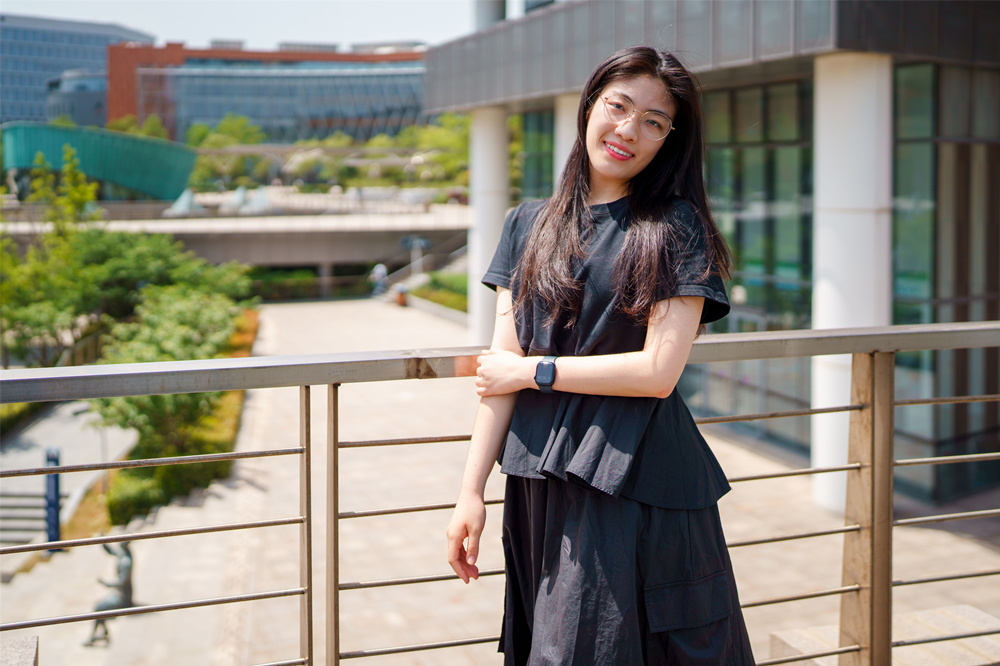
Jiayi Li on XJTLU campus
During her first year at university, Li participated in the International Genetically Engineered Machine (iGEM) competition, where she gained hands-on experience in integrating computer science with life sciences. Her team successfully designed a novel protein component and a bioreactor for adsorbing heavy metals, earning a gold medal at iGEM 2022 and a Best Environment Project nomination.
“This experience showed me how coding can bridge the abstract symbols of mathematics with the tangible world of biology, transforming numbers into a key to understanding life,” she says.
Developing as a researcher
Li says XJTLU’s research-led approach and inclusive environment have supported her in pursuing independent research based on her interests.
“The programme’s curriculum is well established, but completing the required courses is just the baseline,” she says. “Research is about exploring the unknown on your own. In interdisciplinary fields, much of the work involves learning and doing at the same time.”
With this mindset, Li joined the research group led by Professor Jia Meng, Head of the Department of Biosciences and Bioinformatics at the School of Science, where she began her first independent research project.
She investigated the application of deep learning models in nanopore sequencing and developed a machine learning tool for the quantitative detection and quality control of chemical modifications in mRNA vaccines. This work was later published in an Science Citation Index (SCI) journal, with Li as the first author.
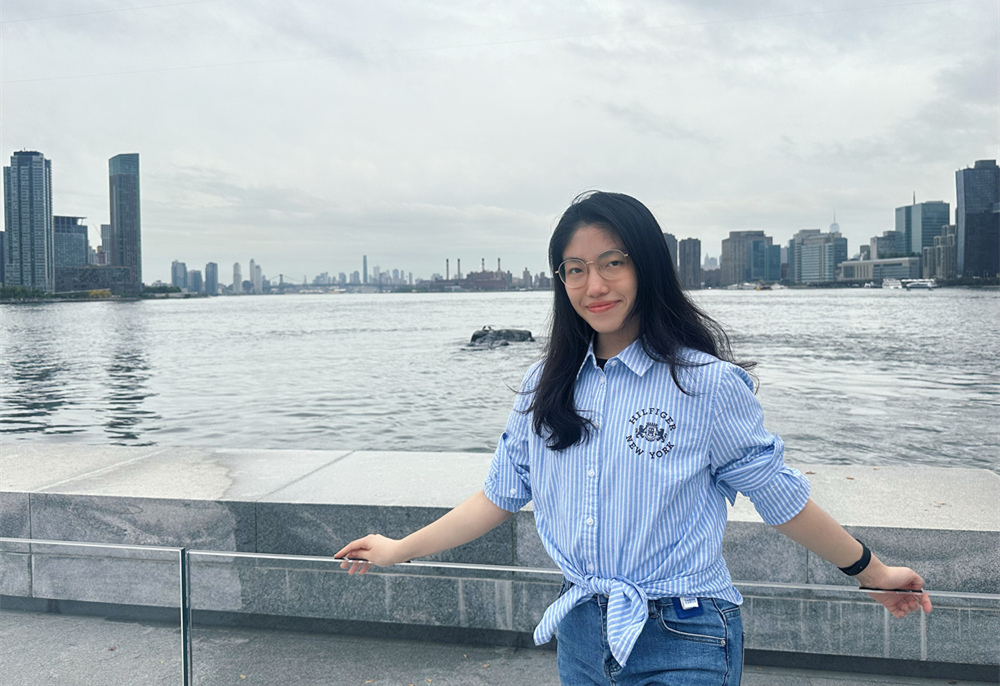
Jiayi Li in New York
Building on this experience, Li undertook a research internship at the Intelligent Drug Design Laboratory at Shanghai Jiao Tong University, China, where she combined statistical models for uncertainty estimation with geometric deep learning techniques for targeted RNA drug design.
This experience further reinforced her belief in the transformative role of data in scientific discovery.
“What fascinates me most about scientific research is the challenge of constantly pushing the boundaries of knowledge and turning ideas into practical solutions,” she says.
A global perspective
To further apply her statistical and computational skills to structured biomedical research, Li secured a full-time research position at the Genomics Research Institute at Icahn School of Medicine at Mount Sinai, one of the top medical schools in the US.
During her four months in New York, Li created a deep learning model that significantly improved the prediction of cell-specific gene expression. This provided a new tool for studying gene regulation at the single-cell level and understanding the heterogeneity of disease progression.
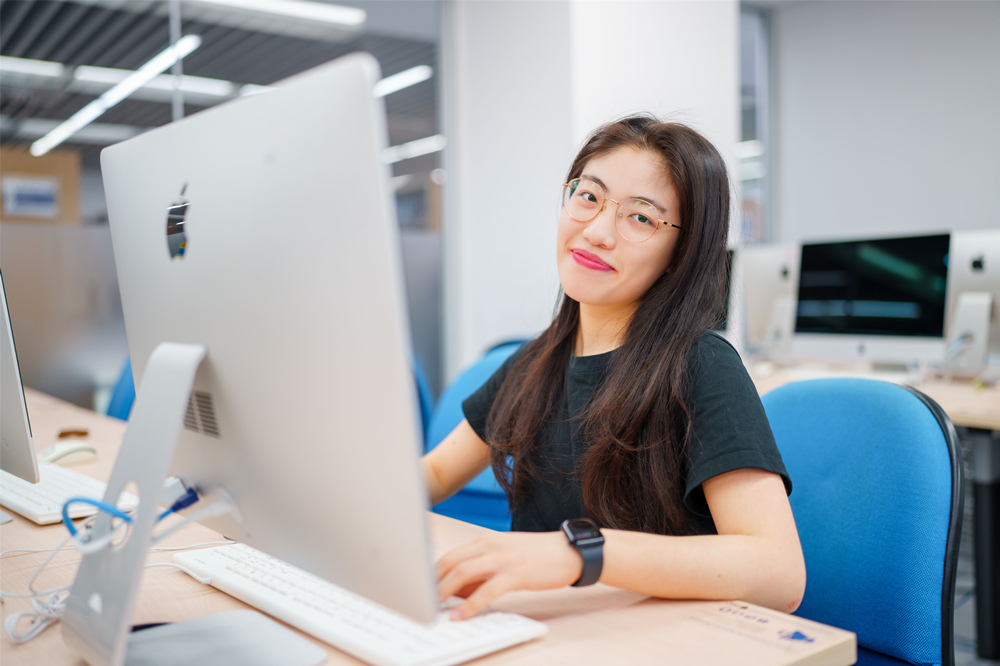
Jiayi Li in the computer lab
This overseas research experience also fostered Li’s personal growth. While working with her teammates, she tackled technical challenges and cultural differences through proactive communication. Beyond the lab, she drew interdisciplinary inspiration from museums and art exhibitions and connected with researchers from diverse fields, reflecting XJTLU’s “Global Citizen” philosophy.
“Research is not a solitary journey; it’s a dialogue with the world,” Li says. “A good researcher dives deep into their field while remaining open to the world’s diversity.”
By Luyun Shi
Edited by Katharina Zhu and Xinmin Han
Photos by Zuofu Wang
10 Jan 2026