




15 Jan 2026


Professor Lixian Qian, Associate Dean for Research at the International Business School Suzhou (IBSS), Xi’an Jiaotong-Liverpool University (XJTLU), and founder of the Smart Mobility Analytics Centre (SMAC), together with Dr Miaomiao Liu, SMAC coordinator, led a delegation on a visit to Tsinghua Suzhou Automotive Research Institute (TSARI). The visit centred on in-depth discussions about how China’s automotive industry can expand internationally in a more strategic, sustainable way. Both parties reached a preliminary consensus on joint research, resource sharing, and long-term collaboration, with the shared aim of supporting the high-quality global expansion of China's automotive industry.
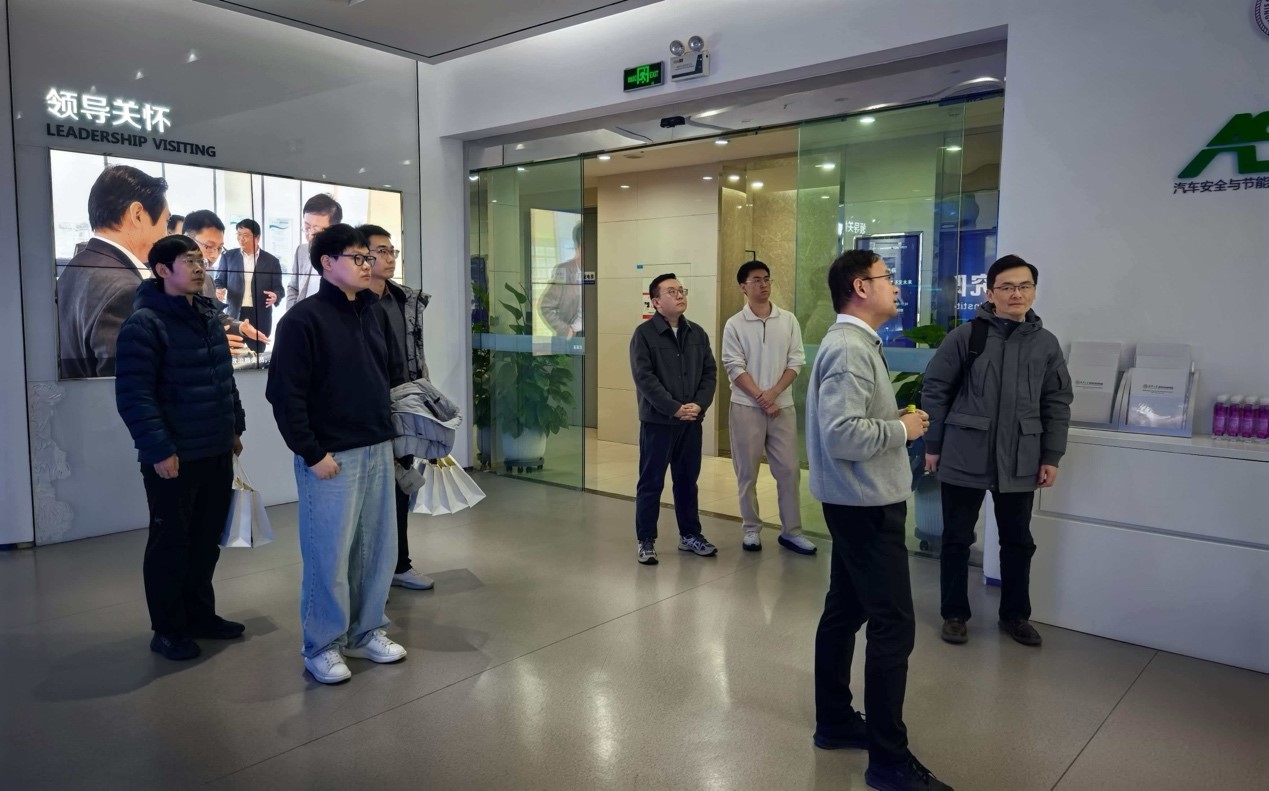
Tsinghua Suzhou Automotive Research Institute was jointly established by Tsinghua University and the Suzhou Municipal People's Government. Leveraging Tsinghua's strengths in engineering technology and talent development, the institute focuses on emerging fields such as intelligent connected vehicles and new energy vehicles. It has built six major platforms covering technology R&D, analysis and testing, technology finance, talent development, technology transfer, and enterprise incubation – helping to shape a comprehensive industrial innovation ecosystem that brings together technological innovation, industrial services, and entrepreneurial incubation.
Professor Lixian Qian began by introducing the positioning and educational characteristics of IBSS and XJTLU, highlighting the school's strengths in cultivating international talent, global partnerships, and its interdisciplinary research profile. He also shared SMAC's research framework and international collaboration experience across areas, including policy research, smart mobility, business models, and the diffusion and adoption of new technologies.
Dr Yifan Dai, Chief Engineer of TSARI, provided a detailed overview of the institute's current priorities. These include low-to-medium speed, scenario-specific autonomous driving; AI big data and large model technologies; as well as the layout of an intelligent safety industry chain covering functional safety, Safety of the Intended Functionality (SOTIF), data security, and AI security. He also introduced the latest progress of the institute's think tank team in serving government industrial planning, advancing industry policy research, and exploring ways to support navigating overseas markets and expanding internationally.
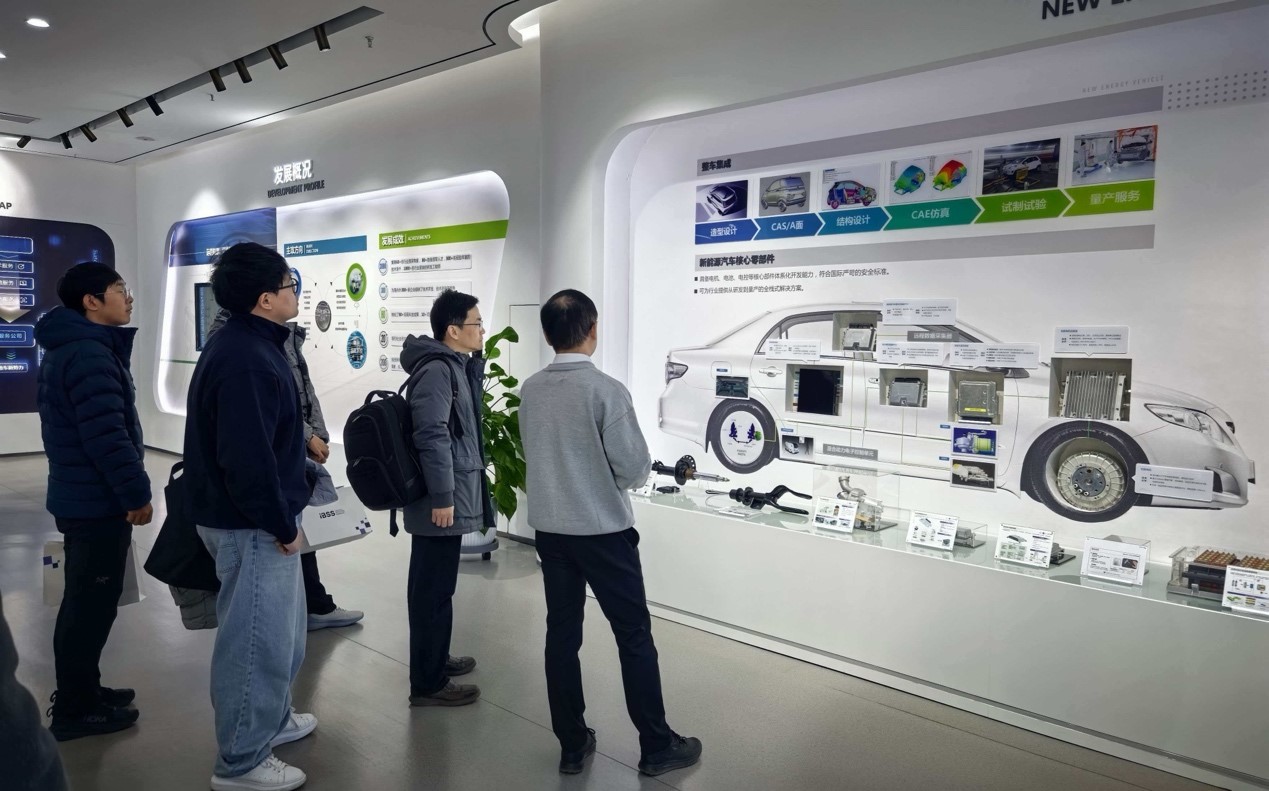
During the exchange session, both sides engaged in discussions on the accelerating trend of Chinese automotive and component enterprises expanding overseas. Topics included differences in overseas market access and industrial policies, cross-border compliance and labour risks, data and AI security requirements, and how scenario-specific autonomous driving is applied and regulated across different countries and regions. Both parties agreed that China's automotive industry has moved beyond straightforward product exports and entered a phase of systematic internationalisation, one that calls for coordinated support across technology, policy, business models, and think tank research.
Building on these discussions, both sides noted that future collaboration could combine IBSS’s international networks and business research capabilities with Tsinghua’s platform advantages in automotive technology and industrial research. Potential collaborations include jointly conducting country-specific studies and enterprise (“going global”) (internationalisation) research in key regions (such as Southeast Asia, Europe, etc.), and producing white papers, policy recommendations, and decision-support outputs for government and industry. Simultaneously, both parties will explore various forms of co-operation to turn ideas into action, including joint research projects, co-developing think tank platforms, enterprise consulting and executive training, and closer collaboration with overseas partners - all in service of China's automotive industry as it pursues high-quality global expansion.
Smart Mobility Analytics Centre (SMAC)
Building on a strong research foundation and wide network of academics and industry leaders, the Smart Mobility Analytics Centre (SMAC) was established at IBSS in May 2022. SMAC’s vision is to become a leading platform in smart mobility analytics, bringing together the insights and needs of academic research, industry and education. SMAC’s strategic objectives are to: (a) promote interdisciplinary and cutting-edge academic research on smart mobility analytics; (b) establish close collaborative relationships with companies in the mobility sector; and (c) explore opportunities to contribute to the School’s executive education programmes, as well as undergraduate and postgraduate student projects in the domain of mobility and transport.
SMAC comprises more than 30 members, including IBSS faculty and postgraduate students, non-IBSS XJTLU faculty and students, international researchers from the Centre’s research network and industry advisors.
15 Jan 2026