



NS Practitioner Talk Series: Working with the UN — China's Role in Global Development & Career Pathways

10 Apr 2026


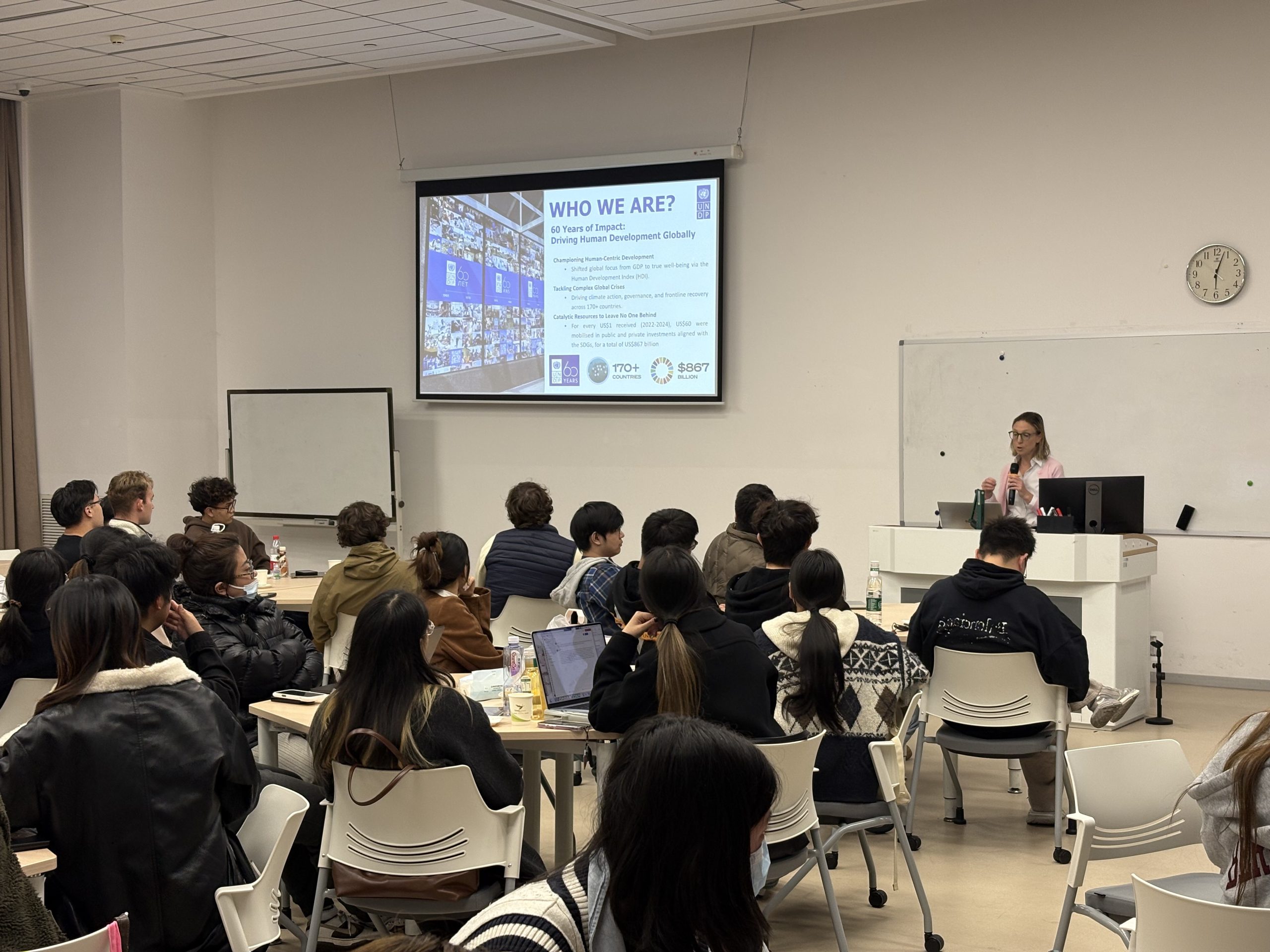
On 23 March 2026, the Department of International Studies welcomed Violante di Canossa, Head of Strategic Partnerships and Policy at the United Nations Development Programme (UNDP) China, for an engaging discussion on global development, sustainable finance, and career pathways in international organisations. The room was full, reflecting strong student interest in these timely topics.
“We might not be as rich as we thought. ”
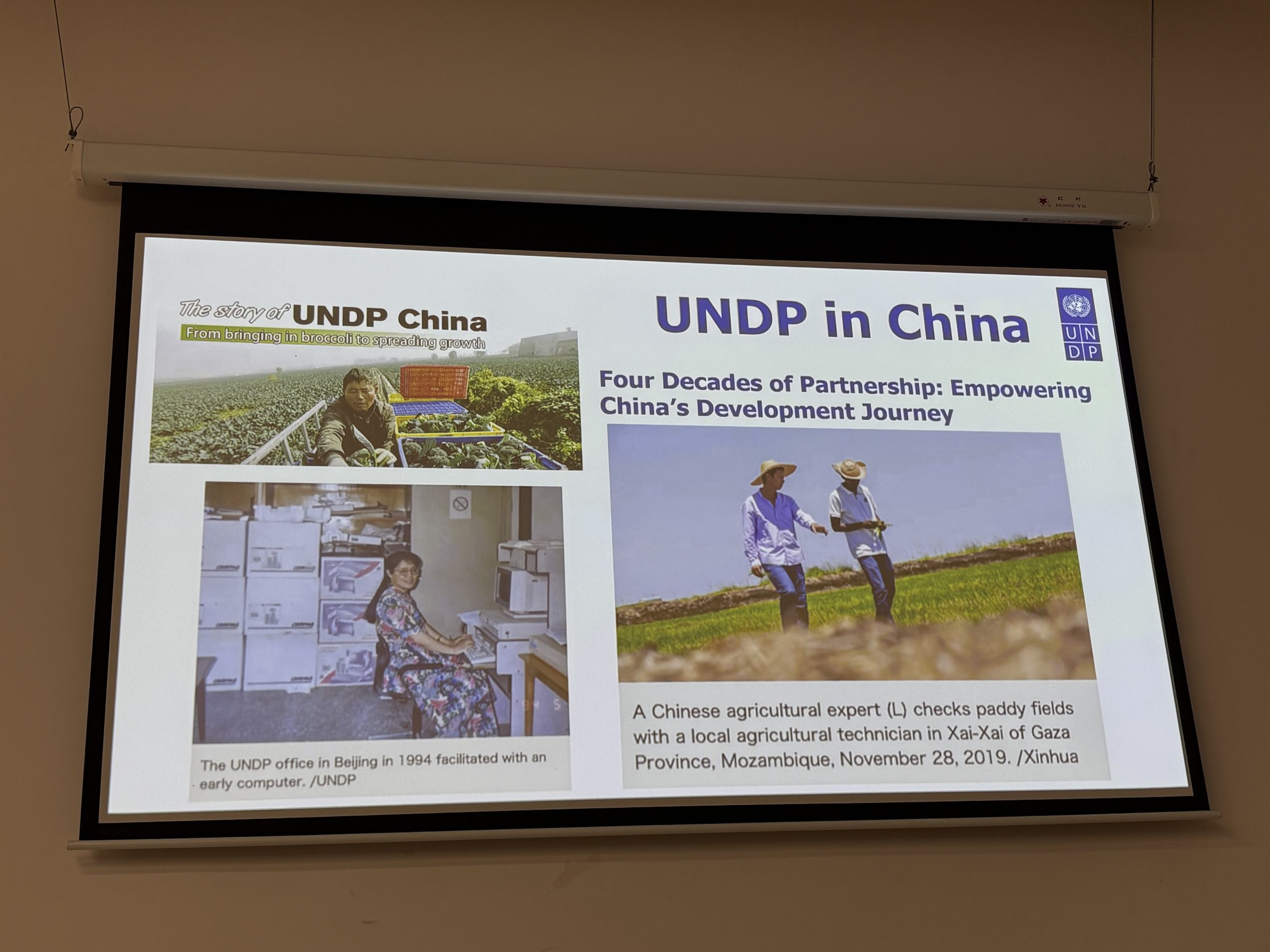
Violante opened with a surprising example of UNDP's long-standing engagement with China: the introduction of broccoli to Chinese agriculture. This historical footnote illustrated how international development cooperation often begins with tangible, practical interventions before evolving into complex policy frameworks.
The discussion then turned to contemporary development metrics. Violante introduced students to the Planetary Pressure-Adjusted Human Development Index (PHDI), which adjusts traditional HDI rankings by accounting for ecological dimensions like planetary boundaries. This shows us that “we might not be as rich as we thought based on GDP and HDI alone," she noted, challenging conventional measures of national progress.
Three Levers for Systemic Change
Violante outlined three critical enablers for sustainable development: artificial intelligence, gender equality, and sustainable finance. She emphasised that the UN approaches these through systemic solutions rather than isolated interventions, adopting multi-partner and multi-stakeholder perspectives that operate at scale.
The scale of financing required remains a critical issue. Violante highlighted the disparity between the 40 billion annual need for development finance and current flows of only 60 million per year. Bridging this gap, she argued, depends on demonstrating to the market that sustainable development makes financial sense by creating tangible financial opportunities for investors.
SDGs from Pilot to Mainstream
In the final part of her lecture, the speaker highlighted China's role in this landscape is evolving. Violante discussed how her organization is working on taxonomies for SDG-aligned finance, such as those developed by the National Association of Financial Market Institutional Investors (NAFMII), that are helping transition and sustainable finance to develop from pilot projects to mainstream practice. She also pointed to the emerging silver economy as an area where corporate social responsibility is shifting toward comprehensive green industrial strategy.
Career Insights and the Future of Development
The session concluded with a lively discussion on development trajectories in China and India, and whether African nations might leapfrog directly to renewable energy infrastructure, bypassing fossil-fuel-dependent development paths.
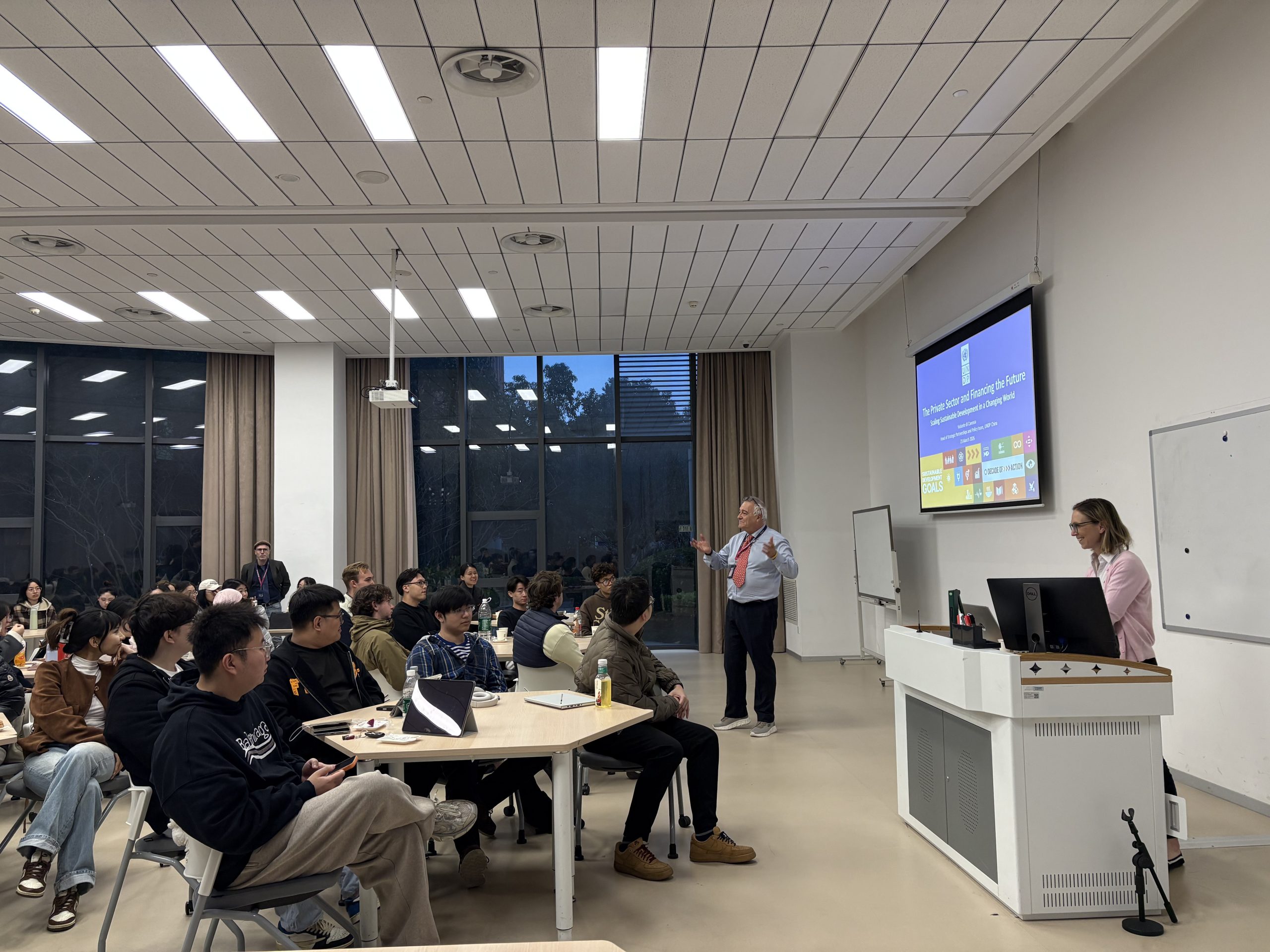
Throughout the talk, Violante offered practical guidance for students interested in international organisations, including platforms for exploring junior-level opportunities and the analytical skills that underpin success in policy research. The secret she shared is that it might be a better idea to first become an expert in a specific policy field, gain experience in government work and then apply for UN-level jobs.
The event exemplified the International Studies Department's commitment to connecting students with practitioners at the forefront of global governance and sustainable development.
Contribute by Department of International Studies
10 Apr 2026