




21 Apr 2026


Professor Shaozhong Deng has recently joined the School of Mathematics and Physics at Xi‘an Jiaotong-Liverpool University as Deputy Dean. Professor Deng brings extensive academic expertise and research experience in scientific computing and its applications in physics and biology.
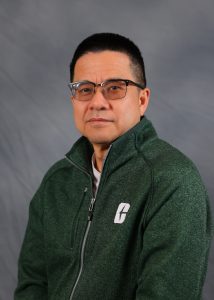


As the new Deputy Dean of the School, Professor Deng has a clear vision for its development. He hopes to support the School‘s growth through academic excellence, strategic focus, and an open and well-governed academic environment. He states that he would like to help build a policy-driven and transparent academic environment, where key decisions are guided by clear procedures, fairness, and shared understanding. He also hopes the School can further strengthen its existing disciplinary strengths while identifying and developing a few research areas that can achieve national or even international visibility. These focus areas should be carefully built upon current strengths, the University’s strategic research priorities, and global research trends. Additionally, he encourages deeper interdisciplinary collaboration and stronger engagement with industry, particularly within Suzhou Industrial Park, to better connect research with real-world applications.
Overall, he aims to cultivate an academic environment that is open, transparent, collaborative, and ambitious, supporting both individual development and the collective advancement of the School.
For students, Professor Deng offers thoughtful advice. He emphasises that lasting ability is built on a strong foundation. Without solid grounding, skills and ideas such as innovation, critical thinking, and teamwork cannot fully develop. In the age of AI, he notes that while AI can generate answers in seconds, it cannot replace human judgment in evaluating correctness, recognising bias, or assessing risk. Therefore, understanding the fundamentals behind the tools we use remains essential for meaningful and responsible application. He cites a Chinese saying: “To do a good job, one must first sharpen one‘s tools” (‘工欲善其事,必先利其器’). For students, these “tools” are their fundamental knowledge in their subjects. He encourages students to take time to build this foundation carefully—by engaging deeply with core courses, strengthening conceptual understanding, and practising essential skills. In the long run, this will not only support effective use of new technologies like AI but also help them develop sustainable and adaptable capabilities for their future careers.
Edited by Qinru Liu
21 Apr 2026