




No template to follow: Professor Xiaojun Zhang on building XJTLU’s educational influence

25 May 2026


Professor Xiaojun Zhang first became involved with Xi’an Jiaotong-Liverpool University (XJTLU) in 2010, when the University welcomed its first cohort of graduates, and joined full time in 2013 as Deputy Director of the Institute of Leadership and Education Advanced Development (ILEAD).
Today, he serves as Chief Officer of Education, Head of the XJTLU Entrepreneur College (Taicang) leadership team, Executive Dean of the Academy of Future Education, and Director of the Entrepreneurship and Enterprise Hub.
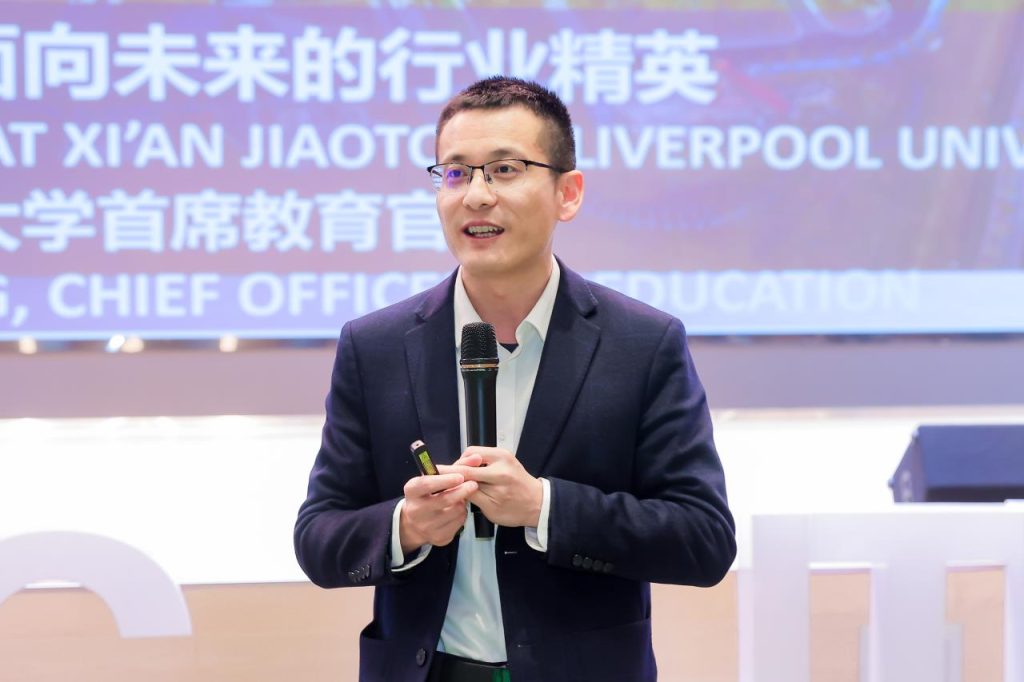
In the run-up to XJTLU’s 20th anniversary, Professor Zhang shares how the University built its educational influence step by step.
Going beyond campus
When XJTLU launched ILEAD in 2013, as its only full-time staff member, my most pressing task was finding a way to create impact beyond XJTLU. However, most colleagues were focused on teaching, research, and student management; talking about external influence felt remote.
The earliest challenges fell into three main areas.
First was brand recognition: Why would institutions with much longer histories believe that they could learn from a young international joint-venture university?
The second was articulating the XJTLU system. Our distinctive practices could not remain ideas, they needed to be developed into a methodological system that could be explained, learnt, and tested.
The third and most important issue was team building. We needed colleagues who were willing to move the work forward together. Fortunately, several became involved in external training and
exchange activities early on, although the challenge of finding academics willing to invest their time remains to this day.
We started from scratch to distil XJTLU’s practices into a teachable methodology, and by 2017, teachers from dozens of universities were coming to us for training each year, and our conferences and activities were attracting broad attention.
But we quickly realised that these early programmes were far from enough. To make XJTLU’s influence sustainable, we needed a systematic, mutually reinforcing relationship between internal innovation and external communication.
Uncharted territory
For many decisions, we had no template to follow. In 2017, we integrated ILEAD with the Academic Enhancement Centre (AEC) and the training section of the Language Centre, during which there was considerable disagreement.
At the time, ILEAD was mainly responsible for external engagement, the AEC for academic staff development, while the Language Centre had a small external training function. All three operated separately. It was proposed that we bring them together to create a complete loop connecting internal innovation with external communication.
Differing views emerged: AEC felt it already had a mature system, and the Language Centre also had concerns about the move. Rather than opposition, it was a lack of understanding on the underlying logic behind the merger. It took us nearly three months to build consensus.
We prepared reports to collect and organise everyone’s views. Some worried that our external influence would be weakened; others feared that academic staff development would be pulled off course. We responded to these concerns one by one and explained that external impact and internal support are two sides of the same coin: In helping other institutions develop their staff, we are pushed to develop ourselves – and as our teams become stronger, more can share their experiences externally.
The decision was eventually approved. Without this integration, ILEAD might have remained a peripheral unit and likely wouldn’t have evolved into what is now the Academy of Future Education. By the time the Academy was established in 2021, there was already an ecosystem for future education exploration that connected internal and external efforts. We’d become one of the largest teacher-training institutions in China, with various community activities engaging more than 1 million online and offline participants each year.
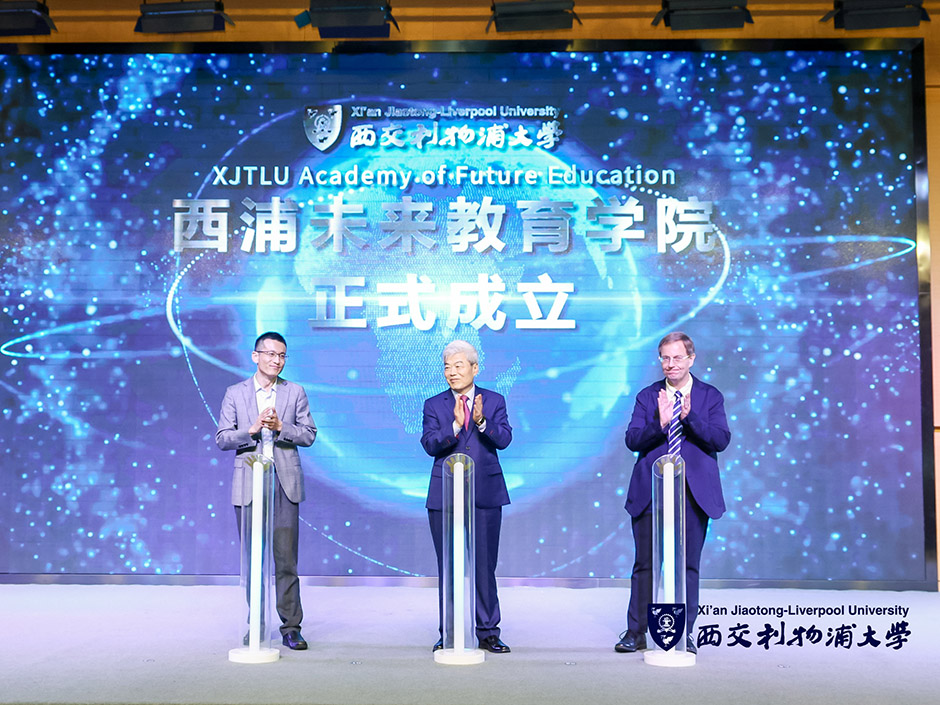
Launch ceremony for the Academy of Future Education in 2021
Dedication to vocation
XJTLU’s founding philosophy was to build an educational ecosystem that supports lifelong development, and we place great emphasis on working with institutions across different stages of learning. Yet entering the field of vocational education was a risky proposition.
There was strong opposition internally, with some asking whether a research-led university’s involvement in vocational education would dilute its brand.
XJTLU’s leadership acknowledged the risk, but fundamentally returned to that founding philosophy, which requires breaking down boundaries. It wasn’t that we wanted to do vocational education – our philosophy naturally extended into vocational and basic education.
This is how XJTLU has gone beyond convention and – through step-by-step exploration – developed its current thinking and practice in building future education across different learning stages. The XJTLU Affiliated School, Shenzhen Basic Education Group, Wuhan Basic Education Group, our experimental high school classes in more than 10 Chinese cities, and our Colleges of Dream-chasers in the provinces of Shandong, Shaanxi, and Hainan are all future-oriented testbeds for basic and vocational education.
Model workers
Many people are now familiar with XJTLU’s 2.0 and 3.0 concepts, but turning them into fully functioning educational models has been far from easy. When Syntegrative Education was first proposed, some outside the University speculated whether we’d “lost our way”. At such moments, philosophy and vision are crucial.
Before XJTLU Entrepreneur College (Taicang) welcomed its first undergraduate cohort in 2022, we provided substantial guidance to students and parents. Professor Youmin Xi, Executive President of XJTLU, also introduced Syntegrative Education repeatedly on almost every public occasion, emphasising how it aims to cultivate high-end industry elites.

Admissions fluctuated in the early years, which is normal, but over the past three years, recognition of the model’s value has grown. On the Taicang campus, students often share with me their inspiring stories, which go far beyond the typical university experience.
After nearly eight years of practical exploration, Syntegrative Education has also found its footing in practice. Our recent book, “Syntegrative Education: A New Education Model for the Future”, offers a systematic introduction.
However, while XJTLU 2.0 and 3.0 are already in operation, most existing systems for staff evaluation, promotion, and resource allocation still follow the logic of XJTLU 1.0. This means we need to keep exploring new kinds of mechanisms and institutions.
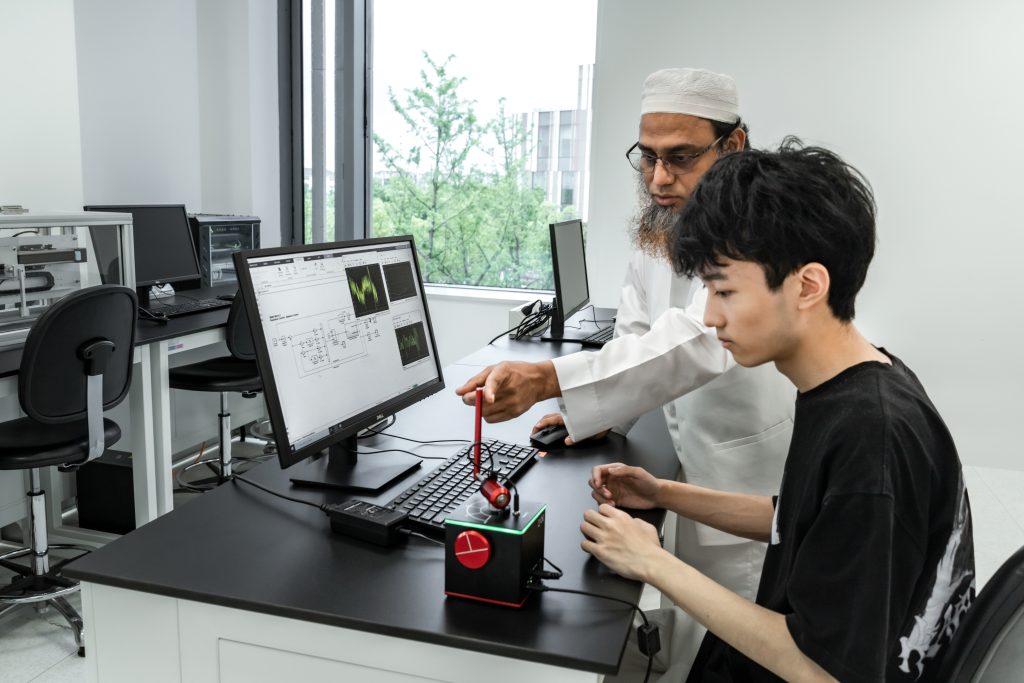
An XJTLU student conducts an experiment with a teacher’s guidance
For example, in traditional education, teachers pass on knowledge through courses. Syntegrative Education adopts a different approach: teachers spend more time on mentoring, industry engagement, and personalised support. Using 1.0 indicators to measure a 2.0 approach doesn’t work.
There are many similar mismatches, such as in research, where traditional indicators still dominate annual evaluations. The system has not yet provided a reward mechanism for academics devoted to project-driven teaching and industry-driven research.
Imagination is invaluable
Over the past decade, my role has changed three times. First, I was a communicator, then my focus was sharing and co-creating ideas, and building a business structure in which different functions interlock and support one another. After becoming Head of XJTLU Entrepreneur College (Taicang) Leadership Team in 2023, my role became strengthening the team’s confidence and making our educational philosophy tangible and practical.
The University’s first 20 years are an undoubted success. While XJTLU 2.0 cultivates international industry elites, 3.0 looks at how a university can integrate into society, mobilise resources, and create an ecosystem for education and innovation.
The University has now proposed XJTLU 4.0, moving from the creation of industrial ecosystems towards the shaping of a broader social ecosystem. For me, this will be XJTLU’s core competitiveness over the next two decades. When we look back on these explorations, their impact may reach far beyond XJTLU.
What we rely on is not the replication of existing models, but trial and error, debate, difficult decisions, and each person’s imagination for the future of education.
Content by Jiayan Ji
Translated by Xiangyin Han
Edited by staff editor and Patricia Pieterse
25 May 2026