



Systemic Inequalities in Global Challenges: A Global Perspective

26 May 2026


What happens when Health Science, Education, and International Relations students collaborate across two continents to examine systemic inequalities?
A unique Collaborative Online International Learning (COIL) project brought together students from XJTLU in China, Durban University of Technology (DUT), and Cape Peninsula University of Technology (CPUT) in South Africa to tackle one ambitious theme: Systemic Inequalities in Global Challenges.
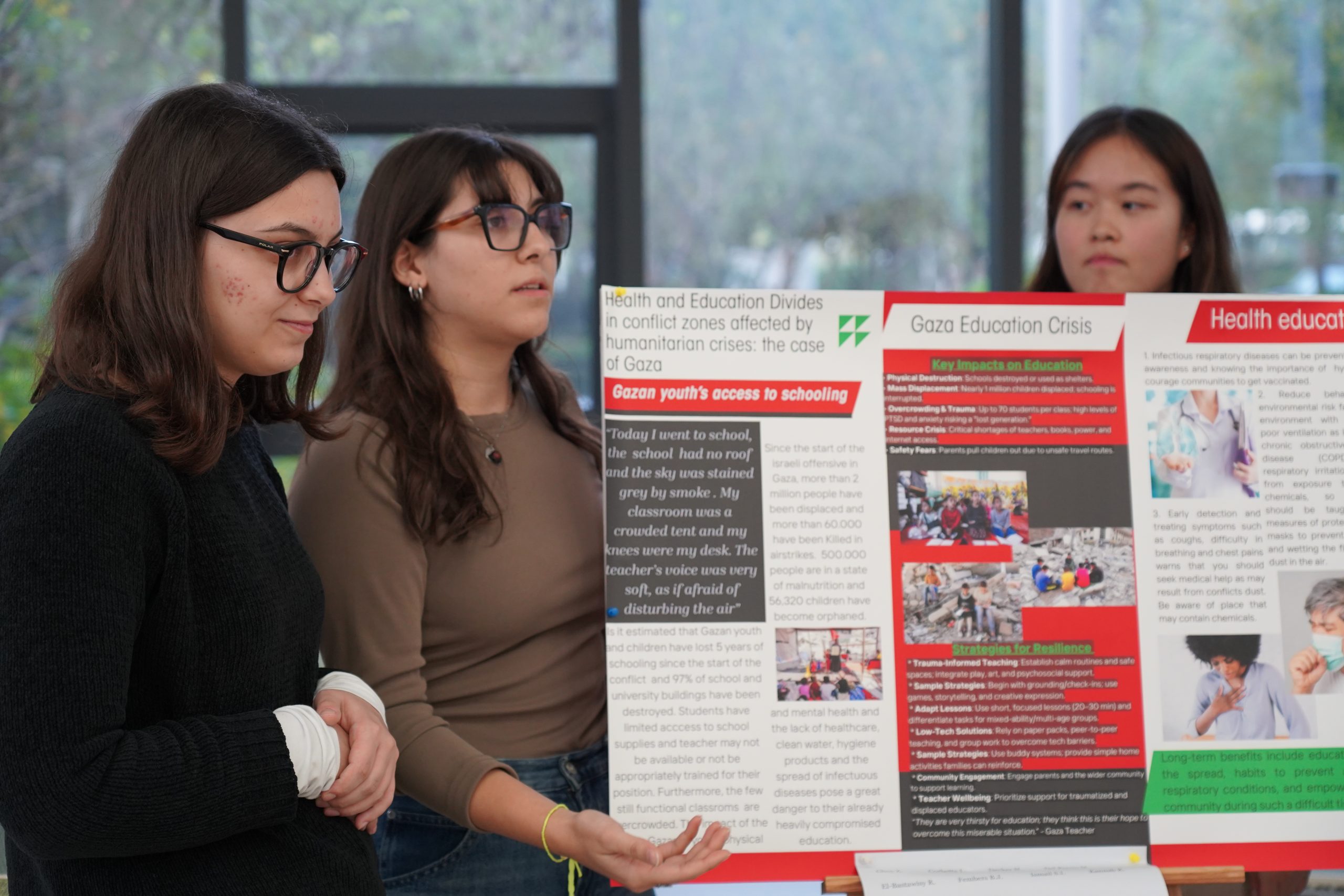
Working in mixed-disciplinary, mixed-nationality groups, students examined five contemporary global cases — from displaced learners in South African schools to the digital divide in rural China, the education crisis in Gaza, and inequities shaping vaccine access across the Global South. Each case demanded that students draw on their disciplinary expertise while engaging with perspectives shaped by radically different lived realities.
As part of the module INS101, Contemporary International Relations, the COIL tasks pushed students towards creative academic expression, producing outputs that were as much acts of storytelling and empathy as they were academic assignments: poems written from the perspective of refugee learners, digital posters on conflict-affected schooling, interactive bulletin boards comparing digital divides across countries, and comic strips illustrating the intersections of inequality, gangsterism, and healthcare access.
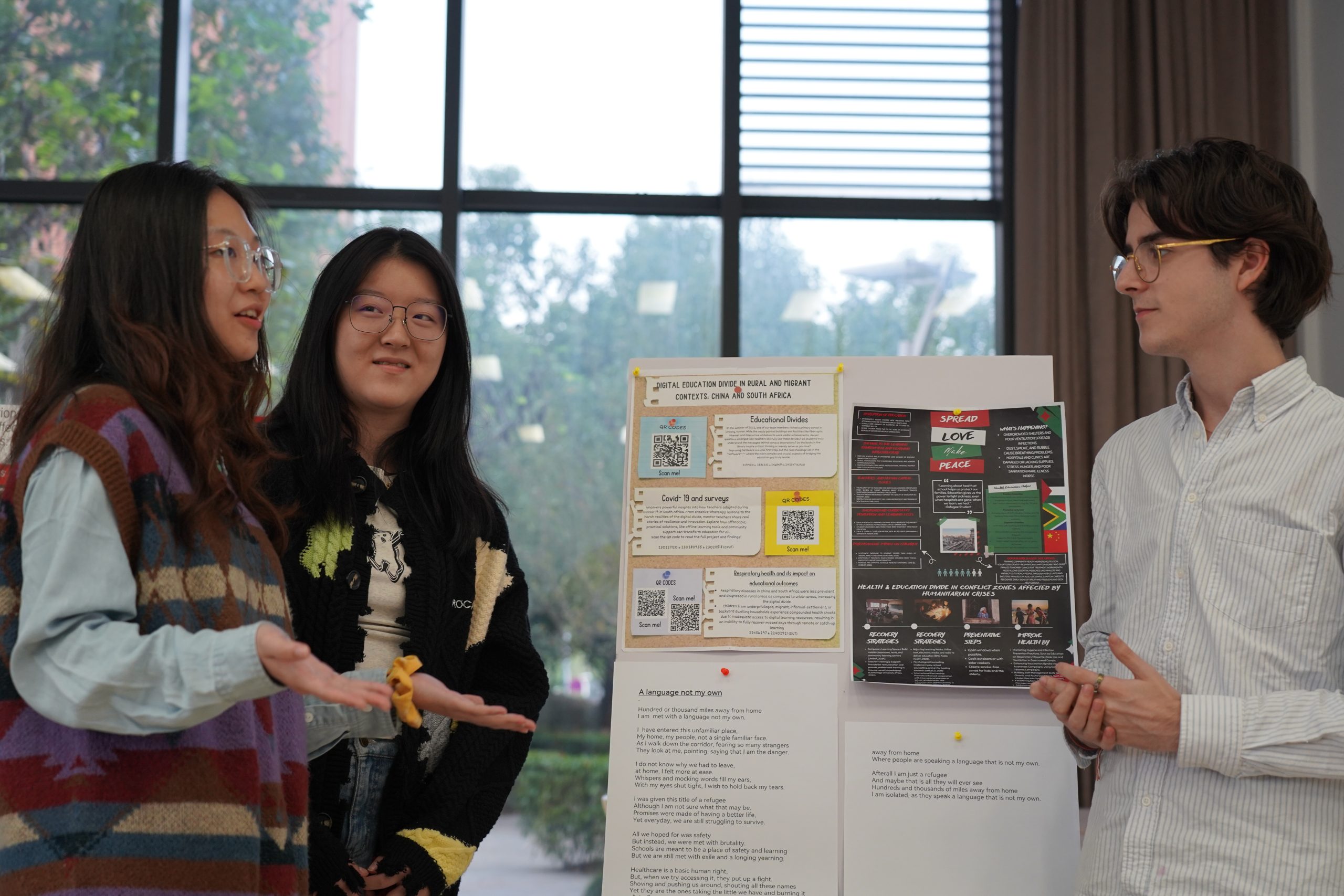
Through this creative, interdisciplinary research, students demonstrated that cross-cultural collaboration can uncover systemic inequalities and generate inclusive, context-sensitive solutions to real-world challenges. For many participants, the project was a first encounter with international, intercultural academic collaboration.
As one CPUT student reflected: "For the first time, I realised how powerful our stories are. When I explained schooling in Cape Town — the gangsterism, overcrowding, hunger — the Chinese students were shocked. Then they shared their migrant schooling challenges. We learned so much from each other."
The project built intercultural communicative competence and digital collaboration skills — essential capacities for tomorrow's global problem-solvers. Lecturers from all three institutions supported the collaboration through weekly check-ins, online discussion groups, and structured guidelines, using platforms including Padlet, Microsoft Teams, and Canva.
The success of this COIL initiative lays the foundation for future cross-continental, cross-disciplinary collaborations—preparing students to lead with insight, empathy, and innovation in an era defined by global crises and intercultural exchange.
👉 Learn more about the project here: https://connect.xjtlu.edu.cn/user/hanning-lu20/systemic-inequalities-in-global-challenges-a-global-perspective
Contributed by Debora Malito, the Department of International Studies
26 May 2026