




17 Jun 2026


As artificial intelligence continues to fundamentally reshape global industries, the profound transformations it is bringing to human living spaces have become a central focus in the academic field of urban development.
From 6 to 7 June 2026, the 2nd XJTLU–UNNC Joint Academic Conference and the 7th UNNC Symposium on Architecture and Urbanism were held at Xi’an Jiaotong-Liverpool University’s SIP campus.
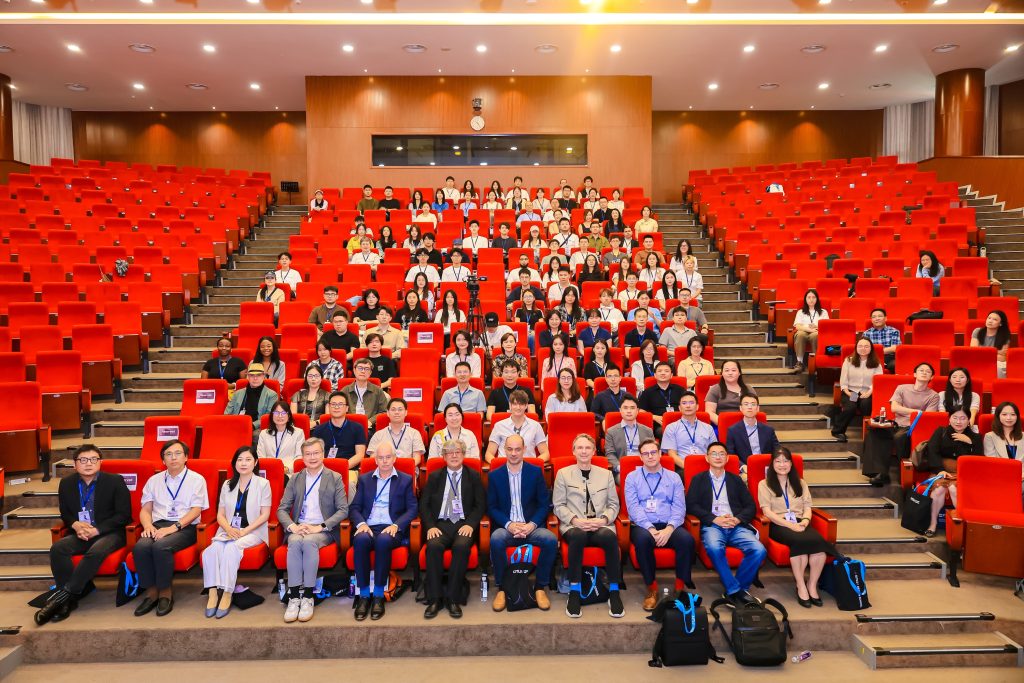
The two-day conference was hosted by the Design School of Xi’an Jiaotong-Liverpool University (XJTLU) and jointly organised and supported by the Human-centered Sustainable Interaction Research Center and Department of Architecture and Built Environment (ABE) at University of Nottingham Ningbo China (UNNC), School of Architecture and Urban Planning at Suzhou University of Science and Technology (SUST), School of Architecture at Soochow University (SUDA), Journal of GUIHUA: Frontiers of Urban and Rural Planning (FURP), and Journal of China City Planning Review (CCPR). The conference was moderated by Dr Yanhui Lei from the Design School of XJTLU.
Opening remarks were delivered by Professor Konstantinos Papadikis, Associate Vice President for Education at XJTLU; Professor Marc Aurel Schnabel, Dean of the Design School; Professor Wu Deng, Head of Human-centered Sustainable Interaction Research Center at UNNC; Professor Dehua Qiu, Dean of the School of Architecture and Urban Planning at SUST; Professor Leilei Sun, Associate Dean of the School of Architecture at SUDA; Dr Edward Cooper, Head of the Department of Architecture and Built Environment at UNNC; and Professor Bing Chen, Head of the Department of Urban Planning and Design at XJTLU. The speakers extended their best wishes for the success of the conference.
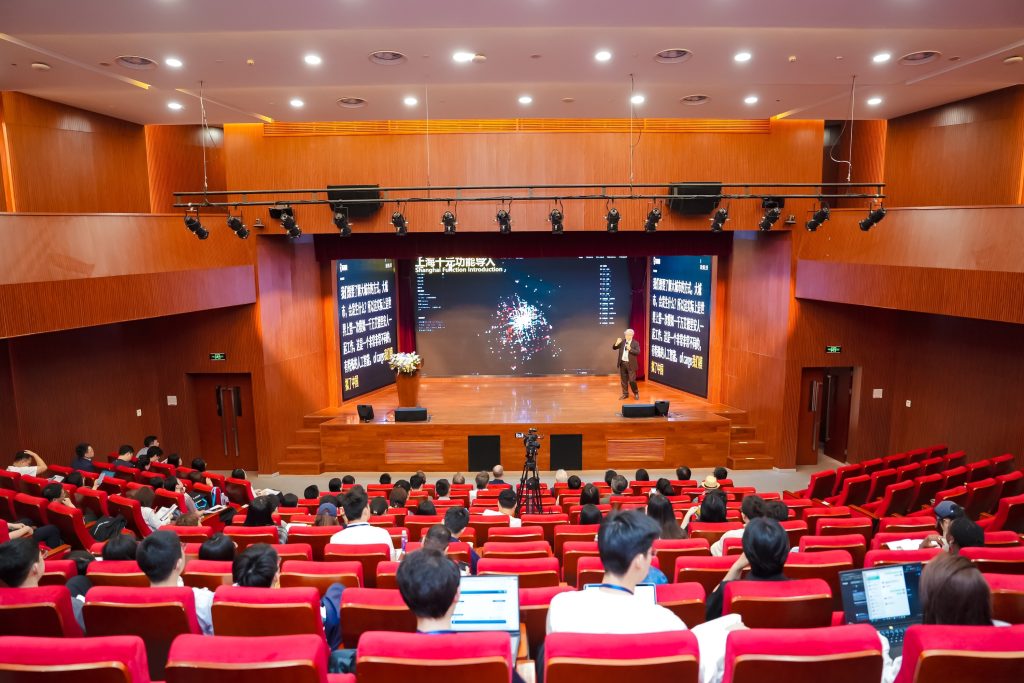
Centred on the theme “Future Human Habitats in the Era of AI,” the conference brought together leading researchers, scholars, and industry experts from China and abroad to examine how intelligent technologies can be used to create sustainable, efficient, and equitable built environments, and to share interdisciplinary and innovative perspectives.
The keynote speakers came from world-leading academic institutions and authoritative academic journals. Experts who attended and shared their insights included Academician Zhiqiang Wu from the College of Architecture and Urban Planning at Tongji University; Professor Hui Chi Man Eddie from the Department of Public and International Affairs at City University of Hong Kong and Editor-in-Chief of Habitat International; Professor Yan Tang from the School of Architecture at Tsinghua University and Youth Changjiang Scholar; Professor David Shaw, Professor Emeritus of University of Liverpool and Changjiang Chair Professor of Nanjing University; Professor Yuan Lai from the School of Architecture at Tsinghua University and Special Research Fellow; Yuheng Jiang, Executive Director of Master planning at AECOM; and Professor Wu Deng from the Department of Architecture and Built Environment of UNNC and Head of Human-centered Sustainable Interaction Research Center of UNNC.
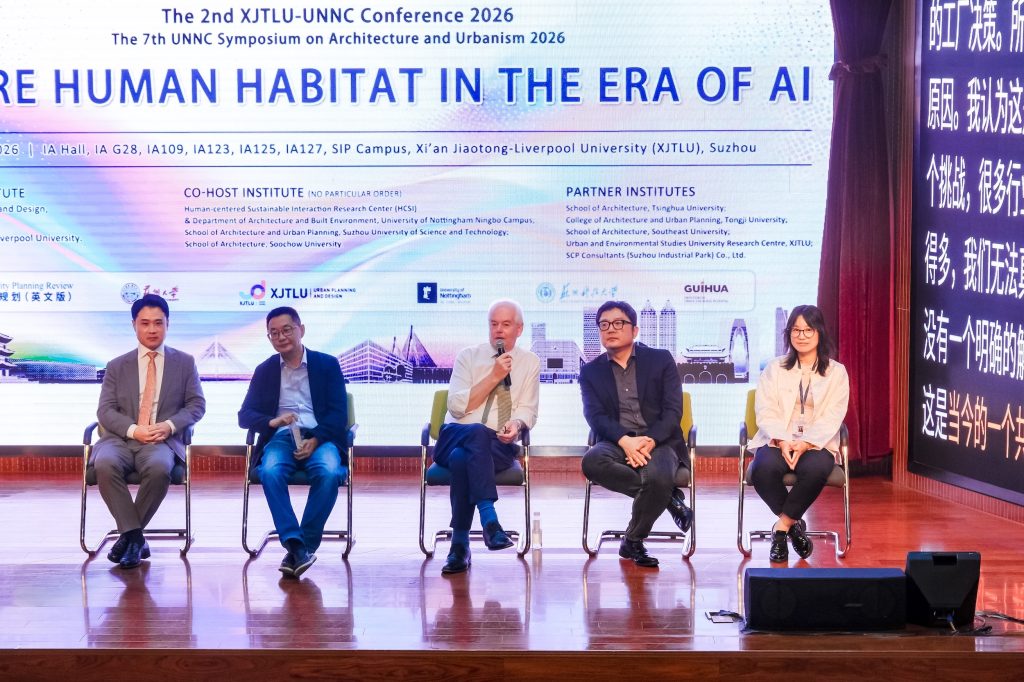
Academician Wu’s keynote speech, titled “Ultra Agent Simulation in the Human-AI (HAI) Era,” systematically presented a development vision for simulating communities of urban intelligent agents in the era of human–AI collaboration. His speech focused on how artificial intelligence is reshaping urban cognition, planning paradigms, and governance systems, offering a new framework for thinking about future urban development.
Professor Hui systematically explained how future living spaces are evolving from static bricks-and-mortar structures into active, self-regulating adaptive ecosystems. He discussed smart homes, the autonomous cognitive city, bio-habitats, and the assessment of socioeconomic impacts, while emphasising the need for mechanisms that balance machine intelligence and human agency in future spatial design.
Professor Tang shared an analysis of collaborative networks in urban regeneration based on the application of large language models. Through empirical analysis of three specific cases, she explored transferable mechanisms and practical experience for urban regeneration.
Professor David Shaw offered a series of reflections on the “art and science” of spatial planning in the era of artificial intelligence, encouraging participants to consider how people’s lives can be improved in the AI era.
Associate Professor Yuan Lai focused on decoding urban life through artificial intelligence from a human-centred perspective. He shared research on spatial measurement and the analysis of human settlement activities based on the integration of urban multimodal information through large models, supporting future-oriented smart city planning and governance practices.
Yuheng Jiang, Executive Director at AECOM, emphasised the need to go back to human-centric as the true measure for urban design in the era of AI. Professor Wu Deng presented research findings on the analysis and prediction of urban solar photovoltaic distribution in Australia based on deep learning and explainable AI.
To respond to the multiple challenges facing contemporary urban planning, the conference held in-depth discussions around four interdisciplinary themes: Sustainability, Informatics, Entrepreneurship and Management, and Social Inclusion. The programme comprised 15 parallel sessions, including a Young Scholar Seminar with Journal Editors and a New Book Launch.
Five special-issue journal sessions were also organised to support participating experts and scholars in publishing their research after the conference.
These were associated with Frontiers of Urban and Rural Planning (FURP), China City Planning Review (CCPR), Transactions in Urban Data, Science, and Technology (TUS), Buildings, and China Ancient City.
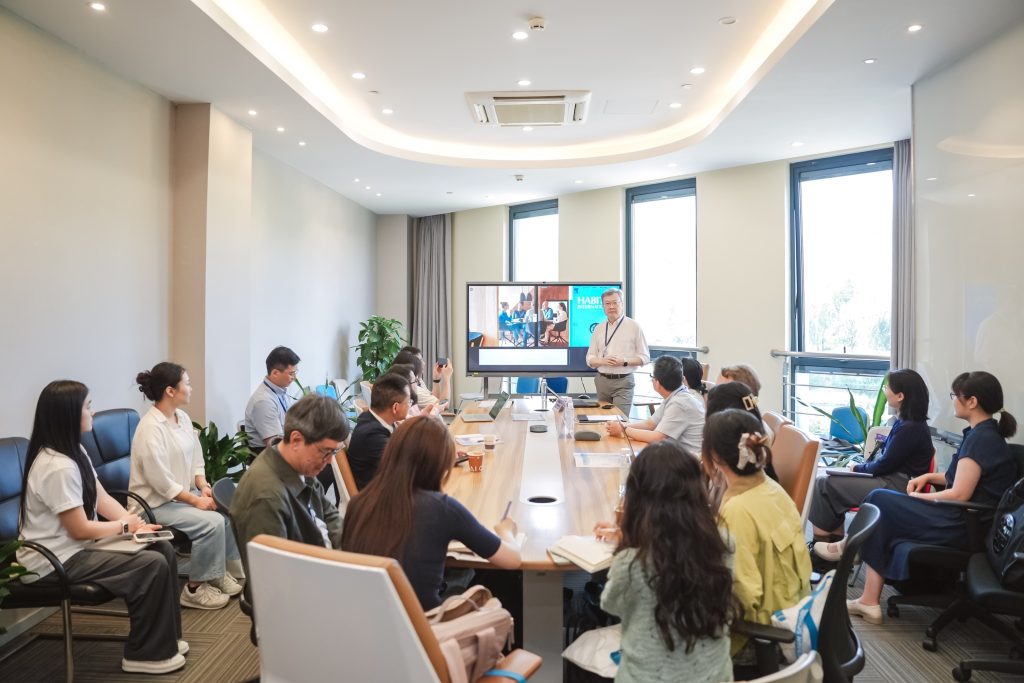
The contributions of experts from China and abroad brought substantial academic authority to the conference and further highlighted the urgency and importance of cross-disciplinary international collaboration at a time when artificial intelligence is continually expanding the boundaries of architecture and urban planning.
Our academic conference also received broad support and close collaboration from leading universities and academic institutions in China, including the School of Architecture at Tsinghua University, the College of Architecture and Urban Planning at Tongji University, and the School of Architecture at Southeast University.
The keynote speeches were livestreamed on the World Urban Planning Education Network platform (WUPENiCity). Over the two days, more than 4,000 attenders watched the livestream, and the broadcast received more than 47,000 likes, significantly increasing the conference's social impact.
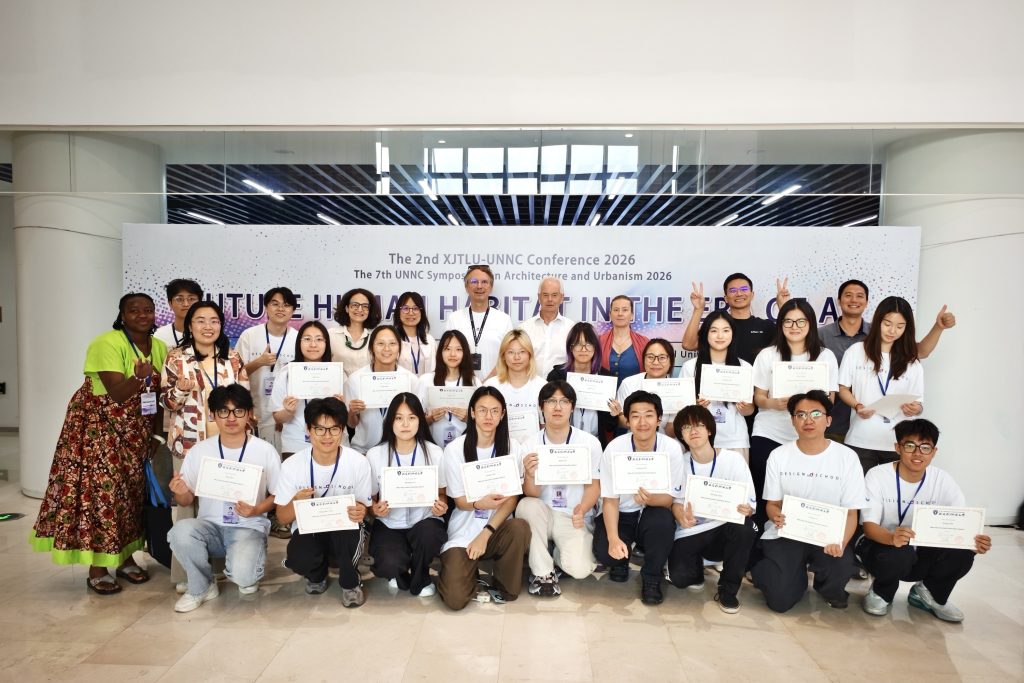
Furthermore, acknowledgement must be extended to the conference support team, as well as the volunteers from the Department of Urban Planning and Design at XJTLU and the School of Architecture and Urban Planning at SUST, whose invaluable assistance laid a solid foundation for the conference’s resounding success.
By Yi Qian
17 Jun 2026