






01 Jun 2026


On 29 April 2026, Dr Yihan Li, Assistant Professor in the Department of Finance at the International Business School Suzhou (IBSS), Xi’an Jiaotong-Liverpool University (XJTLU), was invited as a guest speaker to a career development sharing event organised by NYU Shanghai and the CFA Shanghai Society. The event provided students passionate about the finance industry with deep insights from the front line and offered candid advice on academic and career development. Apart from Dr Li, who represents the academic perspective, the other panellists came from first‑tier financial institutions such as Morgan Stanley Futures China and Dongcai Securities. As a CFA charterholder, Dr Li drew on his academic research background and his buy‑side and sell‑side experience in asset management to share his perspectives on the key aspects of secondary market industry research and personal career growth.
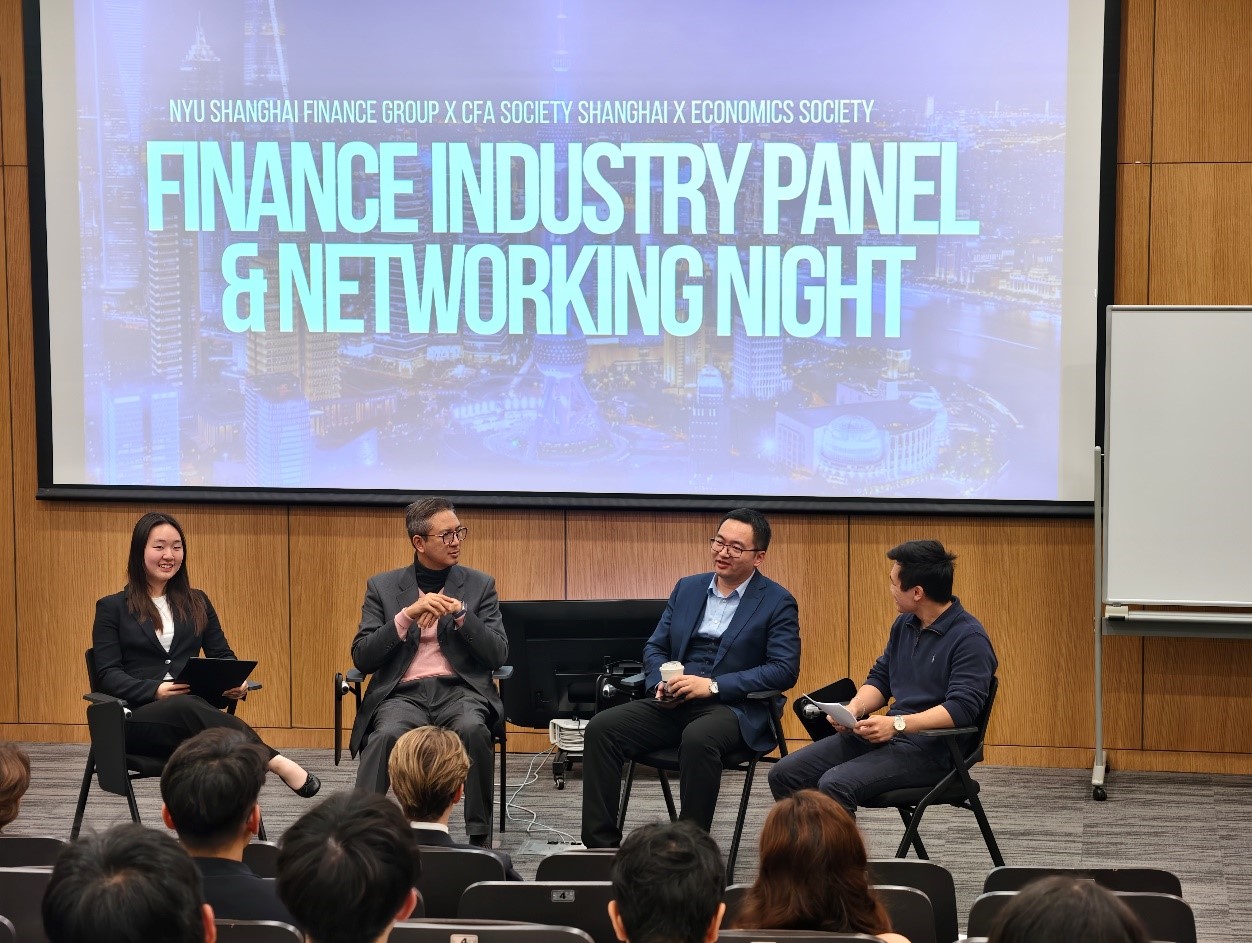
Dr Li systematically dissected the daily work and core essence of secondary market investment research, primarily based on his own experience as a sell‑side analyst at a securities research institute. He first clearly described the core work profile of a sell‑side analyst, characterising it as “a cyclical process of continuous information gathering, in‑depth analysis and updating, and ultimately the formation of effective output”. The daily work of a sell‑side analyst includes collecting information from a wide range of sources – corporate site visits, small‑scale exchanges, public information and more. On this basis, the analyst rigorously updates financial models and formulates investment views. Finally, through roadshows, conference calls and other means, the analyst communicates those investment views and the underlying logic clearly and persuasively to buy‑side institutional investors such as mutual funds and insurance asset managers.
Dr Li further elaborated on two core skills required for success in secondary market research. The first is a keen and rigorous ability to verify information and data – the bedrock of all analytical conclusions. The second is proactive and effective communication and presentation skills, which determine whether research conclusions and investment recommendations are accurately understood and accepted. Excellent analysts must be able to translate complex data and logic into clear, insightful narratives to stand out in the highly competitive secondary market. Dr Li went on to note that the functioning of financial markets is heavily dependent on information and trust. At its heart, all the technical work of subjective secondary market research is still about human interaction and mutual trust. What an analyst provides is not just numbers on a report and investment recommendations; behind them lies a long‑accumulated track record of professional judgement and reliability. Therefore, a central part of the job is to establish and maintain a deep relationship of trust with institutional investors – a trust built on professional competence. Such trust is not built overnight but is earned through every rigorous information update, every meticulously constructed and objective financial model and report, every honest and timely communication, and a sense of responsibility and professional ethics that weathers market volatility.
Dr Yihan Li’s invitation to speak at this event fully demonstrates the ability of IBSS faculty to closely connect theory and practice, as well as their active engagement with the financial industry in service of society.
01 Jun 2026