






05 Jun 2026


The Paper Development Workshop (PDW) for “Technological Forecasting and Social Change” (TFSC), co-hosted by the journal and International Business School Suzhou (IBSS) at Xi’an Jiaotong-Liverpool University (XJTLU), took place at IBSS from 28 to 29 May 2026.
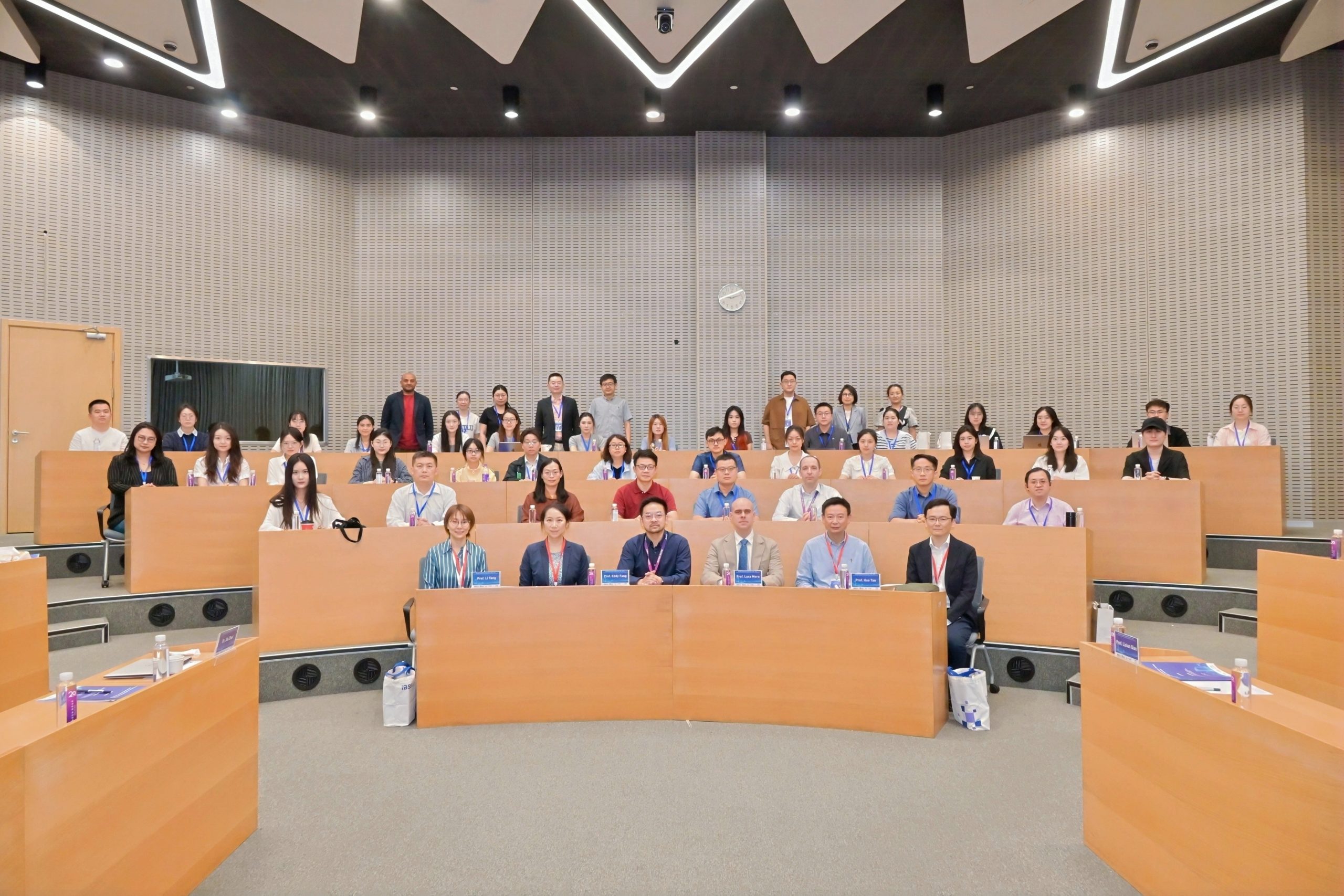
Held as part of XJTLU’s 20th anniversary activities, the workshop brought together TFSC’s Editor-in-Chief, Associate Editors and Editorial Board members, along with more than 50 academics and postgraduate researchers from universities across mainland China.
The two-day event gave researchers the opportunity to receive direct feedback from journal editors and experience scholars, helping them strengthen their manuscripts and better understand the expectations of international academic publishing.
The opening session on 28 May was chaired by Professor Lixian Qian, Associate Dean for Research at IBSS. Opening remarks were delivered by Professor Eddy Fang (Dean of IBSS), and Professor Luca Mora (Co-Editor-in-Chief of TFSC).
Reflecting on his own connection with the journal, Professor Fang remarked “One of my first papers was published in TFSC, an experience that proved formative to my academic career.” He added that they journal’s rigorous peer-review process and academic support had played an important role in his development as an academic. He added that he hoped that the workshop would help participants overcome common publishing hurdles and navigate the publication process with greater confidence.
Professor Mora explained that the workshop was designed to build a direct communication channel between authors, editors and reviewers. He noted that this kind of exchange can help researchers better align their work with the journal’s scope and editorial priorities within the field of technological forecasting and social change amid increasingly competitive top-journal submissions.
The TFSC global PDW series was piloted in 2025, with events hosted in Edinburgh, Beijing and Naples, before expanding to Milan, Qingdao and Suzhou throughout 2026. The IBSS workshop was the largest edition so far, with strong participation and positive preliminary feedback from attendees.
Following the opening session, Professor Mora delivered the keynote address. Drawing on his extensive research in smart city governance and urban innovation alongside his editorial experience, he mapped out emerging research trends and best practices for manuscript writing in technological forecasting and social change, offering authoritative advice for developing publishable research.
Across the workshop, 14 parallel panel sessions were held. Authors of 41 selected papers presented their research on topics including artificial intelligence, digital innovation, green technology and urban governance. Members of the TFSC editorial team facilitated detailed discussions and provided tailored feedback to help authors improve and polish their draft manuscripts.
On 29 May, Joe d’Angelo, Publishing Director for Social Sciences at Elsevier, outlined four key areas of Elsevier’s global scholarly publishing strategy. His presentation covered Elsevier’s upgraded submission platform, reformed peer review frameworks, developments in academic integrity support and guidelines for the use of artificial intelligence within academic publishing.
Attendees also discussed topics including platform functionality, research impact metrics and new journal development. d’Angelo said Elsevier would continue improving its services to support the effective sharing of academic findings.
Professor Mora closed the workshop by summarising the key outcomes and thanking the invited speakers. He thanked all invited speakers, editorial panellists and participating scholars for their active engagement. He also confirmed follow-up support would be provided for revised manuscripts, helping participants to continue developing their work after the event.
By establishing a high-level academic exchange platform, for open discussion, constructive feedback and direct engagement, the workshop helped researchers strengthen their research design and academic writing. It also supported IBSS’ widder efforts to promote high-quality scholarship and increase the international visibility of research in technological forecasting and social change.
05 Jun 2026