





17 Jul 2026


The 2026 LAMOST User Training Workshop and Symposium was held at Xi’an Jiaotong-Liverpool University (XJTLU) from 9 to 10 July. A total of 146 researchers and LAMOST users from 41 universities and research institutions, including the National Astronomical Observatories of the Chinese Academy of Sciences (NAOC), XJTLU, Tsinghua University, Peking University, Beijing Normal University, Nanjing University, Yunnan University, Shandong University and Hebei Normal University, gathered at XJTLU to participate in training sessions and academic discussions on LAMOST scientific research, data applications and the latest developments in the field.
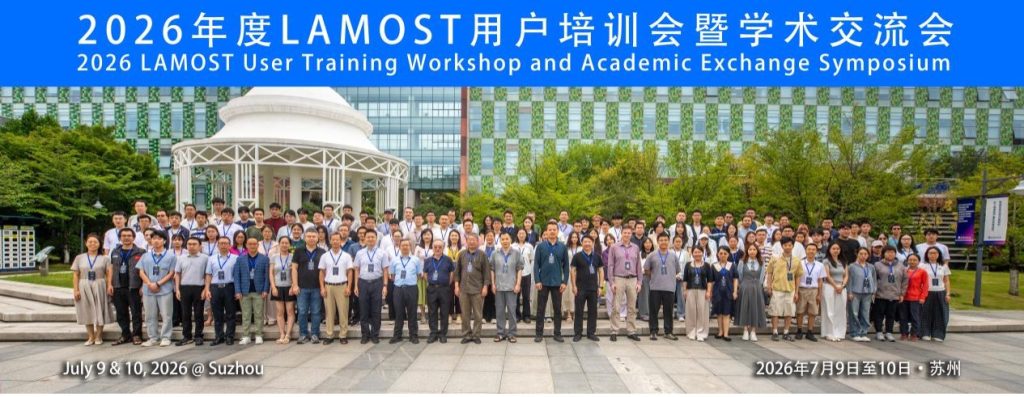
At the opening ceremony, Professor M.B.N. (Thijs) Kouwenhoven, Associate Dean for Research of the School of Mathematics and Physics, welcomed the participants and introduced the recent development of the Department of Physics, XJTLU. He expressed his hope that the workshop would provide a valuable platform for LAMOST users to exchange knowledge, foster academic collaboration and encourage early-career researchers to engage with peers, broaden their research perspectives and explore future collaborative opportunities.
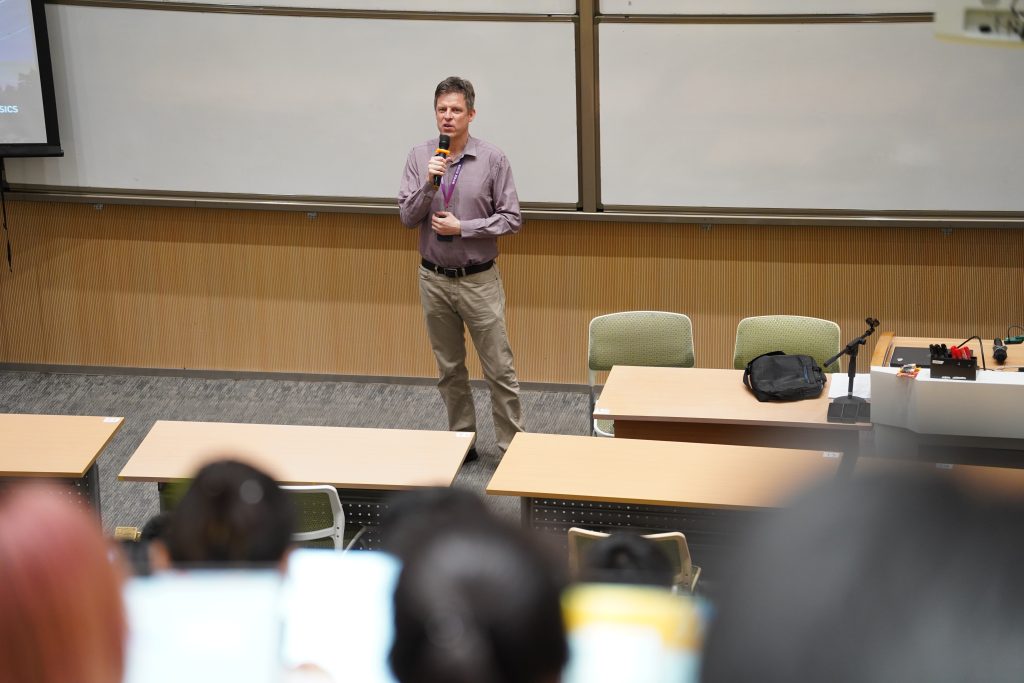
Professor Donghui Quan, Head of the Department of Physics, also welcomed the participants and chaired the morning keynote session on 9 July.
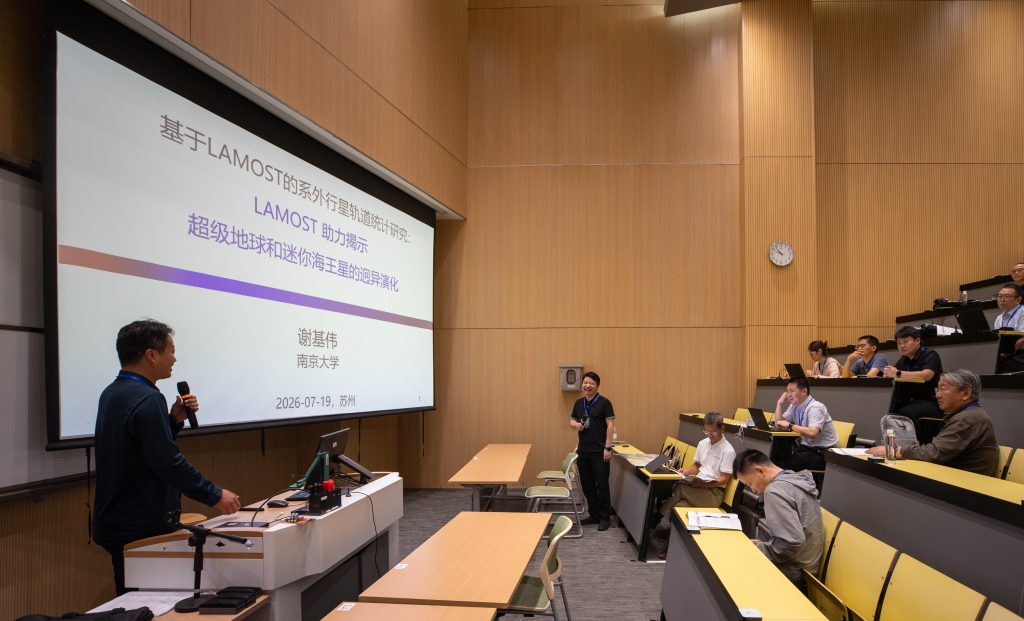
The two-day workshop featured 35 keynote presentations, organised into six thematic sessions: LAMOST Overview and Invited Talks; the Milky Way and Galaxy Evolution; Data Processing and Calibration Methods; Hands-on LAMOST Data Training; Stellar Physics and Peculiar Stars; and Stellar Activity and Exoplanet Science.
Through intensive training and academic exchange, participants gained a deeper understanding of the LAMOST data system and learned about recent high-quality research achievements enabled by LAMOST data in astronomy. Practical training sessions and dedicated Q&A discussions provided participants with hands-on experience in downloading, processing and analysing LAMOST data, helping experienced users address technical challenges while equipping new users with essential practical skills.
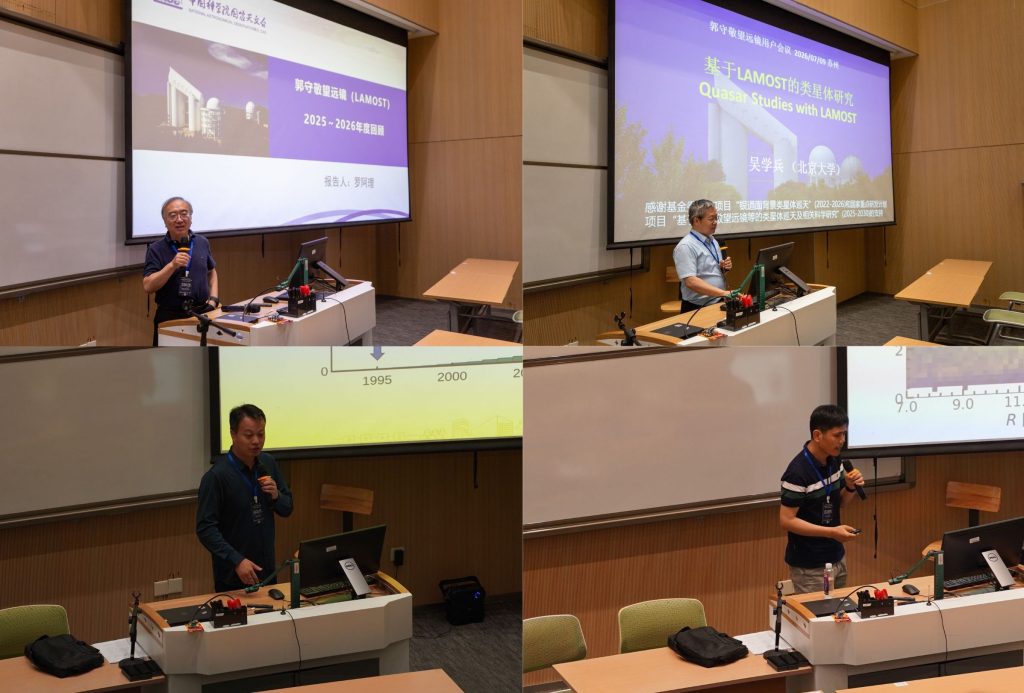
As one of China's major large-scale spectroscopic survey facilities, LAMOST (Large Sky Area Multi-Object Fibre Spectroscopic Telescope) continues to provide high-quality observational data for astronomical research worldwide. The workshop further strengthened collaboration within the LAMOST user community and provided an effective platform for early-career researchers to develop data analysis skills and establish new research partnerships.
By Qinru Liu
Text and selected images courtesy of the National Astronomical Observatories, Chinese Academy of Sciences
17 Jul 2026