




30 Jul 2026


Lecture Review
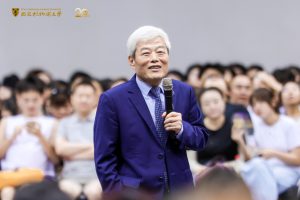
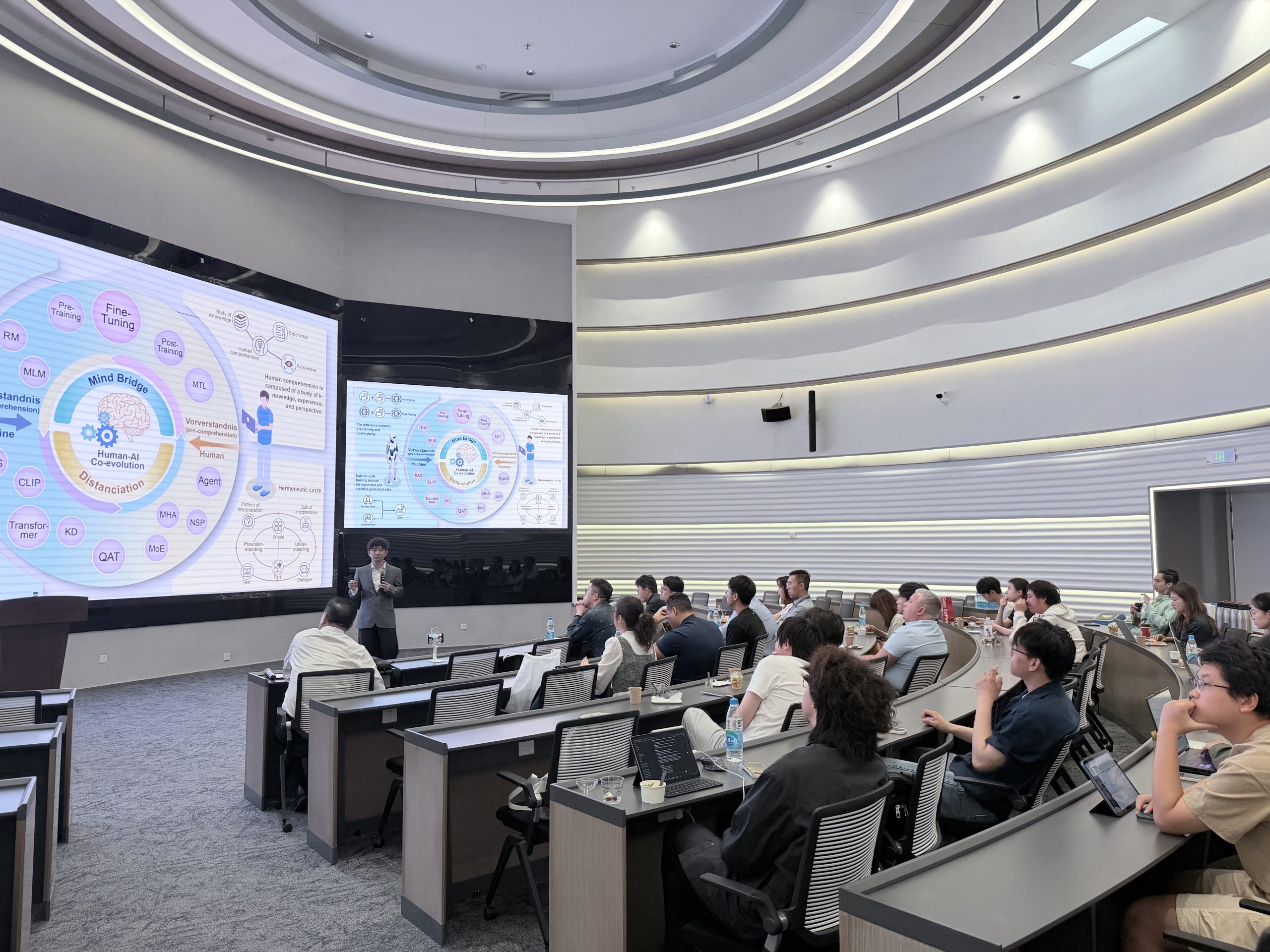
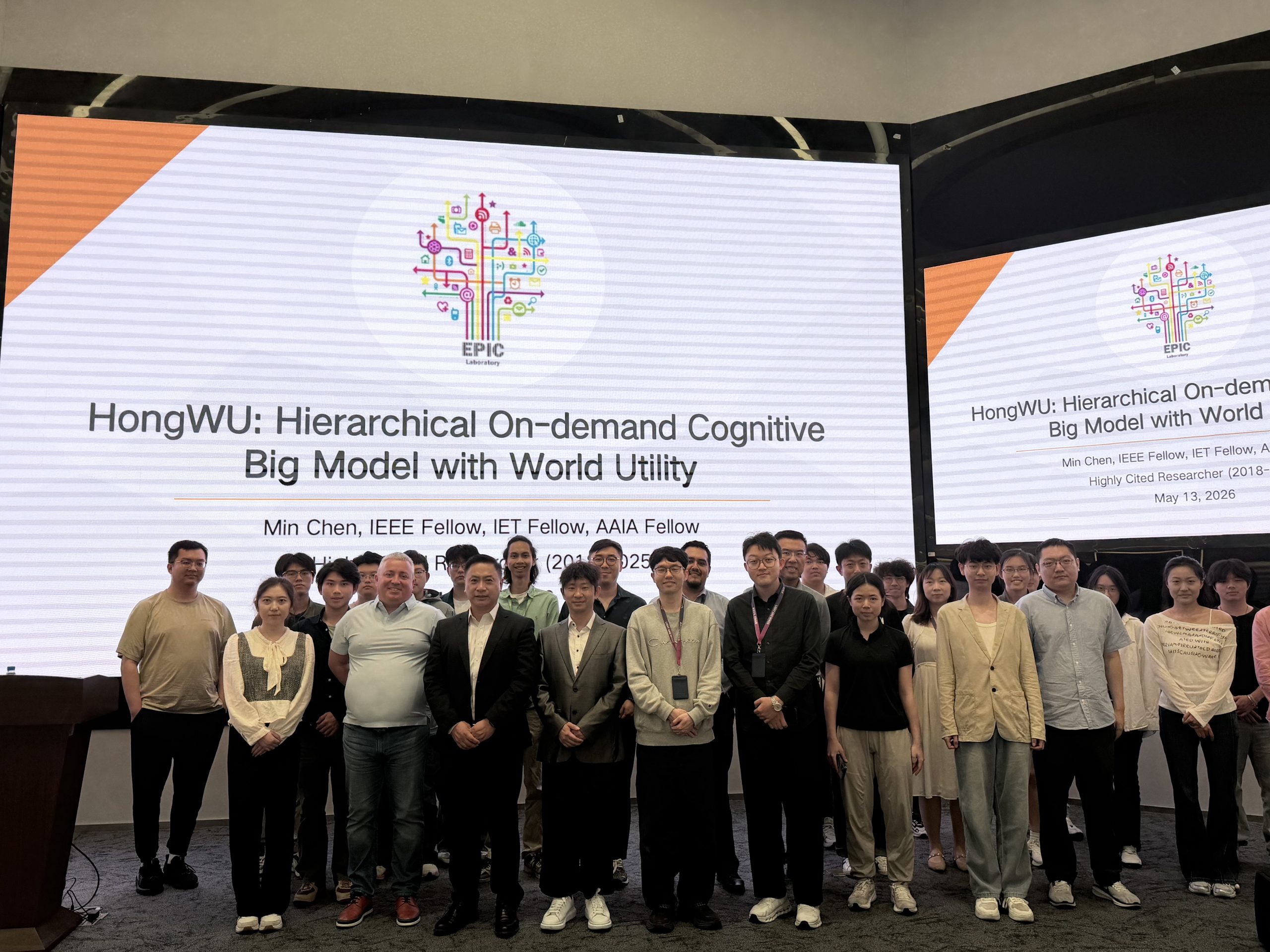
On 13 May 2026, the School of Internet of Things had the honour of hosting Professor Min Chen, a distinguished IEEE Fellow and leading expert in artificial intelligence, for an enlightening session on the future of large-scale models and cognitive computing.
PART 01 Introduction to the Guest Speaker
Professor Min Chen
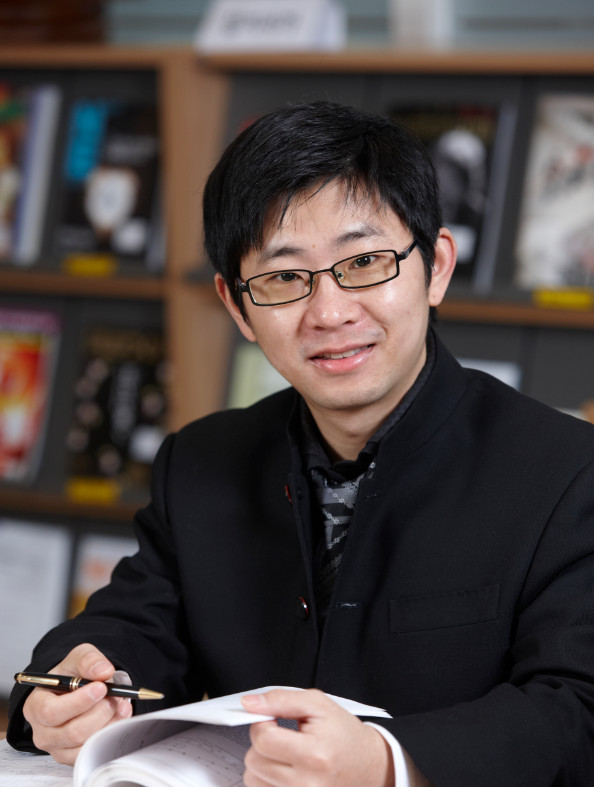
Professor Min Chen is a Professor and Doctoral Supervisor at the School of Computer Science, South China University of Technology. He is an IEEE Fellow, IET Fellow, and AAA Fellow, serving as Chief Scientist of a National Key Research and Development Programme.
Professor Chen has been named a Clarivate Highly Cited Researcher for eight consecutive years (2018–2025) and ranks among the World's Top 2% Most Influential Scientists. With over 55,000 citations on Google Scholar and an H-index of 103, his academic influence is globally recognized. He has published more than 200 papers in top venues including Science, Nature Communications, and CCF Class A conferences, with 34 ESI Highly Cited Papers and a single paper cited over 6,060 times.
PART 02 Lecture Focus: The HongWU Large Model
01 The HongWU Large Model
The seminar introduced HongWU (Hierarchical On-demand Machine-Cognitive Model with World Utility), a unified cognitive framework designed to address fundamental bottlenecks facing contemporary large-scale models: training data depletion, insufficient alignment with human intent, and inadequate grounding in physical systems.
HongWU integrates physical models, data sources, and intelligent tools into a unified tool matrix orchestrated by the foundation model. By leveraging parameter-efficient fine-tuning and human-in-the-loop feedback, it dynamically optimises the tool matrix and reasoning process.
02 Technical Highlights and Future Prospects
The HongWU framework integrates physical models, multi-source data, and intelligent tools into a unified tool matrix orchestrated by the foundation model. Through parameter-efficient fine-tuning and human-in-the-loop feedback, the model dynamically aligns its objectives with human needs. Its federated knowledge engine, multi-level spatiotemporal reasoning, and multi-agent workflow ensure physically consistent reasoning and enable scalable management of complex engineering systems.
Professor Chen's work establishes a foundational architectural framework for the next phase of AI development, moving beyond mere prediction toward practical decision support grounded in physical reality. The lecture offered students a clear vision of how big cognitive models and multi-agent AI will shape the future of intelligent systems.
Conclusion
The AIoT+X Distinguished Lecture Series aims to bring together leading scholars and industry experts to explore the intersection of AIoT technology and various disciplines, driving innovation and collaboration in the field of intelligent systems.
Stay tuned for upcoming events in the AIoT+X Distinguished Lecture Series!
30 Jul 2026