







21 Aug 2026


In semiconductor photocatalysis, a common experimental workflow is to synthesize materials, test their performance, and then use theory to help explain the results.
However, PhD student Yang You from XJTLU's School of Science asked a fundamentally different question:
Can we predict how a photocatalyst should be designed before it is even synthesized?
Across two recent studies, Yang and his collaborators developed and tested a Fermi-level-based framework for materials design.
The Core Breakthrough: Fermi Level as a Design Tool
Density functional theory (DFT) is a powerful tool for calculating material properties. However, conventional calculations typically evaluate energetics for specified atomic and electronic configurations, while the thermodynamic state of a semiconductor surface can vary with its environment.
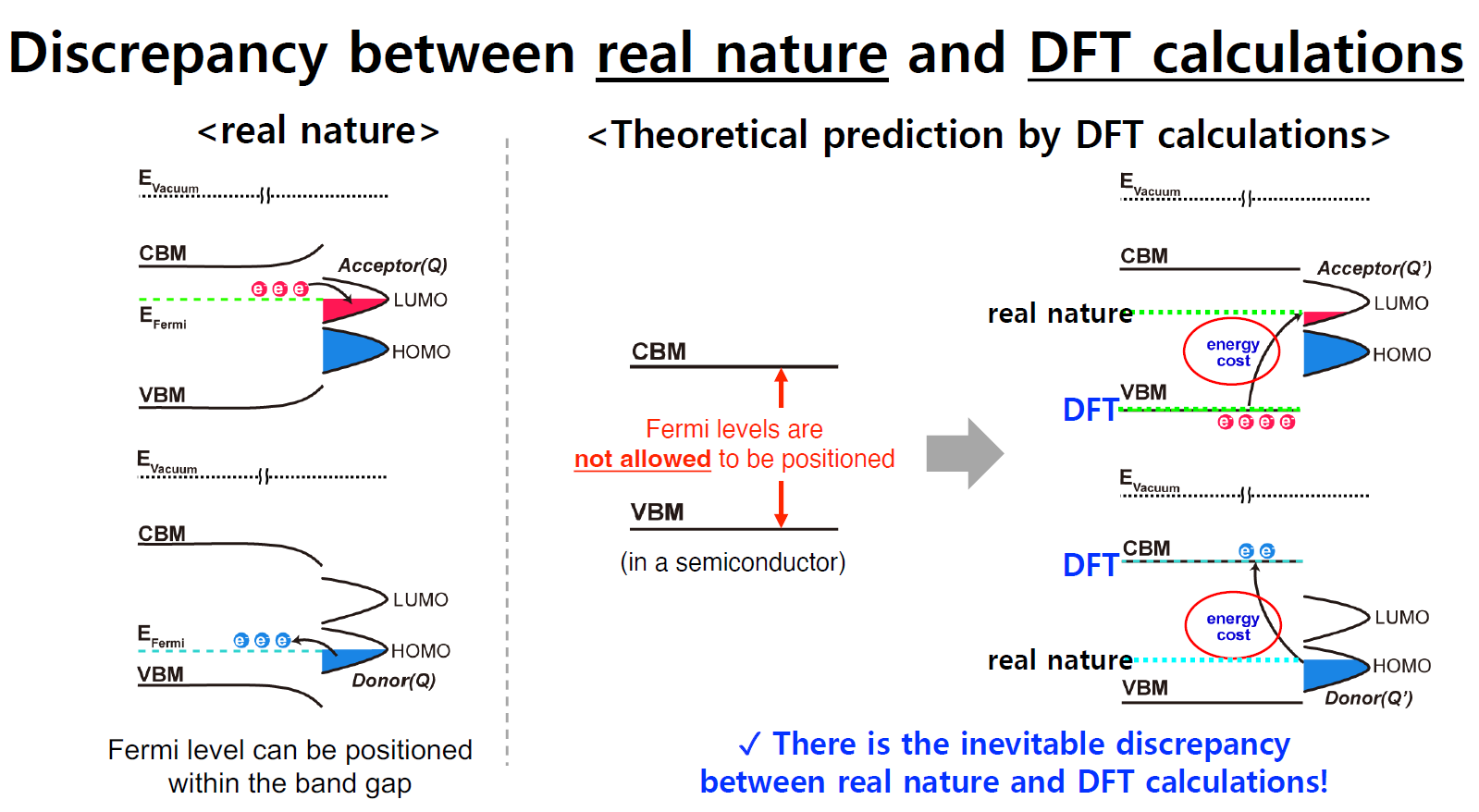
Figure 1: Discrepancy between the real physics and the electronic structure of semiconductors obtained from DFT calculations
The problem? Semiconductor surfaces don't stay fixed. Doping, defects, interfaces, and illumination all shift the surface Fermi level — a critical thermodynamic variable that governs charge transfer.
Yang You's team proposed a paradigm shift: treat the Fermi level not as a calculation output, but as a design coordinate.
Instead of asking "What happens on this structure?", they asked: "Within what design window should the material operate?" DFT energies become inputs for constructing thermodynamic design landscapes, not final answers.
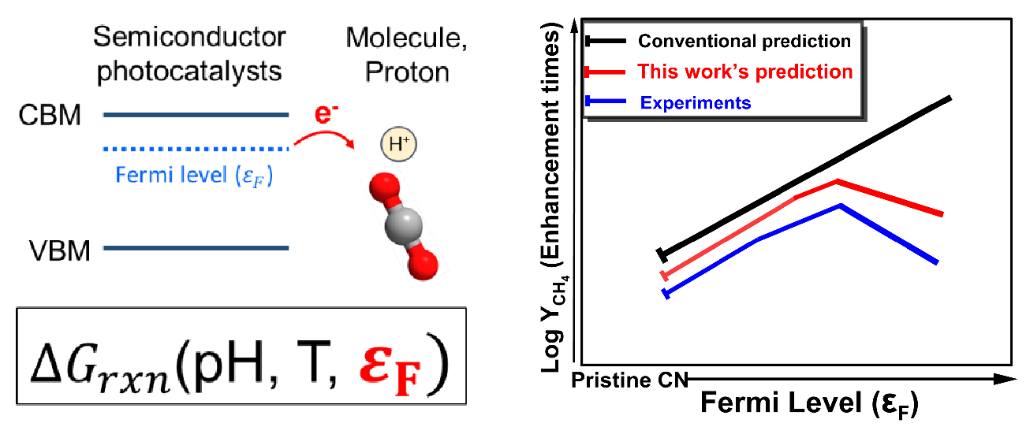
Figure 2 Theoretical point of view setting the adsorption energy of a catalytic reaction intermediate
as a function of Fermi level, not a constant value.
From Theoretical Prediction to Experimental Validation
In the study published in Advanced Science, the XJTLU team developed a model linking nanoparticle work function, surface Fermi level, and cocatalyst coverage to reaction rates. The ‘a priori’ predictions of the optimal cocatalyst and its coverage by the XJTLU research group was experimentally validated by a renowned research group at Sungkyunkwan University (SKKU), led by Prof. Jung Kyu Kim.
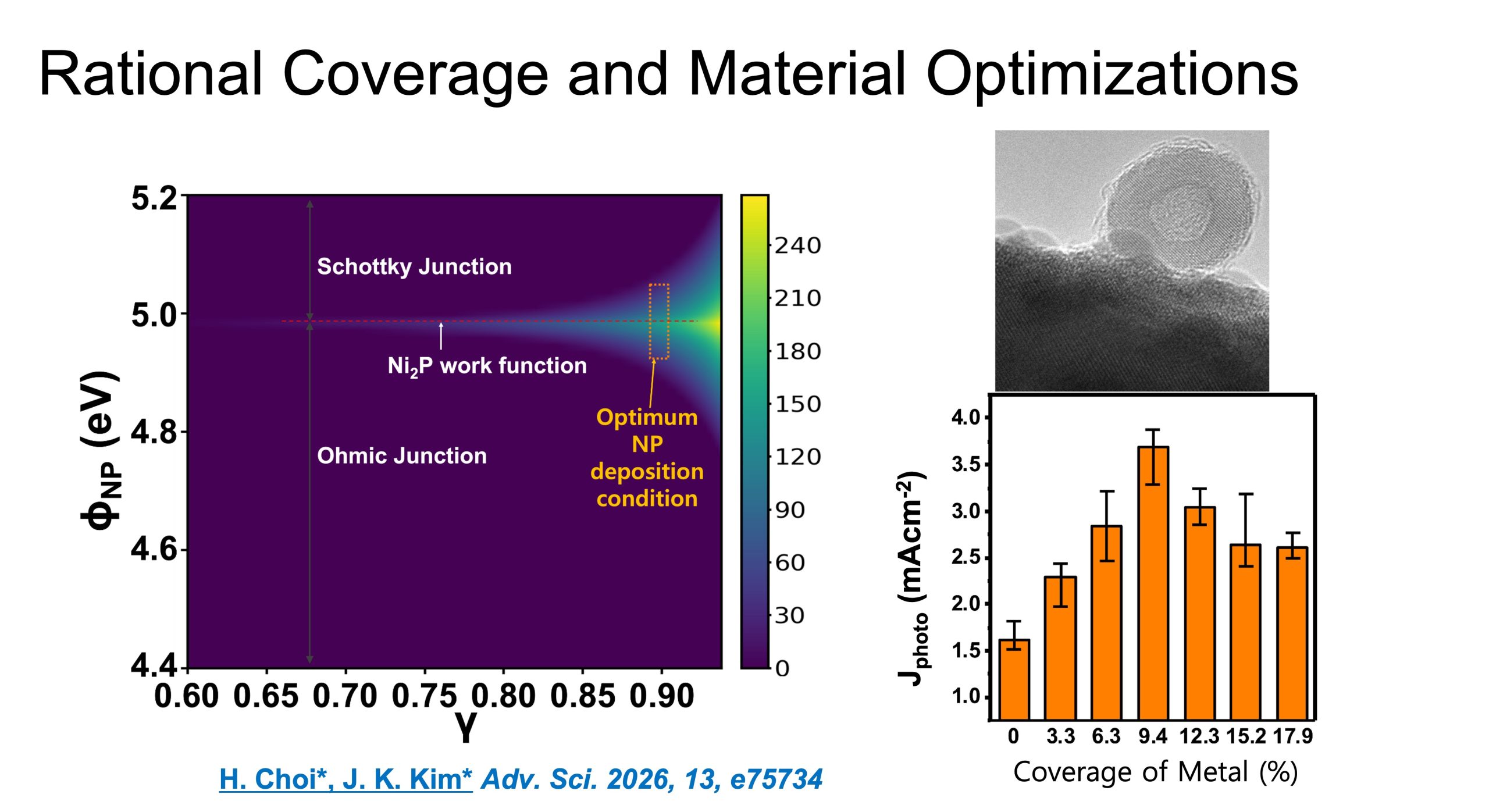
Figure 3 "a priori" cocatalyst selection (Ni2P) and its coverage optimization on BiVO4 for the maximum photoelectrochemical (PEC) water splitting activity.
The result:
Theory predicted optimal Ni₂P coverage of 6–11% on BiVO₄
Experiments found the peak performance at 9.4% — right inside the predicted window
Remarkably, Ni₂P isn't even a strong OER catalyst itself. Its role is Fermi-level regulation — it modifies the semiconductor's electronic chemical potential, making the surface itself more reactive.
This behaviour is difficult to account for using conventional interface models alone, whereas the Fermi-level framework provides an alternative thermodynamic explanation.
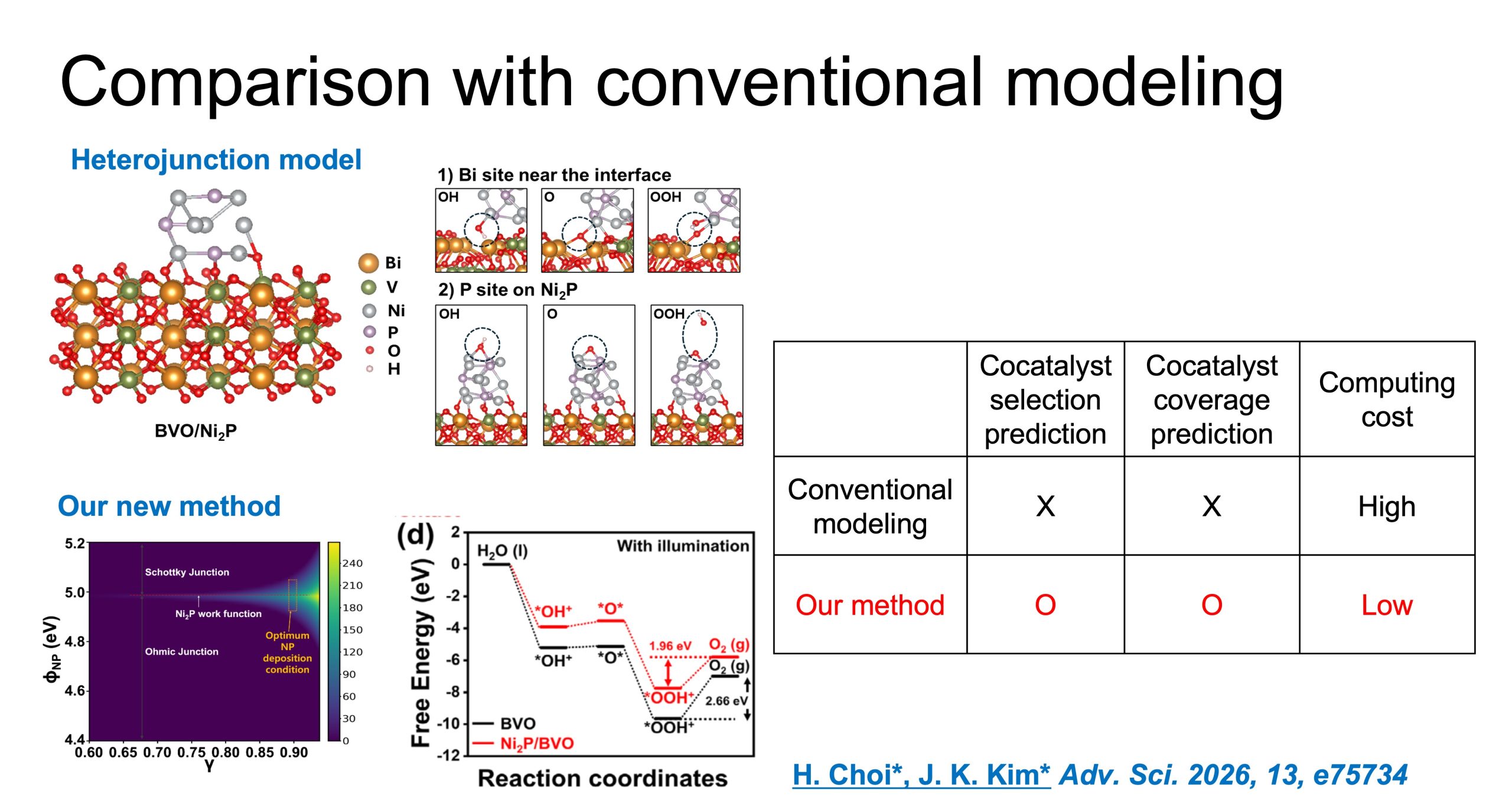
Figure 4: Comparison of conventional "Heterojunction models" and our method in photoanode and photocatalyst materials designs.
From One System to Multi-Dimensional Design Maps
As first author of the study published in Journal of Materials Chemistry A,Yang You extended the framework to CO₂ reduction on g-C₃N₄, building Fermi-level–pH maps that predict CH₄/H₂ competition.
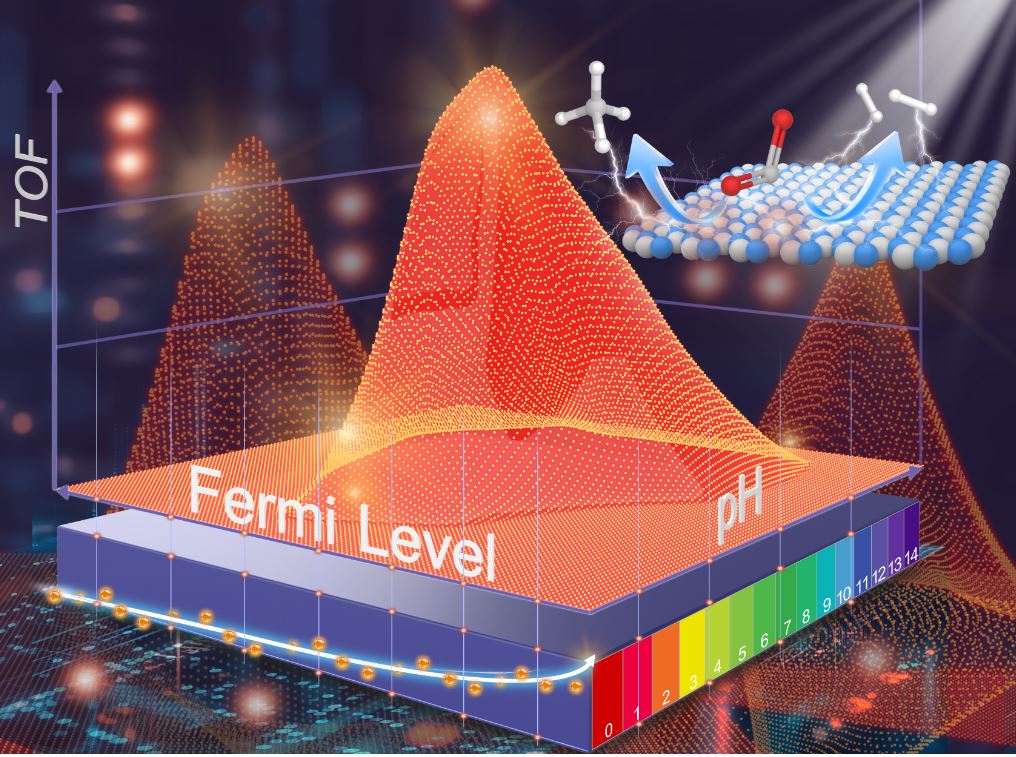
The paper was also selected as a Front Cover article — a notable recognition for a study centred on fundamental thermodynamic theory.
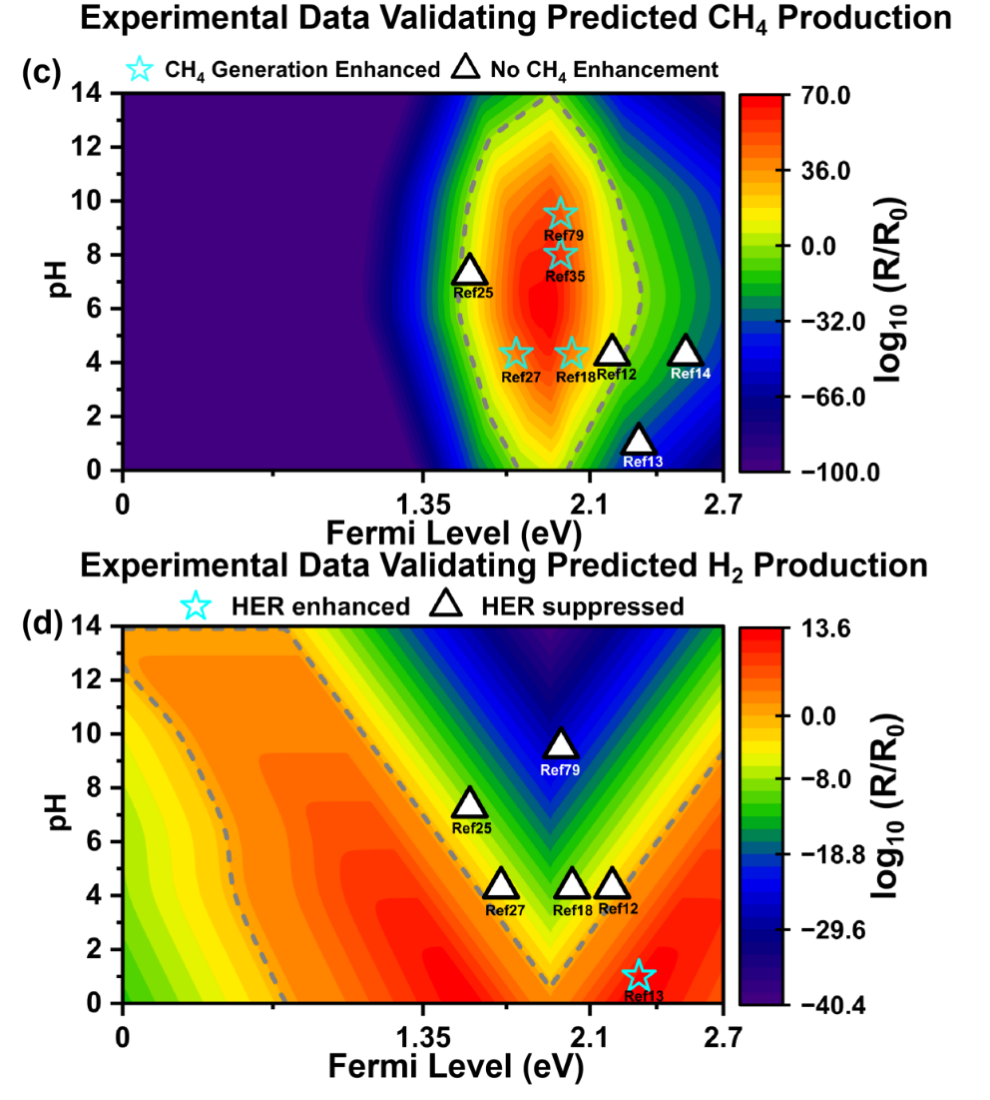
Figure 5 Theoretical predictions of competing photocatalytic CH4 and H2 formations on g-C3N4 with the variations of Fermi level (synthesis condition) and pH (operation condition).
Key predictions:
Favorable CH₄ formation: Fermi level ~1.7–2.1 eV, pH 5–9
Too low a Fermi level: insufficient electron driving force
Too acidic: H adsorption and HER dominate
Too alkaline: proton supply runs out
Independent literature data validated the map — enhanced CH₄ systems fell inside the predicted window. Those without enhancement did not.
Taken together, the two studies point towards a broader shift in computational materials research. Instead of using calculations mainly to explain experimental results after a material has been synthesised, the Fermi-level dependent adsorption energy framework makes it possible to identify promising material and operating conditions in advance.
The logic is:
atomic structure → electronic thermodynamics → activity landscape → testable design window.
By translating atomistic calculations into experimentally testable design windows, the approach could reduce trial-and-error screening and bring computational photocatalysis closer to genuinely predictive, theory-guided materials design.
From Learning a Framework to Advancing It
The two publications also capture Yang You's development as a PhD researcher.
In the Advanced Science study, he worked collaboratively to examine how the Fermi-level framework could explain and predict photocatalytic behaviour beyond conventional interface models. In the subsequent study published in Journal of Materials Chemistry A, he took the next step as first author, independently extending the framework into a multidimensional thermodynamic landscape for photocatalytic CO₂ reduction.
The progression reflects a shift from understanding and applying a theoretical framework to actively developing and extending it — an important part of doctoral training in becoming an independent researcher.
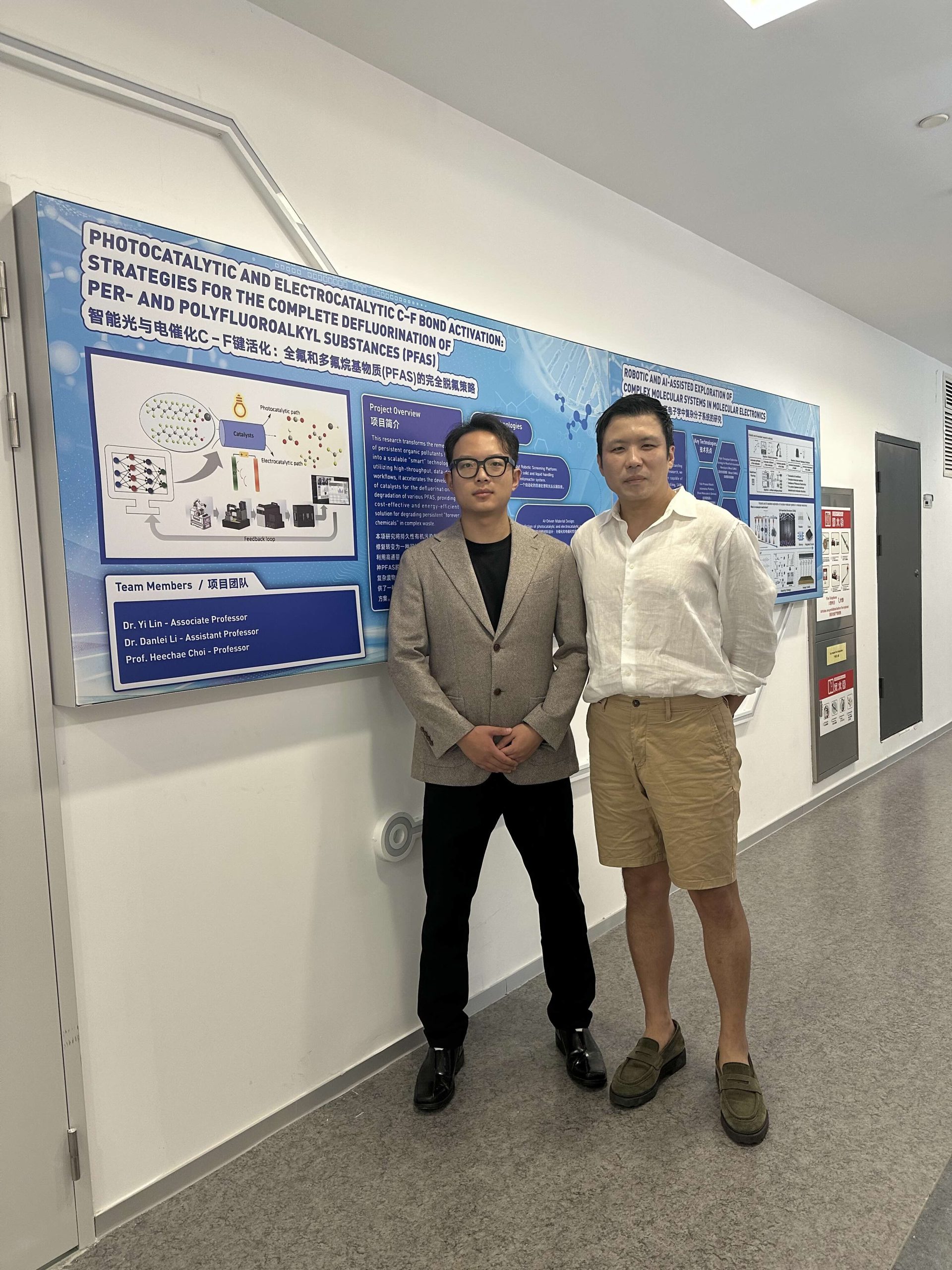
This development has been supported by the research environment at XJTLU's School of Science. Professor Heechae Choi from the Department of Chemistry and Materials Science has supervised the theoretical work, helping connect frontier electronic-structure theory with practical questions in materials design.
The research also aligns with Dean Professor John Moraros' emphasis on enabling students not only to conduct research, but also to define important questions and take ownership of their projects. Strategic collaborations developed by the School, including those with the National Supercomputing Center in Wuxi and the University of Science and Technology of China, provide researchers with access to advanced computational expertise and resources.
For Yang You, the journey from collaborative research to first-author leadership demonstrates how doctoral research can evolve from learning existing approaches to developing new ways of thinking about a scientific problem.
Related publications
“Surface Fermi Level Modulation of Photoanode by Optimized Conducting Nanoparticle Heterointerfaces for Enhanced Photoelectrochemical Water Splitting,” Advanced Science.
https://doi.org/10.1002/advs.75734
“A Thermodynamic Landscape for Photocatalytic CO₂ Reduction on g-C₃N₄: Linking Fermi-Level Position to Selectivity and Activity,” Journal of Materials Chemistry A.
https://doi.org/10.1039/d6ta04016k
Content and photos: Professor Heechae Choi
Editor and New media:Luyao
Review: Professor John Moraros,Professor Heechae Choi,Yang You
21 Aug 2026