





Students win national award for smart cerebral palsy rehab system

28 Aug 2026


A team of undergraduate researchers at Xi’an Jiaotong-Liverpool University (XJTLU) has received a national award for its smart rehabilitation system for children with cerebral palsy that combats mental fatigue with fun, interactive games and collates real-time data.
Lower-limb rehab for cerebral palsy patients often involves long-term, repetitive exercises, which children can struggle to stay engaged with, while parents and therapists largely rely on observation to gauge progress due to limited access to continuous quantitative data.
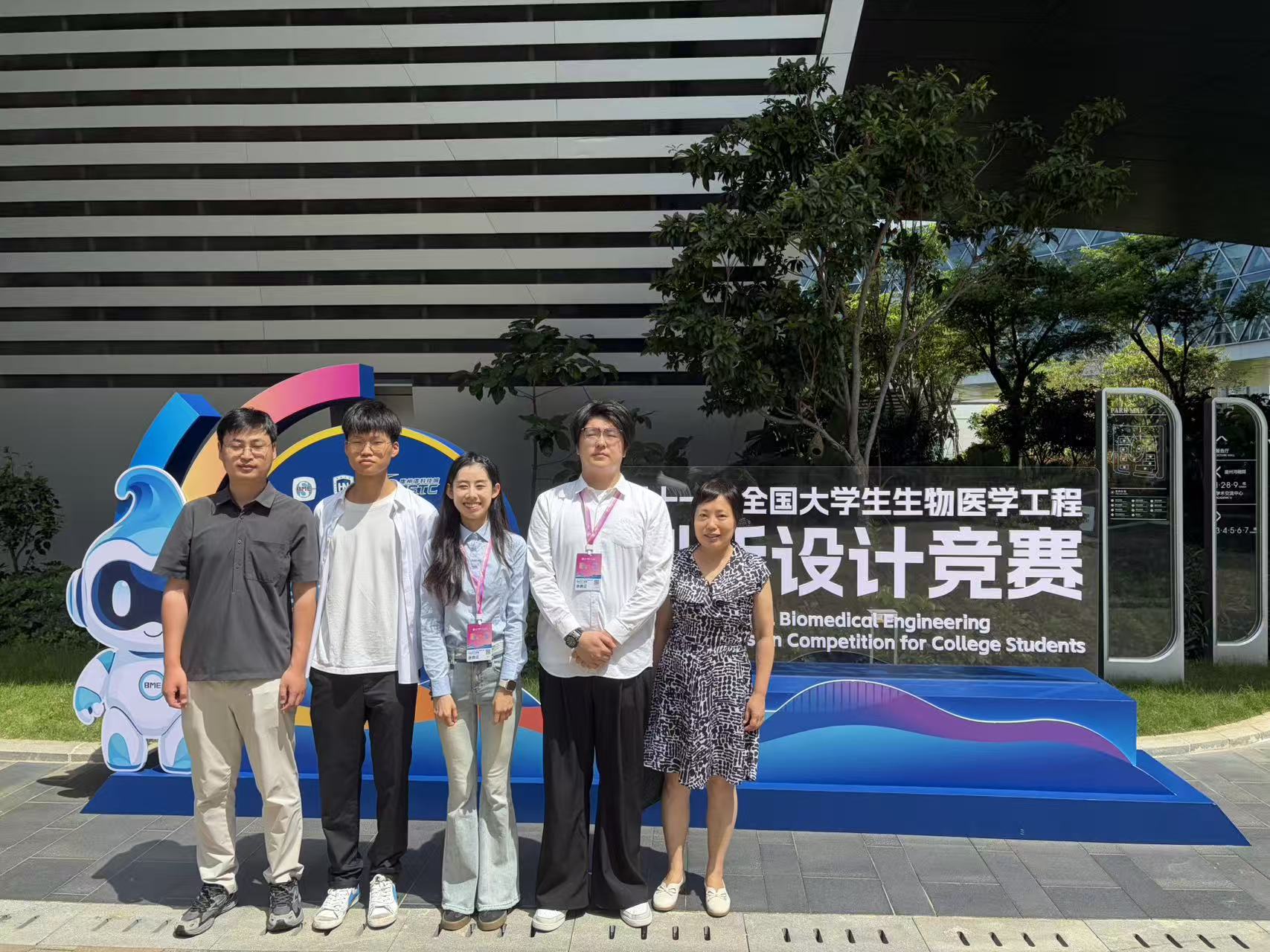
From left: Dr Qinglei Bu, Yuming Shen, Yanfei Chen, Zhengkun Jin, Professor Jie Sun
To address these challenges, students in XJTLU’s School of Advanced Technology have created Xingyuebu, a modular smart-mat system combining mechanical design, embedded systems, Internet of Things (IoT) communication, computer vision, and gamification theory.
During training, light cues guide children through stepping exercises, while vocal feedback and interactive games such as whack-a-mole turn repetitive exercise into a fun experience.
The system records stepping position, reaction time, movement accuracy, and left-right foot usage, and uploads the data to the OneNET IoT platform before synchronising with a WeChat mini programme. Therapists can monitor training and adjust plans remotely according to the child’s progress.
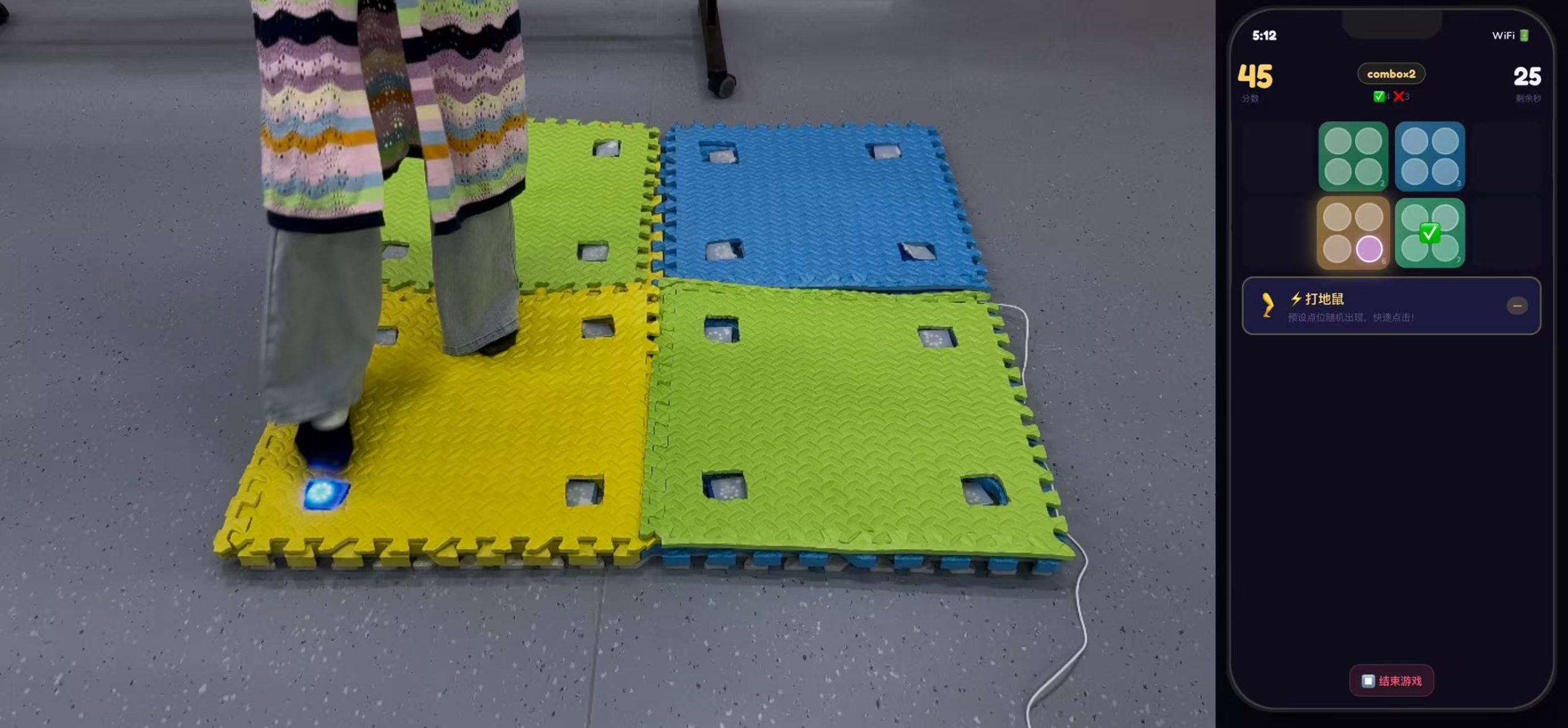
The rehabilitation mat and the WeChat mini programme’s real-time game interface
The team behind Xingyuebu – Yanfei Chen and Yuming Shen from the BEng Mechatronics and Robotic Systems programme, and Zhengkun Jin from the BEng Electrical Engineering programme, along with supervisors Dr Qinglei Bu and Professor Jie Sun in the Department of Mechatronics and Robotics –recently won second prize in the 11th National College Student Biomedical Engineering Innovation Design Competition in Sanya, Hainan province.
Hosted by the Chinese Society of Biomedical Engineering, the contest attracted nearly 20,000 students and teachers from more than 290 universities and research institutions nationwide.
Increasing engagement
The award marks the result of a year of development. Compared with the system’s previous version, the team made improvements in hardware architecture, data collection, and intelligent assessment.
“Before, all the individual mat modules had to be connected to a single main control board in a fixed configuration,” explains Chen. “This year, we redesigned the system so that each module has its own control unit, allowing them to operate and communicate independently. They can now be freely connected, rearranged, and expanded to meet various training needs.”
The students introduced near field communication technology to distinguish between left- and right-foot movements, and upgraded the WeChat mini programme to generate training records and progress charts automatically.
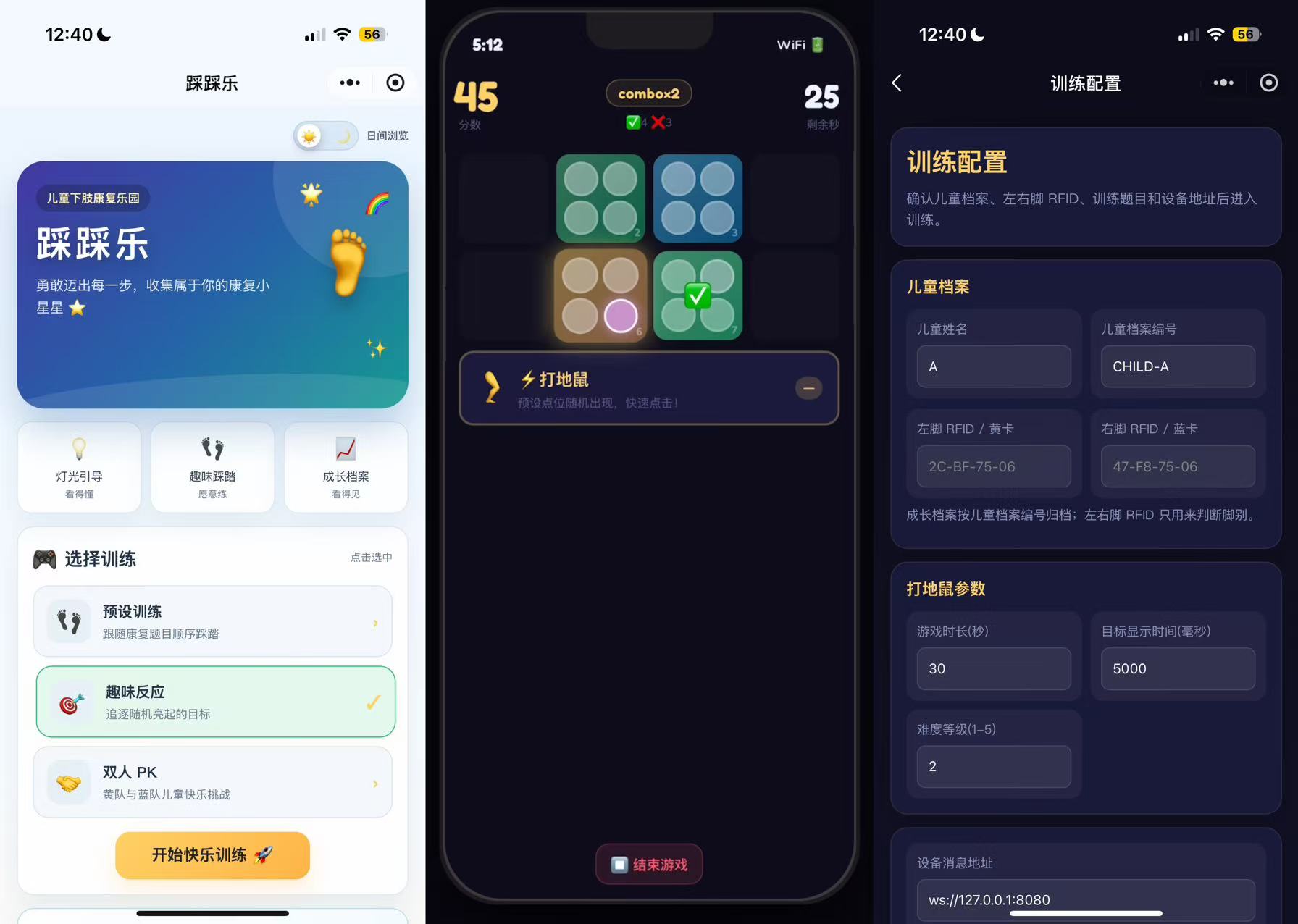
The WeChat mini programme’s interface
They also developed a computer vision-based gait analysis module using the YOLO (you only look once) algorithm to improve object detection. It identifies and analyses range of motion in lower joints, gait cycles, postural stability, and bilateral movement symmetry, providing data to support tailored rehab plans.
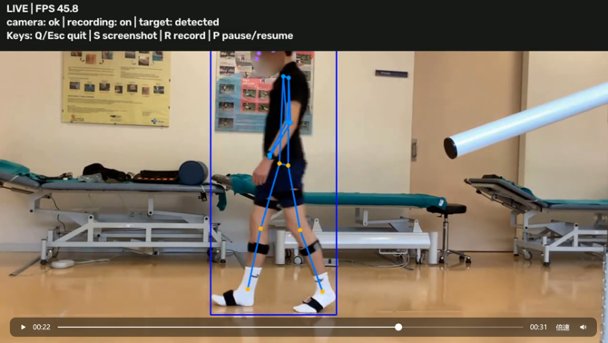
The vision analysis system extracts lower-limb keypoints in real time for gait analysis
Chen says the project required students to work across multiple disciplines, from PCB hardware development – which turns an electronic concept into a printed circuit board – to embedded programming, algorithm training, and system integration. They also used repeated testing to solve problems in module communication, recognition accuracy, and user interaction.
“From initial concept to final product, we went through countless iterations of revision and debugging,” she adds. “This competition really drove home the power of interdisciplinary collaboration.”
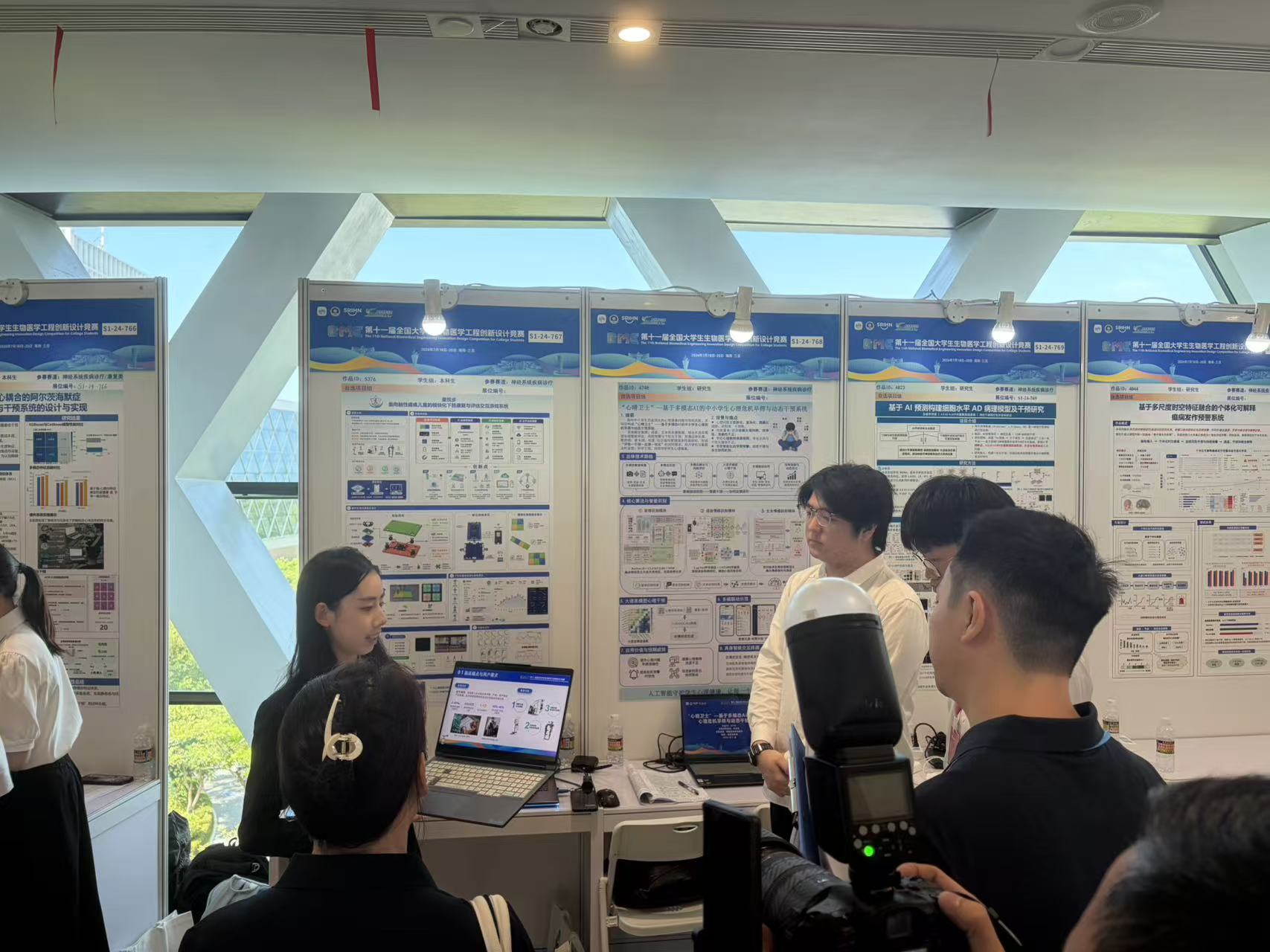
The team presents its system in Sanya, Hainan province
Real-world applications
Dr Bu explains that Xingyuebu has been designed around real scenarios rather than simply being a combination of existing technologies.
“Students don’t just learn how to build a technical solution; more importantly, they learn how to truly translate technology into solutions that serve children, families, and therapists,” he says.
Professor Sun adds that the project has given students an end-to-end experience, from needs analysis and solution design to engineering implementation and user validation.
“Medical-engineering integration is not just the fusion of knowledge across disciplines but also a bridge between engineering thinking and real-world social needs,” she says.
The students are now working to improve the system’s stability and user experience, refine its posture and gait assessment metrics, and conduct further testing in real-world settings.
By Huatian Jin
Translated by Xueqi Wang
Edited by staff editor
28 Aug 2026