





28 Aug 2026


Can a single gorgon fruit seed launch a water-town adventure? What would Suzhou’s shui baxian – the “Eight Immortals of the Water” – look like as animated characters? And how might a boy in a crab-shaped hat capture a day beside Yangcheng Lake?
For a group of Digital Media Arts students at Xi’an Jiaotong-Liverpool University (XJTLU), the answers became three award-winning animations rooted in Suzhou life.
Drawing on the city’s food, ecology, dialect and everyday rhythms, the students combined character design, animated storytelling and AI-generated content (AIGC) to give local traditions a distinctly contemporary voice.
The projects were recognised at the 10th Milan Design Week China Collegiate Design Competition & Exhibition. Lu’er’s Water-Town Adventure won second prize nationally and first prize in the Jiangsu division; A Day with Su Xiaoxie received second prize in Jiangsu; and An Immortal in the Water Town took third prize in Jiangsu.
All three competed across the digital media and virtual IP design categories and were supervised by Yu Sheng and Yankuang Gu of XJTLU’s Academy of Film and Creative Technology.
Three stories, three sides of Suzhou
Set in Luzhi Ancient Town, Lu’er’s Water-Town Adventure was created by Qianru Lin, Yushu Cao, Zhongtian Yang and Lingxian Zhang.
Its heroine, Lu’er, comes from a family that has grown gorgon fruit for generations. When she and Su Xiaomi, a gorgon-fruit sprite, are pulled into a mysterious scroll painting, they must harvest gorgon fruit, gather osmanthus and make a sweet soup to unlock the perfect recipe.
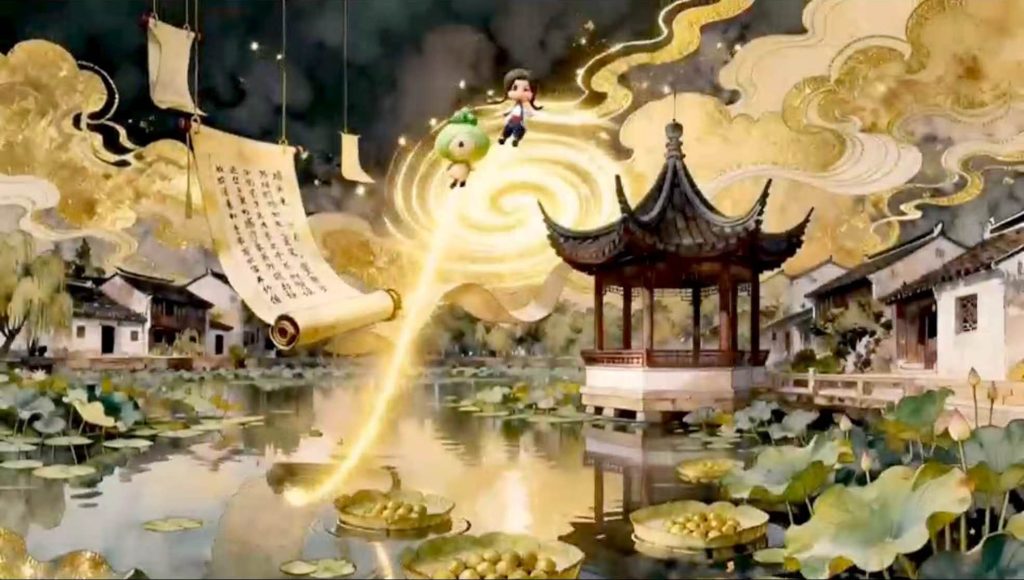
A game scene from Lu’er’s Water-Town Adventure
“Most people associate Suzhou with classical gardens and pingtan storytelling,” the team said. “We wanted to draw attention to the lesser-known town of Luzhi, its distinctive women’s clothing and its food culture.”
Lu’er takes her name from Luzhi, while the story’s food references grew out of the team’s research into Suzhou’s tradition of eating with the seasons. Rather than treating gorgon fruit and osmanthus as background details, the students turned them into characters, challenges and rewards, using a game structure to carry the story.
The team remade the final sequence before entering the competition. In an early version, Lu’er’s movements as she ladled soup were stiff and repetitive, and the spoon passed straight through the bowl. Several rounds of regeneration and editing fixed the shot, while additional UI elements sharpened the work’s game-like identity.
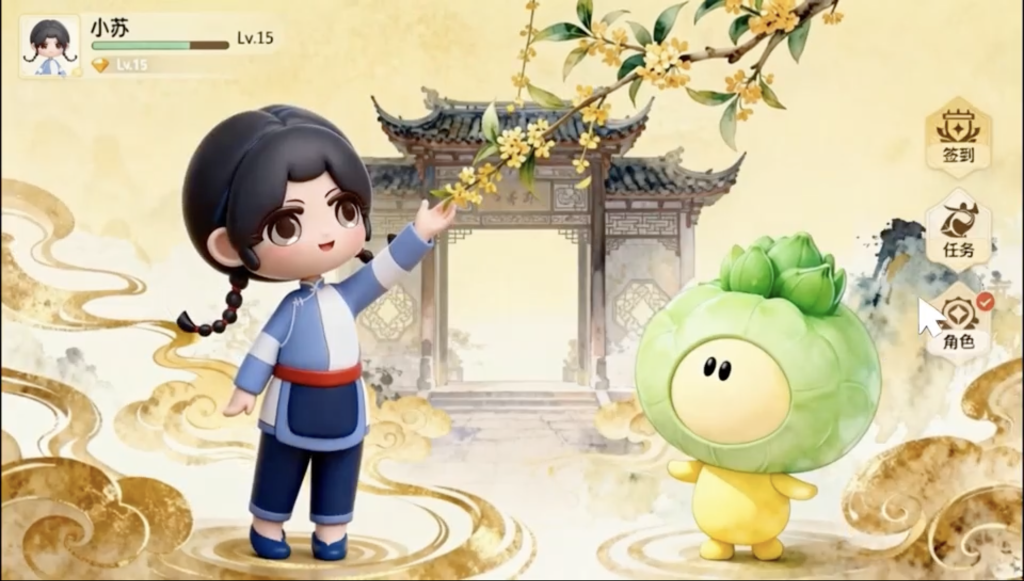
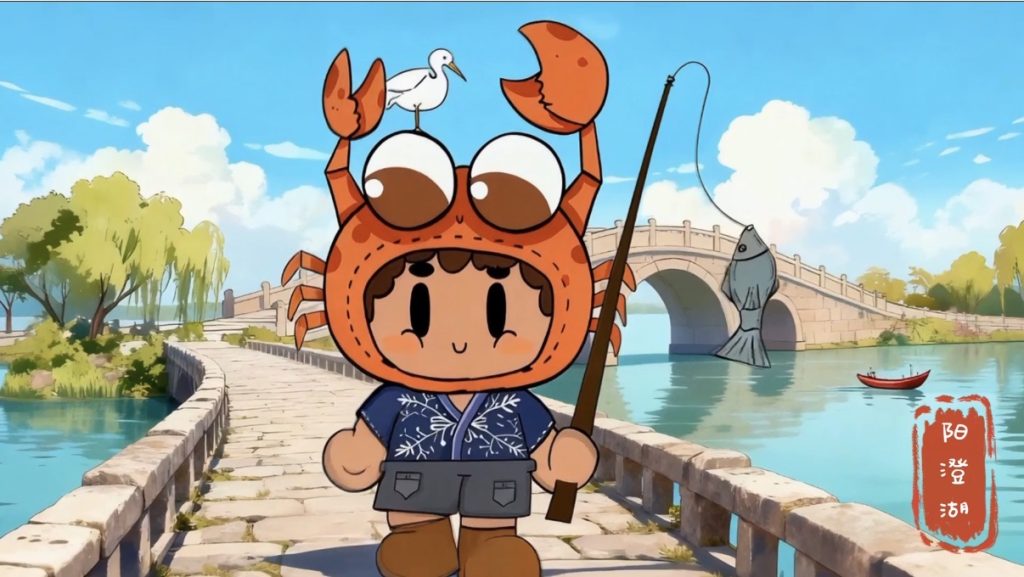
Set beside Yangcheng Lake, A Day with Su Xiaoxie was created by Yichun Yang, Yuning Chen, Si’an Yi and Mingze Gao.
The vlog-style animation follows a 12-year-old boy through an ordinary day: school in the morning, games with his egret companion in the water lanes after class, and crab fishing with his family in the evening. Crab-roe noodles, blue calico, candied hawthorn and Yangcheng Lake itself enter the story as part of his daily routine, rather than as decorative shorthand for Suzhou.
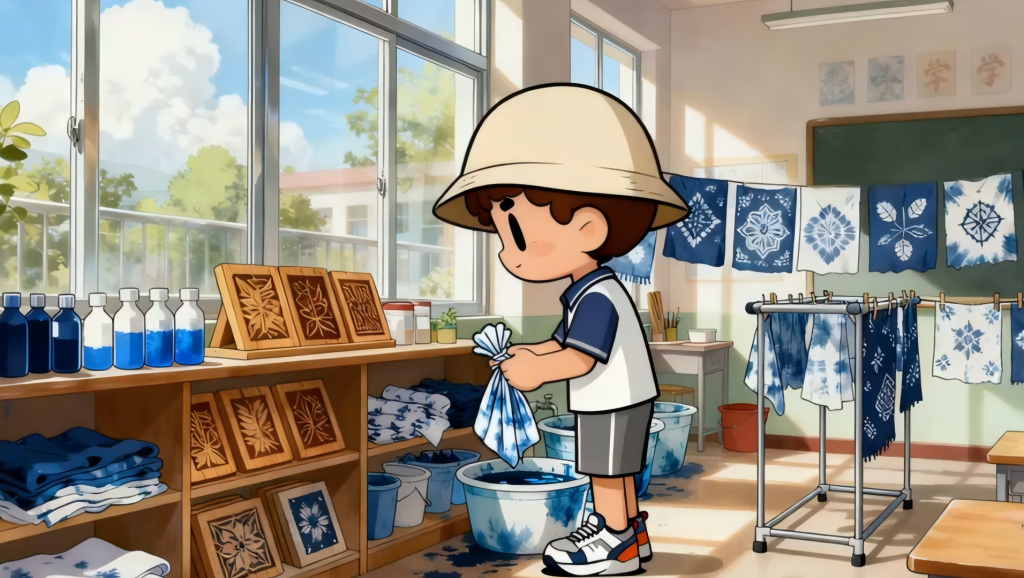
A scene from the animation A Day with Su Xiaoxie
One team member is from Suzhou and has relatives working in the crab trade near Yangcheng Lake. Their first-hand knowledge gave the fishing scenes a lived-in quality.
“We wanted to show what everyday life in Suzhou looks like through a child’s day, rather than simply adding familiar Suzhou symbols,” the team said.
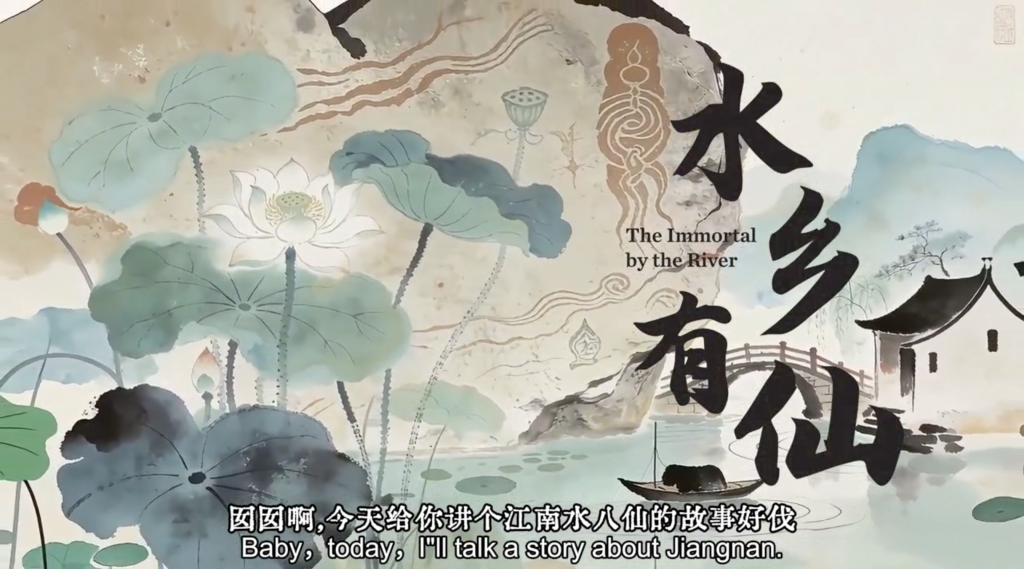
For An Immortal in the Water Town, Jiatong Zhang and Yiyang Lu turned Suzhou’s seasonal produce into character design.
After visiting ancient towns and intangible cultural heritage workshops, and researching local folklore and produce, the team built their character Su Xiaoxian around the shui baxian: water bamboo, lotus root, water celery, gorgon fruit, arrowhead, water chestnut, water shield and water caltrop.
Elements of the eight aquatic plants appear in the character’s headdress, accessories and costume. A muted palette and details drawn from traditional Jiangnan clothing give the design a gentle, understated water-town aesthetic.
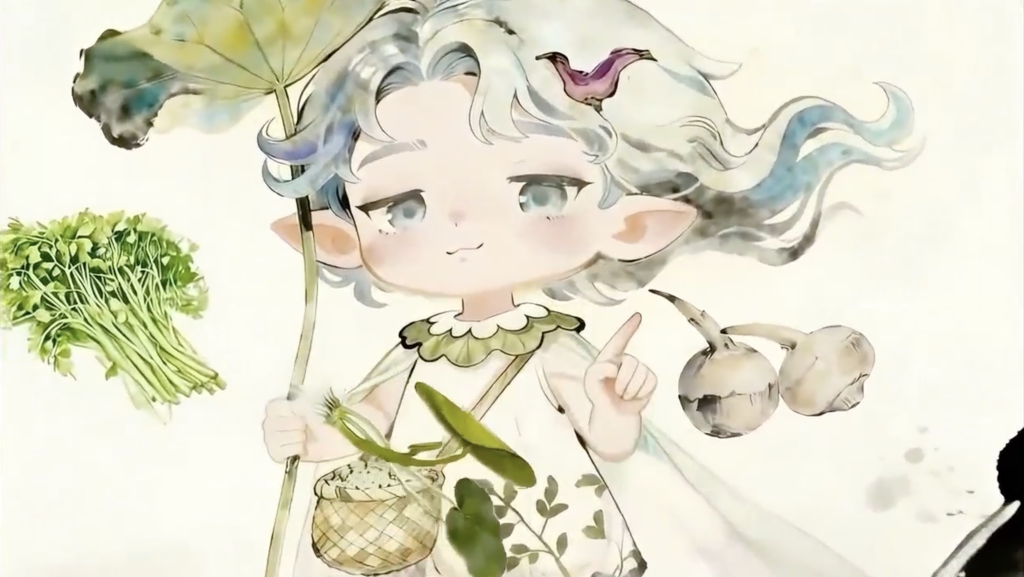
Su Xiaoxian, a character from An Immortal in the Water Town
“Food gives everyone a way into the story,” the team said. “We wanted Suzhou culture to feel approachable – something people could relate to, experience and even taste – especially for younger audiences.”
The animation takes the form of an elder telling a folk tale to a child, with dialogue in the Suzhou dialect. The first AI-generated voice track, however, sounded closer to Shanghainese. The team scrapped it and asked a friend from Suzhou to record the lines instead.
Beyond the prompt
All three works began in a Year Two module at the Academy. Students first researched Suzhou culture and designed an original character, then developed a world, story and sequence of shots around it to create a short animation.
AIGC accelerated early experimentation, background generation and repetitive production tasks. But it also introduced new kinds of error: proportions shifted between shots, faces and clothing changed, movements became distorted and visual styles drifted.
“AI is a powerful assistant, but it is no substitute for creativity,” Sheng said. She added that students must still make their own aesthetic judgements about what the technology produces, while the story, cultural research and final creative decisions should remain in the hands of the creators.
Gu noticed another shift: students were moving away from relying on reference images found online and instead visiting ancient towns and intangible cultural heritage workshops to observe Suzhou culture at first hand.
“The three projects never felt alike,” Gu said. “They all began with Suzhou, but each developed its own distinct identity. That was what stood out most.”
From gorgon fruit in Luzhi and crab fishing beside Yangcheng Lake to the Suzhou dialect and the city’s seasonal produce, the students looked beyond Suzhou’s familiar postcard image of bridges and canals.
Through local knowledge, close observation and digital tools, they found three new ways to see – and animate – the city around them.
By Wenzhen Li
Photos courtesy of the award-winning student teams
28 Aug 2026