




09 Sep 2026


During the IBSS Alumni Conference, a parallel forum titled ‘Talent Strategy Amid Shifts: Constants & Changes in Corporate Talent Demands’ brought together speakers from a range of industries to discuss how AI is changing the workplace. The forum was moderated by Dr Bin Ding, Associate Professor in the Department of Strategic Management and Organisations at IBSS. Four distinguished guests from different industries joined the panel: Yuchen Qiao, Principle Product Manager at Microsoft (China); Lisa Cheng, HR Manager at Deloitte China; Yuhai Liang, Entrepreneurship Consultant; and Simon Tian, Founder and CEO of ST Intelligence and Insights/Menduner. The roundtable discussion, aimed at current students, alumni and corporate representatives, focused on how AI is reshaping corporate recruitment, the human qualities that technology cannot easily replaced, and the essential AI capabilities that professionals need to develop.
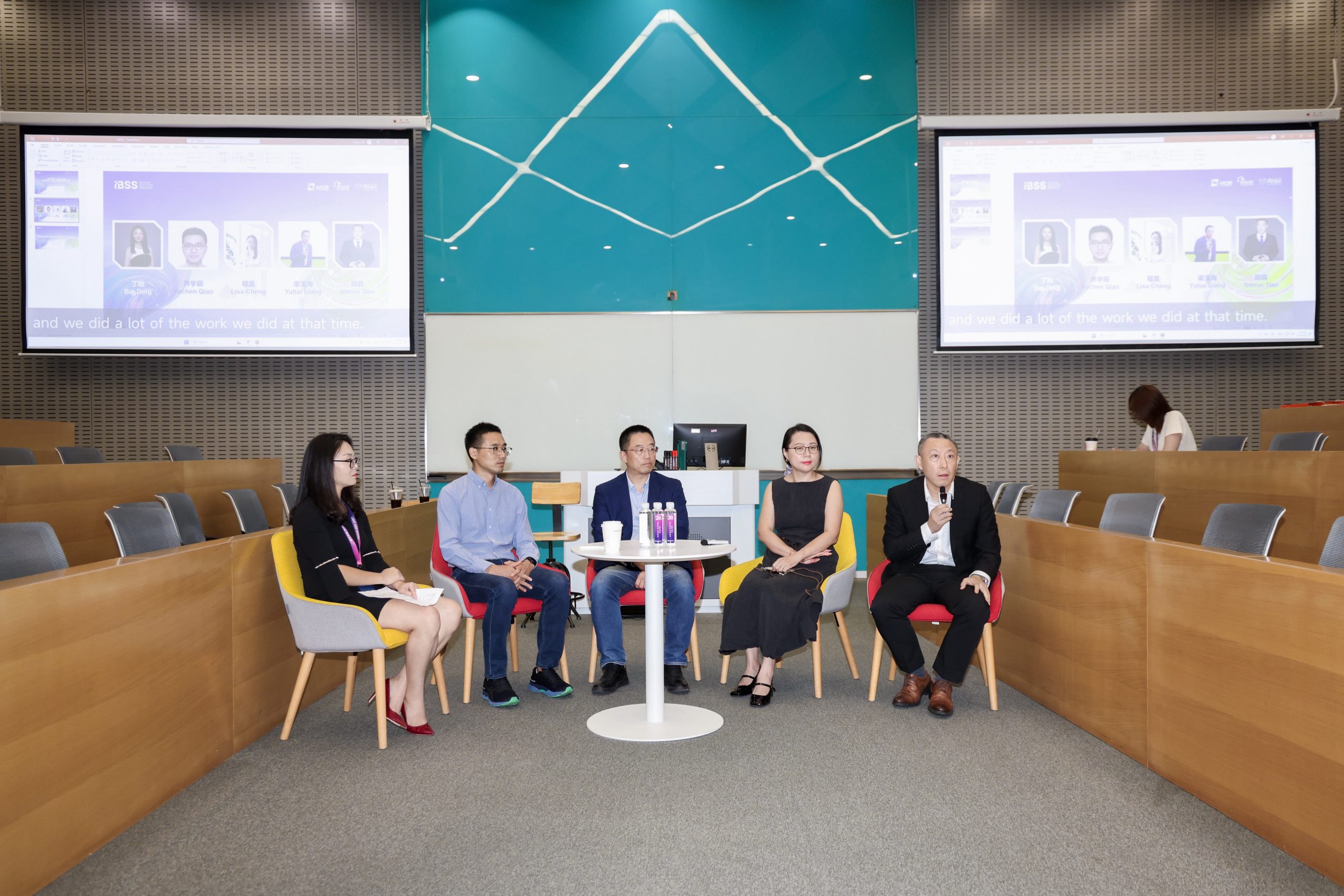
At the start of the session, Dr Ding posed the core question: how has the logic of corporate recruitment changed as AI reshapes the workplace, and which underlying human capabilities remain difficult for technology to replace?
Drawing on his hands-on experience in AI product development, Yuchen Qiao noted that the weight traditionally placed on industry experience and accumulated knowledge is declining. Instead, distinct human qualities – such as curiosity, empathy, a sense of responsibility, and the ability to execute ideas – are becoming increasingly critical. AI is a force multiplier for efficiency, but it cannot take ultimate responsibility for business accountability. Companies are placing greater emphasis on intrinsic human qualities when recruiting talent.
From a practical recruitment perspective, Lisa Cheng shared that companies today place greater value on candidates' growth potential rather focusing too rigidly on academic backgrounds. A diverse talent pool helps organisations withstand uncertainty. Integrity, creativity and resilience have always been – and remain – highly valued qualities. In the face of technological change, professionals must abandon a mindset of “living off past knowledge” and embrace continuous learning to build transferable skills.
Drawing on years of entrepreneurial mentoring experience, Yuhai Liang argued that as a large language models become increasingly similar the value of business knowledge and a grounding in the becomes even more important. Competition in the workplace is no longer purely about seniority – creativity, value judgement, aesthetic sensibility and emotional resonance are qualities that remain distinctly human. He advised students not to treat AI merely as a chat tool, but to engage with it deeply in practice. At the same time, they should strengthen their grounding in the humanities, think about what sets them apart and use AI as a lever to amplify their capabilities.
Drawing on his experience in the cultural tourism and HR tech sectors, Simon Tian observed that many entry-level roles provide valuable opportunities to develop resilience. Citing the growth of the Ritz-Carlton, he emphasised that a commitment to excellence remains invaluable in the AI era. Building AI literacy across the entire organisation is essential, but so too are genuine human connections and the ability to work across different cultures.
During the subsequent Q&A session, the panellists addressed a practical question: if everyone is using AI, which AI-related capabilities should young professionals develop?
Yuchen Qiao emphasised that the key to making good use of AI is not technical proficiency, but the ability to ask high-quality questions and to critically evaluate AI-generated outputs. AI is a co-pilot, but humans must retain decision-making authority. He also encouraged young people not to be consumed by anxiety about competition, but to reflect on what they genuinely want from their careers and lives.
Lisa Cheng stressed that it is not the tool itself that makes people obsolete, but an unwillingness to adapt. Whether new or experienced, all employees should commit to lifelong learning and proactively expand their cross-functional capabilities.
Yuhai Liang warned that many companies treat AI merely as a productivity tool, overlooking the fact that it can fundamentally reshape workflows, organisational structures and performance evaluation systems, as well as affect employees psychologically. This, he said, is a root cause of many failed AI implementations. Standardised, process-driven roles will continue to be transformed by technology, and young people must actively consider where they can create distinctive value.
Simon Tian added that AI literacy is an organisation-wide capability, and companies need to build a culture of AI learning. Beyond technology, real interpersonal engagement and self-exploration remain important aspects of personal and professional development.
At the close of the forum, the panellists offered their final reflections. Yuchen Qiao encouraged the audience to “stay true to the core while making the extraordinary happen” – to preserve the uniquely human qualities that define us, use AI to amplify personal capabilities and pursue their own directions in life. Yuhai Liang recommended “The Almanack of Naval Ravikant”, encouraging young people to understand what sets them apart and actively explore diverse career paths. Lisa Cheng observed that AI is levelling some knowledge barriers, creating more equal opportunities, and called on everyone to continue honing their soft skills and embracing change with courage. Simon Tian remarked that AI opens up a larger world, but that all outward exploration ultimately leads back to self-discovery.
In her concluding remarks, Dr Ding noted that the human qualities and inner strength discussed by the panellists are precisely the areas that IBSS continues to emphasise in its approach to student development. The forum did not add to anxieties around AI; instead, it grounded the discussion in real recruitment and workplace challenges, helping young people understand what is changing and what remains constant in employers’ expectations, while providing practical guidance for the career planning of current students and alumni.
This parallel forum was an integral part of the IBSS Alumni Conference, bringing academia and industry together and deepening dialogue between education and business. It also offered students practical insights into the skills, judgement and adaptability they will need to build successful careers in the AI era.
09 Sep 2026