




XJTLU Students map Climate Crisis through interdisciplinary Climate Fresk workshop

24 Sep 2026


Students from the Department of International Studies and the Department of Urban Planning and Design came together this week for a joint Climate Fresk workshop, bridging urban planning and international relations perspectives on climate change.
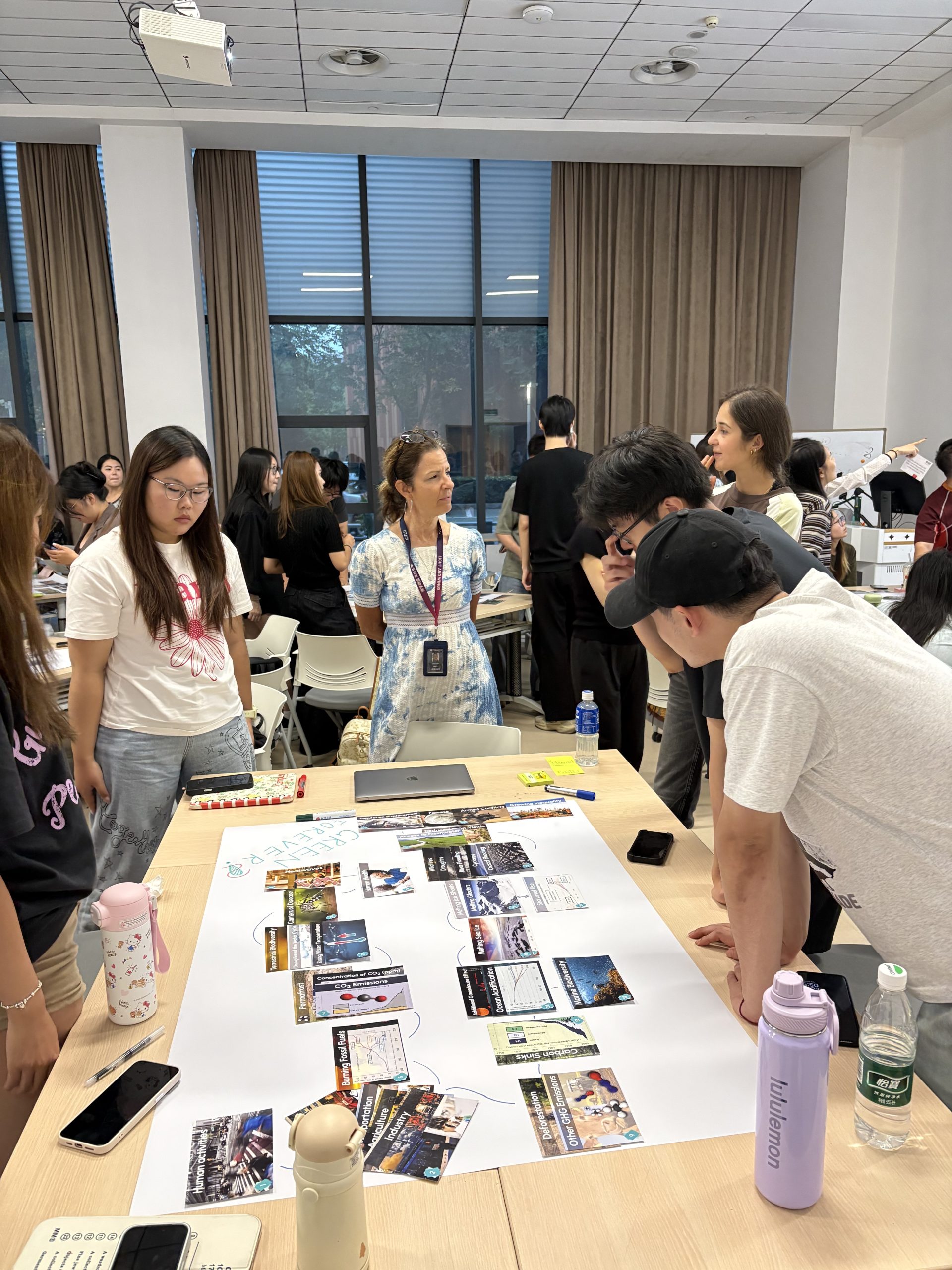
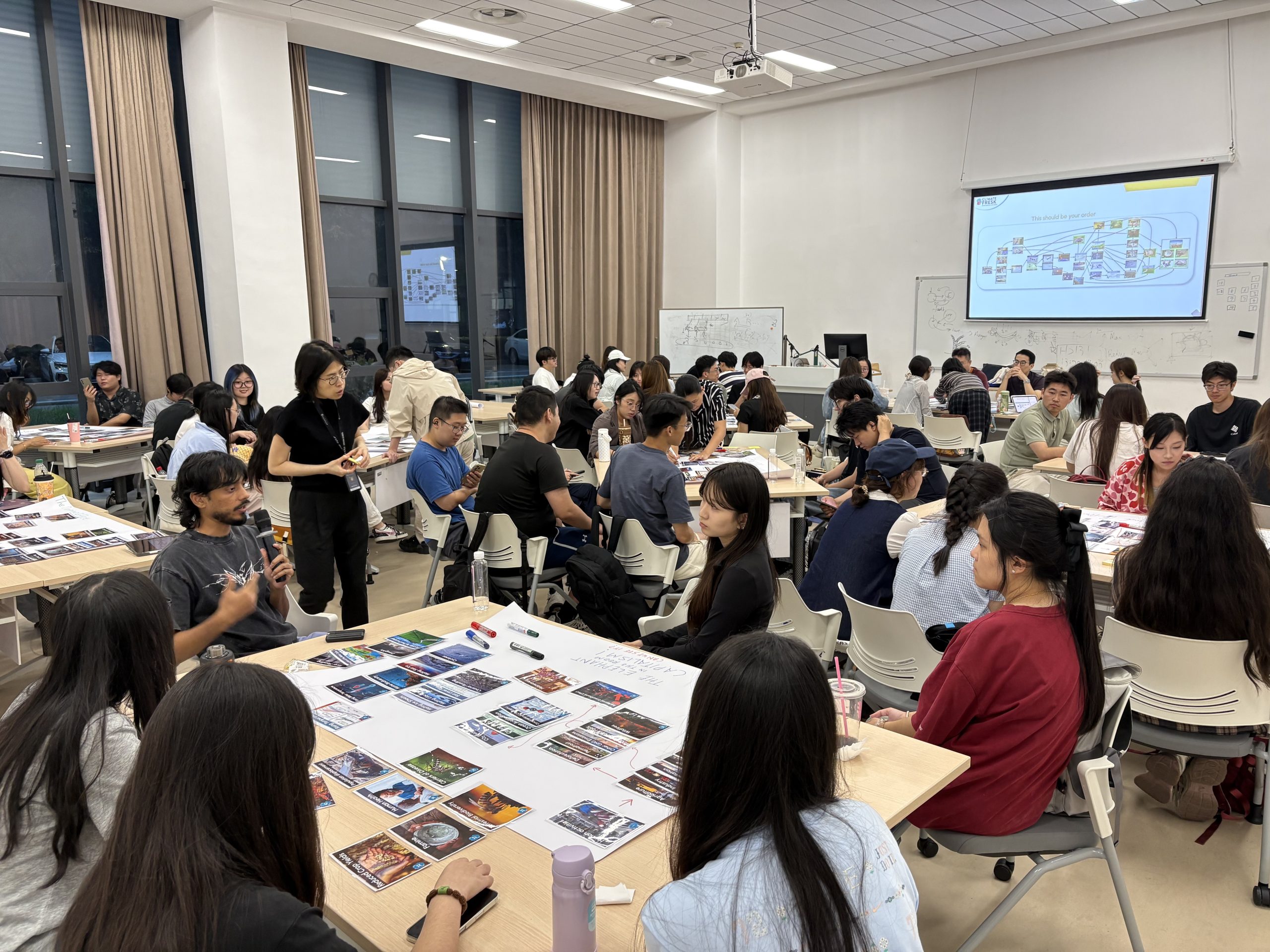
The session, held on 22 September, brought together master's students from INS415 Global Environmental Policy and UPD402 Sustainable Urban Solutions in a two-hour collaborative exercise. Using the Climate Fresk methodology, students worked in mixed groups to map the scientific causes and systemic consequences of climate change, from fossil fuel emissions, transport and deforestation to rising temperatures, biodiversity loss, and global social impacts.
This kind of interdisciplinary engagement among different schools is what we want to foster more at XJTLU. Climate change is a complex issue, a so-called “wicked problem,” that needs to bring together different knowledge domains to find lasting and systematic governance solutions that involve all sectors of society. Having urban planners and IR students in the same room means the conversations in each group had to move between scientific causality, policy design, and solutions in the built-environment that help shape human behavior.
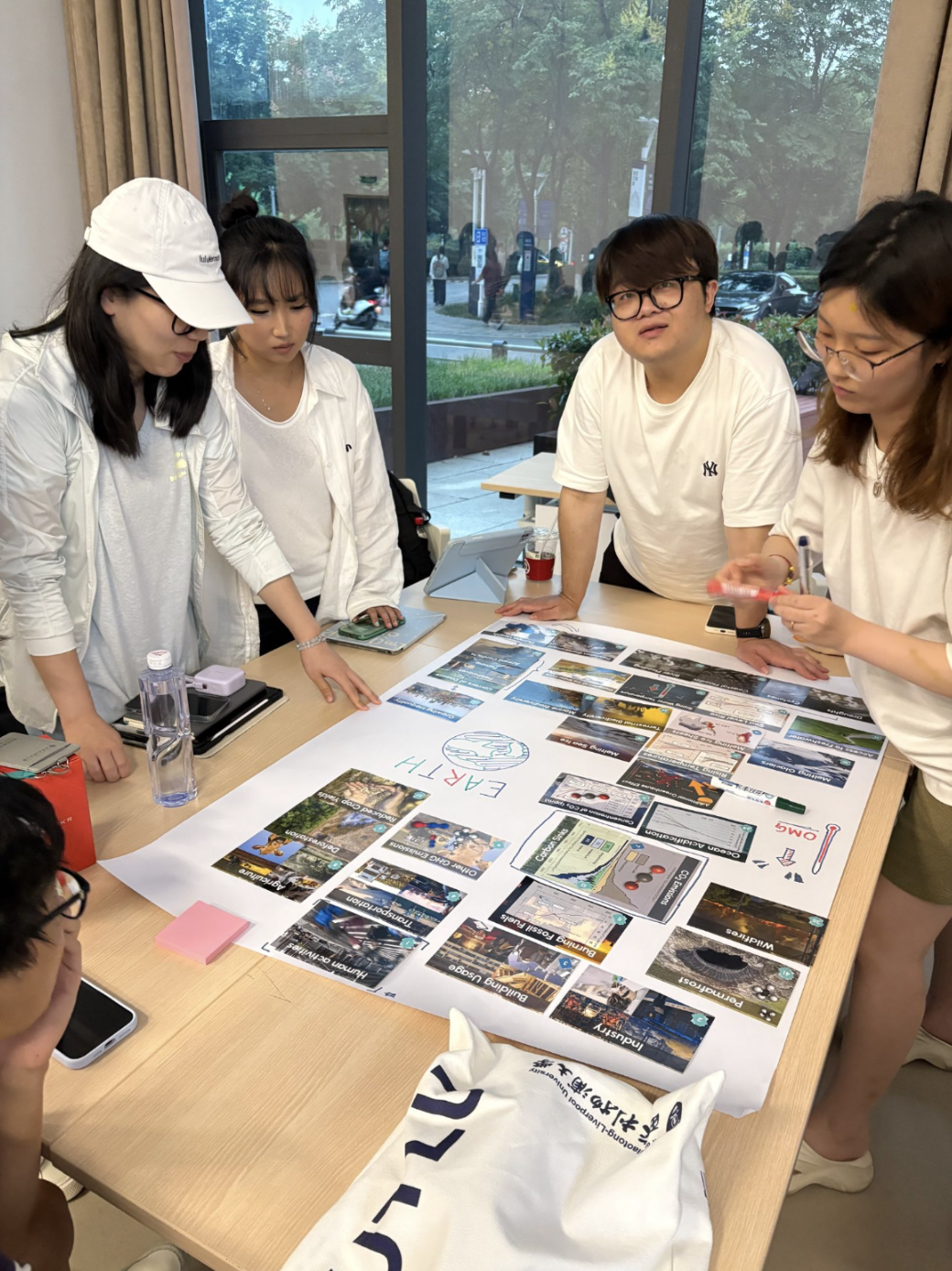
The workshop was co-facilitated by Dr. Niklas Weins, Department of International Studies (INS), HSS, Dr. Juhyun Lee (Department of Urban Planning and Design, Design School and Laura McNabb, English Language Centre), and INS PhD student Weiquan Chen who helped guide students through the five-step card game. Dr. Lee, as one of the Design School's sustainability officers, emphasized her school’s advanced commitment to embedding climate literacy across its programmes. The School of Humanities and Social Sciences has huge potential and willingness for collaboration with several other schools on this agenda.
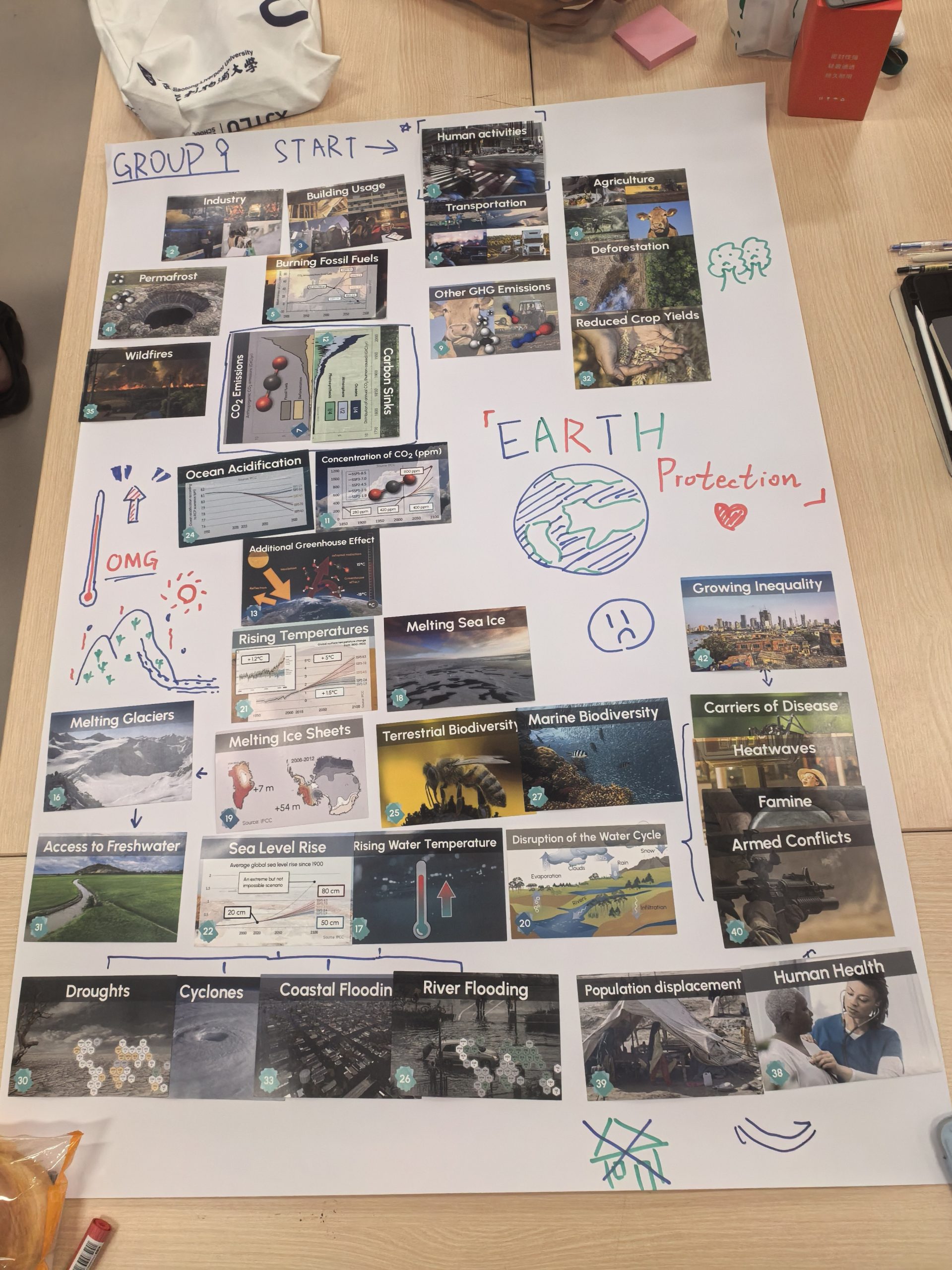
For many international relations students, the Fresk provided a first structured exposure to the natural science foundations of climate policy, a dimension that is often underrepresented in our disciplinary assigned readings and coursework. Conversely, the urban planning students could gain insight into how global governance frameworks and how competing political worldviews shape the policy space within which local sustainability transitions compete.
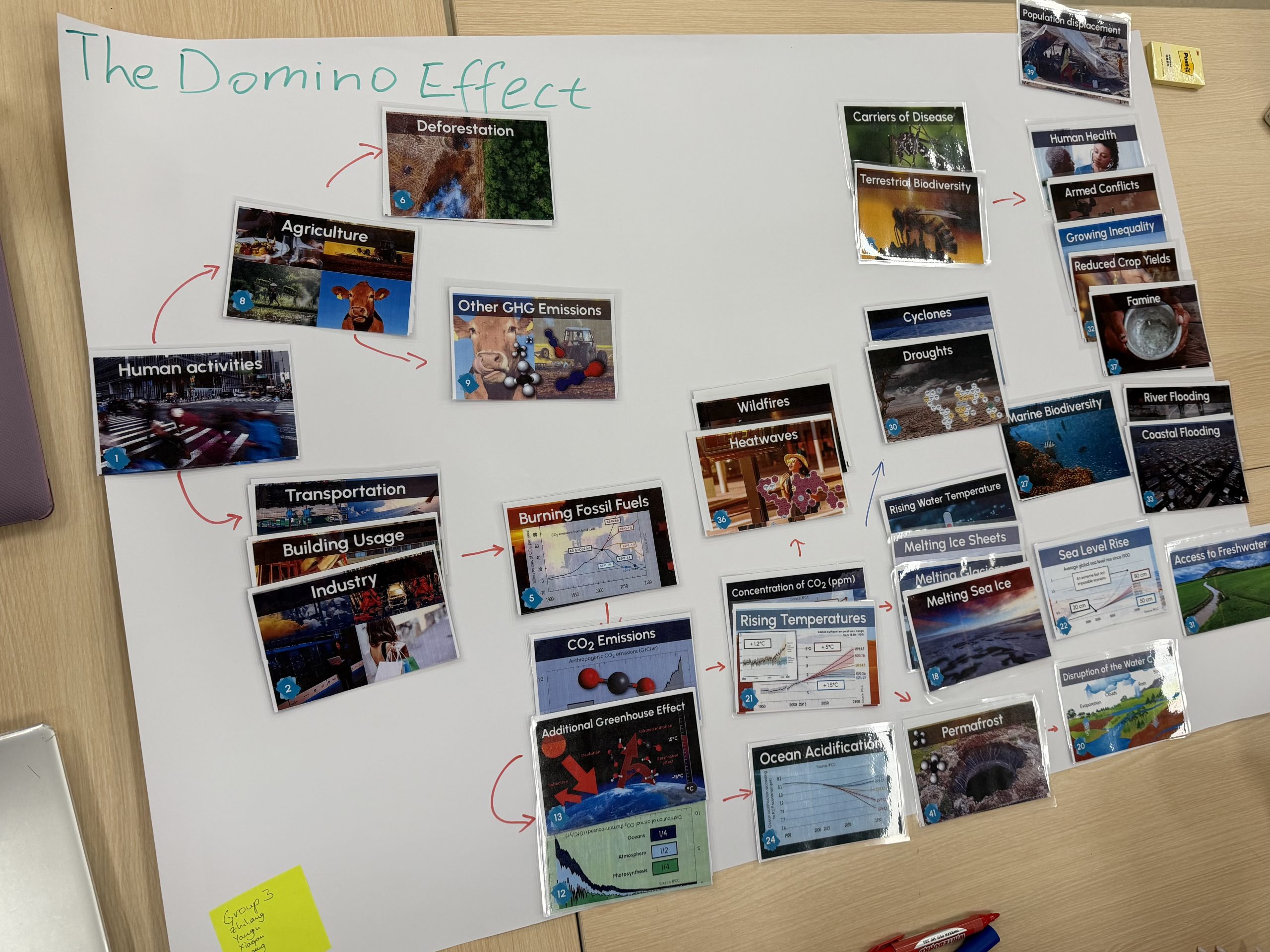
In their final reflections about the exercise, students brought up the remaining systemic issues and the complex interdependencies between the climate and biodiversity crises they learned about, for instance, in our food systems.
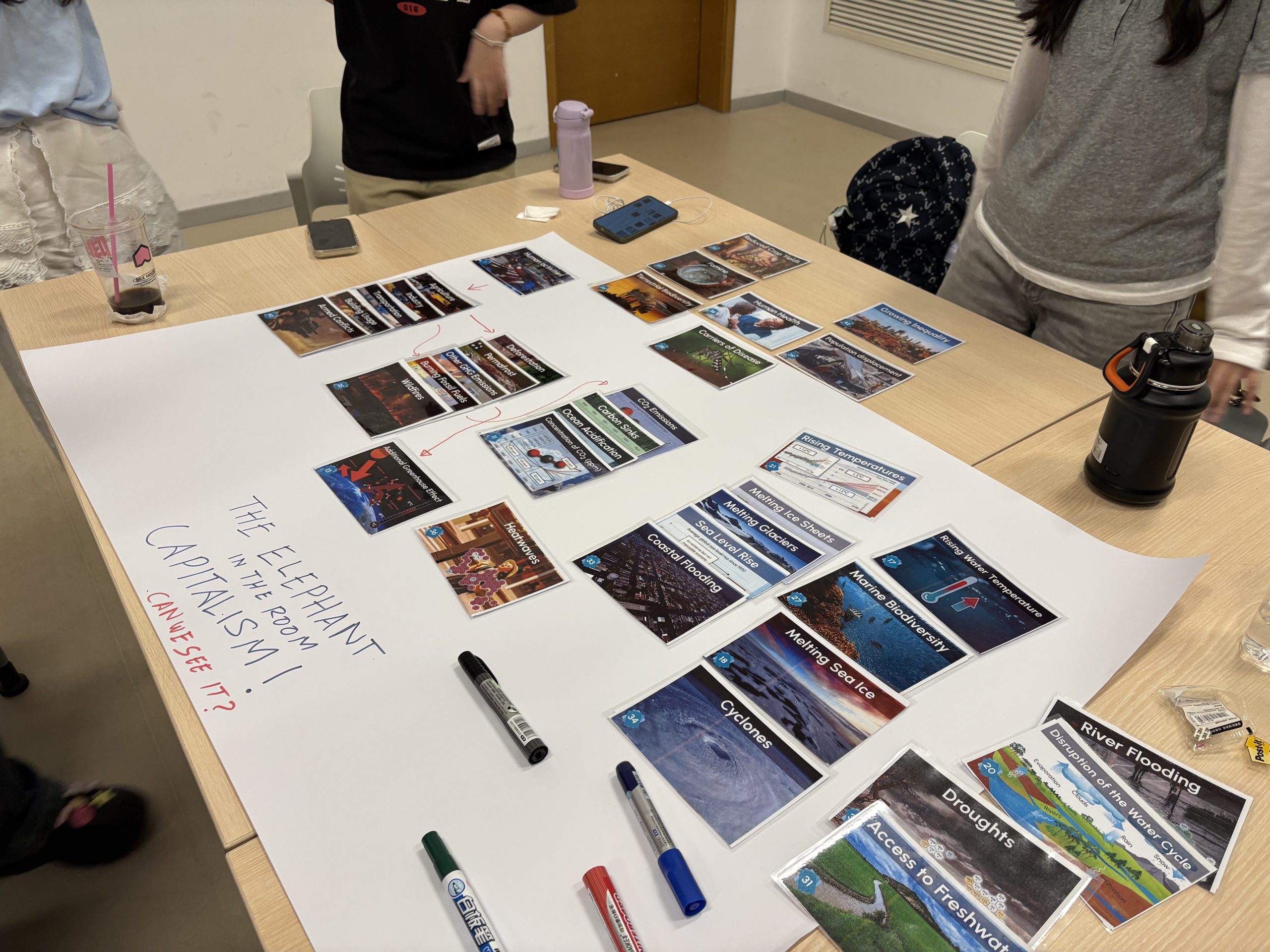
The Climate Fresk, was developed in France and has already had more than 1.6 million participants with sets translated into 51 languages. The Fresk game is designed to make the complex scientific findings of the Assessment Reports of the Intergovernmental Panel on Climate Change (IPCC) more accessible through fun and collaborative card-based learning. XJTLU staff from several schools have been trained in the methodology and many Fresks have been conducted across different events and seminars over the past few years.
The workshop forms part of a broader effort within the Department of International Studies to strengthen practical and interdisciplinary learning. As the two Schools are merging into a new academy, more joint activities will be happening once the departments are under the same roof.
INS415 students will build on the Fresk's systems-thinking foundation throughout the rest of the semester, applying four international political economy worldviews – market-liberal, institutionalist, bioenvironmentalist, and social-green — to case studies in climate politics, waste management, and global agriculture. The interdisciplinary discussions should prepare students from both programs for conversations with practitioners from different fields about the same topics around climate change and sustainability.
Content from Dr Niklas Weins
24 Sep 2026