





02 Sep 2026


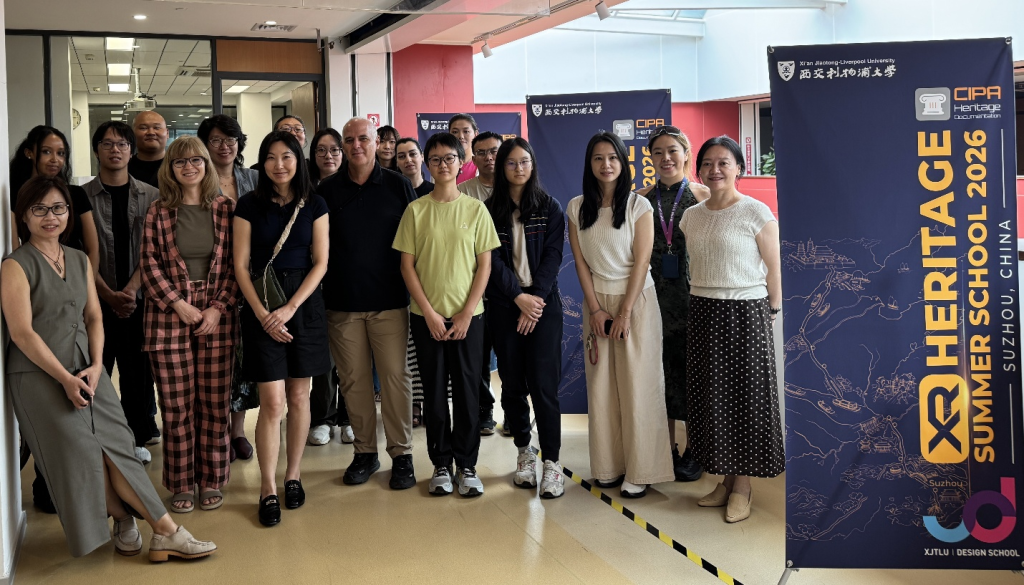
The XJTLU-CIPA XR Heritage Summer School 2026 has opened in Suzhou, bringing together students, researchers, heritage professionals, and practitioners from different disciplines and cultural backgrounds to explore how extended reality (XR) and emerging technologies can create new ways to experience, interpret and communicate cultural heritage.
Organised by the Design School at Xi’an Jiaotong-Liverpool University (XJTLU), the summer school is endorsed by the International Committee for Documentation of Cultural Heritage (CIPA) of ICOMOS and supported by the ICOMOS China Heritage Conservation and Digitalisation (CHCD) Committee. Taking place from 30 August to 6 September 2026, the programme brings together heritage, design, and digital technology in the historic city of Suzhou.
“Over the next week, I hope you will be curious, experimental and generous in sharing your ideas. You will be working with heritage sites, digital technologies and new forms of storytelling. And perhaps, by the end of the week, create something that none of us could have imagined at the beginning,” said Dr Cheng Zhang, Associate Dean for Research at the XJTLU Design School, during her welcome address.
Exploring the Grand Canal through XR
This year’s summer school takes the Grand Canal as a central focus, using Suzhou’s canal heritage as a living setting to explore questions about digital heritage.
Participants will visit and study sites connected to the Grand Canal and its wider cultural landscape, examining how waterways have shaped the city’s architecture, urban life, movement, and cultural memory.
Rather than approaching these places simply as historic sites to be documented, the programme encourages participants to consider how they are experienced today — and how digital technologies might help communicate the layers of history embedded within them.
From heritage sites to digital experiences
Throughout the week, participants will take part in lectures, workshops, field visits and collaborative project sessions. These activities connect discussions of heritage and digitalisation with hands-on experience, allowing participants to develop their own approaches to XR heritage storytelling.
The programme also addresses key questions about digital heritage: How can XR communicate the meaning and atmosphere of a historic place? How should authenticity be understood when an experience is reconstructed or digitally mediated? And how can emerging technologies support richer relationships between people, places, and the past?
Working in interdisciplinary teams, participants will develop projects inspired by their encounters with Suzhou and the Grand Canal heritage landscape. The resulting works will explore different ways to combine heritage research, storytelling, design, and XR technologies.
02 Sep 2026