




XR Heritage Summer School 2026




Why Join This Program
Heritage interpretation today is no longer limited to documentation or preservation alone. It is becoming a multi-sensory, interactive, and participatory experience shaped by digital tools, immersive media, and computational design thinking.
This summer school offers:
- Hands-on training in heritage documentation and scanning technologies
- Introduction to photogrammetry, 3D modeling, and digital asset workflows
- Exploration of XR platforms for storytelling and spatial experience design
- Field-based learning across key cultural sites in Suzhou’s Grand Canal corridor
- Collaboration with leading experts in digital heritage, conservation, and XR design
- Development of a group-based XR heritage interpretation project
- A dual CIPA Heritage Documentation and XJTLU certificate
- Cultural Heritage, Memory, and Digital Futures
Program Structure
Day 1 — Heritage Context: introduction to the Grand Canal and principles of heritage interpretation
Day 2 — Field Immersion: site visits across Suzhou’s Grand Canal heritage landscape
Day 3 — Data Acquisition: introduction to scanning, documentation, and capture workflows
Day 4 — Digital Assets: processing and preparing heritage data for XR use
Day 5 — XR Introduction: tools, platforms, and defining group XR project directions
Day 6 — Narrative Design: developing XR storytelling and user experience structures
Day 7 — Production & Exhibition: finalizing projects and public exhibition
Day 8 — Departure / Optional Tours: program closing and optional cultural activities.
Outcomes
Participants will produce a group-based XR heritage interpretation project, which may include:
- Interactive XR narrative prototype (AR/VR/web-based)
- 3D heritage asset pipeline
- Storyboard and experience design documentation
- Public exhibition presentation
Selected works will be showcased in a final public exhibition at XJTLU Design School.
Who Should Apply
This program is designed for:
- Architecture students and researchers
- Digital media / interaction design students
- Heritage conservation and cultural studies students
- Computational design and XR practitioners
- Early-career researchers interested in digital heritage
No prior XR experience is required, but familiarity with design tools or spatial thinking is recommended.
Faculty & Experts
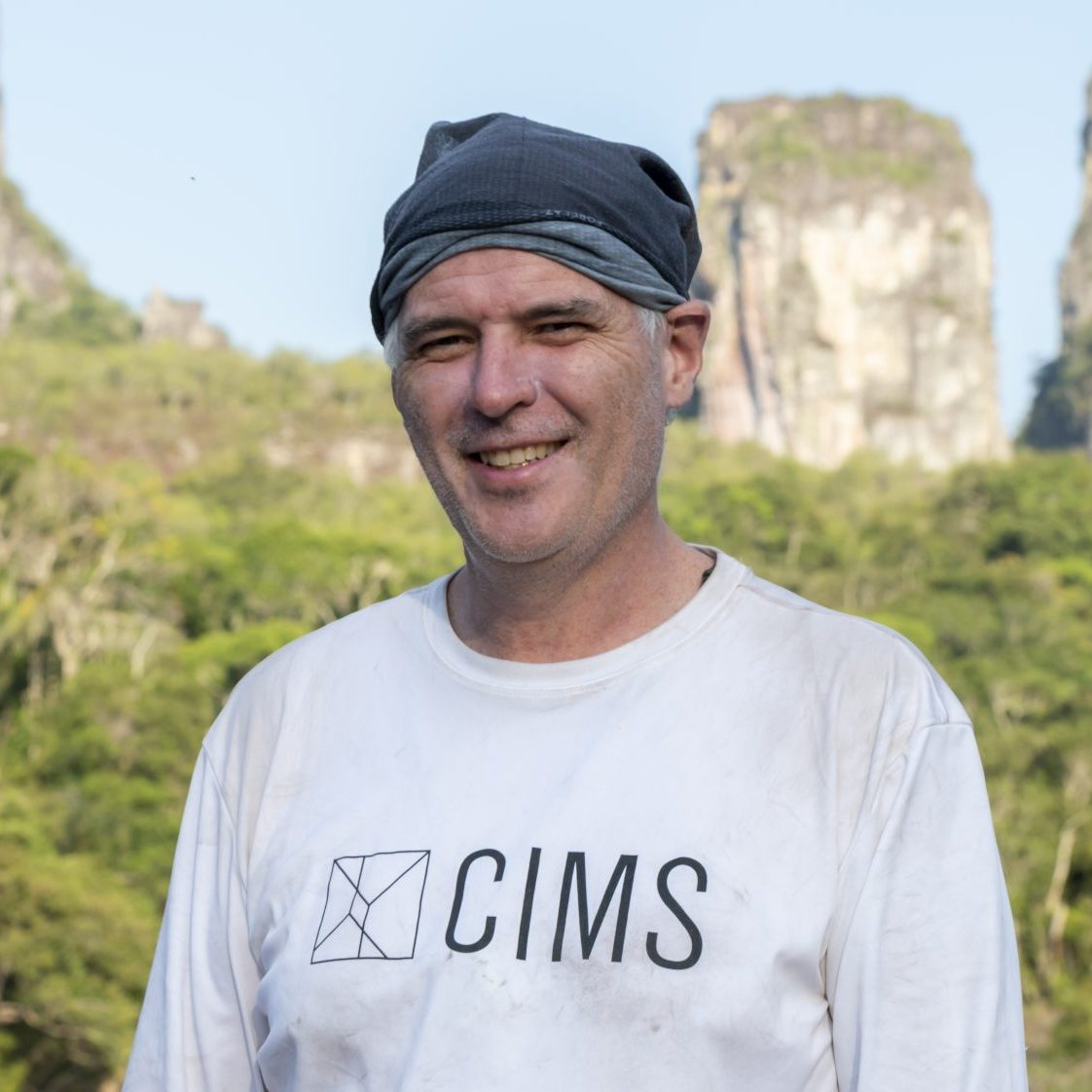
Prof. Mario Santana Quintero
Professor in Architectural Conservation and Sustainability, Carleton University | Honorary President ICOMOS, ISPRS, CIPA Heritage Documentation Scientific Committee | Co-chair, UNESCO Chair for World Heritage Convention, Faculty Carleton Immersive Media Studio (CIMS)
Expert in heritage recording, 3D documentation, risk preparedness, adaptive reuse, and digital conservation workflows for cultural heritage sites.

Dr. Chloe Pei
CIPA Heritage Documentation Expert Member | Former Deputy Secretary-General, ICOMOS China Scientific Committee of Cultural Heritage Conservation by Digitalization | Former Secretary-General, Sino-Hellenic Digital Heritage Joint Laboratory | Former Creative Director and International Affairs Director, Tsinghua Heritage Institute for Digitalization
Her work focuses on the application of contemporary digital technologies in the conservation, management, presentation, and dissemination of cultural heritage.

Prof. Marc Aurel Schnabel
Dean of Design School, XJTLU
Renowned expert in digital design, digital transformation, and extended reality environments, with a distinguished career in architecture and design education spanning over 25 years.

Dr. Cheng Zhang
Senior Associate Professor, Associate Dean for Research, Design School
Specialized in Heritage BIM, 3D reconstruction technology for heritage protection; leading the Research Centre of Intelligent Built Environment

Dr. Yiwen Wang
Senior Associate Professor, Urban Planning Department, XJTLU
Researches cultural heritage, urban history, and interpretation of historic landscapes in China,
focusing on their interpretation through contemporary narratives.

Yang Liu
Expert | Digital Heritage & Content Creation
Specializes in historic cities, working primarily in video to integrate urban heritage research with digital workflows, heritage data systems, and visual storytelling for a public-facing audience.

Anna Vichnevetskaia
PhD Researcher, Urban Planning Department, XJTLU | CIPA Heritage Documentation Emerging Professionals Leadership Team
Focuses on cultural heritage storytelling, authentic interpretation frameworks, and audience-centered narrative design.

Dr. Yiping Dong
Associate Professor, Department of Architecture, XJTLU
Researches Asian architectural history, adaptive reuse of heritage sites with art Intervention, urban regeneration, and XR of built heritage sites.

Dr. Yue Li
Associate Professor, Department of Computing, XJTLU | Leading the Heritage, Edutainment, and Reality Laboratory (HER Lab)
Researches HCI and XR design, evaluation, and application in cultural heritage and education.
Application & Registration
Applications are now open. Early bird closes on June 15.
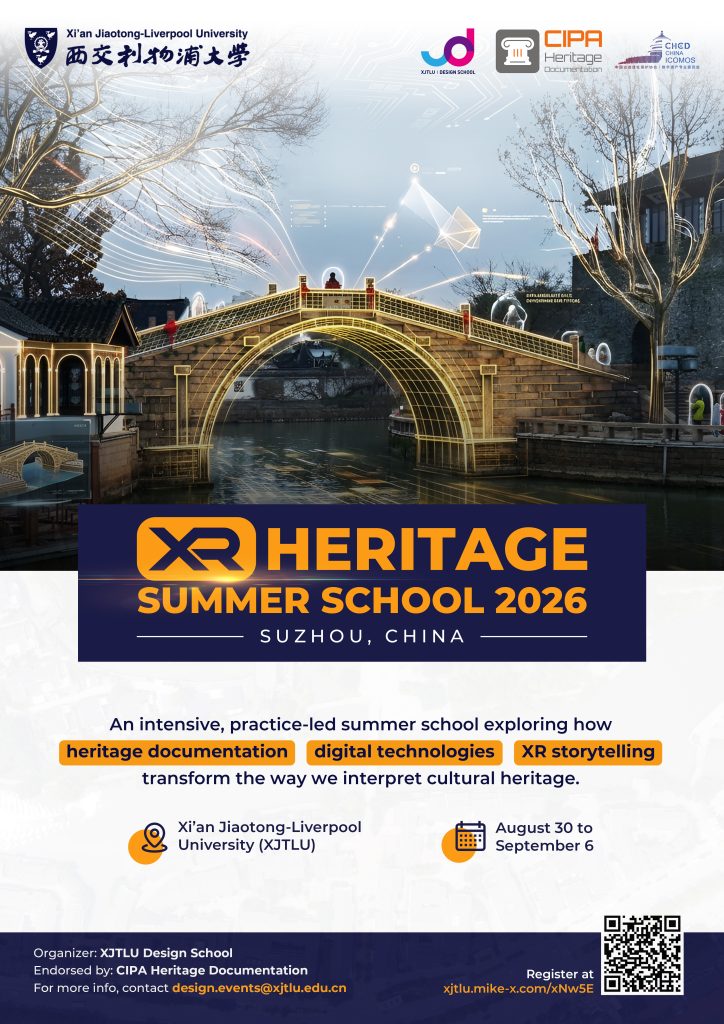
XR Heritage Summer School 2026
Aug 30 – Sep 6, 2026
Suzhou, Jiangsu, China
Organizer: XJTLU Design School
Endorsed by: CIPA Heritage Documentation
Supported by: International Symposium on Cultural Heritage Conservation by Digitalization (CHCD) 2026
Overview
The XR Heritage Summer School 2026 is an intensive, practice-led program that explores how emerging technologies — particularly Extended Reality (XR), 3D documentation, and digital storytelling — are reshaping the way we understand, interpret, and communicate cultural heritage.
Set in the historic city of Suzhou, alongside the Grand Canal and its layered architectural landscapes, the program brings together international students, researchers, and practitioners in architecture, design, heritage studies, and computational media.
Participants will move through a complete workflow, from on-site heritage observation and data acquisition to digital asset creation, and finally to XR experience design and narrative prototyping.
The summer school is organized by XJTLU in collaboration with CIPA Heritage Documentation.
Key Dates
Early bird registration deadline: June 15, 2026
Regular registration deadline: July 15, 2026
Arrival: Aug 29, 2026
Workshop: Aug 30 – Sep 6, 2026
Location
Xi’an Jiaotong–Liverpool University (XJTLU)
Suzhou Industrial Park (SIP), China
Field sites include key sections of the Grand Canal cultural corridor in Suzhou
Registration fee
Early bird (by June 15): 8,300 CNY | 1,220 USD
Standard (by July 15): 8,900 CNY | 1,300 USD
Late (by August 15): 9,500 CNY | 1,400 USD
Includes:
Please note that travel and hotel expenses are not included.