




08 Oct 2026


This academic year, we are pleased to welcome Dr Chen Xue, Dr Xiao Yang and Dr Tianwei Zhang, whose research spans statistics, applied cryptography, observational astrophysics and artificial intelligence.
Welcome to XJTLU's SMP, and we look forward to their contributions to the School!
Dr Chen Xue
Assistant Professor, Department of Applied Mathematics
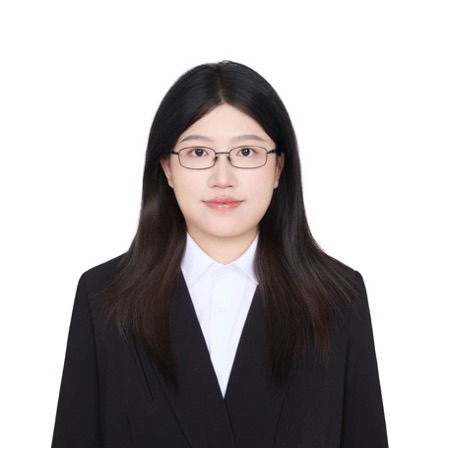
Dr Chen Xue received her PhD in Statistics from Pennsylvania State University, where she also worked as a postdoctoral researcher.
This semester, she teaches MTH324, a course on statistical learning and its applications. The course introduces commonly used statistical and machine learning methods, alongside practical sessions in which students use R to apply these methods to real-world data. By combining theory with practice, students can develop a better understanding of statistical methods and their applications.
Dr Chen’s research interests include spatial statistics, statistical modelling, computational biology and hyperbolic conservation laws. More broadly, she is interested in developing mathematical and statistical methods to address real-world problems in areas such as biology, medicine and engineering.
Through her teaching, Dr Chen hopes to help students develop a data-driven way of thinking, enabling them not only to understand theories and methods, but also to apply them to real-world problems.
Dr Xiao Yang
Assistant Professor, PQC-X Lab
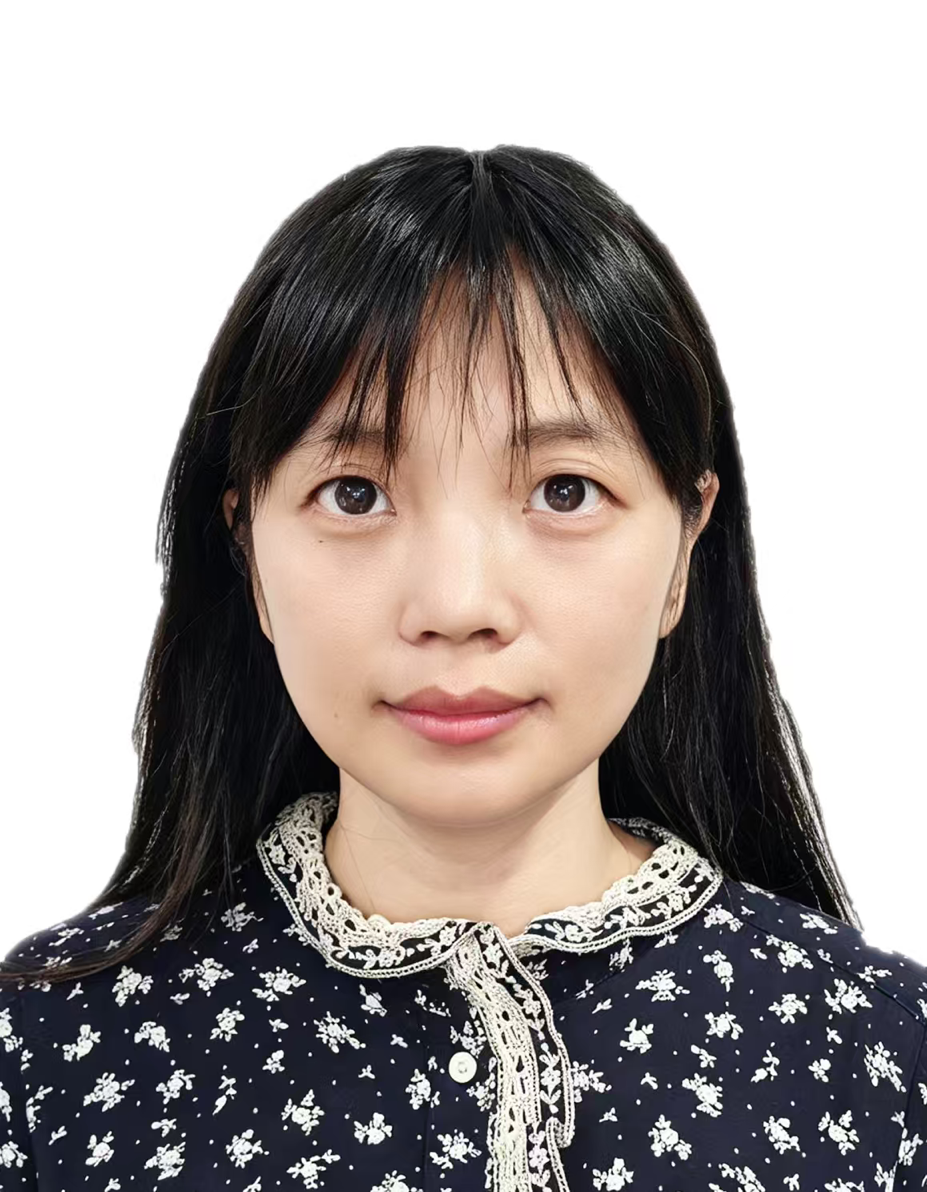
Dr Xiao Yang is an Assistant Professor at the PQC-X Lab, Xi’an Jiaotong-Liverpool University. She holds a PhD in Computing from The Hong Kong Polytechnic University, an MSc in Information Security from Royal Holloway, University of London, and a BSc in Computer Science and Technology from Wuhan University of Technology. After completing her PhD, she worked as a postdoctoral researcher at the University of Hong Kong and the University of Birmingham.
At XJTLU, Dr Yang teaches MTH028 Linear Algebra. Her teaching focuses on helping students understand fundamental concepts and develop logical problem-solving skills, while exploring how linear algebra connects with fields such as computing, data science and artificial intelligence.
Her research focuses on applied cryptography, with a particular theoretical interest in zero-knowledge proofs (ZKPs). Her work explores applications in blockchain security, privacy-preserving authentication and privacy-preserving verification, aiming to develop practical cryptographic techniques that enhance the security, privacy and trustworthiness of digital systems.
For students, Dr Yang encourages curiosity, critical thinking and a willingness to take on challenging problems. She hopes students can connect what they learn in class with real-world applications while developing their own interests and confidence.
Dr Tianwei Zhang
Assistant Professor, Department of Physics
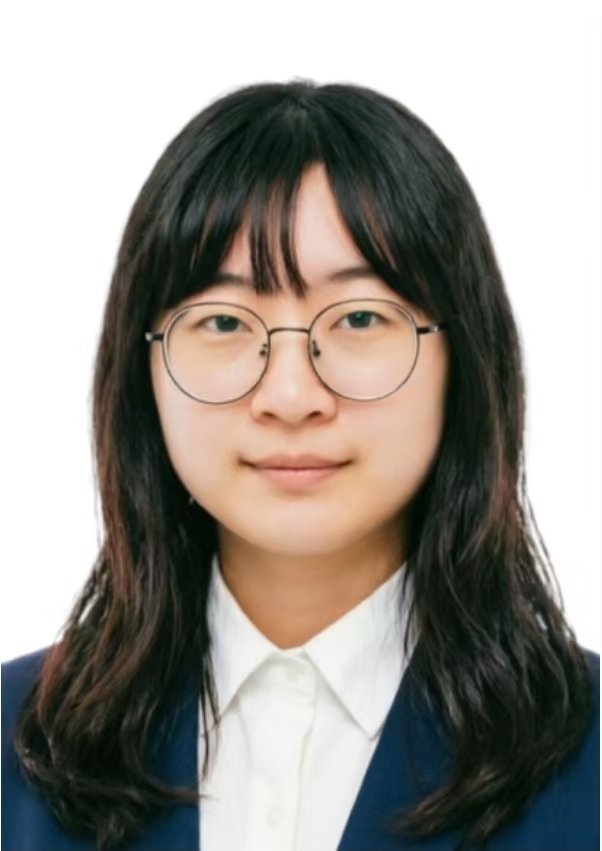
Dr Tianwei Zhang has joined the School of Mathematics and Physics at Xi’an Jiaotong-Liverpool University as a faculty member. She holds a PhD in Experimental Physics from the University of Cologne, Germany, where she studied observational astrochemistry and star formation. She previously studied astronomy and preventive medicine at Peking University.
Before joining XJTLU, she worked as a postdoctoral researcher and Senior Specialist at Zhejiang Lab, focusing on astronomical data and AI-driven analysis. She has published more than 30 research papers.This semester, Dr Zhang teaches PHY104, a practical physics course for second-year Applied Physics students. The laboratory course introduces measurement uncertainty, error propagation, data visualisation and the scientific method through experiments in classical mechanics.
Dr Zhang aims to connect physics education with practical data science skills. In her teaching, she uses examples from the history of science, real-world engineering cases and AI tools to help students understand why careful measurement, statistical analysis and physical reasoning matter. She also encourages students to use AI responsibly as a tool for exploring and analysing physical problems, while emphasising that computational tools should support rather than replace their understanding of physics.
Her research lies at the intersection of observational astrophysics and artificial intelligence. She studies how stars form across different mass ranges and investigates the chemistry of star-forming regions, including the search for prebiotic molecules. Using data from major astronomical facilities such as ALMA, IRAM 30m, APEX and FAST, her work combines astronomical observations with AI-driven methods to address data-intensive challenges in modern astronomy.
Dr Zhang has developed an automated spectral-line identification framework using deep reinforcement learning and transformers, accelerating data analysis by more than 30 times and supporting the detection of prebiotic molecules. Looking ahead, she aims to develop AI frameworks that combine observations from different types of telescopes while incorporating fundamental physical principles into the models.
For students, Dr Zhang encourages them to embrace computational tools while never losing sight of the question “why”. She emphasises that AI can support learning and research, but cannot replace students’ own understanding. At XJTLU, she hopes to involve students in research projects and help them become confident in both physics and computational methods.
Materials provided by Chen Xue, Xiao Yang,and Tianwei Zhang
Reported by Qinru Liu
08 Oct 2026