




13 Oct 2026


This summer, a five-day collaborative workshop brought students and educators from Xi’an Jiaotong-Liverpool University and UCSI University from Malaysia together in Suzhou to explore how cultural experience can be translated through architectural interpretation, computational design and digital fabrication. Developed as an initiative under the Memorandum of Understanding (MoU) between the two universities, the programme turned institutional partnership into a direct teaching, design and cultural exchange experience.
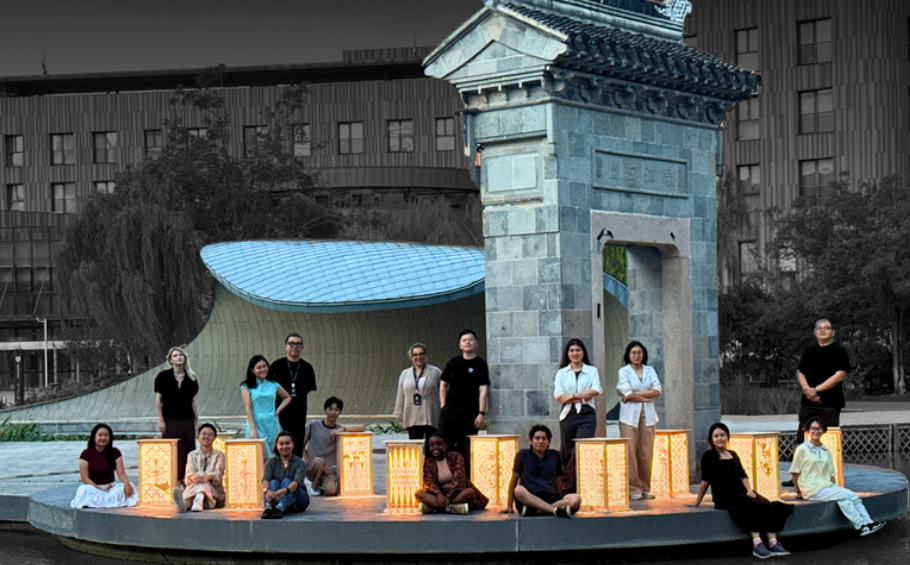
The workshop team and students with the completed illuminated artefacts at XJTLU. Image extracted from the workshop booklet
From MoU to a Shared Design Experience
The workshop, From Kuala Lumpur to Suzhou: Interfaces of Experience, formed the second phase of a growing XJTLU-UCSI collaboration. Earlier in 2026, the partnership began through Tectonic Dialogues: From Suzhou to Kuala Lumpur, a two-part online lecture series under UCSI University’s School of Architecture and Built Environment (SABE). The lectures linked cultural expression, geometric systems, design and digital fabrication with UCSI’s Interior Architecture Design Studio 04.
Building on that academic exchange, the August workshop brought students from Kuala Lumpur to Suzhou for an intensive programme hosted by XJTLU. Led by Assistant Professor Dr Siti Balkish Roslan, the workshop was designed around a simple proposition: cultural exchange becomes more meaningful when students move between observation, discussion, interpretation and making.
The academic team included Assistant Professor Silvia Albano, Assistant Professor Dr Zhelun Zhu and Assistant Professor Dr Yang Song from XJTLU, together with Dr Wong Leong Yee, Lecturer and Head of Research & Postgraduate Studies at UCSI University, and Dr Emmanuelle Khoo Fong Yi, Lecturer at UCSI University. Their combined expertise supported the workshop across cultural interpretation, pattern, material thinking, computational design and fabrication.
Encountering Suzhou, introducing Kuala Lumpur
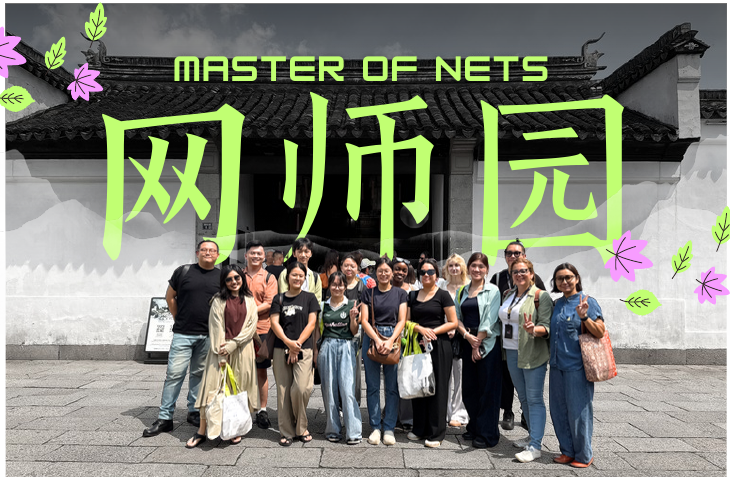
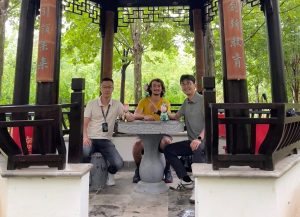
Students and educators at the Master of the Nets Garden, Suzhou, where spatial sequences, lattice patterns, framing, water and craft became sources for design interpretation
The workshop began with direct encounters with Suzhou. At the Master of the Nets Garden, students examined the spatial qualities, proportions, framed views, decorative lattices, material details and relationships between architecture, vegetation and water. A second visit to Pingjiang Road shifted attention from the carefully composed garden to the lived historic streetscape, where canals, bridges, traditional buildings, shops and everyday urban life coexist.
The cultural exchange then moved in the other direction. UCSI University students presented their studio work and introduced aspects of Malaysian cultural identity to their XJTLU counterparts, drawing on the traditions, architecture, motifs, materials and streetscapes of different Malaysian states. References ranged from batik, wau bulan and pucuk rebung motifs to Islamic geometry, Peranakan tiles and other multicultural visual languages.
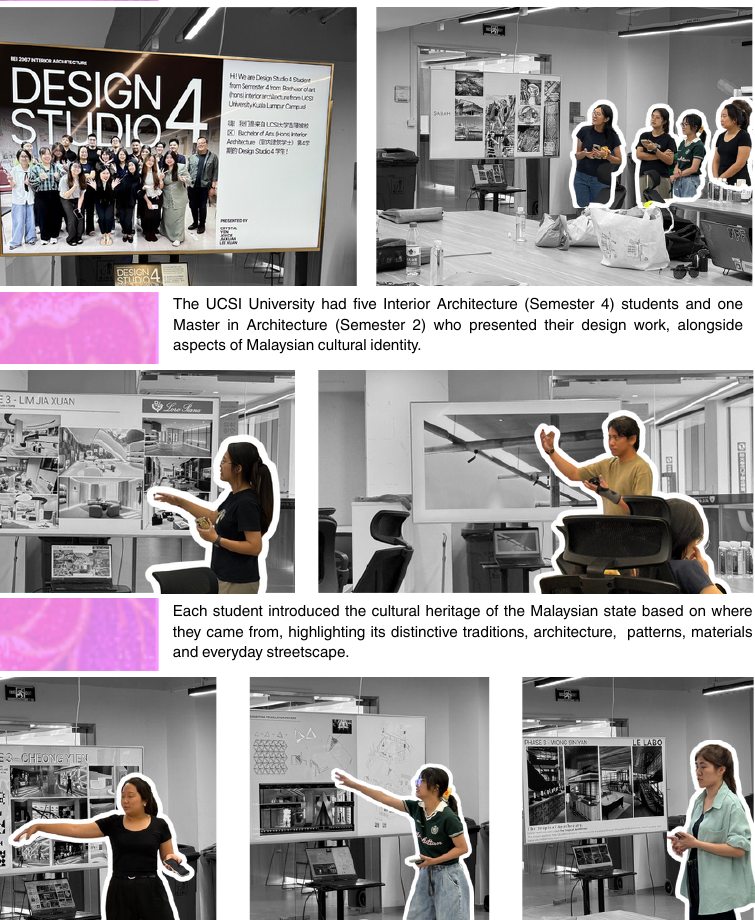
UCSI students presenting design work and Malaysian cultural references to their XJTLU peers
Translating experience through digital making
Lectures and tutorials during the workshop helped students move from cultural observation to design development. Dr Emmanuelle Khoo Fong Yi examined the translation of nature, pattern and Chinese landscape traditions across cultures, while Dr Wong Leong Yee addressed pattern as a generative design system through geometry, repetition, symmetry, tessellation, modularisation and material construction.
Working individually within a shared framework, the ten students developed light artefacts that brought Chinese and Malaysian references into dialogue. Patterns were drawn, abstracted and tested through hand sketches and digital modelling before being prepared for laser cutting in the Design School’s state of the art Fabrication Lab with the assistance of Technician Rui Yang. Students then assembled the panels, tested light sources and studied the shadows produced by the cut patterns. The process connected cultural research with precise digital workflows and hands-on fabrication.
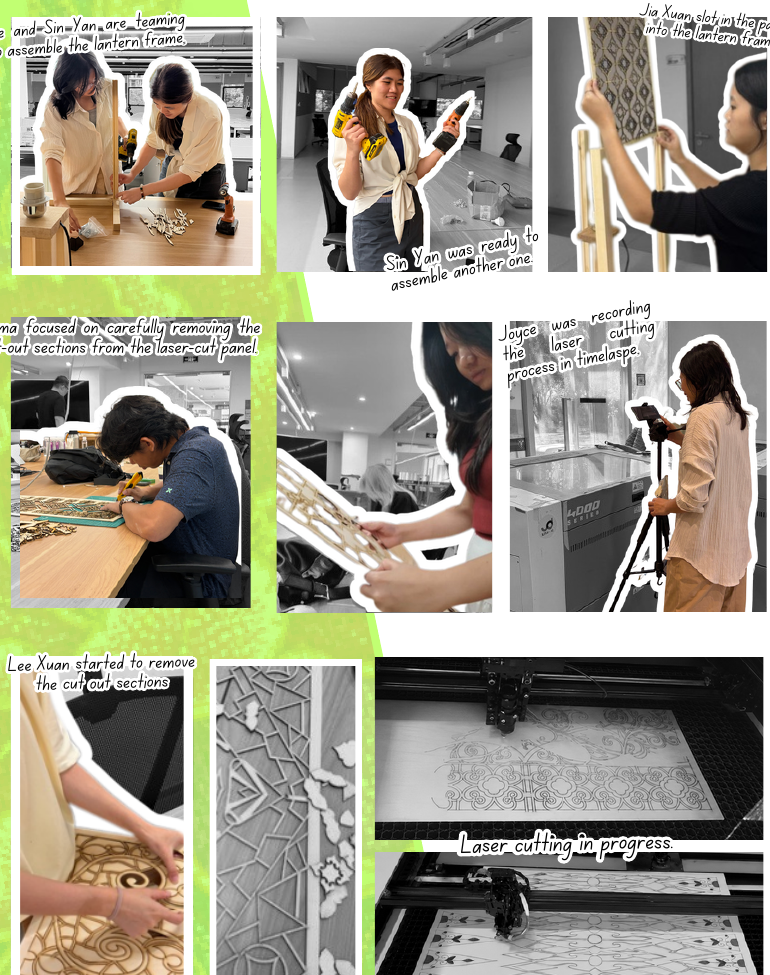
Students moved between digital modelling, laser cutting, panel preparation and physical assembly
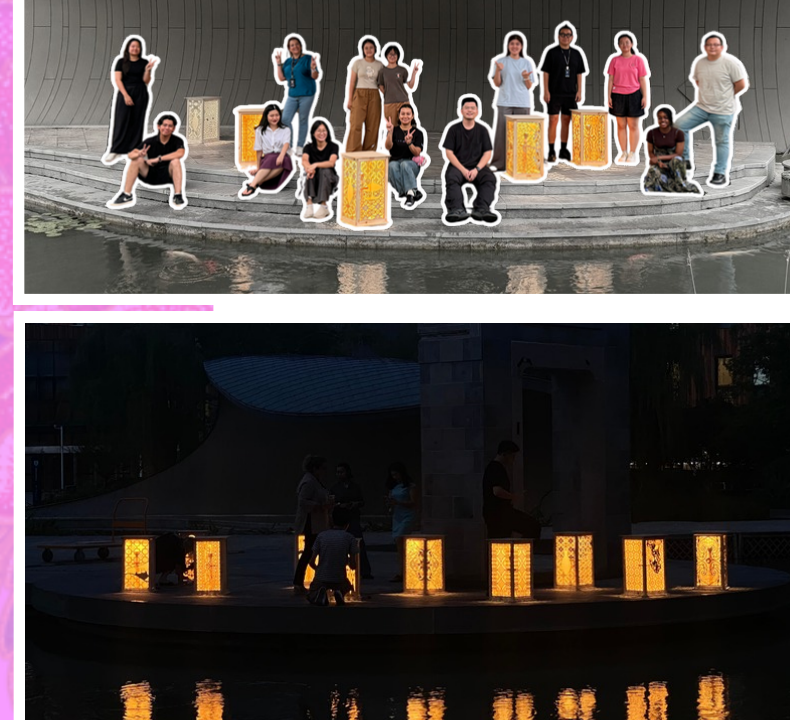
Lighting tests revealed how pattern, shadow and reflection transformed the artefacts after dark
Final review and public exhibition
The workshop concluded with a final design review and installation at XJTLU. Associate Professor Dr Jiawen Han, Deputy Head of Department in the Design School, delivered the closing remarks and presented certificates to the participating students. The final review brought together the design process, cultural research and material outcomes developed across the five days.
The project then extended beyond the university. The completed light artefacts were selected by the Research Centre for Culture, Communication and Society (CCCS) committee to be exhibited as part of the inaugural Suzhou Arts and Culture Festival: Jiangnan Traditions, Contemporary Expressions at Suzhou No. 1 Silk Factory. The festival opened on 30 August 2026 and brought XJTLU teaching and research into a public cultural setting through exhibitions, performances, talks and other activities. Associate Professor Dr Penelope Scott, Acting Director of CCCS, Director of the festival officiated the event along with Professor Dr Adeline Johns-Putra, Professor and Graduate Chair at Queen’s University, Canada, and Founding Director of XJTLU’s Research Centre for Culture, Communication and Society (CCCS), who delivered the welcome address at the opening ceremony.
Within this wider festival context, the workshop exhibition presented the light artefacts as records of exchange between Suzhou and Kuala Lumpur. Their patterned surfaces, illuminated interiors and cast shadows demonstrated how students had interpreted cultural references through contemporary design and fabrication rather than treating heritage as a fixed visual vocabulary.
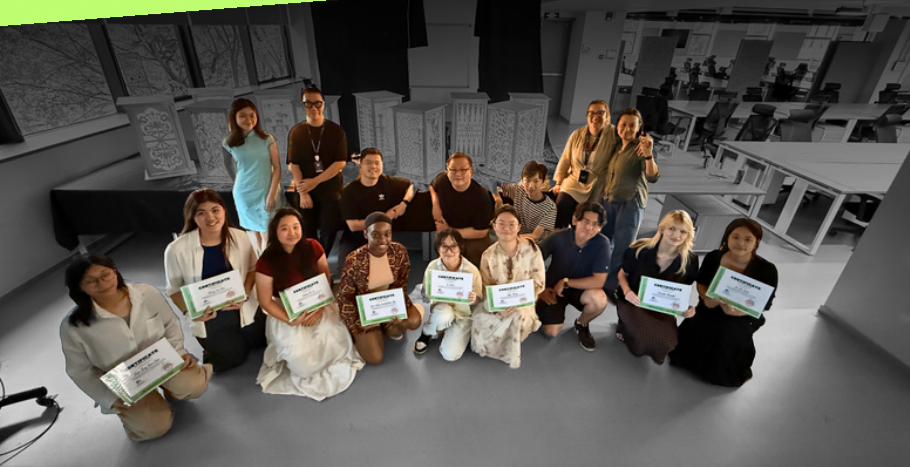
Closing review and certificate presentation at XJTLU
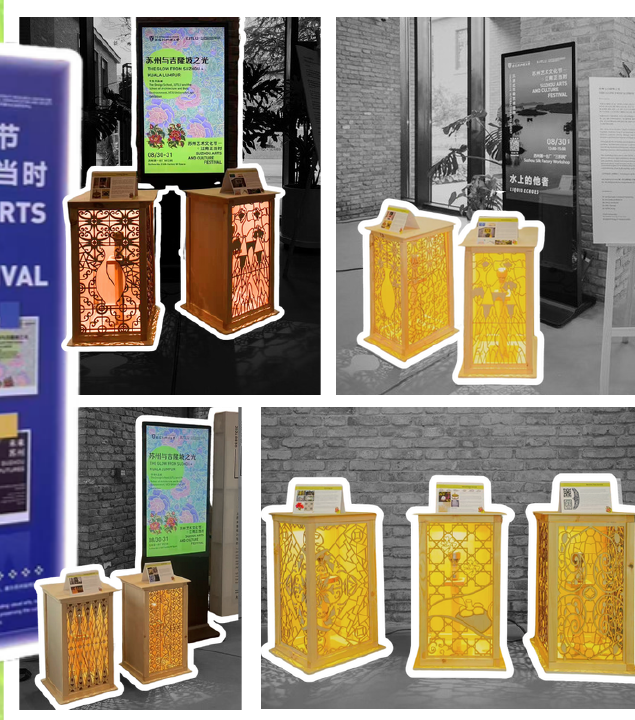
Selected light artefacts on public display during the Suzhou Arts and Culture Festival at Suzhou No. 1 Silk Factory
A platform for continued collaboration
The workshop demonstrated how an institutional MoU can become a practical platform for shared teaching, mobility and creative experimentation. Students encountered unfamiliar cultural contexts while also being asked to articulate their own, developing design proposals through conversation with peers and educators from another university.
For the organising team, the project also establishes a foundation for continued XJTLU-UCSI collaboration. Its combination of cross-cultural inquiry, emerging technologies and making offers a model that can be expanded through future workshops, exhibitions and academic exchanges across the region.
13 Oct 2026