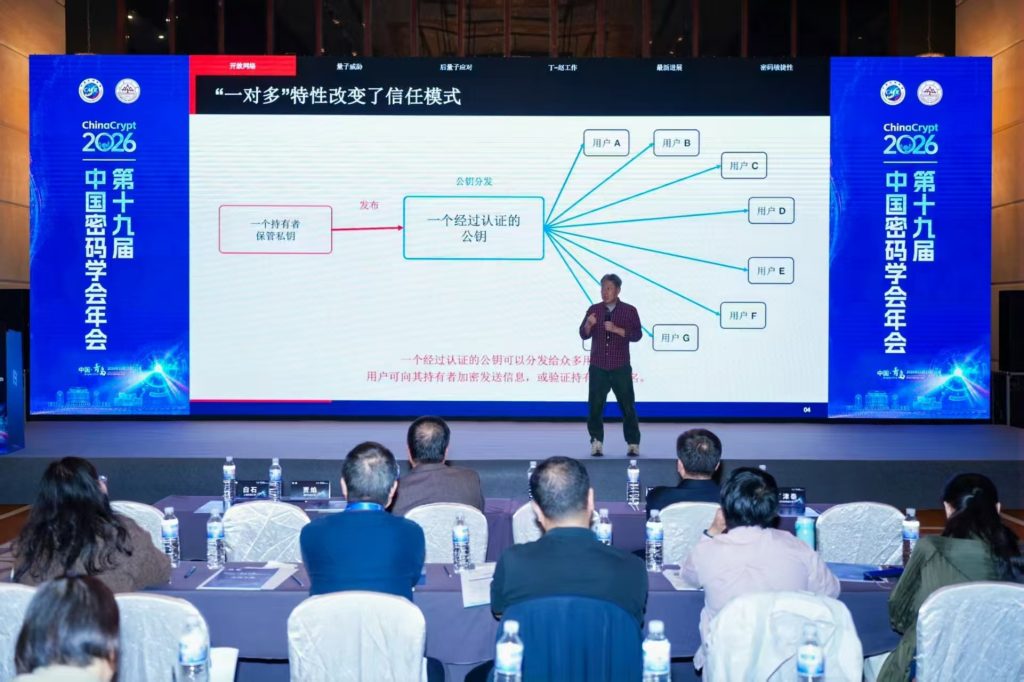
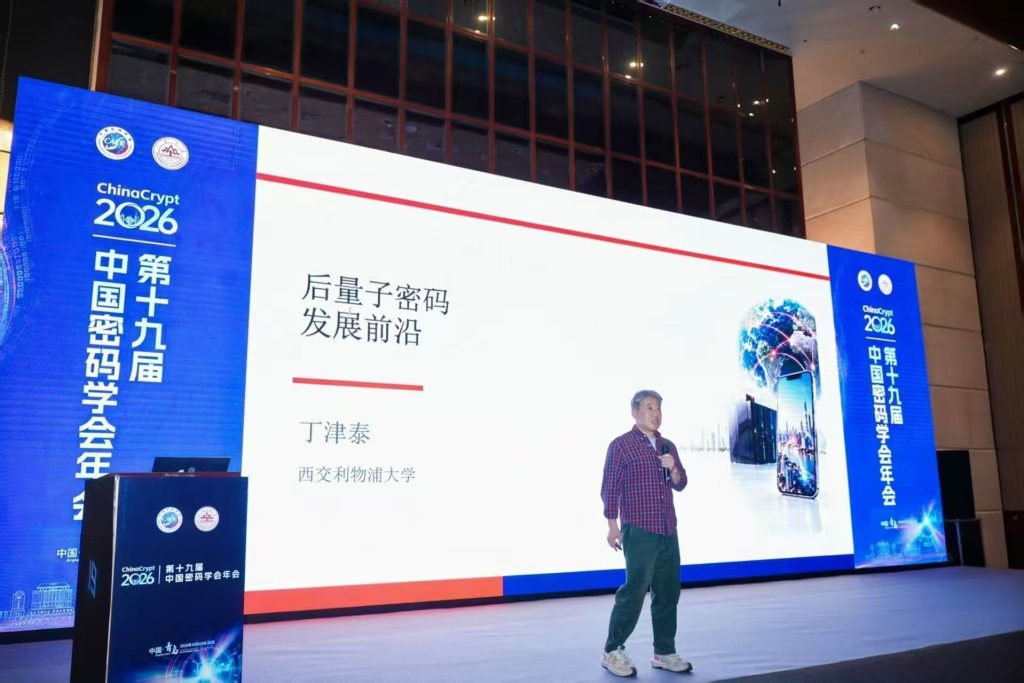
From 24 to 25 October, the 19th China Cryptologic Conference (ChinaCrypt 2026) was held in Qingdao. Hosted by the Chinese Association for Cryptologic Research, the event brought together academicians and leading experts to discuss the latest trends in cryptography. Professor Jintai Ding, Director of the Post-Quantum Migration Interdisciplinary Laboratory (PQC-X Lab) at XJTLU, delivered a keynote titled "Frontiers in Post-Quantum Cryptography".
Cossing the Migration "Window"
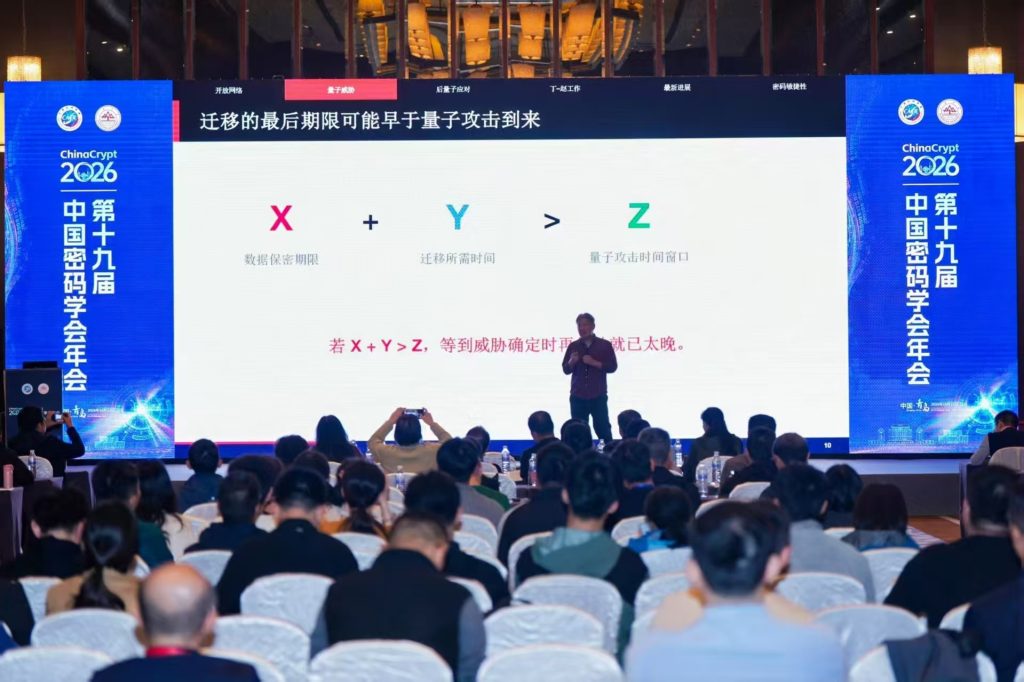
Professor Ding highlighted the realistic threat of "Harvest Now, Decrypt Later." He noted that the data confidentiality period plus migration time must be shorter than the quantum attack window. Delaying action until the threat is fully confirmed will leave systems vulnerable, which is why global migration to PQC standards is accelerating.
Standards & Lattice Cryptography
As one of the designers of the ML-KEM (CRYSTALS-Kyber) algorithm, Professor Ding discussed why lattice cryptography is central to PQC deployment. He emphasised that the release of standards (like FIPS 203/204) is only the starting point; cryptanalysis is a long-term endeavour. A gap in mathematical foundations, parameters, engineering, or concrete implementations could become an attack vector.
Algorithm Optimisation & Implementation-Level Security Challenges
The team shared their latest progress in the SVP challenges, breaking the SVP-210 dimension record through a heterogeneous storage pipeline (disk + GPU). This work reveals a key conclusion: solving a higher lattice dimension does not equal a higher security bit strength.
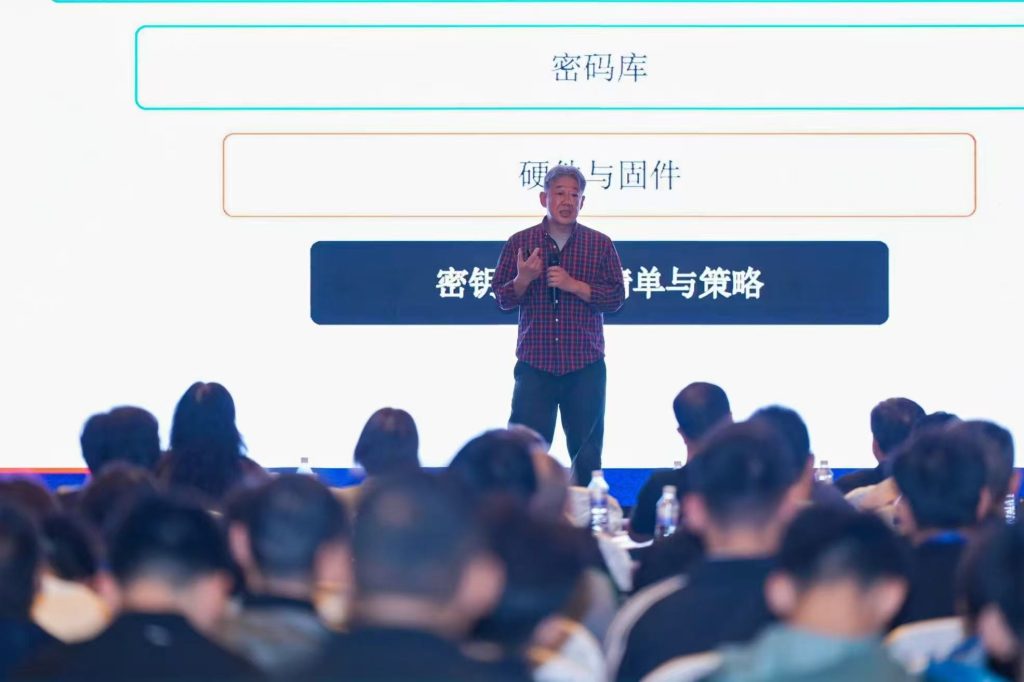
Furthermore, Professor Ding analysed a recent cache-timing attack on HQC, which recovered keys in under 30 minutes. This reminds the industry that Crypto-Agility must address full-stack engineering security—from hardware and software libraries to application systems.