




New Education Innovation Fund celebrates teaching innovation

08 Oct 2026


On 23 September, Xi’an Jiaotong-Liverpool University held the Education Innovation Showcase 2026 to launch its new Education Innovation Fund (EIF) and to celebrate innovative teaching practices.
The introduction of EIF
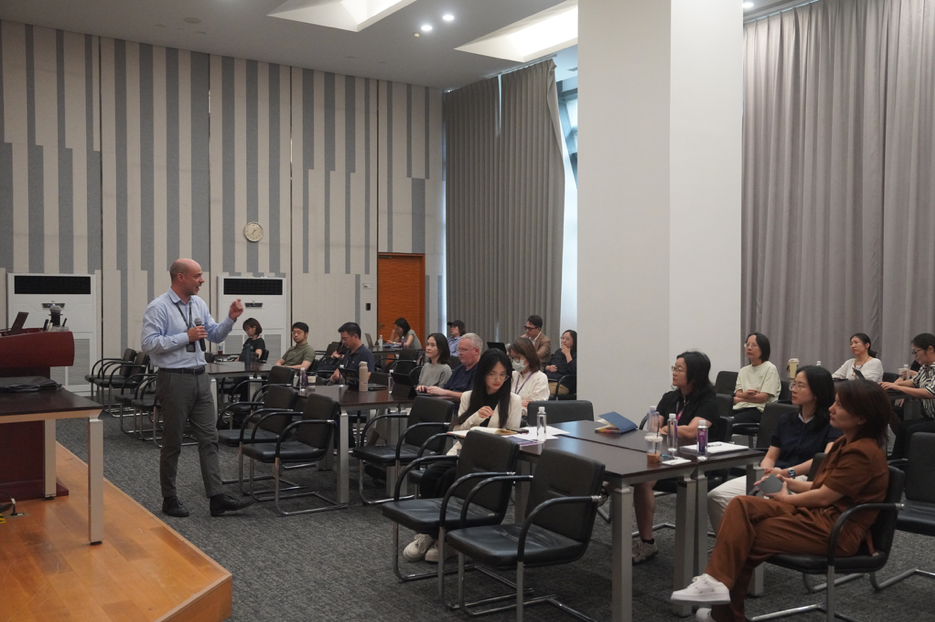
The event opened with a speech from Professor Konstantinos Papadikis, Associate Vice President for Education at XJTLU, who welcomed attendees and outlined the strategic thinking behind the EIF, the University’s new system for supporting learning and teaching innovation.
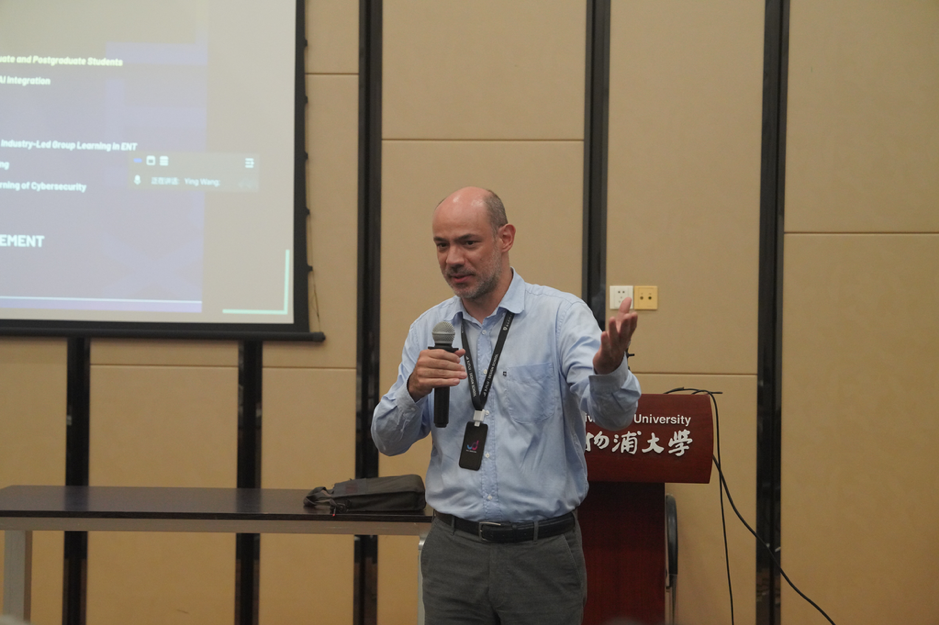
Professor Konstantinos Papadikis delivering the opening speech
According to Professor Papadikis, the EIF replaces two prior mechanisms: the Teaching Development Fund (TDF) and the faster-turnaround Education + AI Sprint Enablement (EASE) Fund.
“We used to have the TDF, which was primarily focused on within-class teaching and exploring pedagogical approaches; it was more module-specific within a specific programme structure,” he said.
“During the EASE Fund process, it became evident to us – especially given the huge engagement, around 160 projects – that when teaching development is aligned with the strategic priorities of XJTLU, we can engage our staff in a much more creative and constructive way,” he said.
This insight has shaped how the EIF is structured. The new system is designed to tie funded projects directly to XJTLU’s education strategy. Also, rather than the TDF’s twice-yearly calls, the EIF will run once a year, with up to three thematic areas set by the University Learning and Teaching Committee (ULTC) in consultation with relevant university bodies.
Professor Papadikis added that the fund also reflects a broader shift in how the University wants to engage with education in an AI-integrated era.
Project showcase
The event then showcased six pioneering education projects from across the University, presented in two panels with Q&A sessions. The presentations spanned disciplines from language education to cybersecurity, illustrating the breadth of innovation already underway across XJTLU.
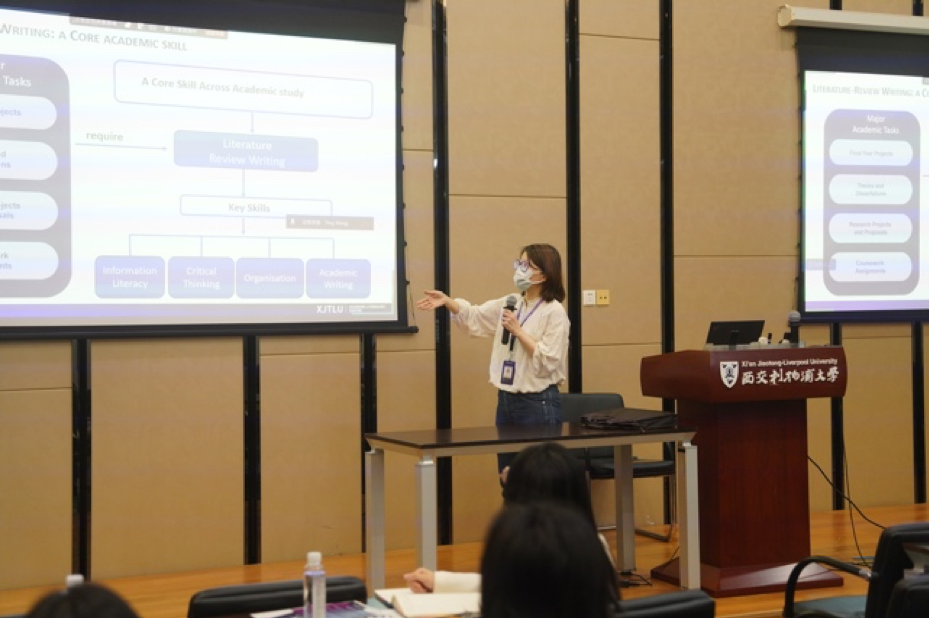
Dr Feng-Chen (Ashlee) Tai at the Global Cultures and Languages Hub sharing “Using AI Agents in Scaffolding Literature Review Writing”
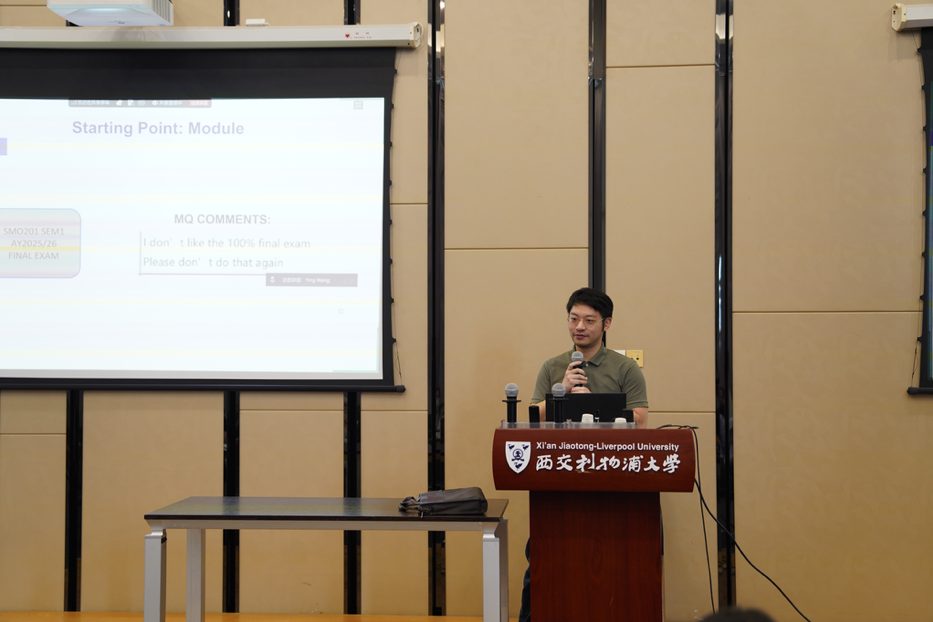 Dr Jia Hao Bryan Chai at International Business School Suzhou sharing “Developing Authentic Individual Coursework Assessments with Ethical AI Integration”
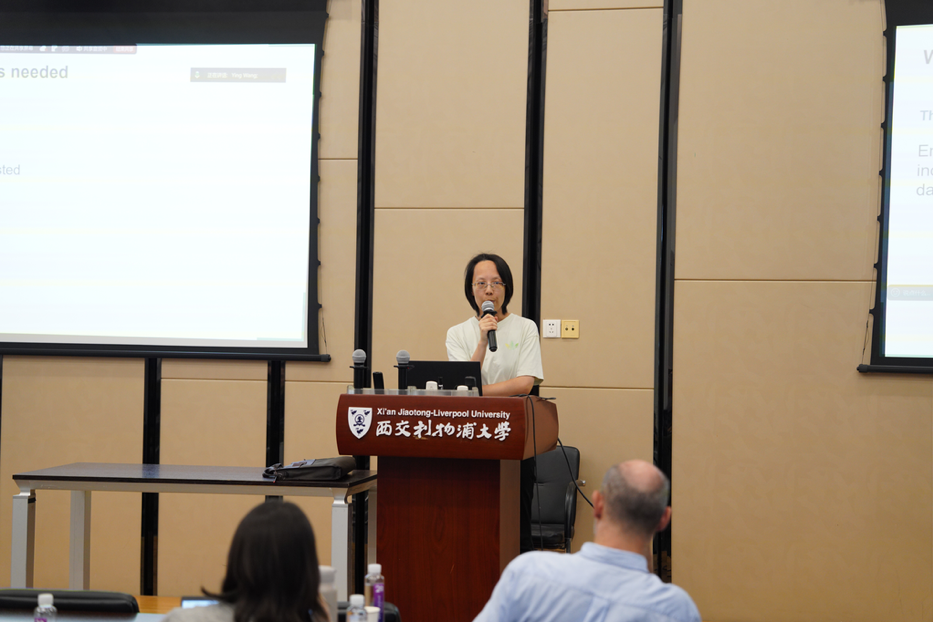 Dr Qing Mu at the Academy of Life and Natural Sciences sharing “Conversational AI-Assisted Data Analysis for Environmental Science”
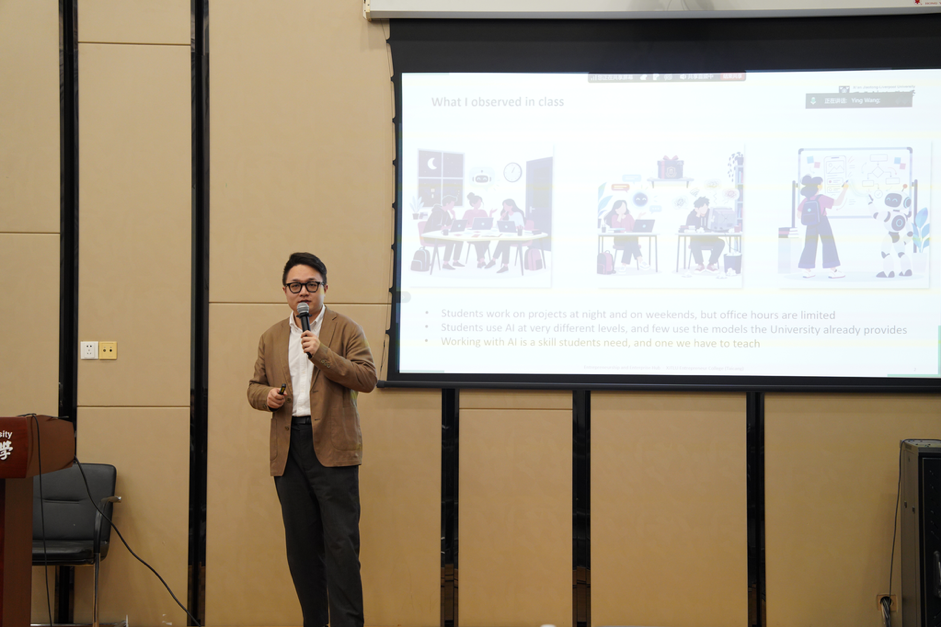
Dr Boyi Jin at the Entrepreneurship and Enterprise Hub sharing “AI-Enabled Syntegrative Education in Project-Based Learning”
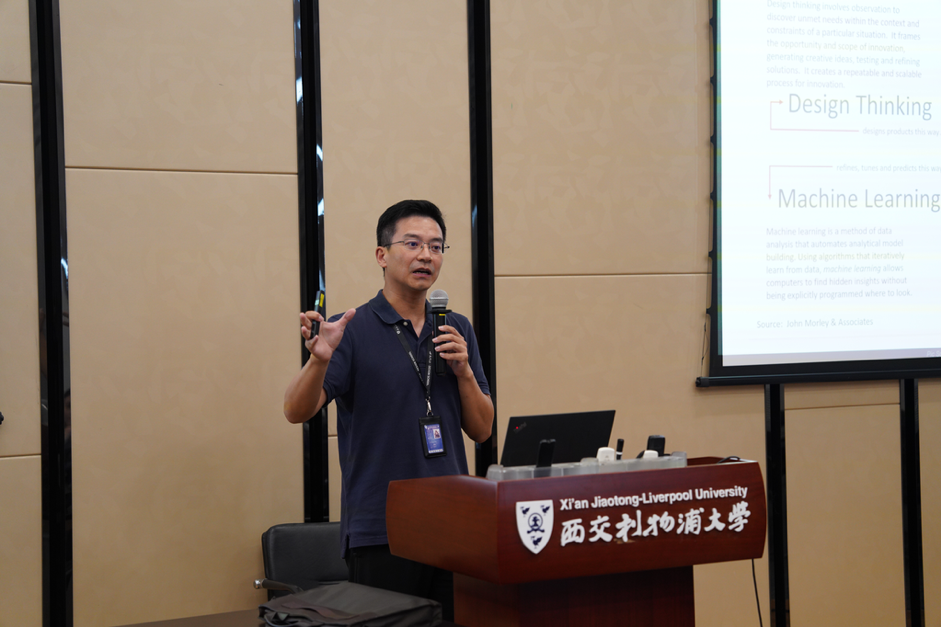
Professor Bing Chen at the Design School sharing “A Pilot Interdisciplinary Programme: BEng Smart City and Spatial Planning”
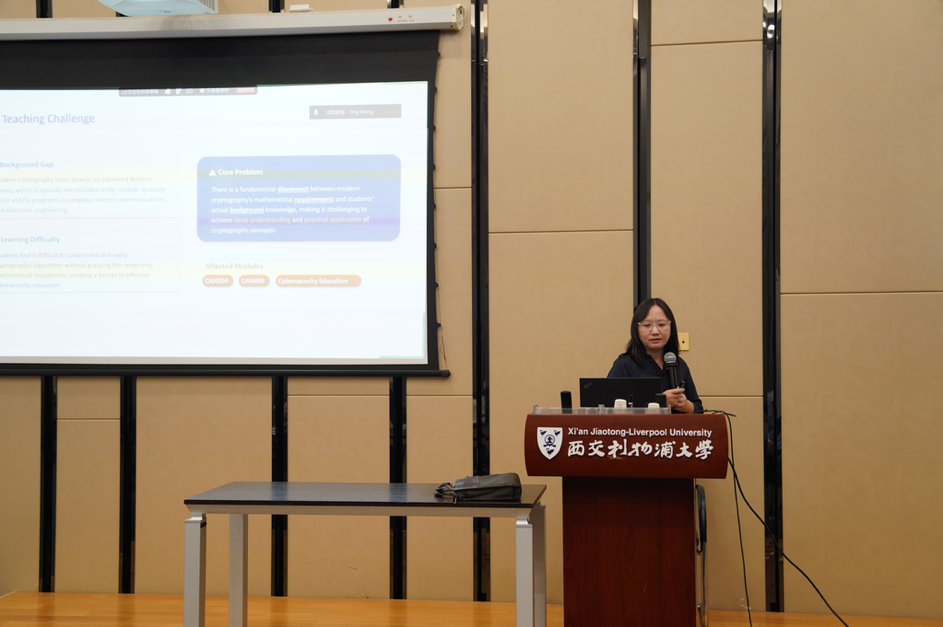
Dr Jie Zhang at the Academy of AI and Advanced Technology sharing “Cryptography Algorithms Demonstration System for Teaching and Learning of Cybersecurity”
Kick-off and theme announcement
The event closed with Professor Papadikis officially kicking off the EIF for AY2026-27. For this cycle, applications will be guided by three strategic themes:
- Human-AI and Data-Enabled Education: Building on the previous EASE Fund, this theme explores the responsible use of AI and data in teaching, learning and assessment, with a particular focus on data-driven personalisation. Exploration areas include AI-supported formative and summative assessments, data-informed personalisation of learning pathways, and critical AI literacy and ethical reasoning across the curriculum;
- Sustainability as Educational Practice: Tied to the 17 UN Sustainable Development Goals, this theme embeds sustainability into curricula through systems thinking, campus-as-laboratory projects, and cross-campus collaboration with the University of Liverpool and Xi’an Jiaotong University. Professor Papadikis noted that sustainability extends well beyond environmental protection and climate action to include clean water, poverty alleviation, quality of life and education, industry, and infrastructure, and several others;
- Industry and Society as Co-Educators: Positioning industry and community partners as active co-creators of learning, this theme supports authentic, challenge-based education and Syntegrative models. Professor Papadikis framed it as addressing education “from the demand side” rather than the supply side, in alignment with XJTLU’s 3.0 and 4.0 education models. The theme is also tied to a broader vision of lifelong learning in which students become professionals and, in turn, return as teachers.
For staff interested in applying, the key dates are as follows:
- Online applications open: 26 October 2026
- Submission deadline: 31 December 2026
- Preliminary review: 4-22 January 2027
- Panel marking and funding decisions: March and April 2027
- Results published: 26-30 April 2027
For more enquiries, please contact the EIF team at eif@xjtlu.edu.cn. The tdf@xjtlu.edu.cn address is no longer in use.
By Xinmin Han
Edited by Patricia Pieterse
Photos by Jingrui Duan
Editorial support courtesy of Education and Quality Assurance Office
08 Oct 2026