




Suzhou Museum of Contemporary Art visits XJTLU for discussion on art, technology, and education

19 Oct 2026


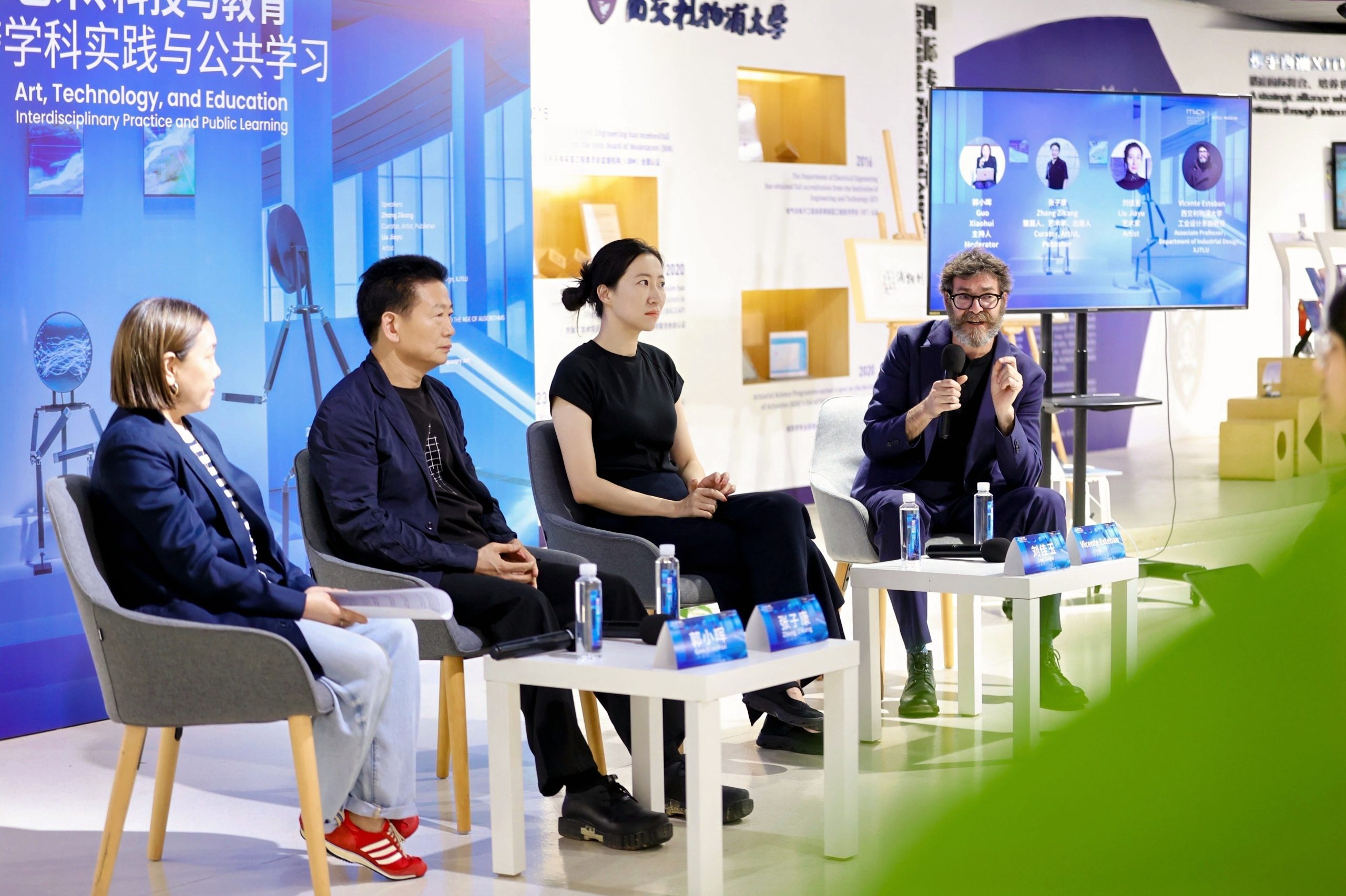
On 14 October, Xi’an Jiaotong-Liverpool University (XJTLU) hosted a panel discussion titled “Art, Technology and Education: Interdisciplinary Practice and Public Learning” at the XJTLU Museum.
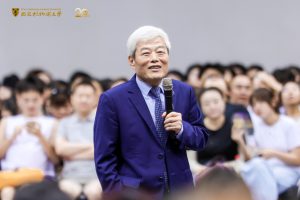
Co-organised by the Suzhou Museum of Contemporary Art and the XJTLU Museum, the event brought together three speakers: Professor Zikang Zhang, Director of the Shenzhen International Museum of Art and Professor at the Central Academy of Fine Arts, China; artist Jiayu Liu; and Vicente Esteban, Associate Professor from XJTLU’s Department of Industrial Design.
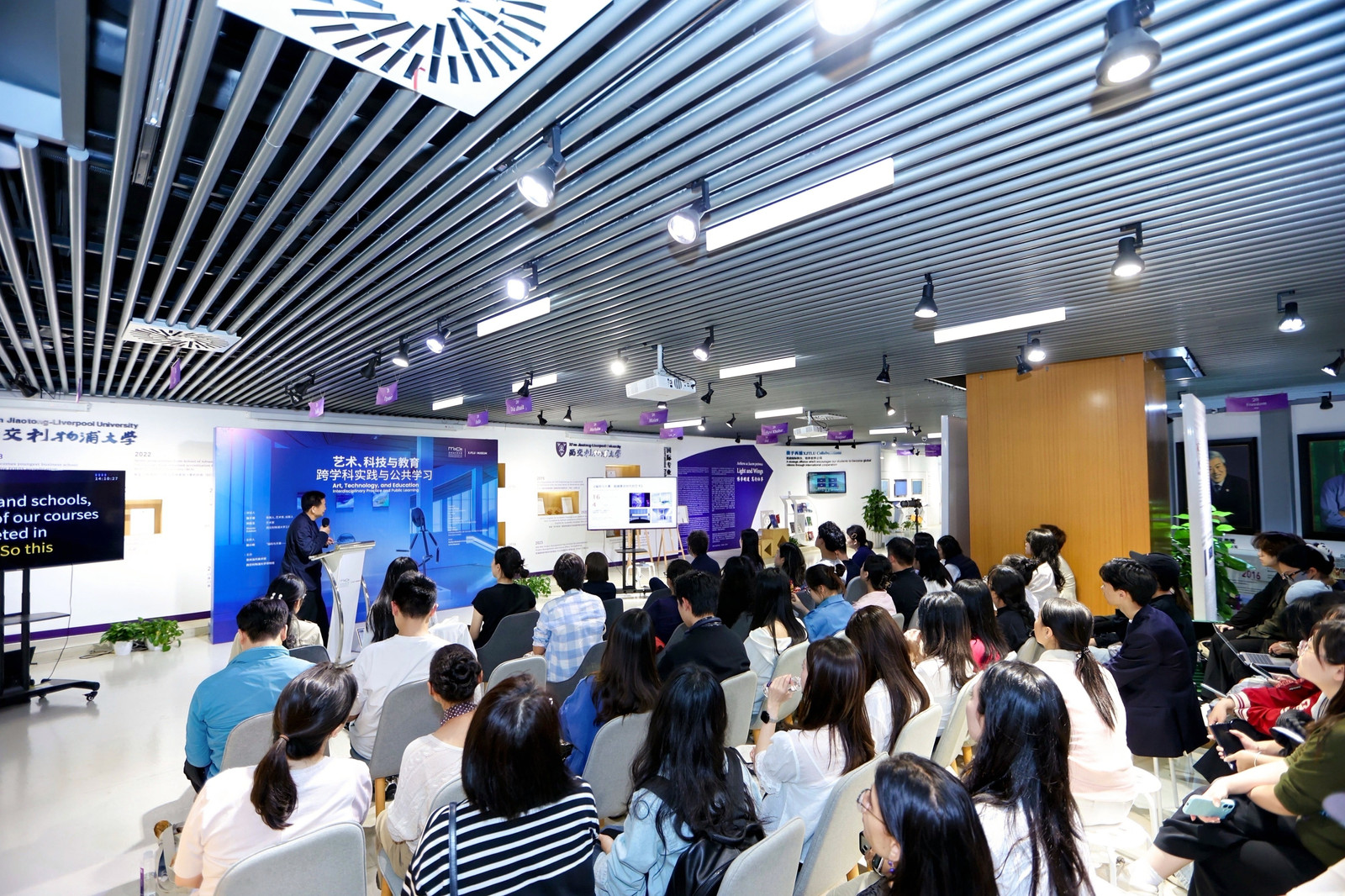
Drawing on the exhibition “Codes & Canopies: Art Beyond the Age of Algorithms”, currently on display at the Suzhou Museum of Contemporary Art, the speakers explored artistic creation, museum curation, and design education in the age of algorithms. The discussion was moderated by Xiaohui Guo, Executive Curator of the exhibition.
“Codes & Canopies: Art Beyond the Age of Algorithms” is one of four major exhibitions marking the opening season of the Suzhou Museum of Contemporary Art. Co-curated by Professor Zhang and Alistair Hudson, Director of the ZKM Center for Art and Media Karlsruhe, Germany, the exhibition features works by 16 artists and artist groups from 11 countries.
Spanning four emerging fields – artificial intelligence (AI) art, bio-art (art involving living organisms), virtual art (art involving virtual reality), and space art (depicting space and the universe) – the exhibition invites visitors to reconsider how they perceive the world in the algorithmic age and explore the interconnected relationships between humanity, nature, technology, and life. Liu’s work “Celestial Note” is among the pieces on display.
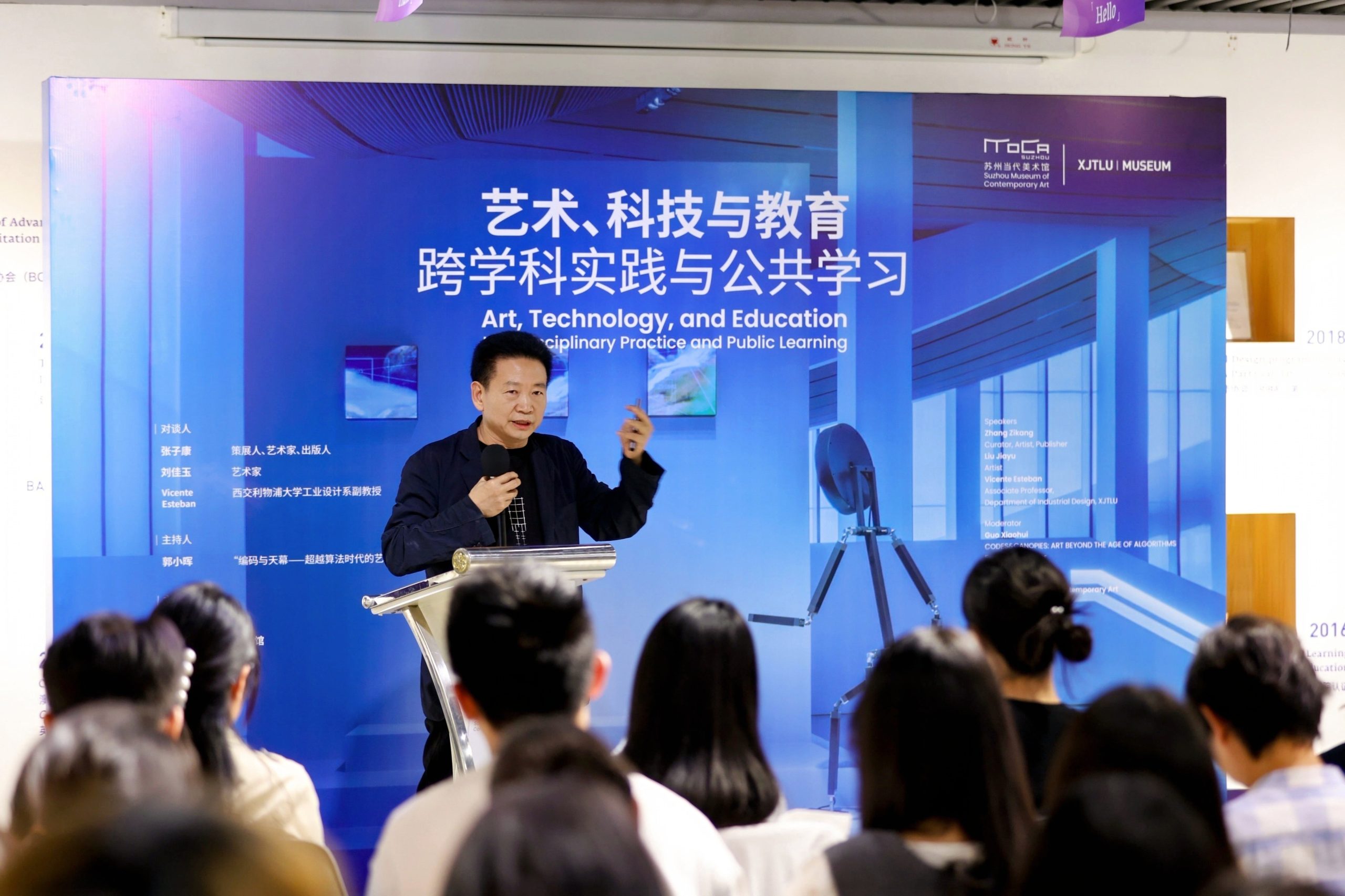
Professor Zikang Zhang
Speaking from his experience as a curator and museum director, Professor Zhang explained that the exhibition explores how algorithms, data, and machine-generated languages are reshaping the ways people perceive the world. He noted that AI art, bio-art, and space art are now engaging in meaningful dialogue with more traditional forms of contemporary art.
A new way of thinking
Professor Zhang also emphasised that museums should create public spaces that move beyond cultural biases in aesthetic appreciation and seek out fundamental, shared human experiences.
“A contemporary art museum is itself a classroom,” he said, explaining that museums can help people see the world from new perspectives and develop innovative ways of thinking.
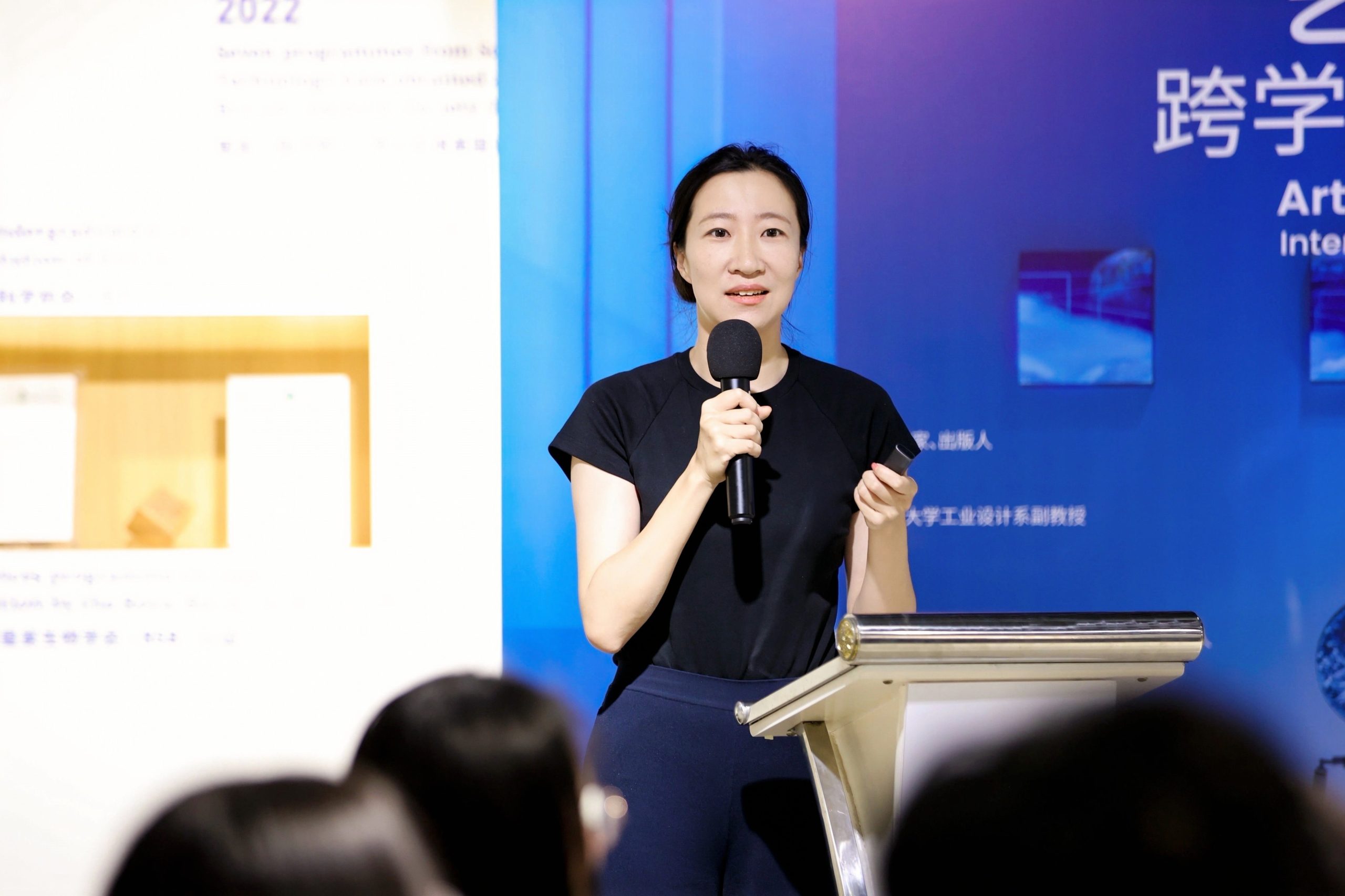
Jiayu Liu
Artist Liu discussed her work “Celestial Note” and her experiments with her personal AI model, Jiayu*. She argued that, in the age of artificial intelligence, artists should look beyond the final images generated by AI and instead explore how to create the conditions that make those images possible.
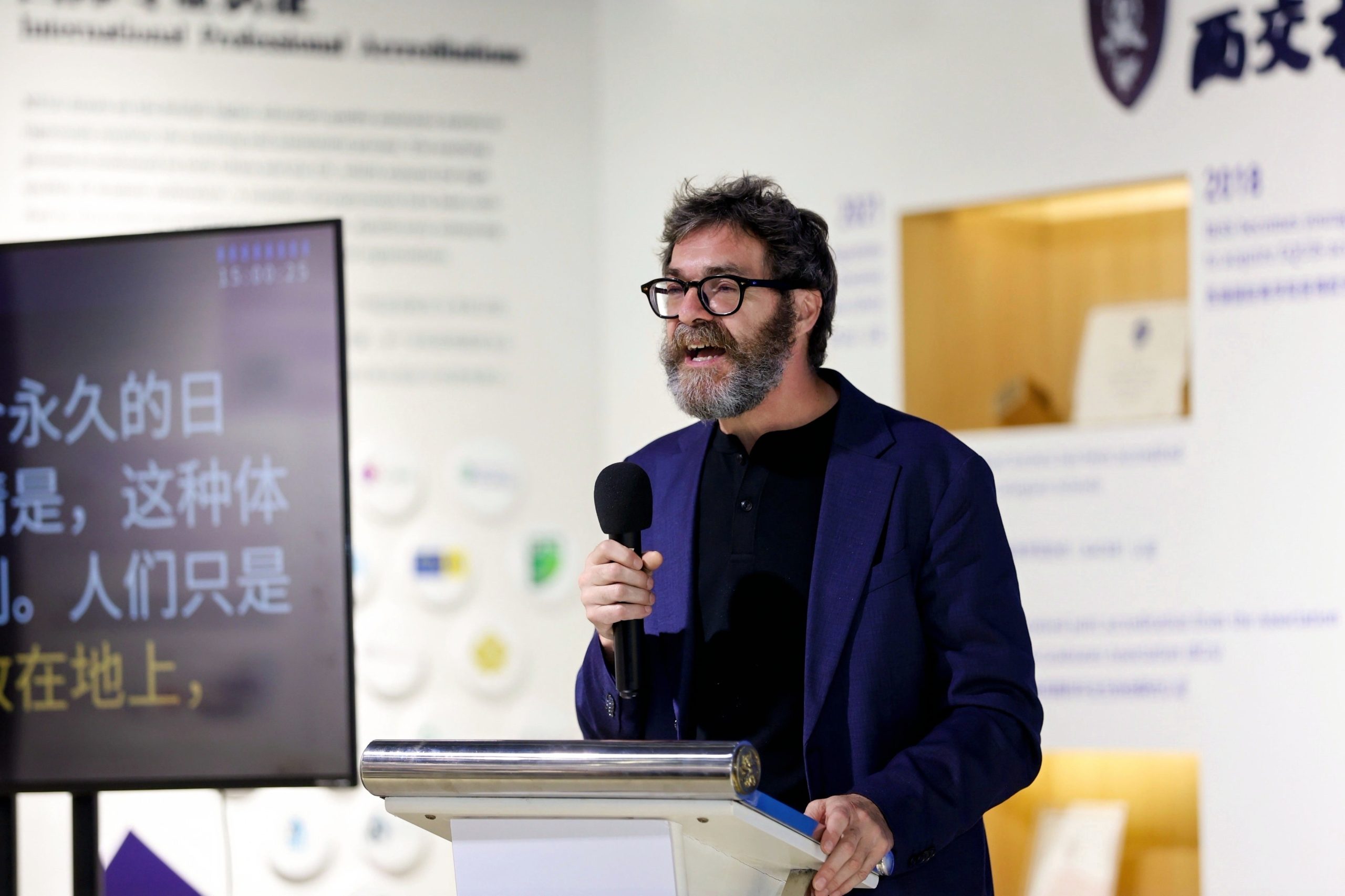
Vicente Esteban
Esteban expressed concern that AI is evolving at such a rapid pace that ordinary people struggle to absorb these rapid transformations.
He cited Google’s smart glasses and snow goggles made by the Inuit from caribou bone as examples – both serve similar functions as tools addressing the question of “how to see”, illustrating that technologies across different eras share the same essential nature.
He said that education should focus on inspiring curiosity and developing critical thinking skills, while recognising that solving complex problems requires collaboration.
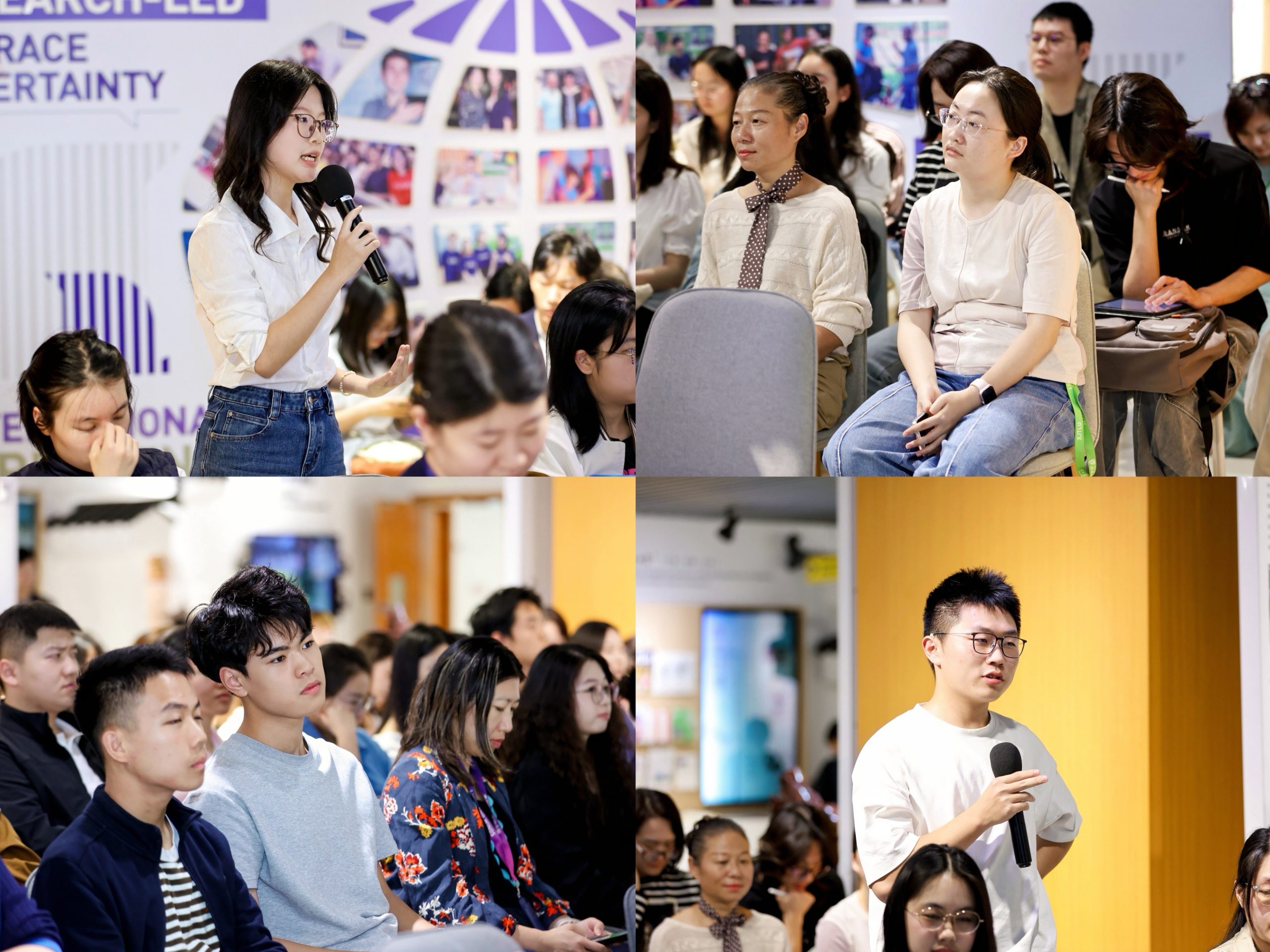
In the audience Q&A session, students raised questions about the homogenisation of AI-generated content and how to begin pursuing artistic creation.
Liu encouraged students to pay attention to the algorithms behind AI-generated images rather than focusing solely on the results, and to regard each generated image as “a surprising gift”.
Reflecting on her own creative experiences as a student, she also encouraged aspiring artists to experiment, practise, and develop their skills through sustained effort.
The wider community
The event marked a further step in strengthening collaboration between the Suzhou Museum of Contemporary Art and XJTLU, particularly in exploring how art and technology can be integrated into education.
As a bridge between the University's academic community and Suzhou's wider cultural and museum sector, the XJTLU Museum plays an important role in promoting arts education and cultural engagement.
Looking ahead, the Museum will continue working with cultural institutions across the city to organise a diverse range of arts and cultural activities, expanding opportunities for public education and cultural dialogue.
Text and images courtesy of XJTLU Museum
Edited by Patricia Pieterse and Vionna Fiducia Theja
19 Oct 2026
RELATED NEWS
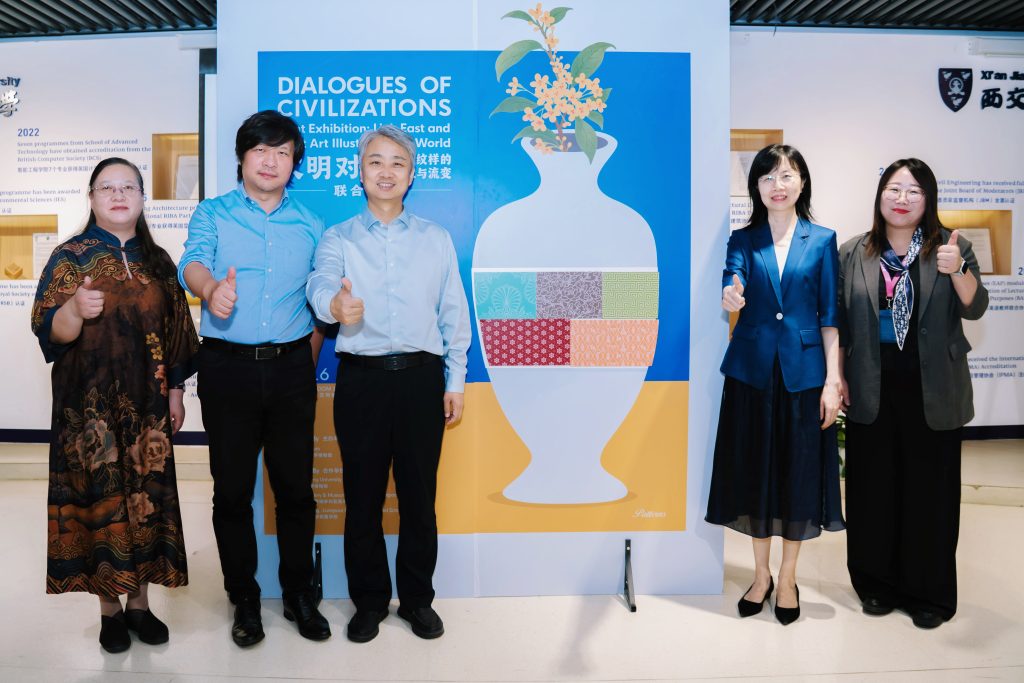
Patterns Link East and West: XJTLU Museum opens joint exhibition
On 16 September, the XJTLU Museum held the opening of “Patterns Link East and West, Art Illustrates the World”, a joint exhibition exploring how decorative p...
Learn more