




29 Oct 2026


On 18 October, the 2026 XJTLU Unmanned Robotics Boat Challenge (URBX) brought eight teams to the water for an exciting game of autonomous boat football. Using boats they had designed and built themselves, students competed to score goals, navigate the course and outmaneuver their opponents.
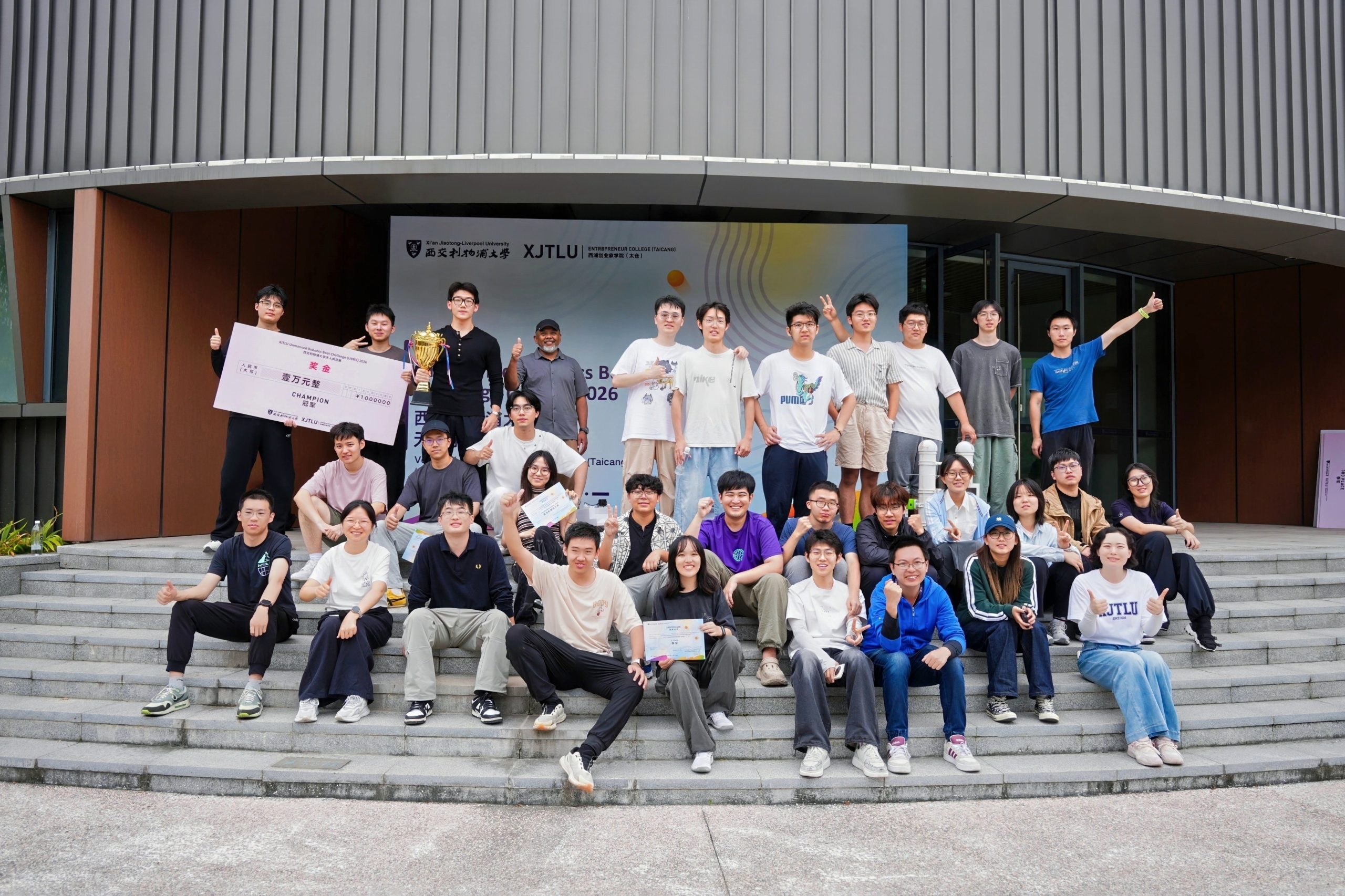
At the end of the competition, all the teams gathered for a group photo. When a teacher called out, “We’re the champions!”, students from different teams joined in.
Not every team would take home the trophy. Some had watched their boats sink during testing; others had struggled to get their algorithms to recognise targets or had to rethink their strategies when equipment failed.
But the competition was about more than winning. For these students, it was an opportunity to discover what engineering really demands: turning ideas into working systems, learning from failure and finding solutions when things do not go to plan.
Starting Over After Their Boat Sank
For Liu Xinqi, a second-year student on the BEng Intelligent Robotics Engineering with Contemporary Entrepreneurialism programme and a member of Team Deep Blue Storm, the road to the competition began with an unexpected setback.
During a test, the team's boat became stuck against a PVC pipe at the edge of the course. Water splashed into the hull, and as the boat sank, the development board and other electronic components were damaged.
“We thought we could improve on what we already had. Then suddenly, we had nothing to build on.”
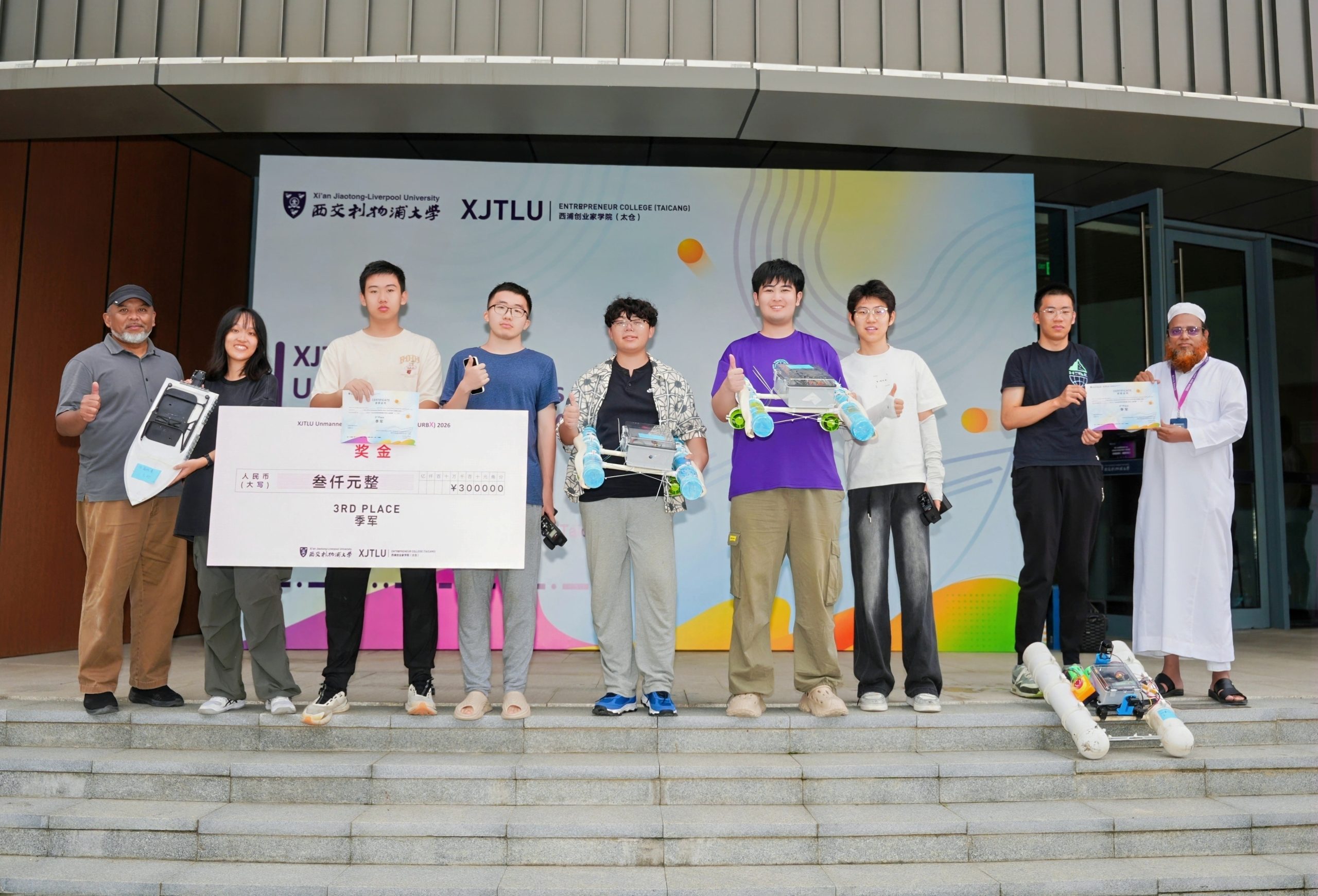
The team was devastated. Liu and her teammates sat by the river, wondering what to do next and whether they should continue. Five or six hours later, they decided to find a way forward.
The team brought together students from three programmes: BEng Intelligent Robotics Engineering with Contemporary Entrepreneurialism, BEng Internet of Things Engineering with Contemporary Entrepreneurialism, and BEng Microelectronic Science and Engineering with Contemporary Entrepreneurialism.
Each member took responsibility for a different part of rebuilding the boat. The student working on visual recognition drew on their C++ knowledge and used AI coding tools to support development, while checking the logic behind the code. Others focused on the hull, circuit connections and testing, coordinating their efforts to get the system working again.
Some solutions came from experience outside the classroom. Chen Tianrun, a student on the BEng Internet of Things Engineering with Contemporary Entrepreneurialism programme, noticed that the boat's centre of gravity was unbalanced. Remembering the wheel balancing weights he had encountered while helping his father with car repairs, he tried using them to stabilise the hull.
On competition day, the team faced another problem: there was not enough space to mount the camera securely. Chen improvised with a box and cable ties to keep the equipment in place.
These were not textbook solutions. They came from observation, previous experience and repeated experimentation.
After numerous adjustments and tests, Deep Blue Storm completed the competition and finished third.
For Liu, the experience brought home just how difficult it was to turn an idea into a functioning engineering product, especially for second-year students with limited practical experience.
“Going from zero to one is genuinely difficult. But people say where there’s a will, there’s a way. We hope to be young people with that determination, capable of making something meaningful happen and leaving no regrets.
Looking for Answers from Above: Using a Drone to Navigate an Unmanned Boat
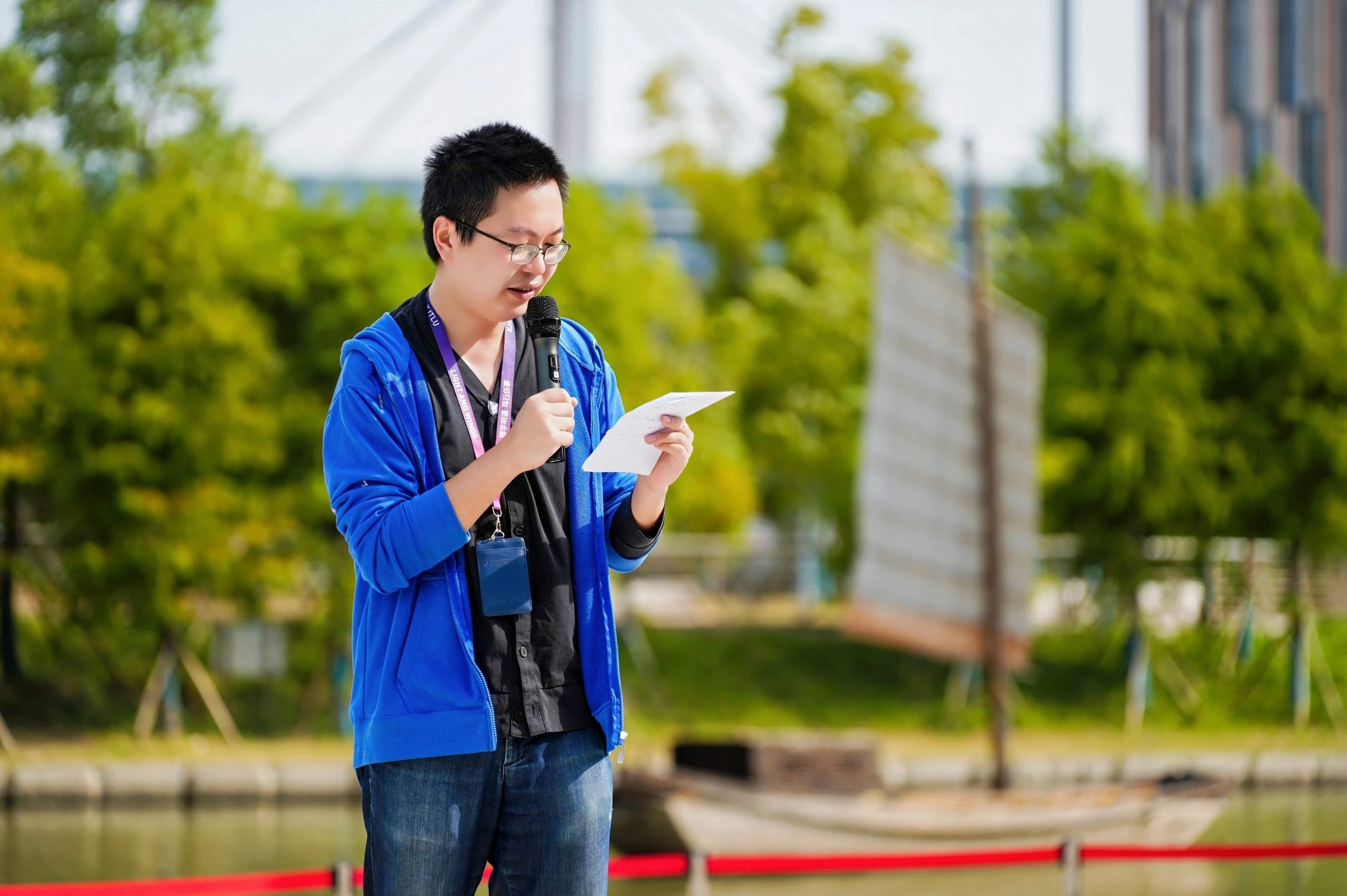
Dr Zhu Wenjun, a competition supervisor from the School of Robotics at XJTLU Entrepreneur College (Taicang), observed that the teams had taken very different approaches to the challenge.
AVE Mujica, for example, looked beyond the boat itself. Instead of relying solely on onboard sensors, the team explored how a drone could help an unmanned boat understand its position and surroundings.
All six team members had participated in the 2025 competition, where their respective teams collectively secured the top three places and won several other awards.
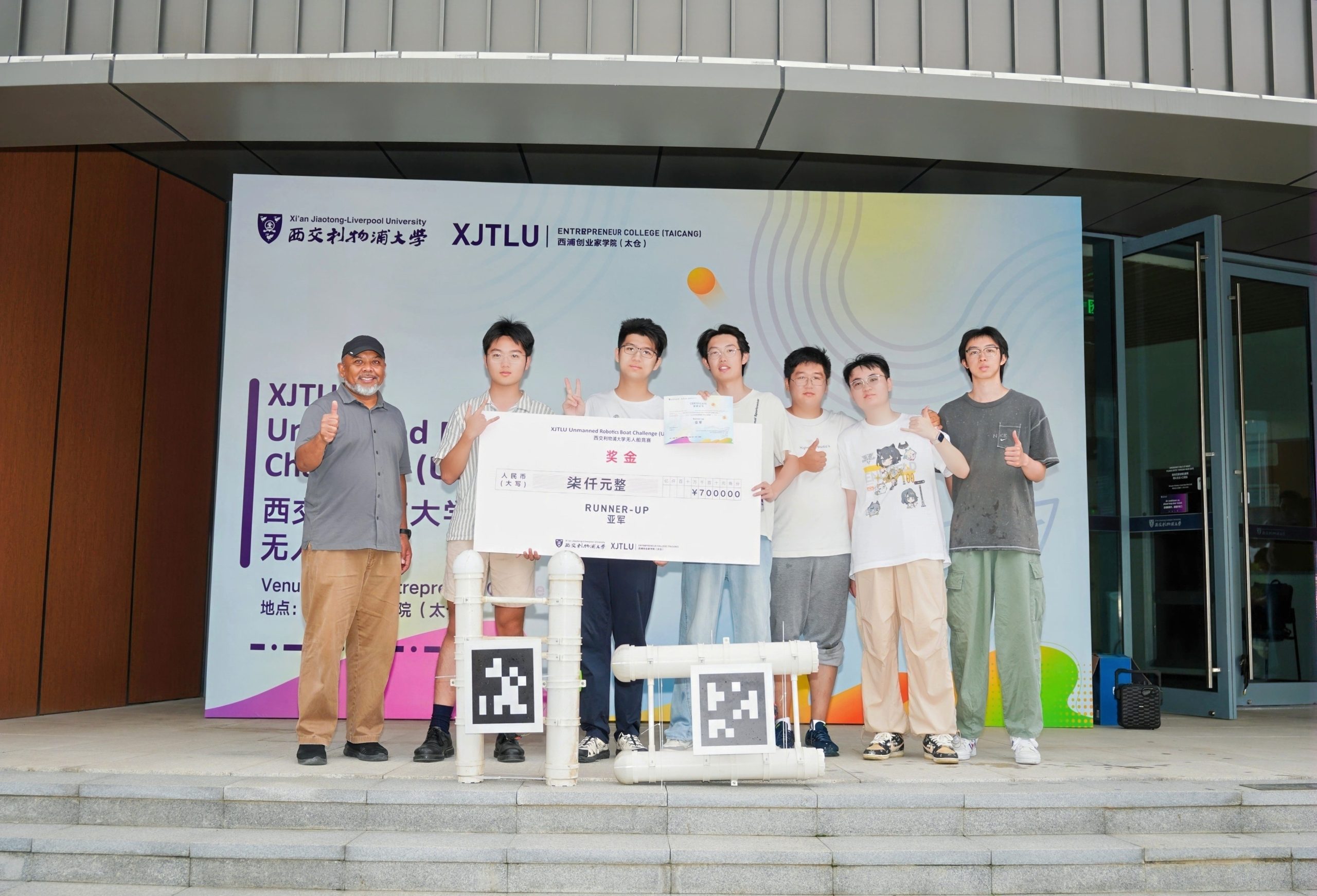
This year, three core members, captain Hai Hang and teammate Yan Han, both from the BEng Intelligent Robotics Engineering with Contemporary Entrepreneurialism programme, and Guo Yongkang, from the BEng Microelectronic Science and Engineering with Contemporary Entrepreneurialism programme, set out to improve their boat's positioning and autonomous operation.
Using a drone already available to the team, they developed a system that viewed the course from above. By recognising AprilTag markers attached to the boats, the drone could determine their positions and orientations. It could also identify other boats, balls and goals, providing a broader view of the playing environment.
“Compared with relying solely on onboard sensors, this approach provides more comprehensive environmental information and better data support for path planning, decision-making, control and algorithm optimisation,” Hai Hang explained.
The team designed and assembled the system themselves, integrating visual recognition, data transmission and autonomous control. But getting it to work reliably was another challenge.
Lighting conditions proved particularly difficult. The system could identify targets reasonably well in bright midday light, but recognition performance declined as the light faded towards evening. The team repeatedly adjusted camera parameters and refined its algorithms to balance accuracy and stability.
Their efforts paid off in the semi-final, when AVE Mujica defeated Deep Blue Storm 111–42.
However, the final would test the team in a different way. Technical advantages alone could not guarantee a win when unexpected problems arose.
A Final-Minute Turnaround: Preparation Makes the Difference
AVE Mujica took the lead in the first half of the final, but the match changed dramatically after the break. One boat malfunctioned, forcing the team to continue with two boats instead of three. In the closing minutes, its drone ran out of battery and could no longer operate.
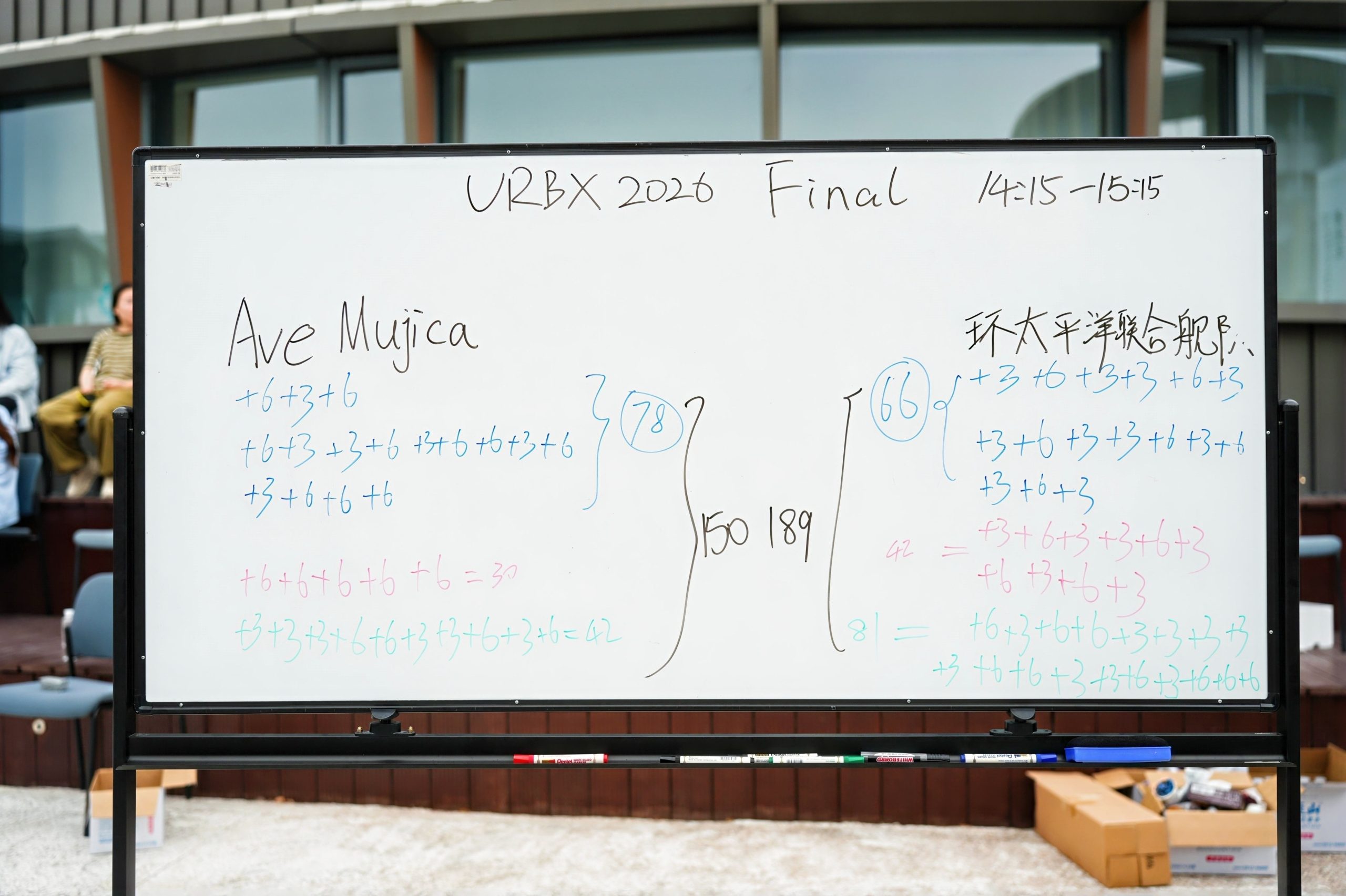
Their opponents, Pacific Rim United Fleet, seized the opportunity.
Captain Liu Shixiang explained that the team's success was not simply a matter of benefiting from an opponent's equipment failures. Like AVE Mujica, the team had spent two to three months building its hardware and software systems from scratch.
Its members included second-year students studying robotics and BEng Data Science and Big Data Technology with Contemporary Entrepreneurialism.
The team designed and 3D-printed its own boat hull, and prepared a spare boat in case something went wrong.
“Our materials may have been more durable, and we also prepared a spare boat. Although the third boat never entered the water, having a backup gave us more options when problems arose.”
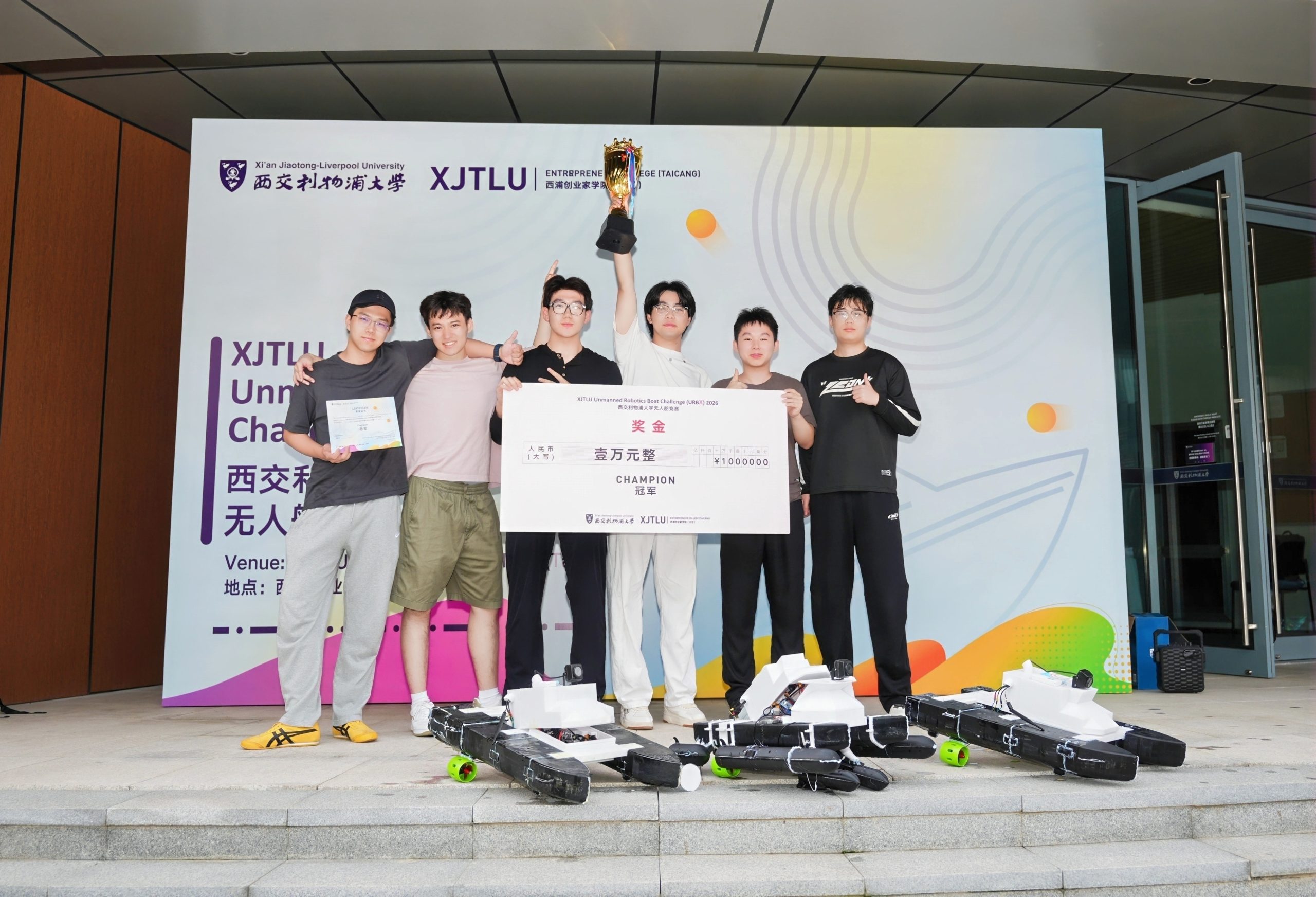
Their hull design went on to win the Best Design Award.
The team had also anticipated problems with its boat's decision-making. During testing, it noticed that the boat sometimes chased balls that had rolled out of bounds or collided with the pipes marking the course. To address this, the students incorporated the boundaries, white pipes and corner posts into the system's recognition logic, reducing unnecessary pursuits.
They also made their ball-chasing strategy adjustable. Each coloured ball was worth six points, while each red ball was worth three, so the team decided to prioritise the higher-value targets.
Rather than rewriting the entire programme during a match, the students had prepared different strategies in advance and made target priorities adjustable parameters. By changing the relevant weights, they could quickly alter the boat's behaviour.
They could not control equipment failures or their opponents' performance. But they could prepare for uncertainty and respond when circumstances changed.
In the end, Pacific Rim United Fleet won the championship. While AVE Mujica had explored how aerial vision could improve an unmanned boat's perception, Pacific Rim United Fleet demonstrated the value of preparation, adaptable systems and timely decisions.
For Dr Zhu, the close final highlighted a fundamental engineering challenge: How can technology remain reliable in real-world conditions?
“An advanced technology is not necessarily a reliable one. We must also consider whether it can continue to operate when faced with risks and changing environmental conditions. This is what we call robustness in engineering. With another year of experience and refinement, I believe all the teams will perform even better next year.”
More Than a Trophy
For Hai Hang of AVE Mujica, the competition's greatest value was not simply proving that drone-assisted positioning could work. It was learning how to approach real engineering problems.
He came to realise that solving a problem did not necessarily mean choosing the most complex or universally applicable technology. The key was to understand the specific situation and find the solution that worked best.
The experience strengthened the team's confidence in its technical judgement and its ability to solve problems independently.
Zhao Chenyu of Pacific Rim United Fleet hopes more teams will join the competition in the future, bringing different ideas and approaches to unmanned boat projects.
“With more teams involved, everyone can bring different approaches to unmanned boat projects. Many innovations emerge through repeated experimentation.”
For these students, the competition was both a test of what they had built and a starting point for what comes next. The boats can be improved, the algorithms refined, and new approaches explored.
See you on the water in 2027! We look forward to seeing the teams return with better designs, fresh ideas and new challenges to tackle.
29 Oct 2026