






14 Nov 2026


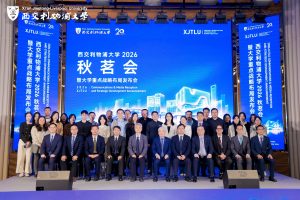
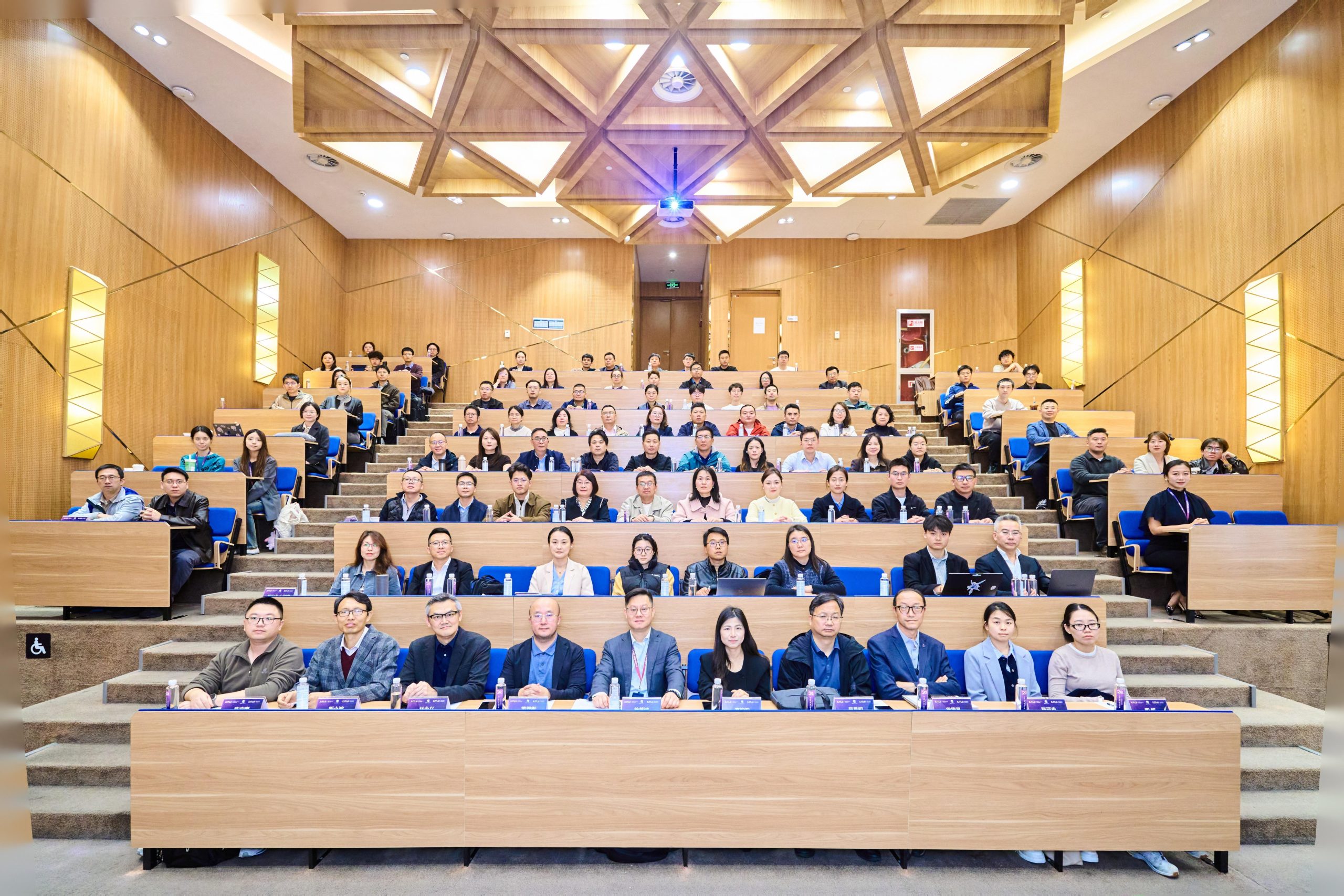
On 13 November, the "Embodied Empowerment · Co-creation through Industry-Research Collaboration—Kunshan Embodied Intelligence Industry Innovation and Partnership Forum", jointly organised by the College of Industry-Entrepreneurs (CIE) and HeXie Management Centre (HeXie Academy) of Xi'an Jiaotong-Liverpool University and the Kunshan Municipal Bureau of Industry and Information Technology, was successfully held. More than one hundred representatives from enterprises across Kunshan's embodied intelligence industrial chain and XJTLU staff and students gathered together to open up channels between university research resources and enterprise technological needs, and to support the transformation and upgrading of manufacturing.
Deepening Government-University Cooperation to Build a Joint Platform for Industrial Innovation
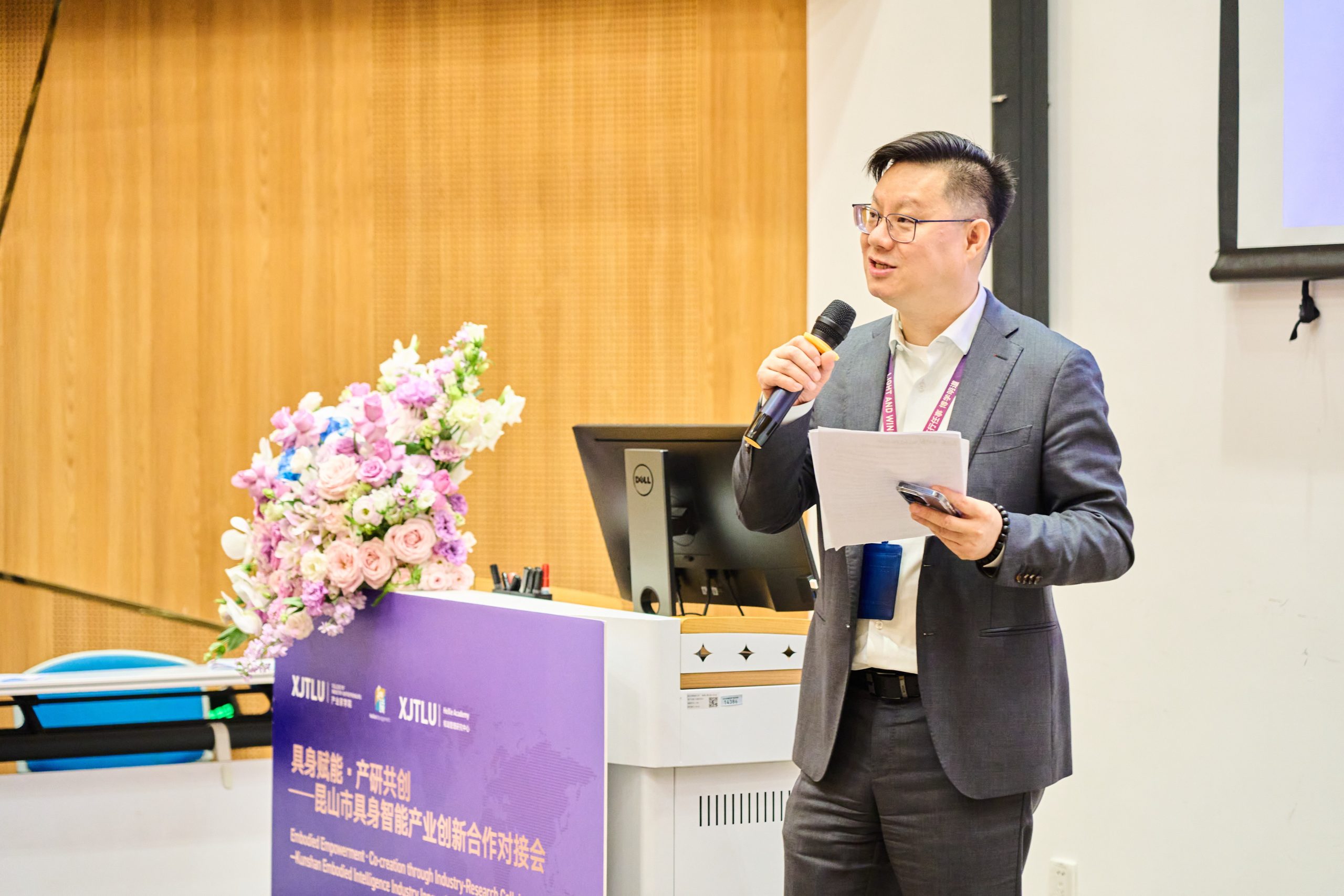
At the start of the forum, Prof. Xiaobo Xu, Executive Dean of CIE and Director of HeXie Academy, delivered a speech.
Professor Xu stated that in May 2026, Xi'an Jiaotong-Liverpool University and Kunshan established a comprehensive strategic partnership. This forum is a concrete practice of both parties deepening cooperation and promoting the integration of research and industry. XJTLU will give full play to its advantages in interdisciplinary research, talent cultivation and industrial resource integration, and work with the Kunshan government and enterprises to jointly explore a cooperation mechanism oriented towards real industrial problems, so as to effectively connect university research outcomes with enterprises' innovation needs.
He also introduced the X-Eco Mall and its first demonstrative sub-ecosystem—"Healthy Ageing & Silver Economy". As an open platform connecting university innovation resources with industrial needs, the X-Eco Mall promotes collaboration between enterprises and university research teams through service provision, demand publication, resource matching and project cooperation. Professor Xu expressed his expectation and welcome for more Kunshan enterprises to join the X-Eco Mall, bring their actual needs and industrial application scenarios into the platform, and jointly explore cooperation opportunities in technological R&D, application validation and commercialisation of outcomes.
Focusing on Technological Frontiers to Jointly Explore Industrial Applications of Embodied Intelligence
In the keynote sharing session, three experts from academia and industry discussed the development trends and application prospects of embodied intelligence from the perspectives of technological frontiers, foundational theory and industrial practice.
Professor Eng Gee Lim of the Academy of Artificial Intelligence and Advanced Technology (AIAT) gave a presentation entitled "Embodied Intelligence: From global frontiers to Kunshan's factory floor". Combining global trends in embodied intelligence technology, he analysed key aspects such as foundation models, robot bodies, data systems and industrial applications. He pointed out that for embodied intelligence to move from technical demonstrations to real manufacturing scenarios, it requires not only technological breakthroughs in robot bodies, but also the ability to meet the comprehensive requirements of production environments in terms of safety, stability, operational efficiency and cost control. In light of the characteristics of Kunshan's manufacturing industry, Professor Lim explored potential application scenarios such as material handling, machine tool loading and unloading, and industrial inspection, and introduced research platforms including the XJTLU Intelligent Automation and Embodied Intelligence Centre, the Innovation and Entrepreneurship Centre and the Innovation and Entrepreneurship Workshop, showcasing the University's research directions, research resources and interdisciplinary innovation capabilities in related fields, thereby providing research resource support for subsequent university-enterprise technological matchmaking and joint R&D.
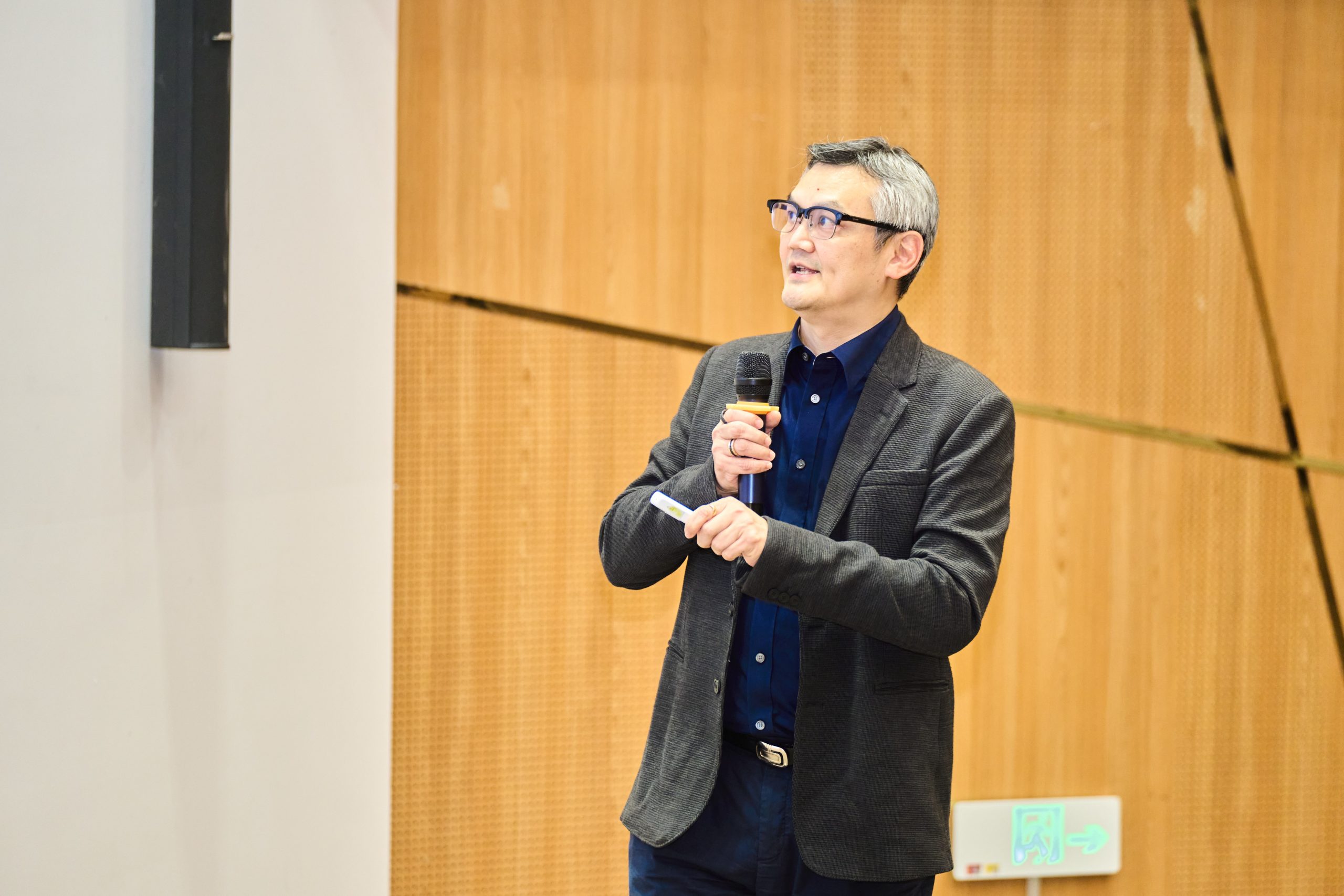
Dr. Yiming Wu, Chairman of Tongren Intelligent Technology Co., Ltd., gave a presentation entitled "Embodied Intelligence as a New Paradigm of Intelligent Science", sharing his insights on the development trends, theoretical foundations, core technologies and industrial applications of embodied intelligence. From the perspective of embodied cognition and the development of artificial intelligence, he discussed intelligent systems' understanding of physical space, perception and autonomous action capabilities, and highlighted mathematical method exploration in the field of stereo vision information recognition, as well as the application of related technologies in spatial understanding, precise recognition and autonomous motion planning. Combining directions such as intelligent equipment, autonomous driving and robotics, Dr. Wu Yiming shared his exploration and reflections on embodied intelligence moving from theoretical research to practical application.
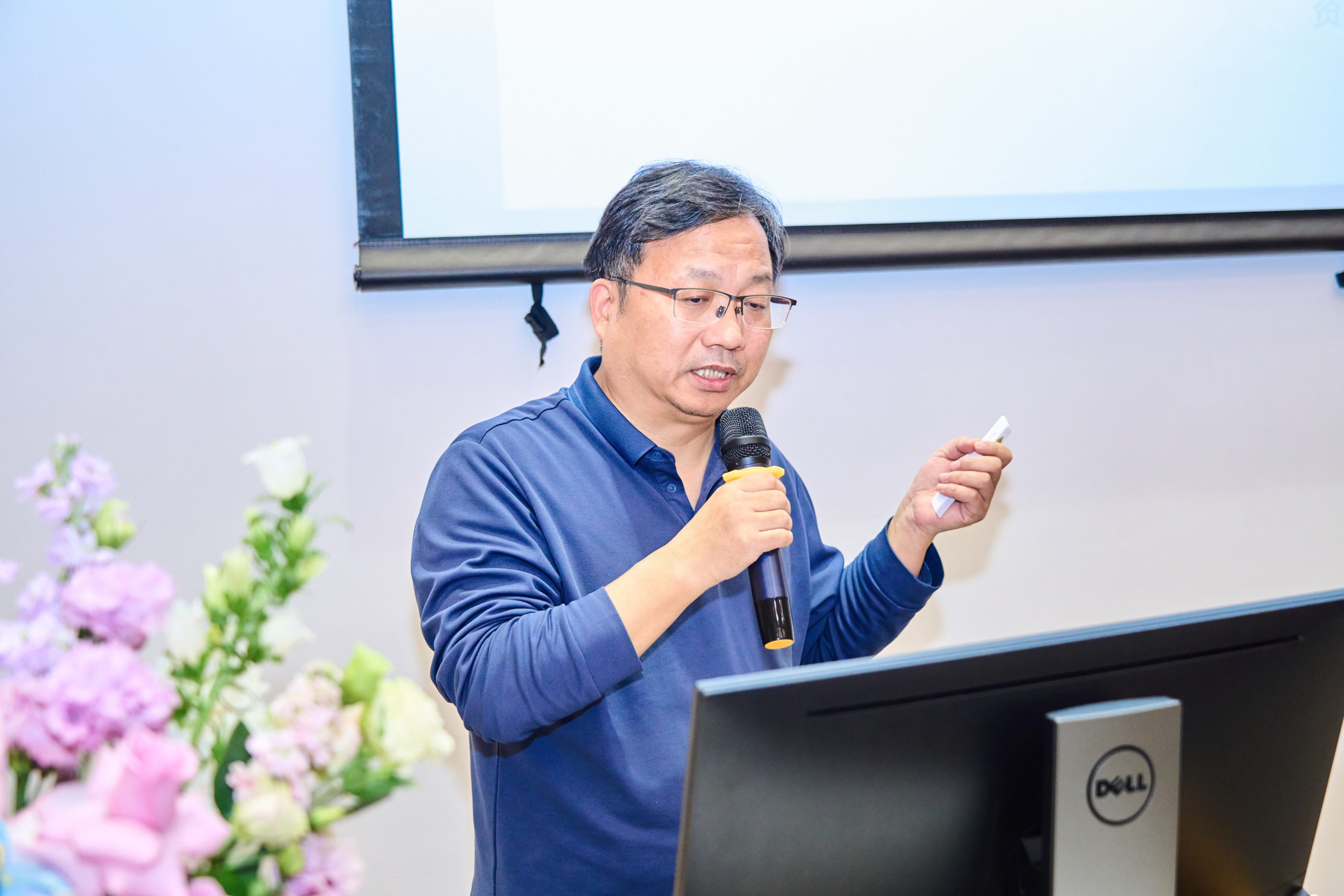
Dr. Yiheng Huang, Executive Director of Suzhou X-TECH Industry, shared from the perspective of industrial practice the trends and application pathways for the integrated development of industrial large models and embodied intelligence. Focusing on aspects such as technological systems, system integration and scenario adaptation, he explored the industrial opportunities arising from the coordinated development of industrial large models and robots, and, in conjunction with application scenarios in fields such as industrial manufacturing, public safety and public services, analysed the technological foundations and engineering support required for the implementation of embodied intelligence technologies. Dr. Huang Yiheng pointed out that the industrial value of embodied intelligence is gradually shifting from the demonstration of single technological capabilities to systematic applications and actual production benefits. In the future, greater emphasis should be placed on data closed loops, coordination with existing systems and validation of scenario value, so as to promote the genuine integration of technological capabilities into industrial production processes.
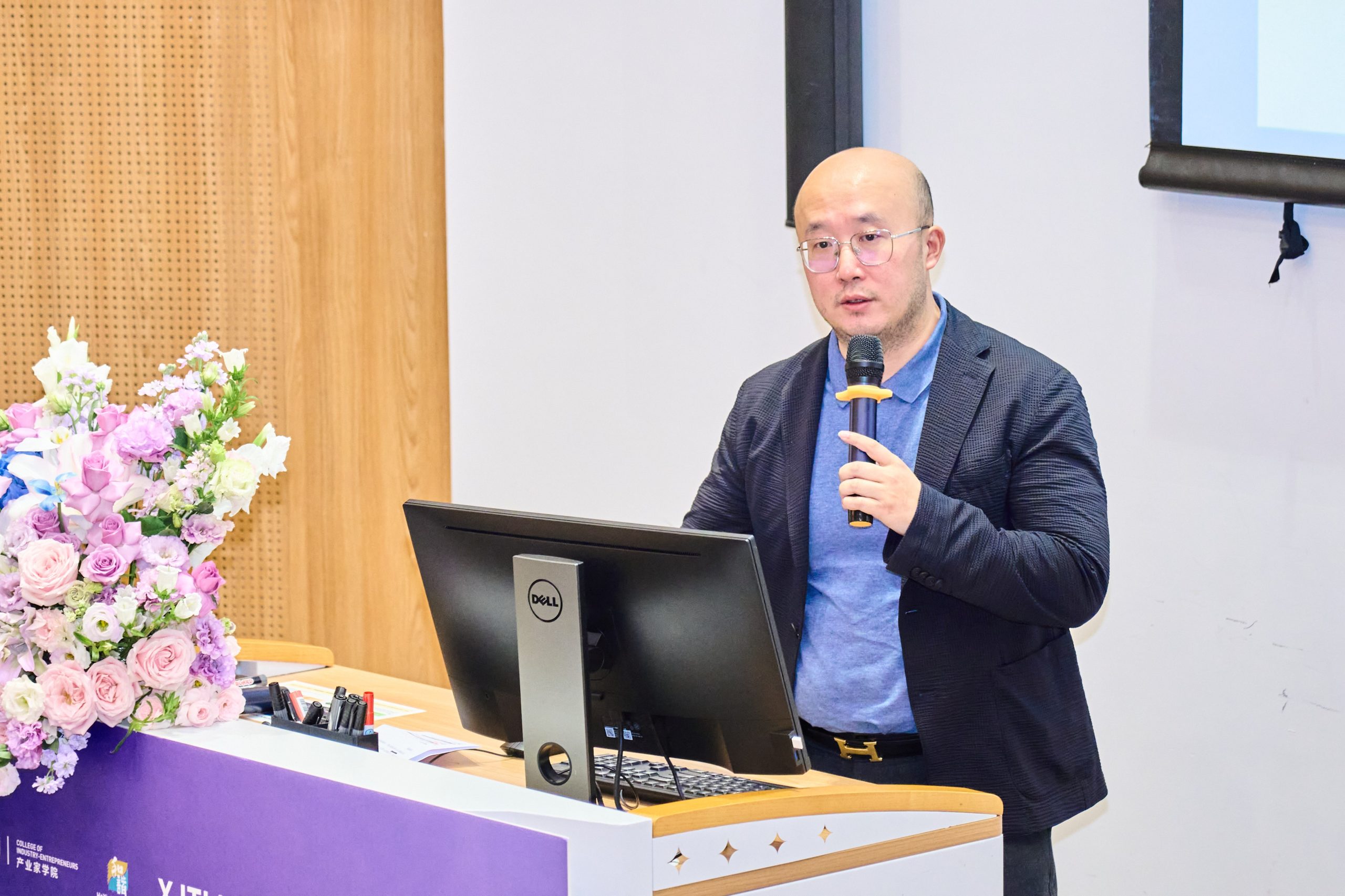
The three experts' presentations presented the key issues in the development of embodied intelligence technology from different angles, and also provided references for Kunshan enterprises to identify application opportunities and assess technological feasibility.
Focusing on Enterprise Challenges to Promote Two-Way Industry-Research Matchmaking
In the Two-way Workshop on Enterprise Technical Challenges, a number of XJTLU faculty members and researchers took part in the exchanges, including Dr. Chengyu Wang of CIE and HeXie Academy, and Professor Dechang Xu, Dr. Xiaobo Jin, Dr. Yaran Chen, Dr. Yuqing Chen, Dr. Yan Yan of AIAT and postdoctoral researcher Zixun Lan. Teachers from different research fields and enterprise representatives exchanged views on technological needs, R&D challenges and application scenarios, and explored potential directions for cooperation in light of their respective research expertise and scientific accumulation.
Quanneng Embodied Intelligence Technology (Suzhou) Co., Ltd., as a representative local enterprise of Kunshan, participated in the forum. The company has built a product matrix of four major categories: humanoid robots, commercial cleaning robots, quadruped robot dogs and wheeled robots. At the forum, the company focused on the development and application of industrial scenarios and put forward technological demands in modules such as control systems, vision and sensors. Through this matchmaking, the company not only connected with university teams to seek technological support, but also became acquainted with two to three upstream and downstream enterprises, gaining both industry-research and industrial chain cooperation leads. On site, experts also provided practical guidance and suggestions regarding the pain points of industrial robot implementation.
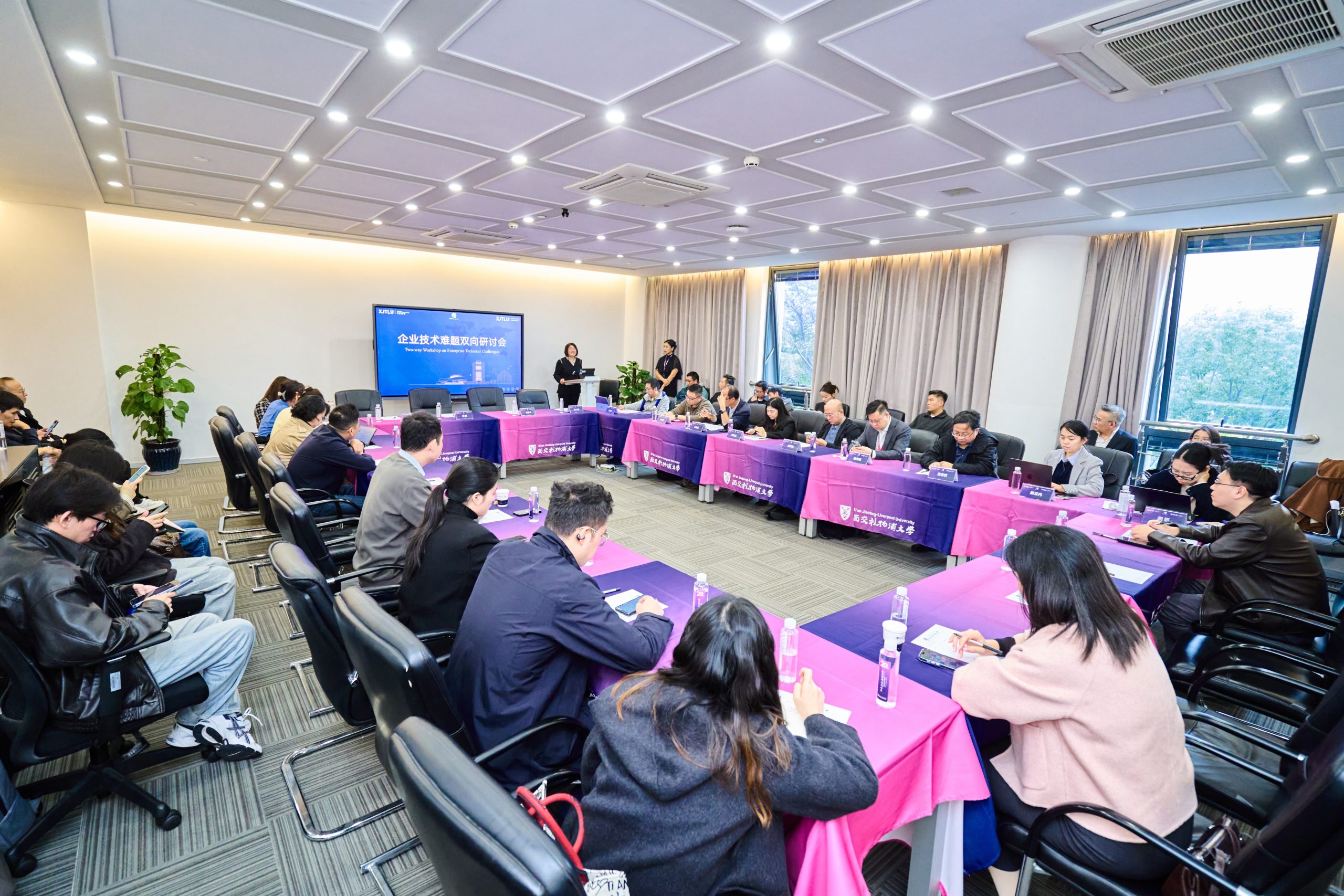
Regarding follow-up cooperation, CIE and HeXie Academy will continue to strengthen communication and collaboration with the Kunshan Municipal Bureau of Industry and Information Technology, consolidate enterprises' needs in areas such as technological R&D, industrial application, talent and project cooperation, and, in conjunction with the resources of relevant XJTLU academies, research teams and laboratories, promote precise matchmaking between supply and demand, and facilitate the transformation of cooperation intentions formed at this forum into concrete projects.
14 Nov 2026