






From Suzhou to Macao: Expanding Opportunities for Teaching Placements and Intercultural Practice

23 Nov 2026


Department of Applied Linguistics and Language Sciences and Pui Ching Middle School Sign Agreement on Teaching Placements
The Department of Applied Linguistics and Language Sciences at Xi’an Jiaotong-Liverpool University (XJTLU) has signed a cooperation agreement with Pui Ching Middle School (Coloane Campus) in Macao to jointly establish a teaching internship base. Building on the “Cultural Bridge Boot Camp” held in April 2026, the agreement marks a further expansion of the partnership, with plans to develop a wider range of language-focused learning and practice opportunities. Looking ahead, the two institutions will explore connections between language education, STEM+, AI-enabled education and intercultural competence, while promoting greater sharing of educational resources between universities and schools.


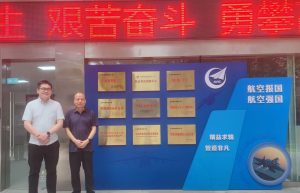
Dr Wan Hu, Head of the Department of Applied Linguistics and Language Sciences, and Siyu Chen, Lecturer in Interpreting, at the signing ceremony
From Learners to Teaching Assistants: Putting Knowledge into Practice
From 8 to 16 April 2026, nine students from Pui Ching Middle School in Macao joined “Cultural Bridge Boot Camp” at XJTLU. The programme included interpreting, digital media translation, multimodal audiovisual translation, traditional Chinese medicine translation, machine translation and a field-based cultural translation session in Suzhou’s classical gardens. Together, these activities gave the visiting students a broader view of translation practice across language, culture, international communication and technology.

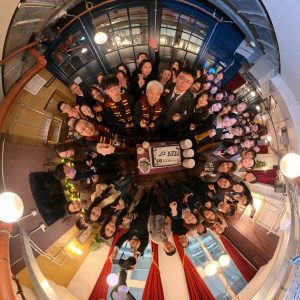
Group photo of “Cultural Bridge Boot Camp” at XJTLU
The camp also gave BA TRI students a new role as teaching assistants. They stepped to the front of the classroom to support teaching, explain course content and facilitate interaction. Working with visiting students with different levels of prior knowledge also required them to adapt their explanations and activities in response to learners’ needs.


XJTLU Translation and Interpreting students working as teaching assistants
How can relatively abstract interpreting concepts be made accessible to younger learners? How can subject knowledge be turned into engaging classroom activities? And how should teaching assistants respond to different learning backgrounds and communication styles? These were practical questions the students had to address. From introducing the basic principles of dialogue interpreting to leading interactive exercises and answering questions, they learned to organise information, shape explanations for different audiences and respond to classroom feedback in real time.
For the BA TRI teaching assistants, the experience was more than an opportunity to stand in front of a class. It marked a shift from learning knowledge to communicating it to others. They came to see that mastering a skill means not only being able to perform a task independently, but also explaining ideas clearly, guiding others and helping them apply what they have learned. Positive feedback from the visiting Pui Ching students further highlighted the value of translation and communication in real intercultural settings.
For the BA TRI teaching assistants, the experience was more than an opportunity to stand in front of a class. It marked a shift from learning knowledge to communicating it to others. They came to see that mastering a skill means not only being able to perform a task independently, but also explaining ideas clearly, guiding others and helping them apply what they have learned. Positive feedback from the visiting Pui Ching students further highlighted the value of translation and communication in real intercultural settings.

Pui Ching student Dorothy shares her feedback on the teaching assistants
Beyond the classroom, the BA TRI teaching assistants also accompanied the visiting students on cultural activities in Suzhou. At the Taihuxue silk workshop, they explored local traditions and drew on their subject knowledge to help explain cultural practices and concepts to the visitors. The experience gave them further opportunities to apply their language skills in intercultural communication and knowledge sharing.

XJTLU students accompanying the visiting group at the Taihuxue silk workshop
Beyond Translation: Exploring Diverse Career Pathways
From the “Cultural Bridge Boot Camp” held in Suzhou in the spring to the signing of the cooperation agreement in Macao in the autumn, the partnership has grown from a short-term exchange into a sustained collaboration on teaching placements. The earlier boot camp gave BA TRI students first-hand experience of applying their learning in a teaching context. In the process, they strengthened their communication, classroom facilitation, intercultural communication and problem-solving skills. These capabilities are relevant not only to translation, but also to careers in education, international engagement and cultural communication.
Looking ahead, the two institutions plan to explore further cooperation in multilingual education, interpreting practice, academic competitions exploring language and AI in education, and intercultural education. These initiatives will give students more opportunities to build practical experience, encounter different professional environments and explore where their interests and strengths might lead.
From classroom learning to real-world projects, Translation and Interpreting programme develops far more than language skills. It equips students with adaptable, transferable capabilities that can be applied across professional settings. Translation and interpreting can therefore lead well beyond a single career path, giving students the flexibility to build on their own interests and strengths and take them in diverse professional directions.
23 Nov 2026