







06 Nov 2026


Quantum computing is reshaping the cryptographic landscape, while artificial intelligence (AI) is opening up new possibilities for cryptanalysis. How can financial institutions safeguard digital trust amid these developments?
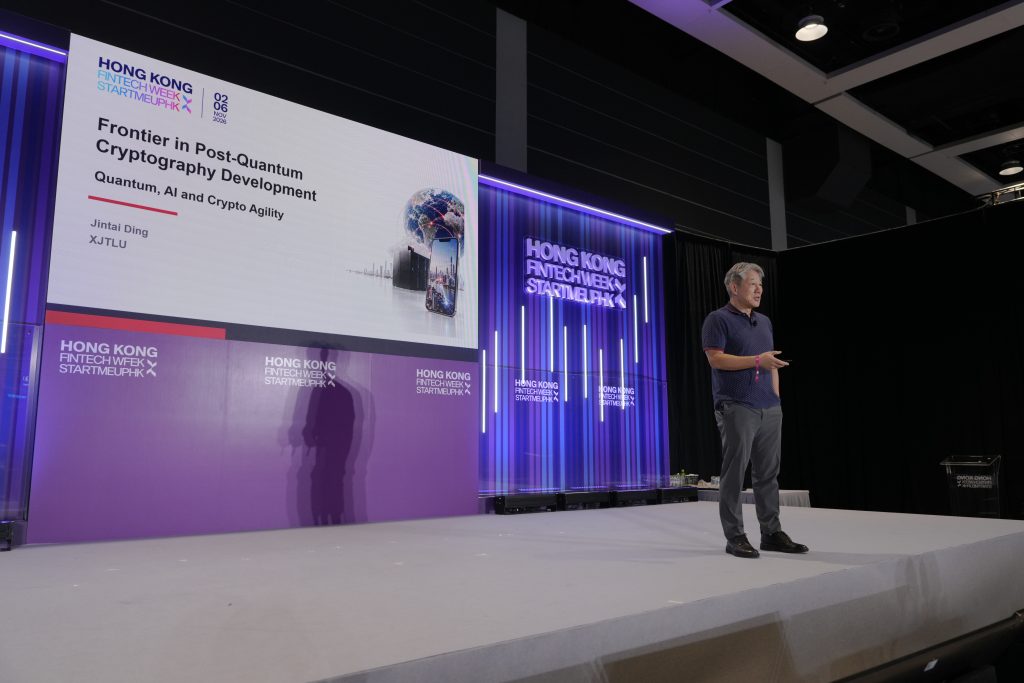
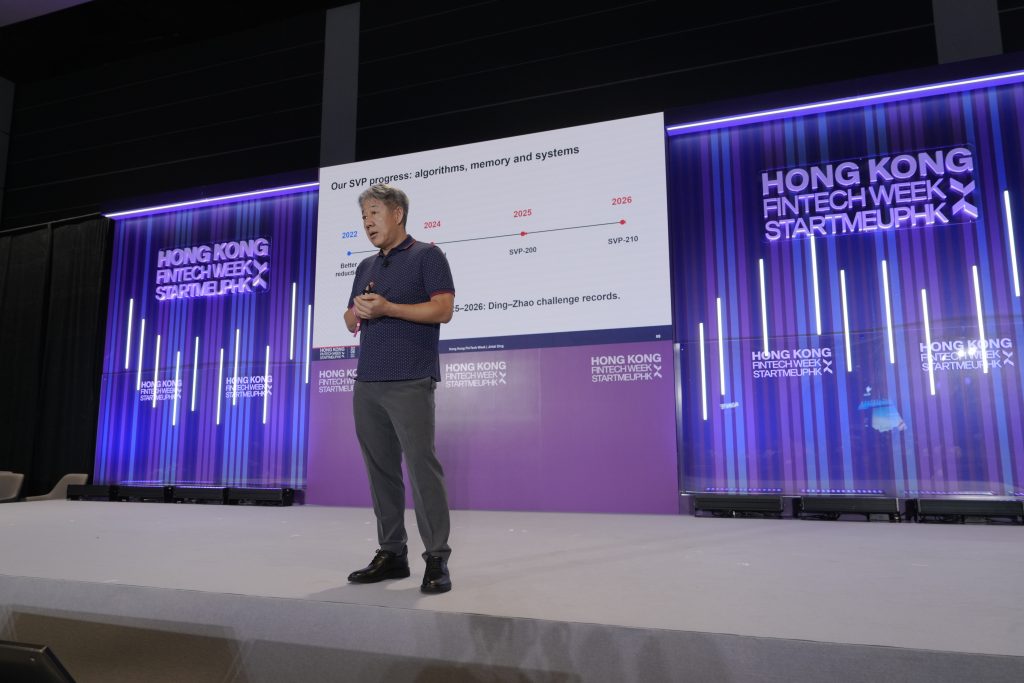
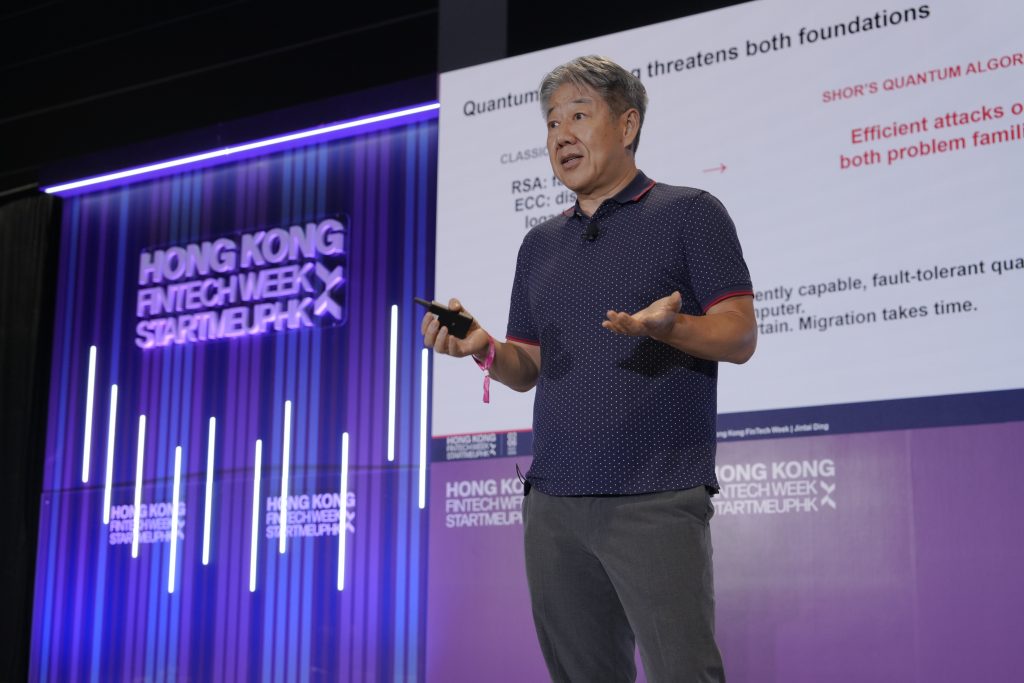
On 3 November, Professor Jintai Ding, Dean of the School of Mathematics and Physics at Xi’an Jiaotong-Liverpool University (XJTLU) and Director of the Post-Quantum Migration Interdisciplinary Laboratory (PQC-X), delivered a keynote speech at the AI and DeepTech Forum during Hong Kong FinTech Week x Startmeup 2026. His talk, Post-quantum cryptography frontier development, explored emerging security challenges and strategies for post-quantum migration in the financial sector.
How AI is changing cryptanalysis
Advances in AI are providing researchers with new tools for analysing cryptographic algorithms. In his talk, Professor Ding highlighted two recent developments.
In July 2026, Anthropic researchers used Claude Mythos Preview to identify structural weaknesses in HAWK, a candidate post-quantum digital signature scheme, leading to its withdrawal from the standardisation process.
In September, researchers used the AI coding agent Devin to help build GPU-based computational workflows for factoring RSA-260, an 862-bit challenge.
These developments demonstrate AI’s potential in cryptanalysis, but do not mean that established standards such as ML-KEM or widely used systems such as RSA-2048 have been broken.
Building crypto-agility for financial institutions
For banks, post-quantum migration involves more than simply replacing existing algorithms. Professor Ding highlighted crypto–agility– the ability to update or replace cryptographic mechanisms while maintaining security and business continuity.
He outlined five key steps:
- Inventory: Identify existing cryptographic assets and system dependencies.
- Prioritise: Assess risks and identify data requiring long-term protection.
- Validate: Test the security, performance and compatibility of new algorithms.
- Migrate: Deploy post-quantum solutions in phases.
- Retire: Phase out outdated cryptographic mechanisms.
He also recommended three immediate actions: identify where public-key cryptography is used, request migration roadmaps from suppliers, and launch pilot post-quantum migration projects.
From research to real-world deployment
The financial sector is already taking steps towards quantum preparedness. In July 2026, the Hong Kong Monetary Authority (HKMA) published its first Quantum Preparedness Index (QPI) for the banking sector, with an initial score of 2.3 out of 10 and a target of full preparedness by 2030. On 2 November, the HKMA and the Hong Kong University of Science and Technology launched a Post-Quantum Cryptography Toolkit to support banks in planning their migration.
At XJTLU, PQC-X bridges research in post-quantum cryptography with practical migration needs, focusing on cryptographic security analysis, algorithm optimisation, hardware security and standards verification.
As AI and quantum computing continue to advance, building adaptable and resilient cryptographic systems will be essential to securing future financial and digital infrastructure.
06 Nov 2026