






26 Nov 2026


From the patterns in sunflower seeds to animations of life inside a cell, scientific visualisation can reveal hidden processes and inspire artistic ideas.
Dr Haodong Li explored these possibilities with students and staff from Xi’an Jiaotong-Liverpool University’s Academy of Film and Creative Technology (AFCT) on 20 November.
An associate research fellow at the Center for Arts and Science, University of Science and Technology of China, Dr Li delivered a lecture titled “When Science Meets Art – My Musings on Scientific Visualization”.
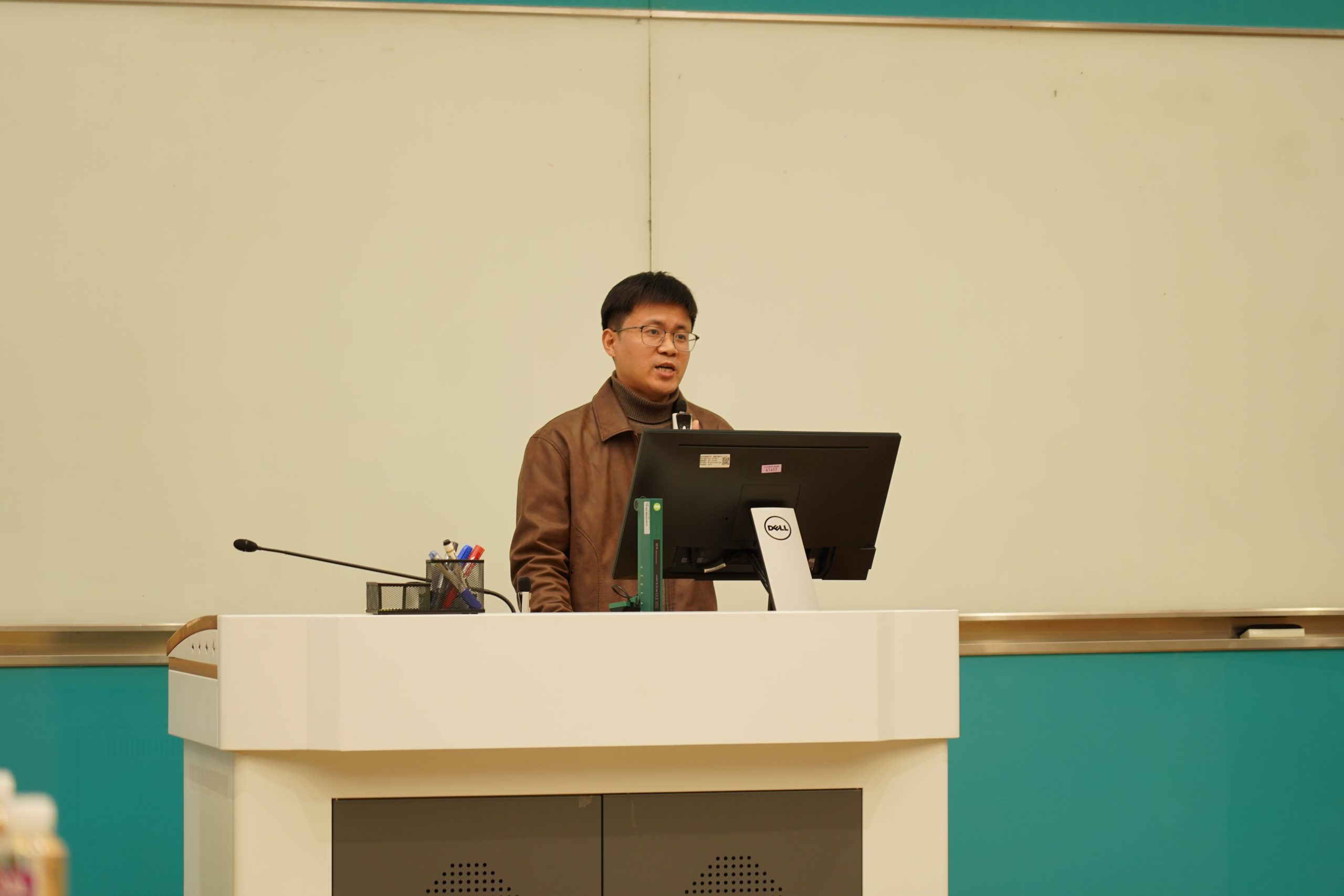
Dr Li (pictured below) specialises in scientific and molecular structure visualisation. Drawing on his work in research, design, software development and teaching, he discussed how scientific data can inform visual expression, from 3D modelling to AI-assisted tool development.
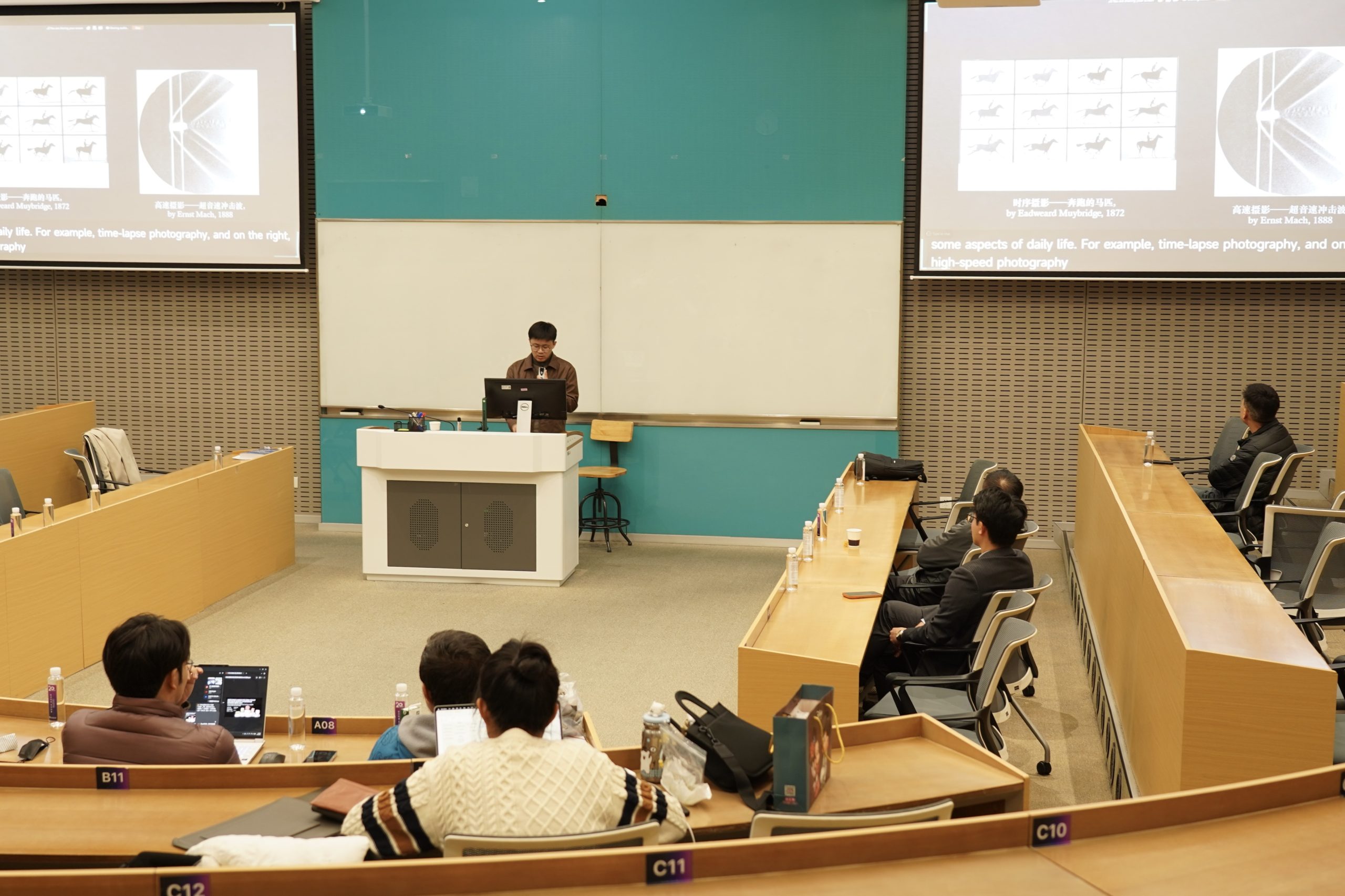
Scientific visualisation helps researchers communicate discoveries and develop new ways of understanding the world.
Using the arrangement of seeds in a sunflower head, Dr Li illustrated how mathematical patterns underpin natural forms. Images can make these abstract relationships easier to understand.
He traced this role through scientific history: Galileo’s drawings of the Moon, the X-ray diffraction images that helped reveal DNA’s double helix structure, and modern 3D animations of cellular activity. Each demonstrates how images can document discoveries and guide further investigation.
Advances in photography, microscopy and computing now allow researchers to capture smaller structures, faster changes and more complex processes. For Dr Li, visualisation also prompts questions, making phenomena that are difficult to observe directly accessible to exploration and discussion.
Balancing accuracy and expression
Dr Li’s own interest in scientific visualisation grew while studying polymer science at Fudan University, where he encountered engineering drawing and 3D representation.
During his postgraduate studies, The Inner Life of the Cell, produced by XVIVO in collaboration with Harvard University, showed him the potential of combining science with visual storytelling.
After completing his PhD in 2017, he entered scientific visualisation, initially modelling structures at micro- and nanoscales. His practice expanded to teaching scientific illustration, designing journal covers and developing software tools.
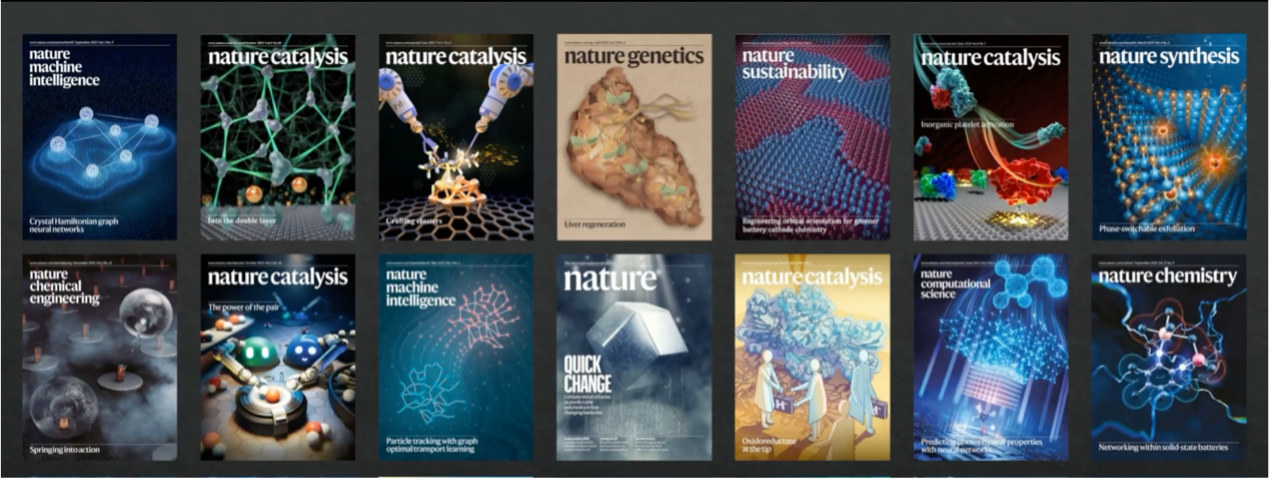
He described scientific illustration as “dancing in shackles”: creators must respect scientific facts while finding clear, engaging ways to present complex information.
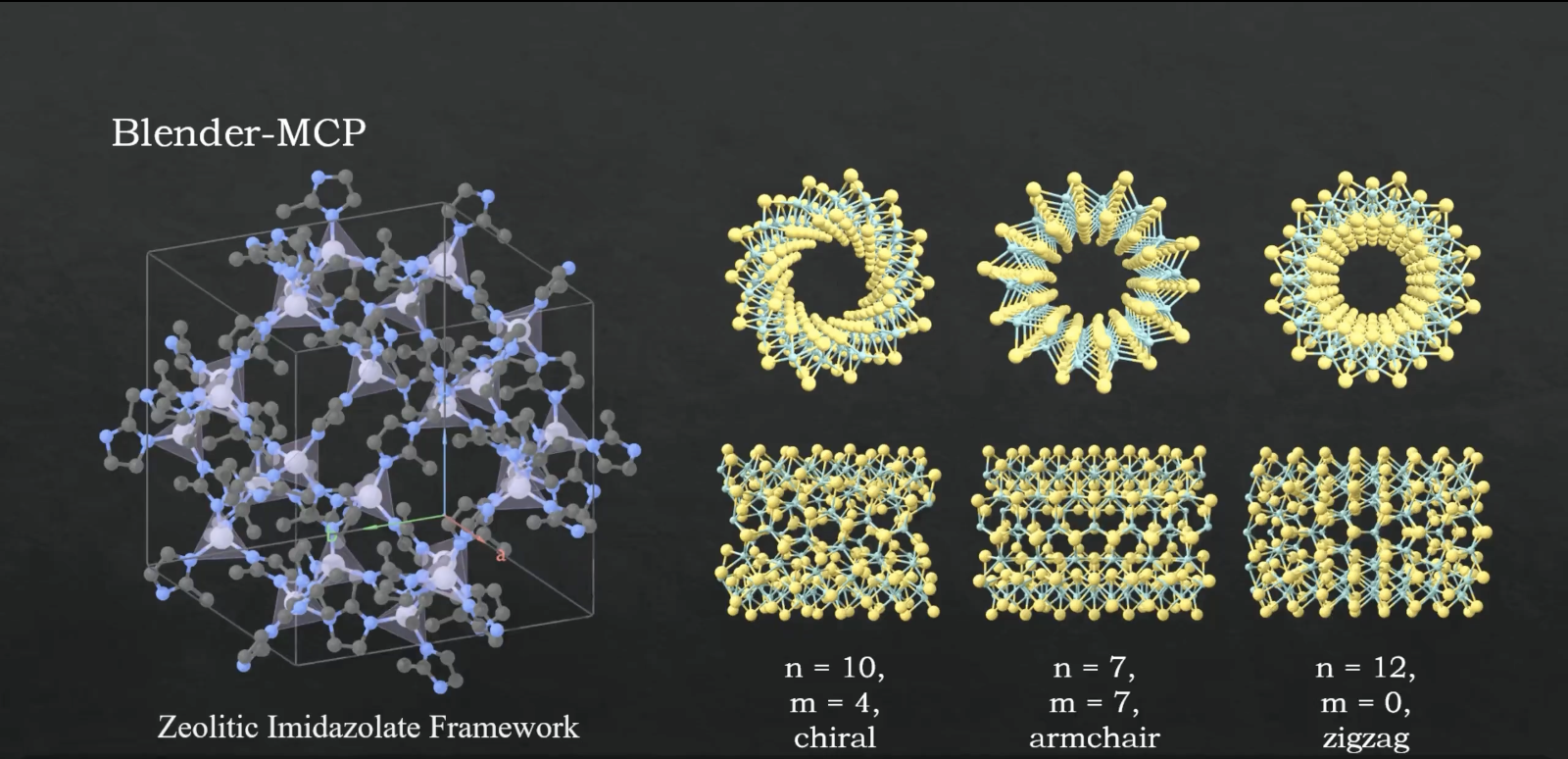
A model of a virus, for example, must reflect its underlying structure and scientific data. Appearance alone is insufficient. To reduce repetitive tasks and simplify data conversion, Dr Li has developed tools using Blender’s programming interface and Geometry Nodes to turn scientific data into 3D models.
For students working in digital media, film and art, this approach broadens the role of 3D software. Alongside creating visual effects, it can represent structures, simulate processes and help investigate patterns.
Dr Li also discussed AI-assisted development. Although AI can generate images quickly, he stressed the value of understanding how data becomes an image and what governs its form and behaviour.
Creating with nature’s rules
Scientific principles can also provide a starting point for artistic experimentation.
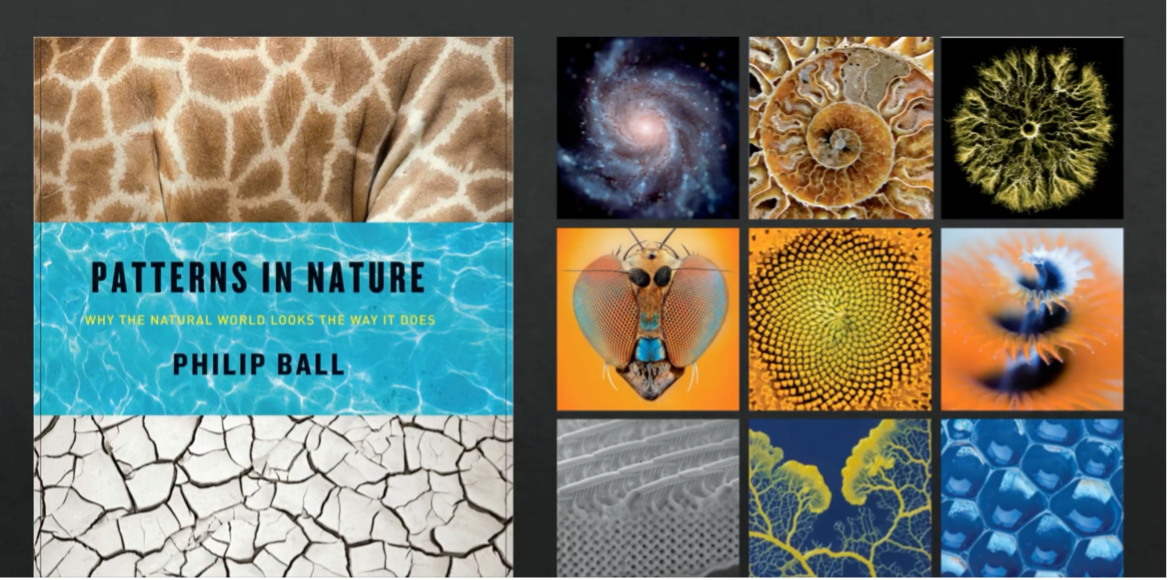
Dr Li presented fractals, the networks in dragonfly wings, folds in flower petals and animal markings. These varied forms often arise from mathematical relationships, physical processes or patterns of growth that can be described and simulated. He also used Escher’s work to show how mathematical models can inform art.
He encouraged looking beyond nature’s appearance to ask how its forms emerge. Discovering those rules, or experimenting with new ones, can suggest fresh directions for research and creative practice.
For artists working with 3D scenes, motion graphics or interactive media, this means considering both the effect they want to achieve and the processes that could produce it. Scientific questions can become part of developing an idea.
Dr Li closed with Escher’s Day and Night, reflecting on science and art as ways of understanding and expressing the world. Scientific visualisation brings them together, using data and scientific principles to guide artistic expression and make complex phenomena easier to grasp.
By Jiaying Li, Wenzhen Li
Photos courtesy of Jiaying Li, Haodong Li
26 Nov 2026