





06 Nov 2026


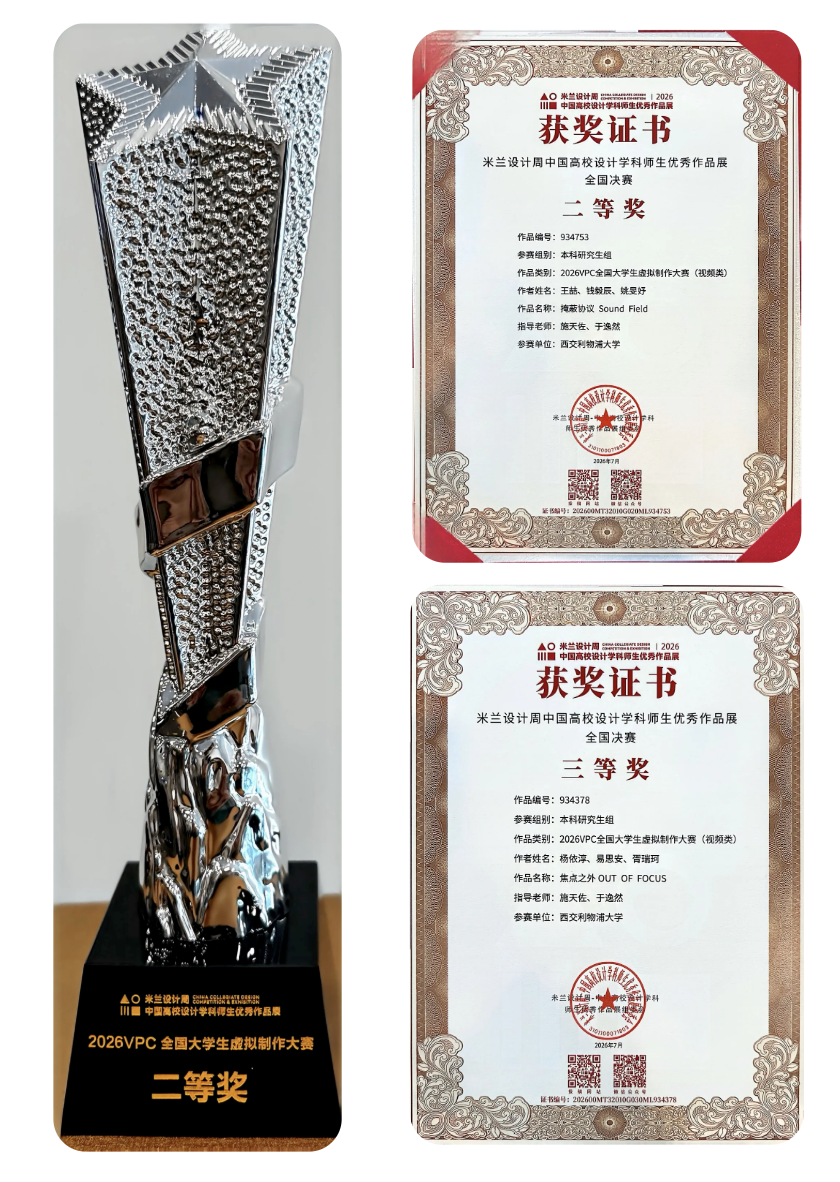
The national finals and award ceremony of the 2026 National College Students Virtual Production Competition (VPC) recently took place at Shanghai Film Academy of Shanghai University. Xi’an Jiaotong-Liverpool University’s Academy of Film and Creative Technology (AFCT) sent three teams comprising nine students from their second to fourth years of study, representing the Digital Media Arts and Film and Television Production programmes. Under the guidance of lecturers Shi Tianzuo and Yu Yiran, two teams won second- and third-place prizes at the national level for works that combine traditional culture, artificial intelligence, and virtual production technologies.
This year’s competition attracted nearly 1,500 students and teachers from 94 universities and 112 departments nationwide. A total of 350 eligible works were submitted, with 46 teams advancing to the national finals. The competition featured four themes: the modern lacquer painting Dream of the Motherland; the Ming Dynasty painted sculptures of Chongning Zhenjun at Tiefosi Temple in Shanxi; Cool Retreat; and the original film score Magic Awakening. Participants were required to combine virtual production and artificial intelligence technologies to explore contemporary expressions of Chinese culture.
The team behind The Obscuring Protocol: Sound Field won second prize at the national level. The work was created around the original film score, Magic Awakening, by Wang Zhe, a third-year Film and Television Production student; Qian Yichen, a fourth-year Digital Media Arts student; and Yao Minyu, a third-year Digital Media Arts student.
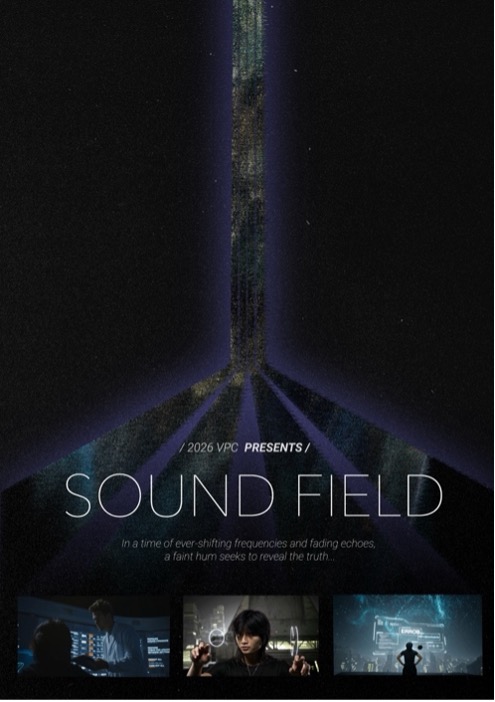
The story is set in a future world where real sounds have been encrypted by corporations and reduced to white noise. Reed, the protagonist, possesses an extraordinary sense of hearing. After escaping corporate control, Reed gradually awakens the ability to visualise and reassemble fragmented sounds, becoming the only person in the world able to hear pure sound—and the truth. The team felt that the commissioned score lent itself well to science fiction. They therefore used sound as a narrative thread, transforming an auditory experience into a visual expression.
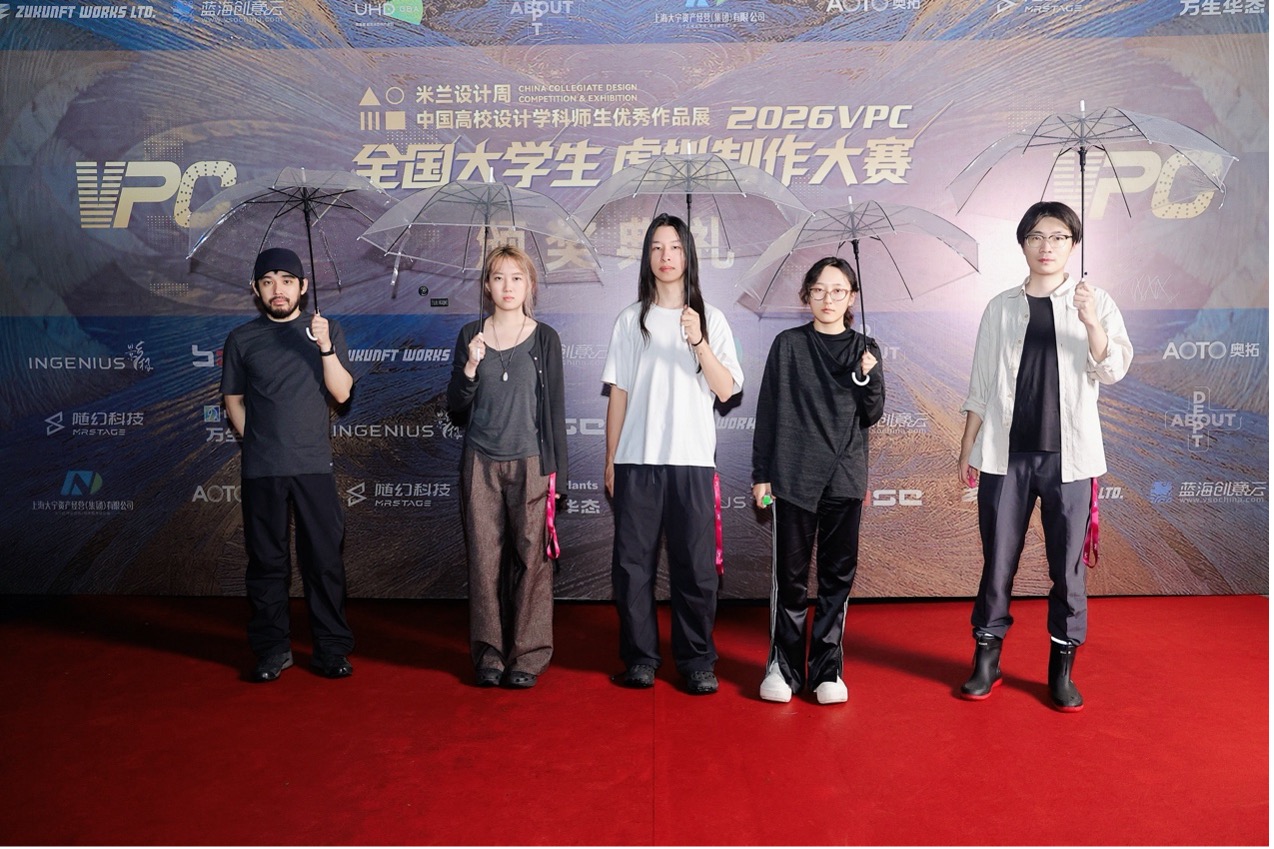
Wang was responsible for cinematography and lighting, Qian for post-production and sound, and Yao for building the Unreal Engine 5 environment and handling artificial intelligence-related work.
During filming, the team encountered problems including uneven edges around the actors and missing areas in the keying caused by reflections from the green screen. They addressed these issues by adjusting the distance between the actors and the screen, treating the lighting separately, and refining the footage in Unreal Engine 5 and After Effects. The team also used AI tools to generate particle effects, integrate light and shadow, and create atmosphere. However, AI-generated footage sometimes failed to match the direction and intensity of the original lighting. The team therefore had to specify parameters before generation and make repeated adjustments.
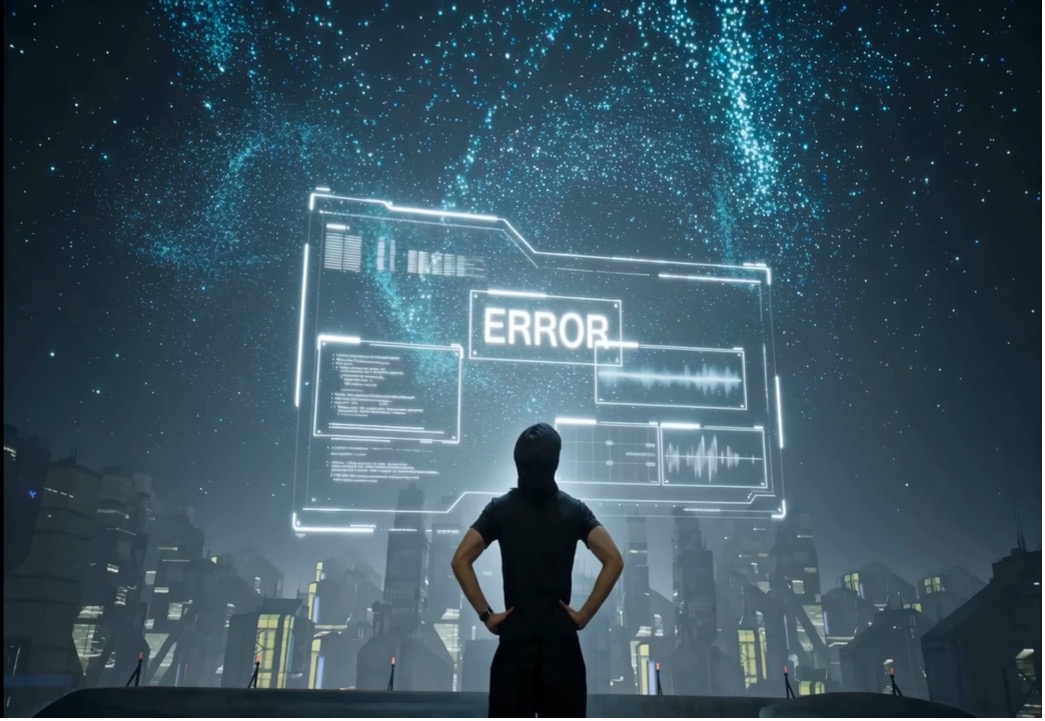
“I had never worked with virtual production before,” said Wang. “Previously, I mainly used more traditional filming methods. Working with two Digital Media Arts students introduced me to a new field and enabled me to learn a great deal about virtual production.” He added that the interdisciplinary collaboration helped him gain a deeper understanding of the relationship between cinematography, lighting, real-time rendering and post-production.
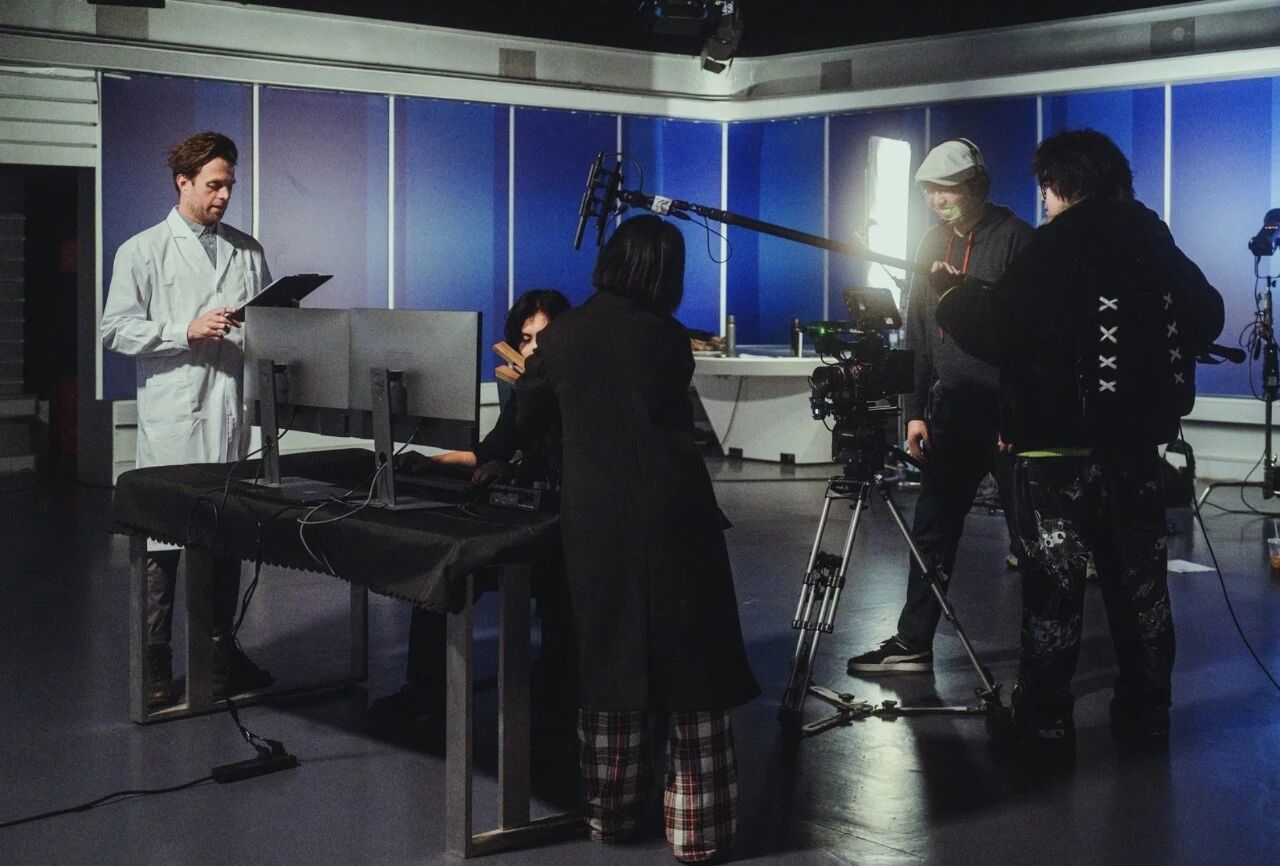
The team behind OUT OF FOCUS won third prize at the national level. The work was created around Cool Retreat by second-year Digital Media Arts students Yi Si’an and Yang Yichun, and second-year Film and Television Production student Xu Ruike.
The story takes place in a modern studio late at night. While using artificial intelligence to restore Cool Retreat, a digital restorer discovers that the figures in the painting appear to be gazing at a blank area of the image. As the algorithm progresses, the figures gradually raise their heads and turn towards the restorer beyond the screen. Eventually, the restorer is drawn into the painting, becoming the object of observation and scrutiny.
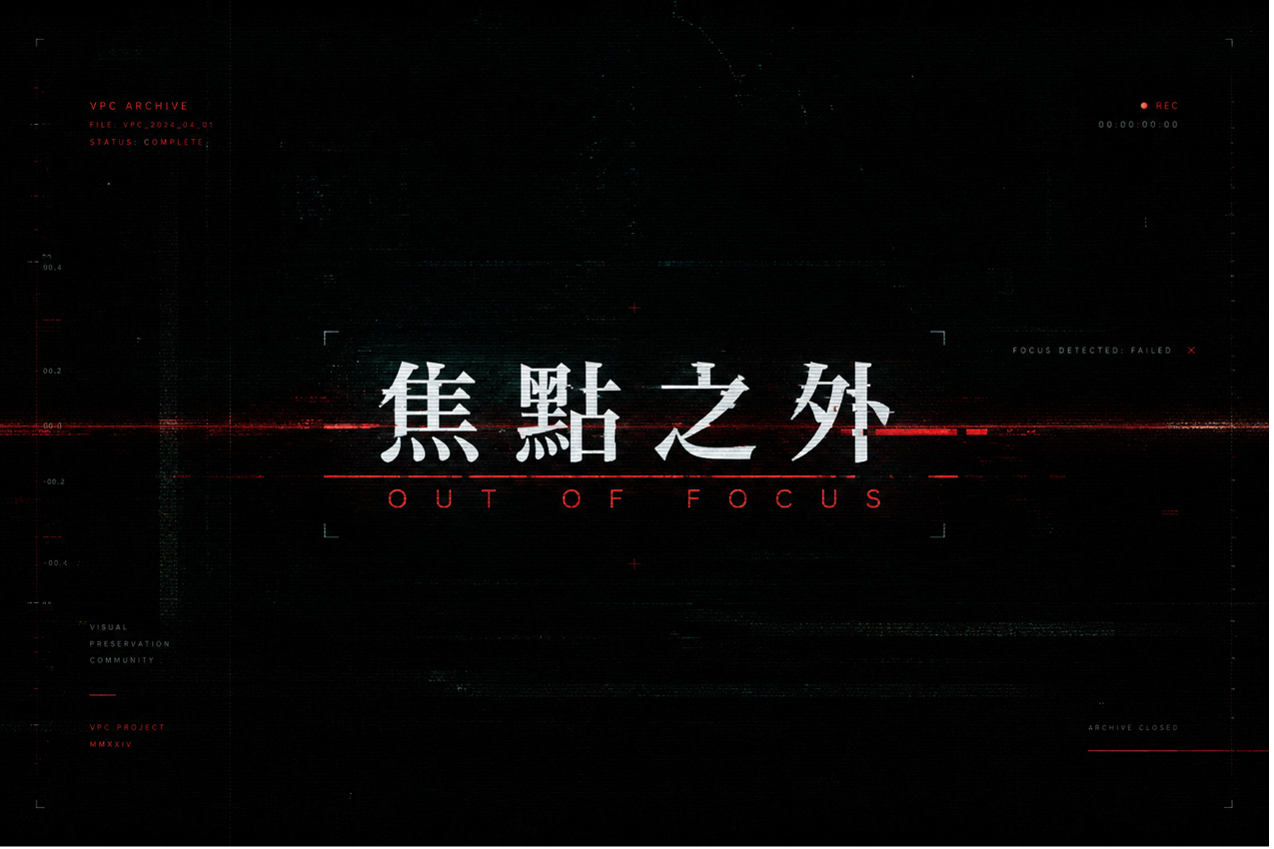
Yi served as director, responsible for developing the script, designing the storyboard and coordinating the shoot. Xu was the director of photography, while Yang handled art design, virtual environment construction and technical implementation. By combining traditional culture and artificial intelligence, the team sought to explore the relationship between the observer and the observed.
“We are accustomed to using technology to observe, analyse and understand things,” said Yi. “But could this relationship be reversed at a certain moment?”
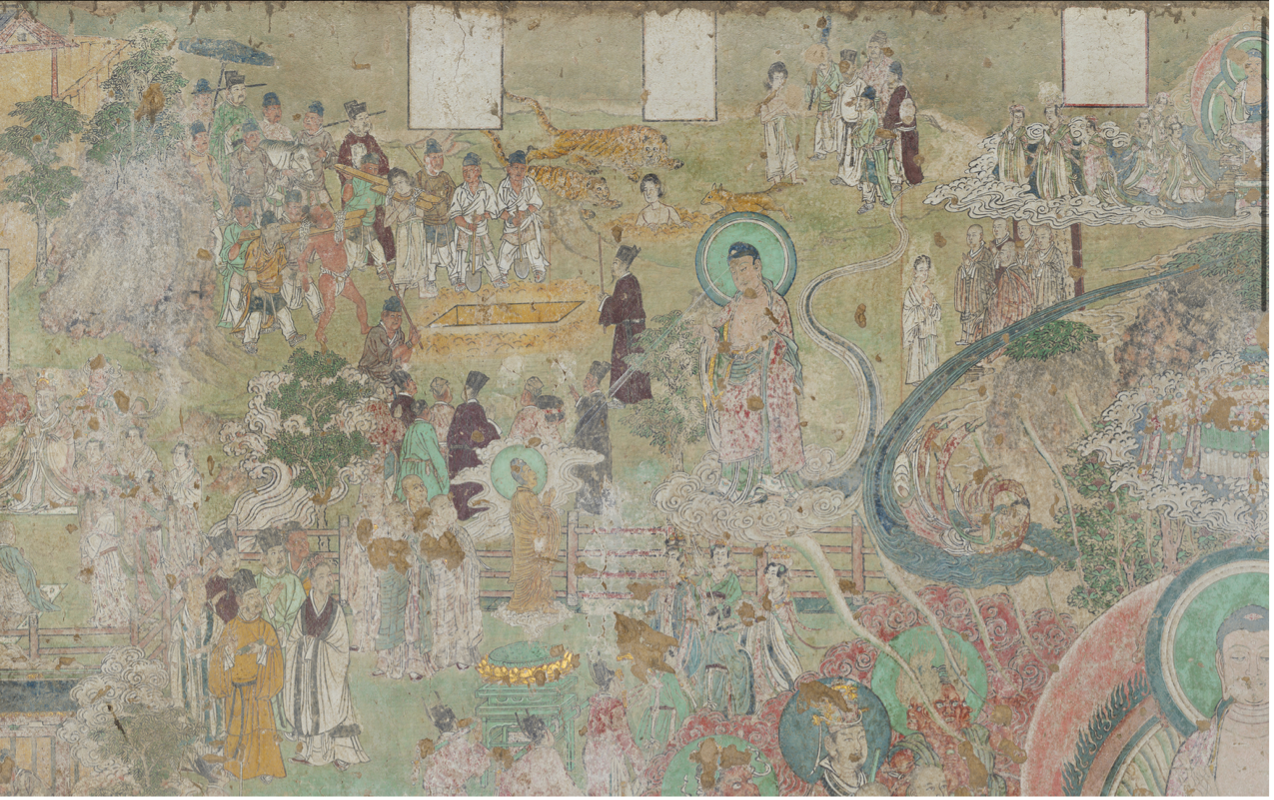
Using Unreal Engine 5.4, the team built a virtual space featuring a temple, Buddhist statues, and red threads. This enabled the protagonist to move from a modern computer room in the real world into a surreal world within the painting. An important scene was filmed in the Academy’s HS computer room. Its enclosed and oppressive atmosphere conveyed the protagonist’s sense of being surrounded by technology, while also suggesting that he was being watched by the screens in return.
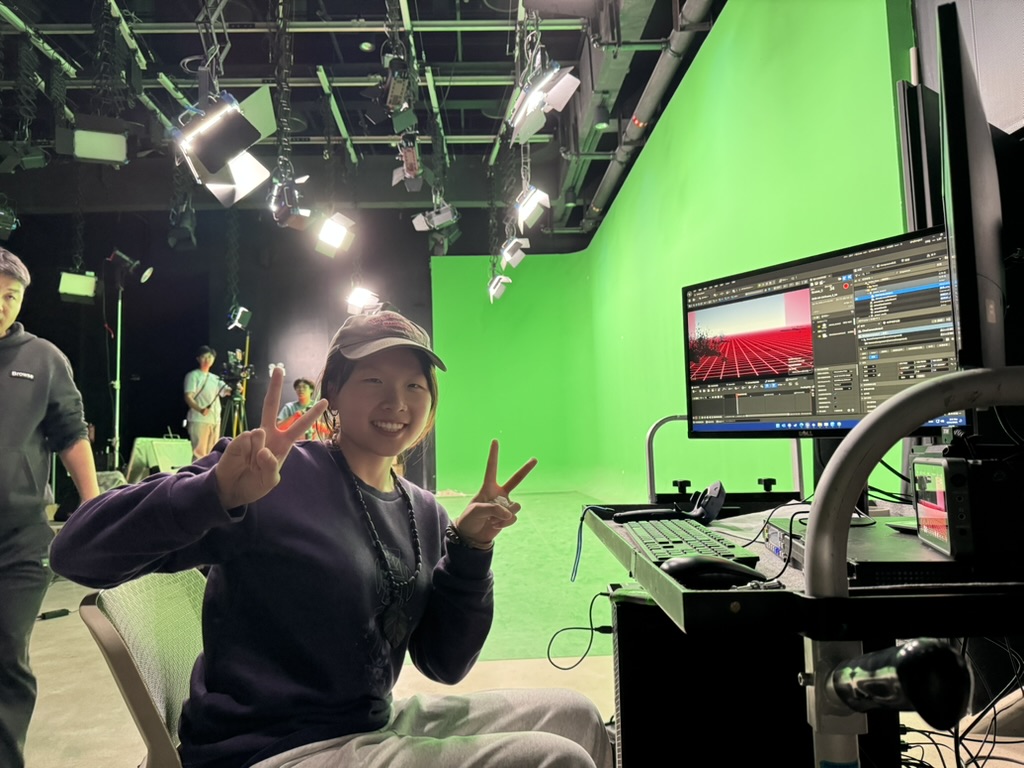
During production, the team found that the real-time compositing effects were not sufficiently stable. They therefore used After Effects for keying and post-production compositing, while adjusting some transitions and narrative elements. They also used AI tools, including ChatGPT, Gemini, and Jimeng, to support script discussions, production planning, and the generation of selected transitional shots. Yi noted that AI could improve efficiency in some stages of the creative process and provide visual inspiration, but creators still needed to decide whether the resulting content genuinely served the story.
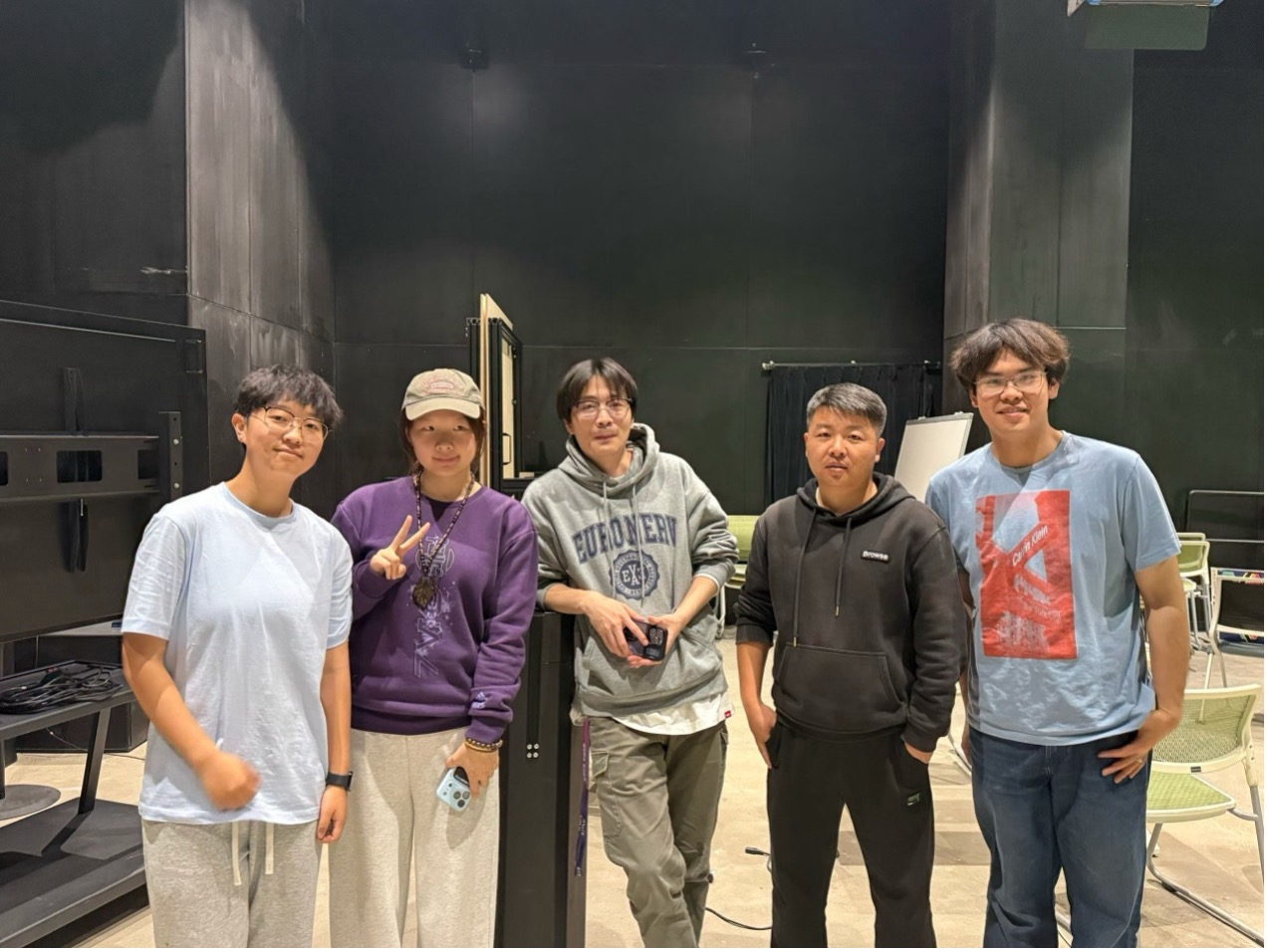
During the competition, AFCT provided financial support to the participating teams. The Academy’s technical team offered equipment and technical support throughout the process, while Mr Guo, head of the Digital Technology Group and an expert in Unreal Engine, provided on-site guidance and answered students’ questions.
“The competition gave students systematic training in virtual production, the application of artificial intelligence and teamwork,” said Shi Tianzuo. According to Shi, participating works were required to use platforms such as Unreal Engine to complete real-time compositing shots, with real-time compositing accounting for more than one-third of the total running time. Each work also had to integrate at least two types of AI tools and explain how the tools were used and how the workflow was organised.
“This required students to genuinely understand and master artificial intelligence, rather than simply use generative tools,” he said. Teams of three were required to complete multiple aspects of production, including filming, post-production and sound. Their interdisciplinary collaboration and coordination skills were also developed through practice.
In Shi’s view, the competition was more than an extension of classroom assignments: it was a practical creative project closely aligned with industry standards. Having their work assessed by national-level competition judges and industry experts provided students with credible validation of their abilities and strengthened their competitiveness for further study and employment. AFCT’s support for the competition was centred on the principles of “promoting learning, industry and research through competition”. The competition itself also served as a platform for integrating industry and education, helping bring cutting-edge virtual production workflows into student training.
By Wenzhen Li
Photos courtesy of Zhe Wang, Sian Yi
06 Nov 2026