





BSc (Hons) Applied Physics



September 2027

Full time

Four years

Suzhou


XJTLU undergraduate students earn two degrees: an XJTLU degree recognised by the Chinese Ministry of Education and a globally respected University of Liverpool degree.

Knowledge and skills
By the time you graduate from the BSc Applied Physics programme, you will have:
- a deep understanding of the physical laws that govern the universe, from everyday phenomena to quantum-scale systems;
- advanced analytical and problem-solving skills valued across science, engineering, technology, and finance;
- first-hand experience with modern laboratory techniques, scientific instrumentation, and experimental design;
- strong programming, computational modelling, and AI-enhanced data analysis capabilities;
- experience applying physics to emerging fields such as quantum technologies, advanced materials, and intelligent systems;
- research experience gained through inquiry-driven projects and independent investigations;
- the ability to evaluate evidence, test hypotheses, and develop innovative solutions to complex challenges;
- excellent communication and teamwork skills developed through collaborative projects and presentations; and
- the knowledge and confidence to pursue postgraduate study, scientific research, and careers in high-technology industries worldwide.
Physics combines humanity's curiosity about the universe with the technologies that are shaping our future, from artificial intelligence and quantum computing to advanced materials and sustainable energy. In the BSc Applied Physics programme, our goal is not only to teach physics, but to help students develop the analytical thinking, creativity, computational expertise, experimental skills, and problem-solving abilities that will serve them throughout their lives. These are powerful, highly transferable skills valued across science, engineering, technology, finance, and many other professions. Whether our graduates choose to pursue research, postgraduate study, or careers in industry, I am confident that the knowledge and experience gained from the programme will equip them to tackle complex challenges, adapt to technological changes, and make meaningful contributions to society. I warmly invite ambitious and curious students to join us on this exciting journey of discovery and innovation.

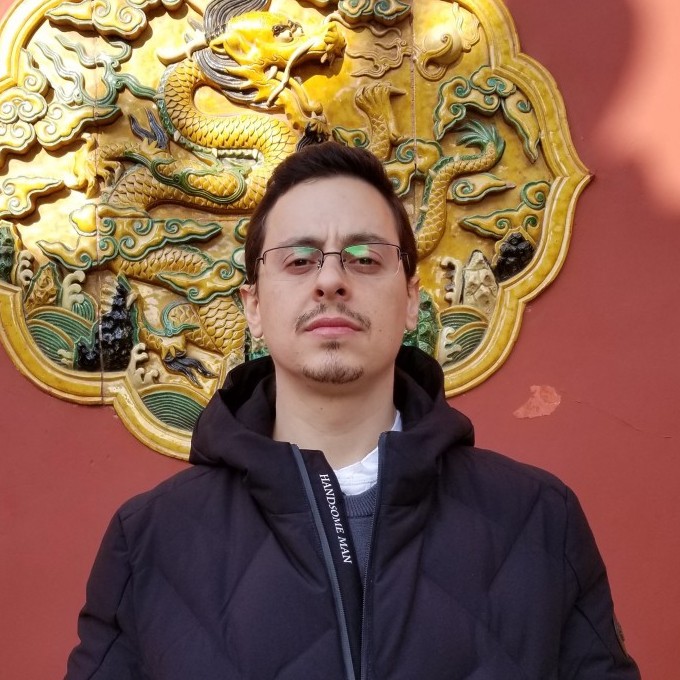
Dr Tiago Adorno
Programme Director
Modules
*Programme modules listed are illustrative only and subject to change. XJTLU students are advised to log in to the e-Bridge Portal to view the effectuated module structure.
Xi’an Jiaotong-Liverpool University offers a wide range of courses in the first year, including English for academic purposes (EAP), mathematics and physics, and humanities and social sciences. Click to learn more.
Core Modules
Careers
Physics is the foundation of the technologies that are transforming our world. A BSc Applied Physics degree provides a powerful base for careers at the forefront of science, technology, and innovation. Graduates are equipped with advanced analytical, computational, and experimental skills valued across a broad range of industries, including quantum technologies, AI, advanced materials, renewable energy, aerospace, semiconductor manufacturing, finance, consulting, and data-driven industries.
The programme also provides strong preparation for postgraduate study and research at renowned international universities. Our graduates may continue their studies in fields such as physics, quantum science, materials science, computational physics, engineering, data science, machine learning, scientific computing, and quantitative finance.
Overview
Physics lies at the heart of many of the technologies transforming our world, from quantum computing and artificial intelligence (AI) to advanced materials and sustainable energy. The BSc Applied Physics programme combines a rigorous foundation in fundamental physics with hands-on laboratory experience, computational modelling, and research-based applications. Through research-led teaching and inquiry-driven projects, students develop the skills required for careers in high-tech industries, scientific research, and postgraduate study in physics, engineering, computing, and related disciplines.
Physics seeks to understand the fundamental laws of nature while driving innovation in some of the most exciting scientific and technological fields of the 21st century. The BSc Applied Physics programme combines deep theoretical knowledge with experimental, computational, and AI-enhanced approaches to problem-solving.
The BSc Applied Physics programme is designed for students who want more than a traditional physics education. By combining fundamental physics with computation, AI, laboratory practice, and research-led learning, the programme equips graduates with the knowledge, skills, and adaptability needed to succeed in academia, industry, and the rapidly evolving technologies of the future.
Why should I study Applied Physics at XJTLU?
In the BSc Applied Physics programme, you will: