




Letter from the Executive President: Reconstructing for the next decade

03 Feb 2026


In 2026, Xi’an Jiaotong-Liverpool University (XJTLU) marks its 20th anniversary. As it stands at the threshold of its third decade, one thing is clear: XJTLU’s development has never followed a linear path. Instead, it has been shaped by a series of deliberate choices – each grounded in forward-looking judgement and periodic self-renewal.The evolution of disciplines related to film and creativity offers a telling example. The establishment of the School of Film and Television Arts (SoFTA) was initially driven by a careful assessment of social demand and institutional opportunity. External resources and industry conditions played a role; more fundamentally, however, the University recognised that culture and arts would assume growing importance in shaping human values and social systems. This led XJTLU to position itself early as a centre for the education of professional arts specialists, forming what is described as a 1.0 model focused on elite, discipline-based training.
As our understanding of future education deepened, XJTLU’s 2.0 syntegrative education model began to take clearer shape. In an era where artificial intelligence (AI) and digital technologies increasingly permeate daily life, a new challenge emerged: the potential erosion of meaning in work and life. Supporting learners in sustaining creativity, a sense of value, and purpose became a central educational question.It was against this backdrop that the School of Cultural Technology was established. By applying technology to cultural content creation and the development of cultural industries, the University sought to cultivate talent aligned with industry needs and future societal demands.Though they share common disciplinary foundations, the two Schools – one based at the Suzhou Industrial Park (SIP) campus, the other at the Taicang base – differ in educational purpose: one focuses on professional artistic excellence, the other on cultivating industry-oriented cultural and technological talent. Maintaining differentiation while strengthening system-wide integration, and responding more effectively to social and industrial change, became questions the University could no longer avoid.
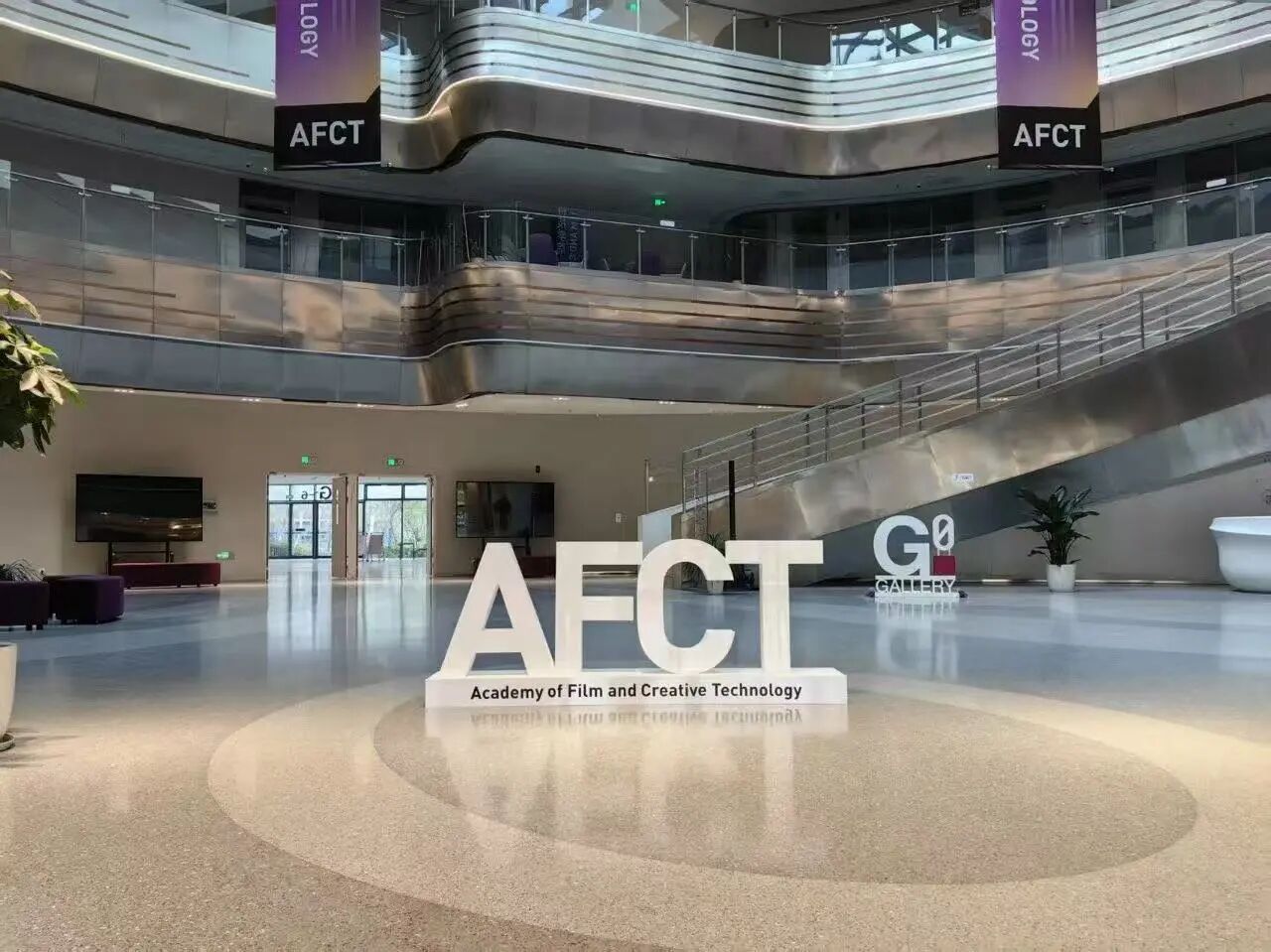
From its inception, XJTLU positioned the School of Cultural Technology within the broader concept of the 3.0 education model, as embodied in the establishment of the Academy of Film and Creative Technology (AFCT). This involved appointing a dedicated Dean and actively engaging industry partners, with the intention of embedding professional education and industry-oriented education within a real-world ecosystem – one where learning, research, industry practice, and innovation could reinforce one another.
Conceptually, this ecosystem made sense. By connecting education and industry in both directions, real-world problems could feed into teaching and research, strengthening talent development and knowledge creation. In practice, however, the picture proved more complex. Collaboration between the two campuses remained at an early stage, and some industry partnerships progressed more slowly than anticipated. As a result, the ecosystem had yet to form a stable, high-performing operational loop.It was under these conditions that XJTLU began to rethink how to enhance system integration within the broader framework of two campuses and three education models. The restructuring of AFCT followed naturally – driven both by gaps between interim achievements and long-term goals, and by structural challenges revealed in day-to-day operations.By appointing a new Dean and redesigning governance mechanisms, the University sought to accelerate renewal and upgrading efforts. As XJTLU approaches its 20th anniversary, it continues to apply a proven principle of “resetting through iteration” – not a return to the beginning, but a recalibration built on existing foundations. The aim is a more flexible organisational structure that can unlock new potential and support sustainable development in the decades ahead.
AFCT as a pilot practice
Within this restructuring process, AFCT is best understood not as a model to be replicated, but as a pilot experiment. XJTLU has already developed multiple Academy ecosystems, each shaped by its own mission and trajectory.
AFCT is distinctive in that it operates simultaneously across two campuses and three education models, bringing greater complexity to coordination, process design, and governance. Its restructuring therefore serves not only its own development, but also as a testbed for future Academy reform.
In practice, this raises a series of concrete questions:
- How can two campuses and three models function as an integrated whole?
- How should staff define their roles across different modes of education?
- How can teaching, research, and administrative processes align with an Academy structure?
- How can distinct educational objectives remain differentiated yet complementary?

AFCT has become the platform for addressing these questions. Through practice, the interactions between professional elite education, industry-oriented training, and the 3.0 model are gradually becoming clearer, along with the boundaries between shared resources, coordinated processes, and relative autonomy. While an initial operational framework is now in place – covering teaching, research, administration, and staff development – more efficient coordination across models remains an ongoing task.The broader value of AFCT lies in the fact that its challenges closely resemble those faced by other Academies undergoing restructuring. Its contribution is not to offer ready-made answers, but to clarify how complex systems function – providing experiential knowledge for future organisational innovation at XJTLU.Ecosystems as the infrastructure of future education
The greatest challenge AI poses to education is the rapid weakening of traditional models centred on knowledge transmission. When knowledge is no longer scarce, education must once again ask a fundamental question: how should people learn?
Future learning will increasingly revolve around real-world contexts, authentic problems, and meaningful phenomena, with inquiry driven by problems and projects. The critical shift lies not merely in new technologies or spaces, but in the systemic redesign of educational processes and relationships.
In this emerging model, teachers act less as information providers and more as designers and guides, using real tasks to activate learning. Students, supported by AI and educational ecosystems, pursue self-directed exploration, with teachers intervening when deeper understanding is required or when challenges exceed the limits of AI. Structured assessment then completes the learning loop.
At the same time, educational relationships are expanding beyond the traditional teacher–student dyad into a multidimensional network involving teachers, learners, AI agents, blended physical and virtual environments, and global learning communities.
The true difficulty lies in sustaining a sufficient supply of rich scenarios, meaningful problems, and mentoring resources. The answer lies in ecosystem building. By integrating industry mentors, real industrial challenges, and cross-sector resources, education gains the conditions needed for continuous renewal. In this sense, ecosystems are becoming XJTLU’s “software infrastructure” for future education, providing a shared foundation across different educational models.
The hardest part of reconstruction: PeopleUltimately, the most difficult aspect of organisational reconstruction lies not in structural design or institutional arrangements, but in shifts in mindset. XJTLU’s reform logic has consistently been future-driven: first assessing emerging trends, then designing organisational forms accordingly. At the same time, real operational challenges exert pressure from the present. When these forces converge, there is no fundamental conflict in their direction.Concerns among academic and administrative staff – about pace of change, professional identity, and future roles – often stem from uncertainty. Addressing these concerns does not mean avoiding reform, but clearly articulating the post-restructuring picture: how teaching is organised, how research is conducted, how staff development and evaluation operate, and how existing work transitions into new structures. Clarity reduces uncertainty.
For this reason, the hardest challenge is not the design of institutions or systems, but the transformation of mindsets and psychological habits. Once core concerns are addressed, structural transformation becomes achievable.
For two decades, XJTLU has treated future judgement as the starting point for institutional design. We continue to do so today. Reconstruction is not about change for its own sake, but about responding proactively – maintaining direction while building higher-order systemic stability for long-term sustainability.
This is the choice XJTLU makes as it steps into its third decade.
Professor Youmin Xi
Executive President of XJTLU
Pro-Vice-Chancellor of University of Liverpool
03 Feb 2026