




Norwegian students find new perspective in China at XJTLU


Fredrik Andersen and Kristoffer Engen, both from Norway, first experienced life in China as exchange students from BI Norwegian Business School in 2023. That initial semester left a strong impression – so much so that when it came time to choose a postgraduate programme, they decided to return and pursue master’s degrees in International Business and Global Affairs (IBGA) hosted by the Department of International Studies at HSS.
This time, they brought a friend along. Jakob Hovland, also from Norway, joined them in the same programme. What began as a semester-long exchange evolved into a deeper academic pursuit, a shared journey of friendship, and a personal rediscovery of China.
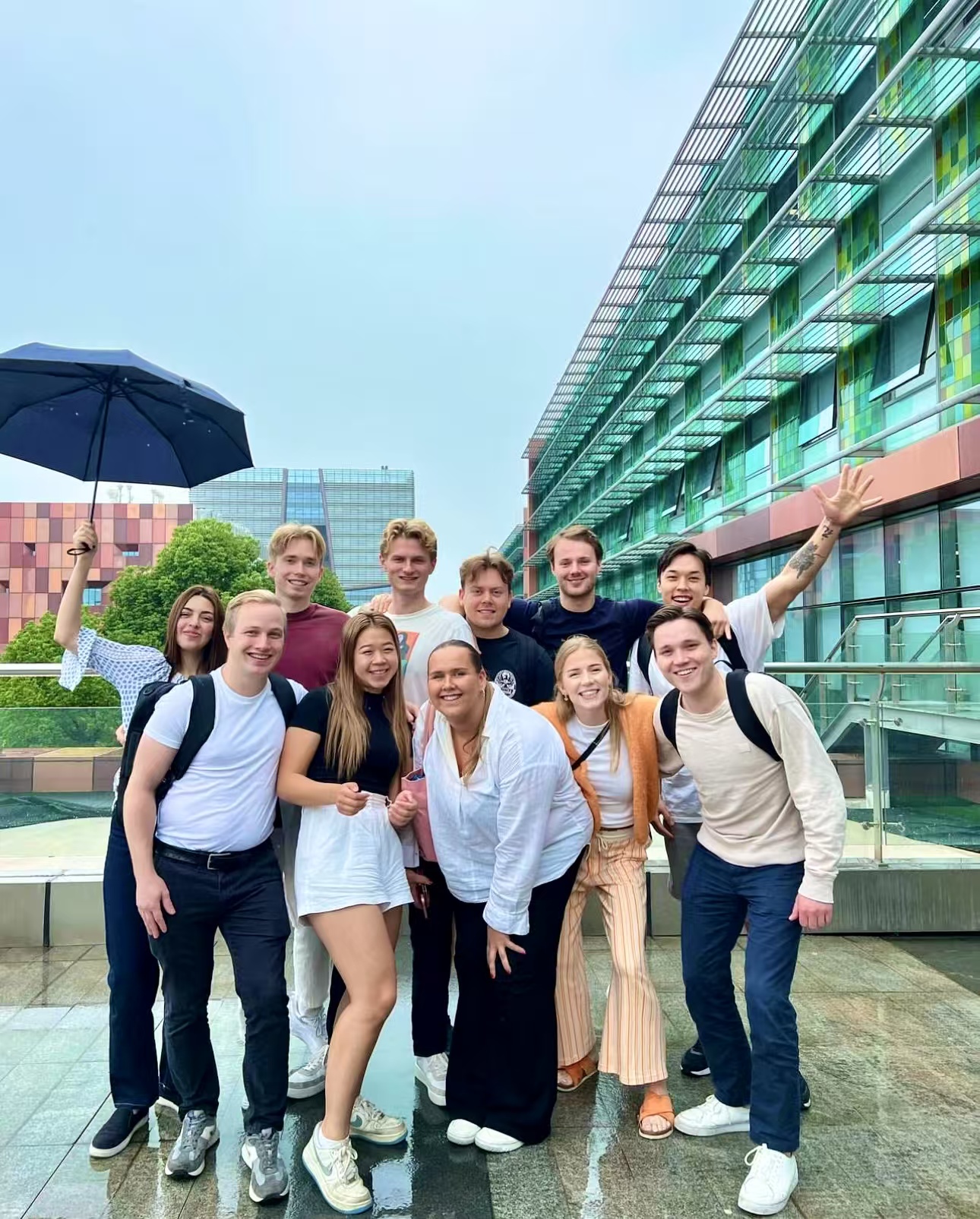
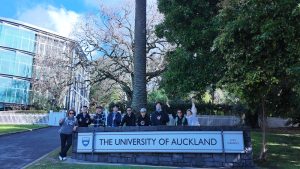
Fredrik Andersen (back row, first from right) and Kristoffer Engen (back row, third from right) and other exchange students from BI Norwegian Business School at XJTLU
Drawn back by experience
Looking back, Andersen says his decision to return for postgraduate studies was influenced by both fond memories and practical advantages.
“We had a good experience from our exchange. When I first arrived, I couldn’t believe how modern and well-equipped everything was – the gym, the facilities, and the whole campus,” Andersen says. “We also got the 30% master’s entry scholarship, which was fairly priced.”
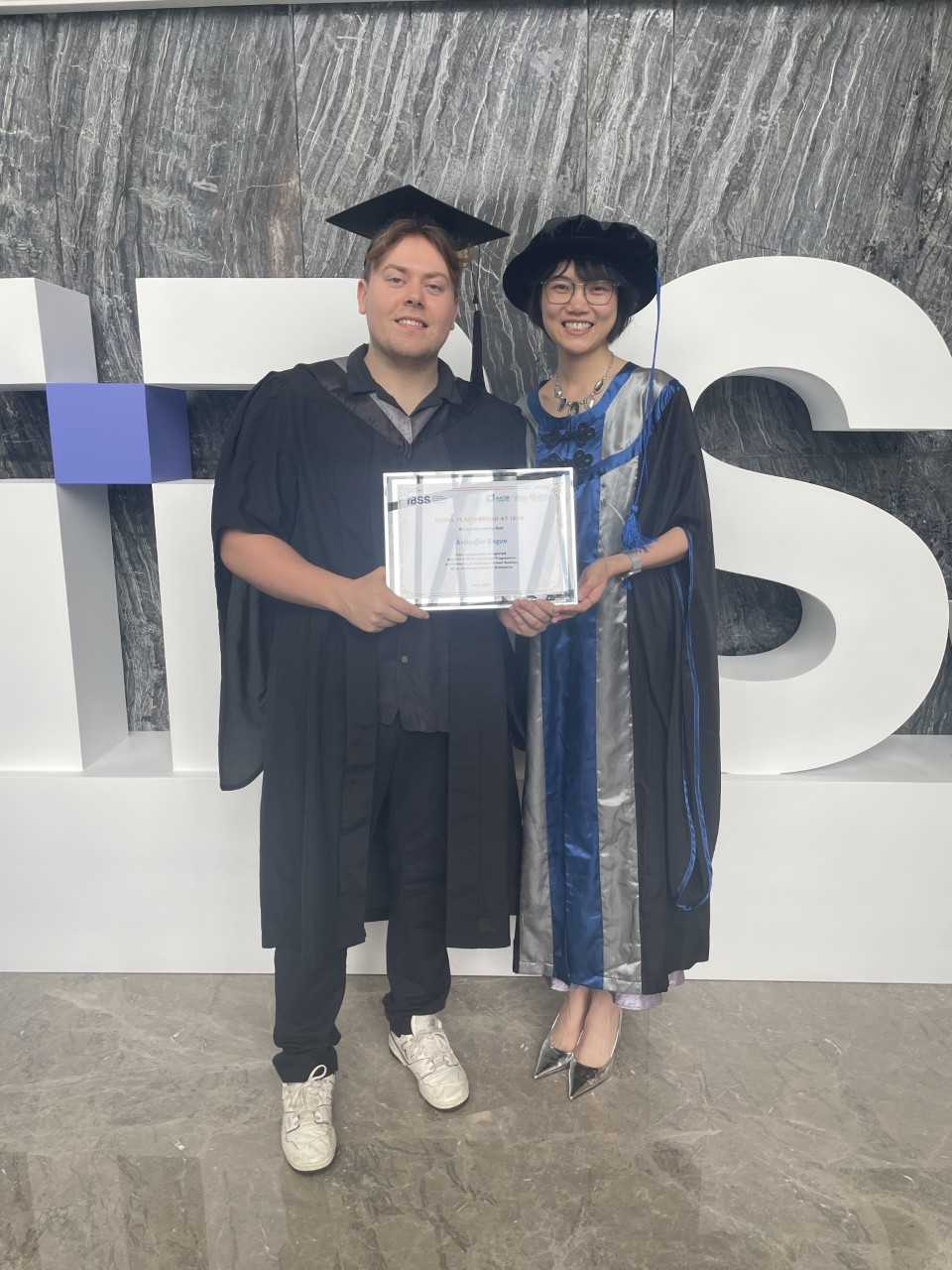
Kristoffer Engen (left) with Ka Du, Chinese Language Lecturer at XJTLU, on the day of his bachelor’s graduation
Hovland’s decision was more spontaneous. “I was fishing with Kristoffer,” Hovland says. “He told me about his life in China and that he’s going back for a master’s. I became interested, and the next day I said: ‘Okay, I will go with you.’”
When Hovland arrived, one of the first surprises for him was the country’s move away from cash. Unlike in Norway, where cash and credit cards are still commonly used, China has fully embraced digital payment systems, such as Alipay and WeChat.
“You don’t even use your card; everything is done through your phone,” Hovland says.
At first, this shift was a bit of a culture shock. However, the convenience of the system quickly won him over. Now he’s used to the simplicity and efficiency of a cashless society.
And it wasn’t just the payment system. China’s technological advancements, infrastructure, and urban landscape shifted many of the stereotypes they grew up with. The sheer scale of cities, such as Beijing and Shanghai, with its vast skyscrapers and modern design, left them with a lasting impression.
“You heard it’s advanced, but you don’t really understand until you get here,” Engen says.
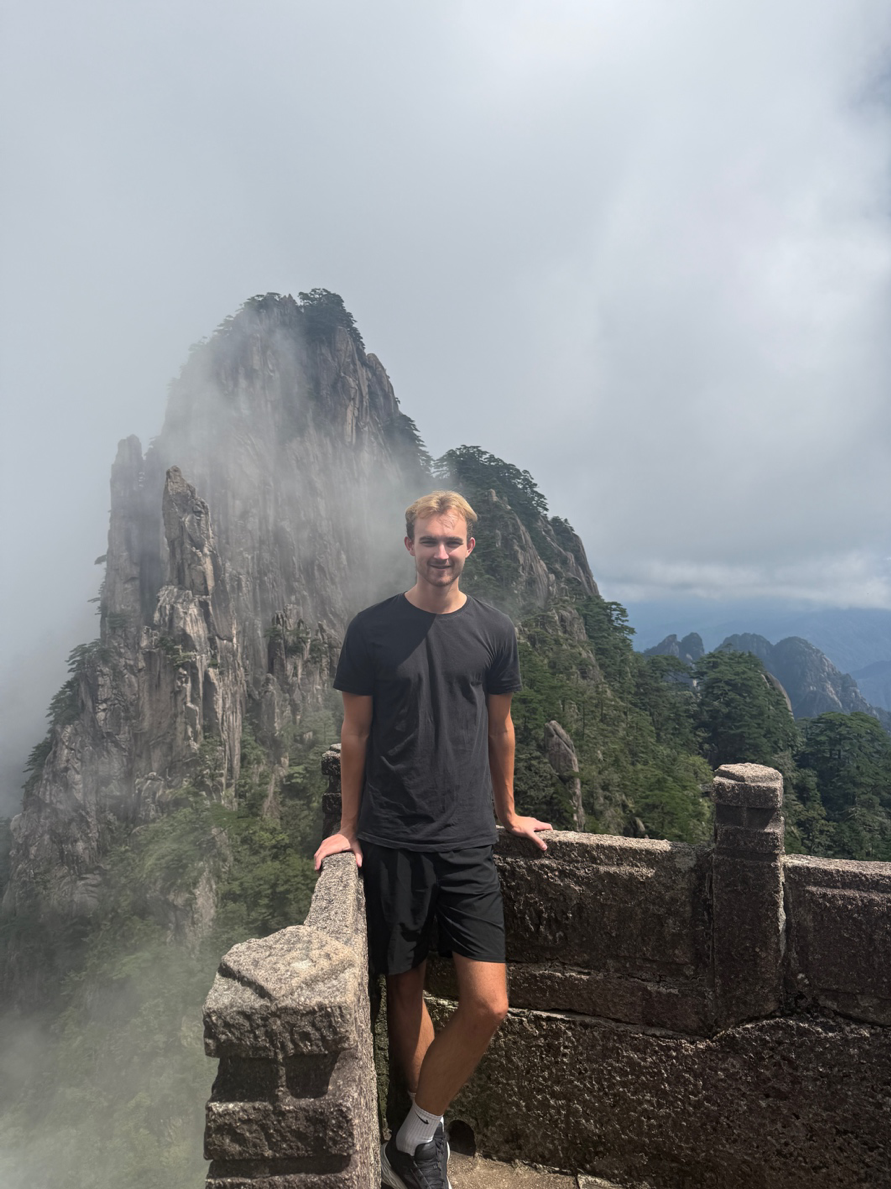
Jakob Hovland in Huangshan, also known as the Yellow Mountain
Global focus with a China lens
When asked about their programme choice, the trio says they were attracted by its combination of business, a broad global focus, and China-related content.
“I liked macroeconomics and global issues during my undergraduate studies,” Hovland says. “This programme combines both while letting me learn more about China. It teaches me how the world works – macropolitics, globalisation, and so on.”
Engen appreciates the programme’s focus on communication and management. “You get a completely different perspective on international business by studying it in China,” he says.
They also like the engaging teaching styles of teachers like Professor Roberto Donà and Dr Esol Cho.
The trio recalls a company visit to an Italian coffee machine company in Suzhou, as part of Professor Donà’s module on International Management and Global Institutions.
“They were one of the first Italian coffee firms to enter China’s market,” Andersen says. “It was interesting to learn how they entered the Chinese market and adapted their business strategy.”
Student life in China
Compared to life in Norway, all three agree that being a student in China offers a better quality of life.
“In Norway, students usually cook at home because eating out is very expensive,” Engen says. “But in China, you can afford to go to restaurants, try new food, and explore the city. It’s a much higher quality of life for a student.”
They also noticed cultural differences in self-expression.
“At our school in Norway, it felt like everyone looked the same – same hair, same clothes, and even the same way of behaving. People want to blend in and not be too different,” Andersen says. “But here, people are freer to express themselves in outfits. Students dye hair, wear colourful clothes, weird hats, or even cosplay costumes.”
“In Norway, if you showed up in cosplay, you’d never come back to the school,” Andersen says.
“The social backlash will be too much,” Engen adds. “If you stand out too much, you’re the outcast.”

Kristoffer Engen at the Summer Palace in Beijing
Andersen also says he had a lot of experiences that he would never have in Norway. The international environment at XJTLU pushed him to see beyond his own cultural bubble.
“I feel like if my social circle here is much bigger than in Norway,” Andersen says.
“If I stayed in Norway, I’d probably only hang out with a small group of friends,” he says. “But here, I become part of an international community. I meet people from all around the world.”
A transformative experience
All three agree that their time in China has been “transformative” – both in how they see the country and the world.
Hovland says: “When you tell people you are going to China, people usually react like: ‘Why?’ It’s 50/50 – some think it’s cool, others just don’t get it.”
“We heard about all the stereotypes about the country,” Andersen says. “But actually, being here, you see a totally different story. It’s made me much more critical of how China is portrayed in the West.”
Engen says: “It’s a huge shift – saying goodbye to your family and stepping into an entirely new world. A new culture, language, food, and everything else. You’re forced to adapt and to learn.
“It’s scary. But if you can push past that fear, the growth is incredible. You will come out the other side with so much more confidence and independence. It’s definitely a positive change.”
Photos courtesy of Kristoffer Engen and Jakob Hovland
RELATED NEWS

How studying in China sparked a startup
In a world where cultural fluency opens doors, China stands as a beacon of opportunity for young entrepreneurs. For Nicholas Sukardi, founder of the travel s...
Learn more
Malaysians discover new sides of studying in China
For many students, university life extends far beyond lectures and exams – it’s an experience that shapes careers, character, and connections across borders....
Learn more