




26 Mar 2026


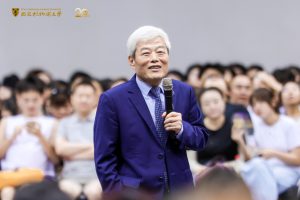
Recently, Professor Donghui Quan has been appointed as the new Head of the Department of Physics in the School of Mathematics and Physics at Xi’an Jiaotong-Liverpool University. Professor Quan brings extensive academic expertise and research experience in computational physics, astrochemistry, and the intersection of artificial intelligence with science.

Professor Quan began his academic journey in the Gifted Young Program at the University of Science and Technology of China, majoring in chemical physics. He then pursued his PhD at The Ohio State University in the United States, where he focused on modelling interstellar molecules. Over the past two decades, his research has centred on understanding how matter evolves in the universe, exploring how simple atoms and molecules in the interstellar medium develop into complex organic species and potential precursors of life.
Prior to joining XJTLU, Professor Quan served as a professor at Eastern Kentucky University in the United States and later as Deputy Director (Acting Director) of the Research Centre for Astronomical Computing at Zhejiang Laboratory, where he led a large interdisciplinary research team working on AI for Science. He has published over 70 peer-reviewed articles and secured more than 36 million RMB in research funding as principal investigator. One of his key contributions is the development of AI-empowered computational modelling frameworks that integrate physical processes, chemical evolution, and astronomical observations, offering new ways to interpret complex molecular data from modern telescopes.
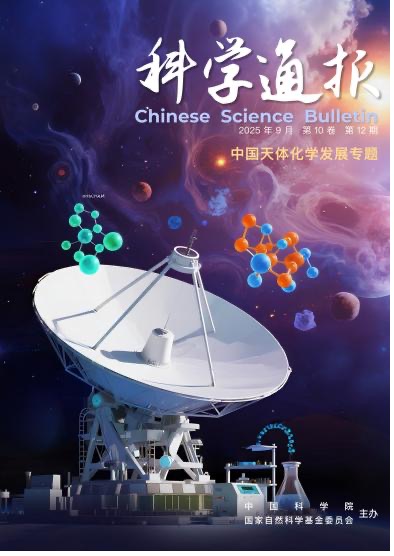
At XJTLU, Professor Quan’s research focuses on AI for Science, with a particular emphasis on integrating artificial intelligence with physics and astrophysics to study the evolution of matter in the universe. He is currently developing BIRDS-AI (Big-Data-Driven Interstellar Reaction Discovery System), a platform designed to use artificial intelligence to systematically organise, expand, and analyse large astrochemical reaction networks, transforming how scientists discover and model chemical processes in interstellar space.
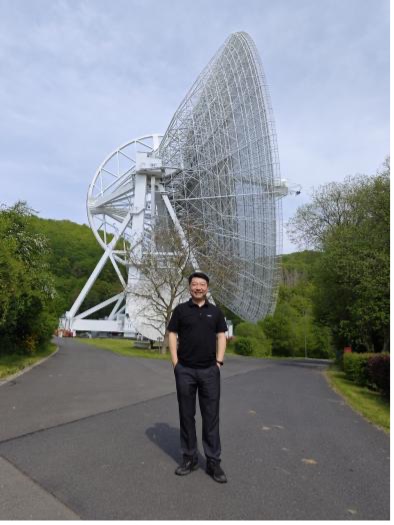
Professor Quan notes that this research contributes not only to fundamental science, helping us understand how molecular complexity forms in star-forming regions and how the chemical ingredients of planetary systems may arise, but also to methodological innovation, providing powerful new tools for analysing complex scientific datasets. These approaches have potential applications in other data-intensive fields such as materials science, climate modelling, and biomedical research.
As the new Head of the Department of Physics, Professor Quan envisions building a vibrant academic environment that combines strong disciplinary foundations with interdisciplinary innovation. He observes that physics provides the conceptual framework underlying many modern scientific and technological developments, from artificial intelligence to space science and medical imaging. His goal is to cultivate a department where fundamental physics education, computational methods, and real-world applications advance together.
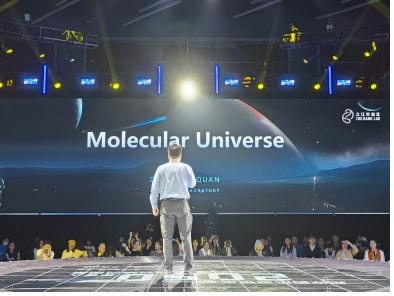
In guiding the department’s development, Professor Quan often thinks in terms of three groups that shape its future: faculty, students, and partners. Faculty are the ones who build the department through their scholarship and teaching, and it is essential to create an environment where colleagues can develop their strengths and collaborate across disciplines. Students are those the department ultimately serves, and programmes should prepare them not only with strong theoretical foundations but also with clear pathways toward careers in science, technology, and industry. Partners—including universities, research institutes, and industry collaborators—help amplify the department’s impact by connecting its research and education with the broader scientific and societal landscape. By bringing these elements together, he hopes to cultivate an academic culture characterised by intellectual curiosity, mutual respect, and open collaboration, where both teaching excellence and frontier research can flourish.
For students, Professor Quan offers advice rooted in his own academic experience: cultivate curiosity, persistence, and intellectual independence. He emphasises that physics is not only a body of knowledge but also a way of thinking—learning how to ask meaningful questions, construct models, and test ideas against evidence. Looking to the future, he believes research within the School will increasingly take place at the intersection of fields. Artificial intelligence, data science, and high-performance computing are transforming how scientific research is conducted, and he hopes students will embrace these opportunities, combining strong physical intuition with modern computational tools to explore some of the most fundamental questions about nature and the universe.
Edited by Qinru Liu
26 Mar 2026