





14 Apr 2026


Recently, Dr Xiao Lu, Assistant Professor at the Academy of Film and Creative Technology, Xi’an Jiaotong-Liverpool University, has been featured in two international media reports, offering expert insights into China’s Digital Content Creation and Its Impact on cultural going global.
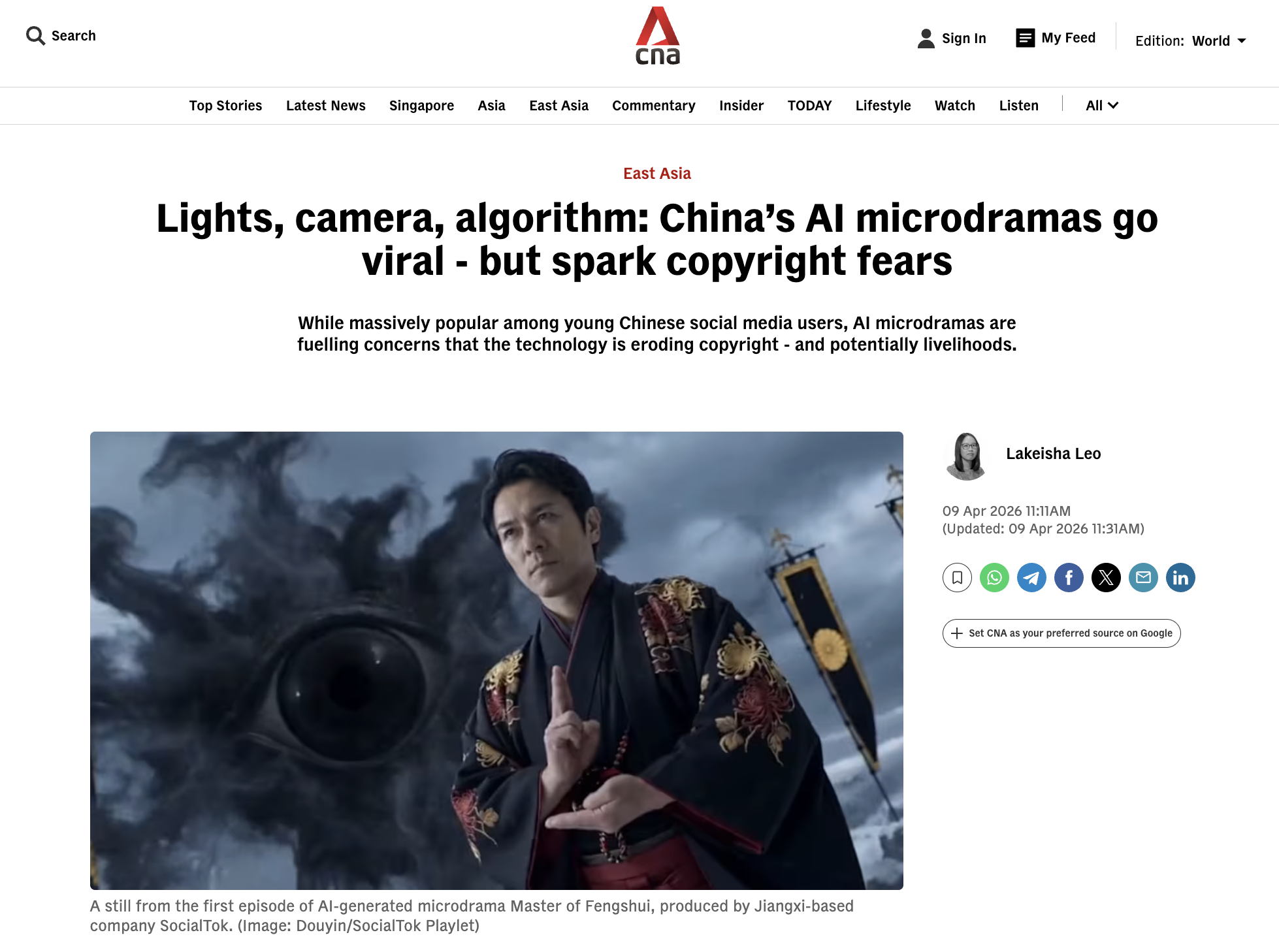
The coverage appeared in Channel NewsAsia: Lights, Camera, Algorithm: China’s AI Microdramas Go Viral – But Spark Copyright Fears and The Straits Times: From Wuxia Games to AI Microdramas: China Sharpens Its Soft Power Playbook.
Together, these reports highlight key developments in AI-driven content production, from industry transformation and copyright concerns to the evolving role of digital cultural exports in shaping China’s global soft power.
AI Microdramas: Reshaping Content Production
(Source: Channel NewsAsia)
According to Channel NewsAsia, AI-generated microdramas have rapidly emerged as one of the fastest-growing sectors in China’s content industry. Powered by generative AI, the entire production process—from scripting to visual output—can now be significantly accelerated.
Dr Lu noted: “Think about the productivity of producing microdramas using generative AI – it can shorten the production cycle from a few months to a few weeks.”
She added: “This significantly changes the traditional workflow.”
These developments point to a fundamental shift in production logic—from highly segmented workflows towards increasingly automated and platform-based systems. At the same time, the report highlights growing concerns around copyright, image rights, and the impact on creative labour.
(Full article available at:https://www.channelnewsasia.com/east-asia/china-generative-ai-microdramas-copyright-creative-concerns-6043656)
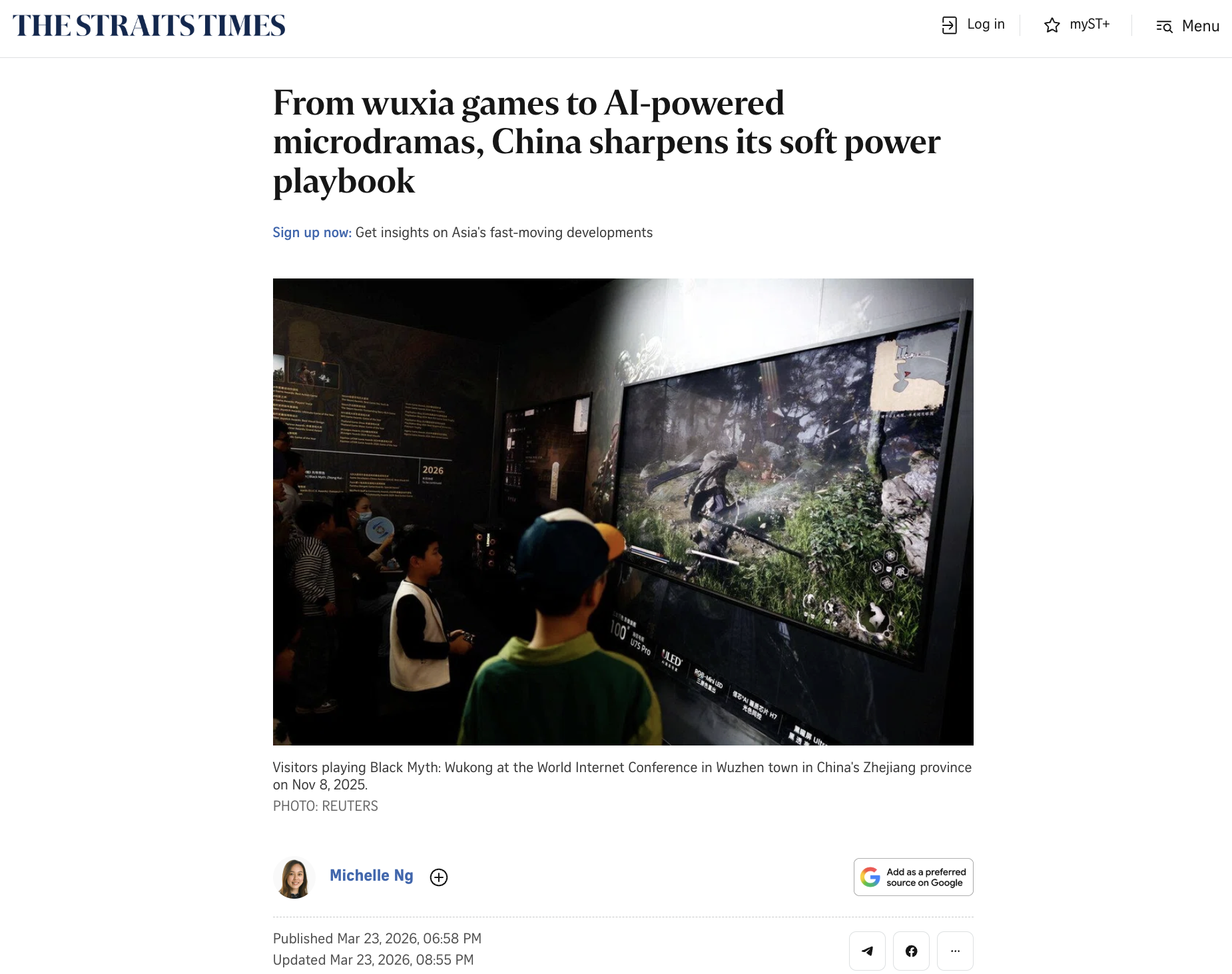
From Production to Global Influence: AI and Soft Power
(Source: The Straits Times)
In The Straits Times, AI microdramas are examined within a broader framework of China’s digital cultural exports and soft power strategy.
Alongside online literature and video games, microdramas form part of a new generation of cultural products driving China’s global cultural presence. These “new three” digital exports reflect a shift from traditional cultural symbols towards technology-enabled storytelling and platform ecosystems.
In this context, Dr Lu highlighted the growing role of digital cultural products in shaping China’s global cultural influence.
She noted: “Video games always respond to market needs. If they are not compelling, players will not invest time or energy.”
She added: “So video games uniquely combine commercial success and cultural impact, making them a powerful means to represent Chinese soft power globally.”
Dr Lu further emphasised the importance of audience resonance in cultural exports: “Cultural exports need to be both novel and resonate with users… Market performance is the clearest test.”
These observations underscore how market responsiveness, technological innovation, and cultural storytelling are becoming increasingly intertwined in the global circulation of Chinese digital content.
(Full article available at:https://www.straitstimes.com/asia/east-asia/japan-government-launches-subsidies-review-to-cut-inefficient-spending)
From Tool to Engine: The Convergence of AI and Creative Industries
Taken together, the two reports point to a broader trend:
Generative AI is evolving from a production tool into a core driver of content creation and cultural expression.
For the film and creative technology sector, this signals:
- a restructuring of production workflows
- an expansion of creative possibilities
- deeper integration between technology and storytelling
The AFCT Perspective: Bridging Technology, Creativity and Industry
The Academy of Film and Creative Technology at Xi’an Jiaotong-Liverpool University is actively engaged in exploring the intersection of artificial intelligence, immersive technologies, and creative content production.
Scholars at AFCT contribute to global conversations on emerging industry trends, offering research-informed perspectives that connect technological innovation with cultural practice.
As AI continues to reshape the creative industries, key questions remain around balancing efficiency, creativity, and ethical considerations—areas that will define the next phase of development in film, media, and digital content production.
(Part of the content is reproduced with permission from The Straits Times and Channel NewsAsia by the Academy of Film and Creative Technology, Xi’an Jiaotong-Liverpool University.)
By Wenzhen Li
14 Apr 2026