





Dr Xin Bi shares AI-empowered education with international experts

15 Apr 2026


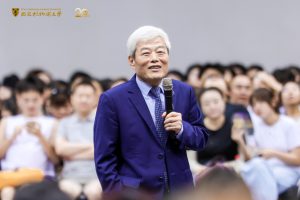
In March, Dr Xin Bi, XJTLU’s Chief Officer of Data, Director of the Centre for Knowledge and Information, and Director of the Digital Transformation Research Centre, spoke at the Elton Bryson Stephens Company (EBSCO) Day Vietnam 2026. He shared XJTLU’s framework and experience in applying AI in higher education with experts across the Asia-Pacific region.
In his presentation, “From data to wisdom: how AI empowers higher education”, Dr Bi outlined three core principles underpinning XJTLU’s AI policy: governance, pedagogy, and operation. He drew on a model of technological evolution to illustrate the pathway towards intelligent transformation in higher education.
Dr Bi elaborated on the three principles:
“At the governance level, university leaders should understand, identify, and mitigate risks related to academic misconduct and ethical challenges, while ensuring data privacy, transparency, trustworthiness, and security. It is also important to ensure equitable access to AI technologies for both staff and students.
“From a pedagogical perspective, educators are encouraged to rethink assessment methods to develop students’ transferable skills and better prepare them for an AI-driven future.
“In terms of operation, relevant staff and IT professionals are responsible for monitoring and evaluating AI applications, while providing AI literacy training and support across the university,” he said.
Reflecting on the current stage of AI development, Dr Bi said: “We are currently at Level Three, where AI agents can reason and complete multi-step tasks. With continued development and application, we aim to achieve Level Four, where AI will be able to innovate and support invention.”
Dr Bi also introduced the DIKW (Data, Information, Knowledge, and Wisdom) model as a reference framework for the digitalisation and intelligent transformation of higher education.
He explained that the transition from manual workflows to informatisation represents the progression from data to information, while the shift from informatisation to digitalisation reflects the move from information to knowledge.
“This means that AI is beginning to engage with the domain of human wisdom, thereby accelerating the transformation from digital education to intelligent education,” he said.
He also shared a range of XJTLU’s initiatives in leveraging AI to enhance teaching, learning, research, and administrative services.

XJTLU’s South Campus
Following the meeting, Dr Bi was invited by EBSCO to deliver an online session for the higher education library community in Hong Kong, China, where he highlighted XJTLU Library’s experience in enhancing services through AI.
By XJTLU’s Digital Transformation Research Centre
Translated by Xiangying Han
Edited by Katharina Zhu and Xinmin Han
15 Apr 2026