





27 Apr 2026


International Business School Suzhou (IBSS) welcomed Professor Vasilis Theoharakis from Cranfield School of Management from 22 to 31 March for an Intelligent Operations and Marketing (IOM)-themed paper development workshop and a research talk. Professor Theoharakis is Head of the Centre for Strategic Marketing and Sales at Cranfield School of Management and a Visiting Professor at IBSS.
The paper development workshop brought together colleagues and PhD students for an engaging session aimed at developing early-stage research ideas and gathering feedback for academic publication. In a featured presentation at the beginning of the workshop, Professor Theoharakis introduced a timely investigation into the psychological effects of AI reliance, titled “AI Epistemic Disengagement and Consumer Dependence: An Augmentation-Substitution Framework.” The study addresses a critical modern dilemma: as artificial intelligence increasingly guides consumer decisions; it explores where the line falls between helpful assistance and harmful over-reliance. Introducing the concept of “AI epistemic disengagement,” the research examines how consumers rationalise outsourcing their reasoning to AI, distinguishing between patterns that enhance human judgment and those that replace it entirely. Following f Professor Theoharakis’s, presentation, IBSS colleagues Dr Daniel Hampson, Dr Zhe Lin, and Dr Zheng Zhang presented their ongoing research projects. The audience provided valuable insights during the open discussion.
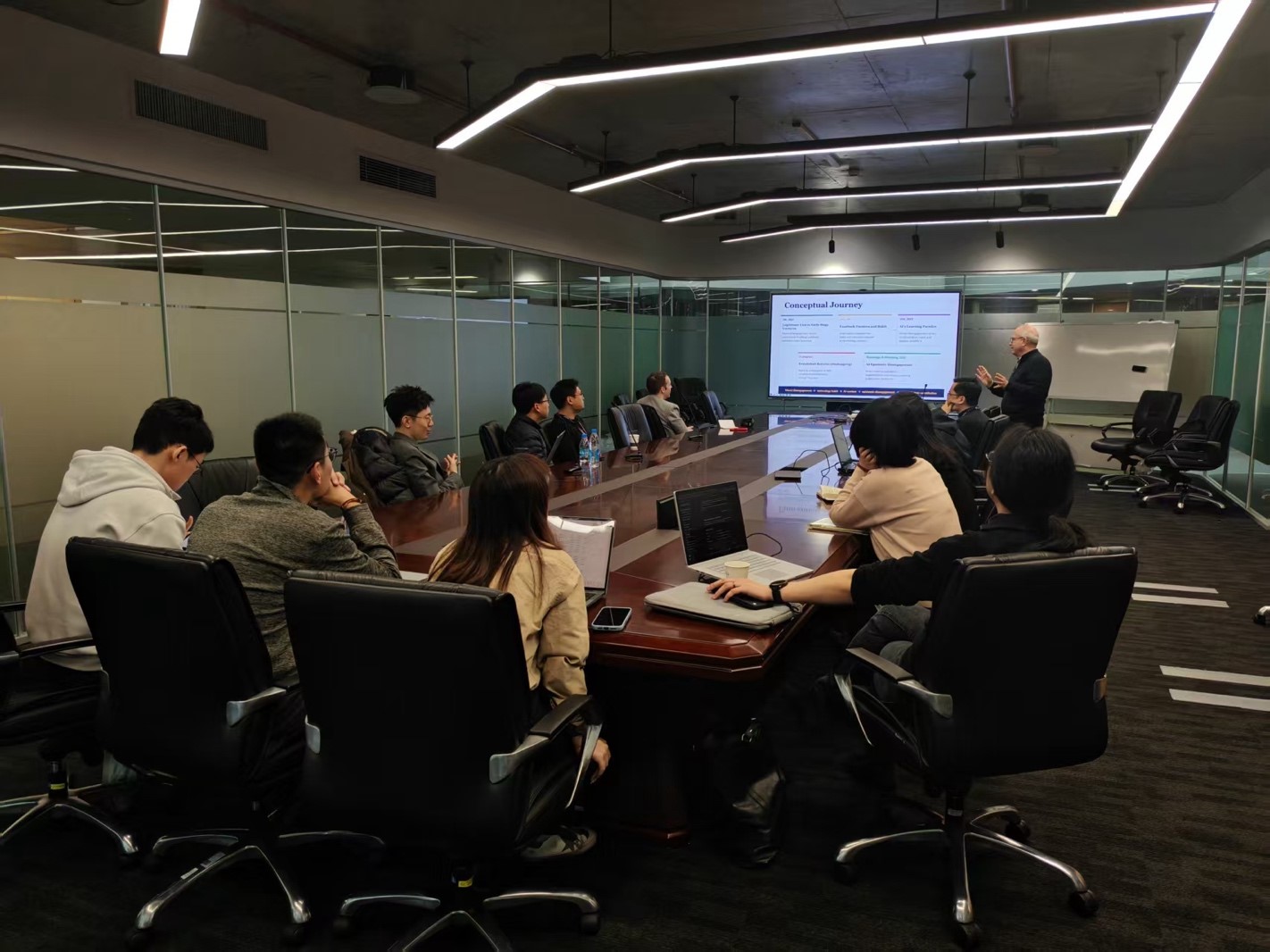
Professor Vasilis Theoharakis in the paper development workshop.
This workshop served as an invaluable forum for early-stage research, providing a constructive environment where scholars could present developing ideas and gather critical feedback to identify potential issues, refine arguments, and uncover new directions. Professor Theoharakis’s presentation on AI epistemic disengagement exemplified the type of thought-provoking work that benefits from such engagement, sparking rich discussion. The subsequent project presentations and open dialogue allowed colleagues and PhD students to tap into collective expertise, transforming initial concepts into more robust, publication-ready enquiries. The workshop clearly demonstrated how collaborative feedback can strengthen research in its early stages and support its development toward publication and impact.
During the research seminar titled “From Rejection to Acceptance: Navigating the Paper Revision Process,” Professor Theoharakis explained that the discussion aimed to provide strategic guidance on one of the most critical yet challenging phases of academic publishing: the revise-and-resubmit process. He noted that the workshop would cover essential strategies for effectively engaging with reviewer feedback, from interpreting comments constructively to crafting compelling response letters. The session drew on practical insights applicable to a wide range of business disciplines, emphasising that successful revision requires both methodological rigor and a resilient mindset. As illustrated in the session’s abstract:
“Revise-and-resubmit decisions are won or lost not just in the manuscript, but in how authors engage with the review process. Drawing on personal experience across multiple published papers, this session offers guidance on responding to challenging reviewer comments, structuring effective response letters, and managing major revisions strategically. It addresses both the craft and the psychology of revision, with reflections on how to turn even harsh feedback into a publishable paper.”
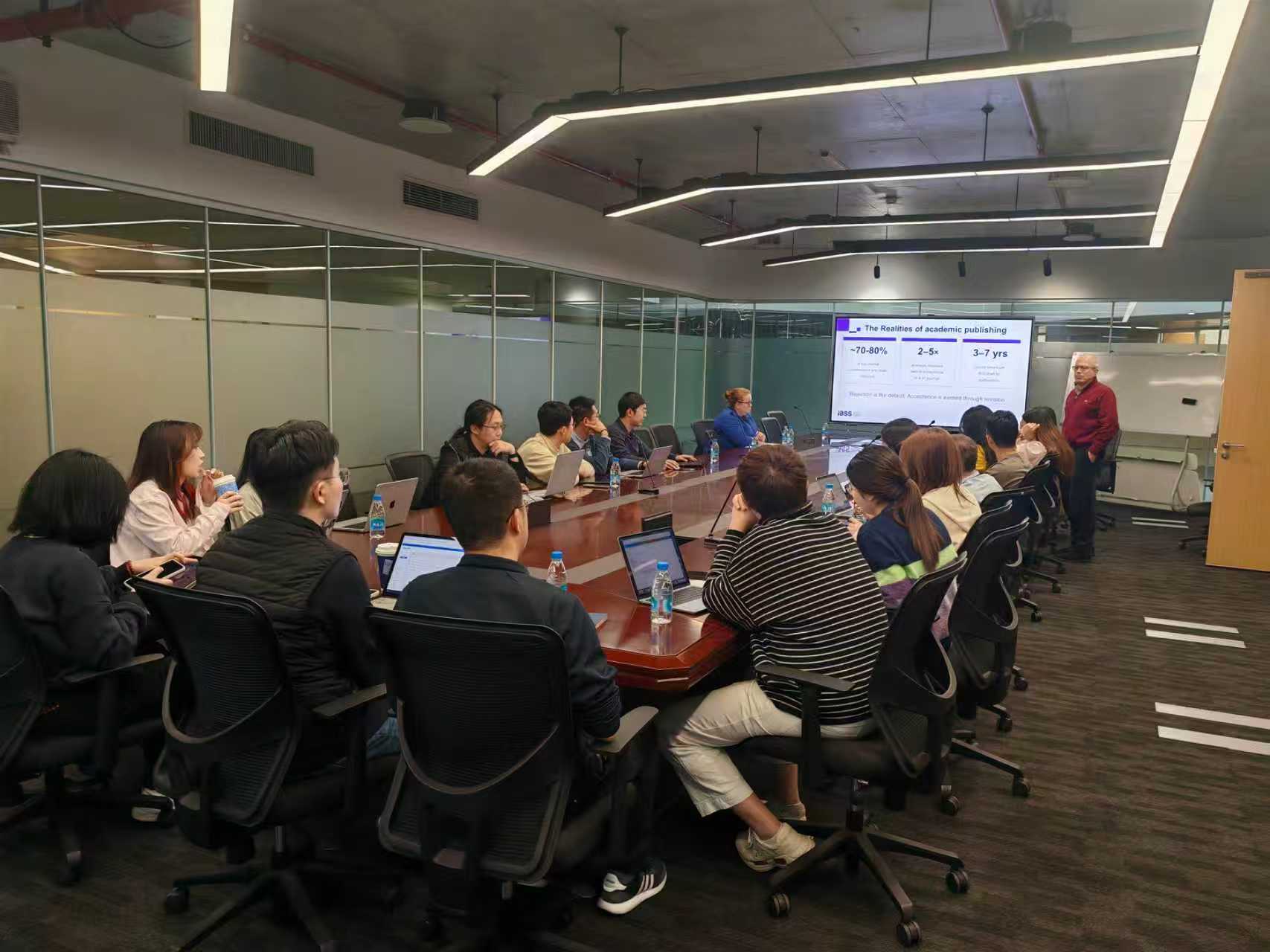
Professor Vasilis Theoharakis in the research seminar titled “From Rejection to Acceptance: Navigating the Paper Revision Process.”
The session proved highly valuable for colleagues and PhD students alike, helping to demystify a common yet often stressful stage of scholarly publishing. The discussion moved beyond generic advice, delving into the essential craft and psychology of navigating reviewer feedback. The audience engaged in a lively discussion, actively sharing personal experiences and challenges related to major revisions and response strategies. This exchange transformed the session into a practical forum, equipping attendees with actionable strategies and reinforcing the importance of a thoughtful approach to revision..
Professor Vasilis Theoharakis’s visit made a valuable contribution to IBSS’s research culture, offering support at both the idea-development stage and the revision stage of academic publishing. The workshop created a dynamic incubator for new ideas, while the seminar demystified the critical revision stage. Together, these sessions underscored a powerful message: excellence in research is cultivated not in isolation, but through proactive collaboration in the early stages and through strategic, psychologically astute engagement with the peer review process.
By Thomas Durham
27 Apr 2026